Up next in 10



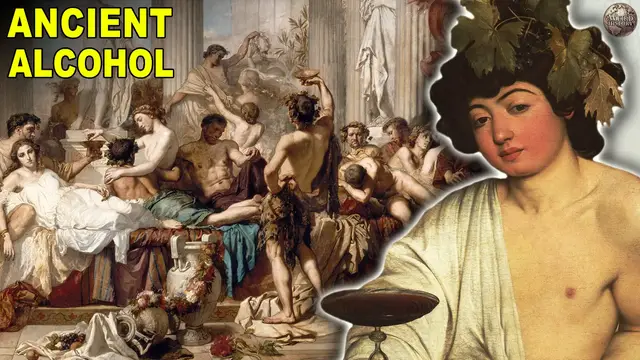
Today's alcoholic beverages range from canned Strawberritas to expertly crafted cocktails, but modern bartenders aren't the first people to invent adults-only drinks. In fact, there are plenty of types of weird ancient liquors that have survived in the historical and archaeological records. These ancient alcohols don't always sound appetizing, but they're definitely fascinating.
Show More Show Less View Video Transcript
0:00
Today's alcoholic beverages range from canned strabberitas to expertly crafted cocktails
0:06
But modern bartenders aren't the first people to invent adults-only drinks. In fact, there are plenty of types of weird ancient liquors that have survived in the
0:14
historical and archaeological records. Today, we're going to take a look at some fascinating alcoholic drinks from ancient societies
0:22
Okay, we've got an excellent selection of ancient cocktails for you to pick from
0:30
Pulque is arguably the most storied alcoholic drink in Mexico's history, serving as an ancient ancestor of mezcal and tequila
0:40
It's made by fermenting, not distilling, the sap of the maguey plant, also known as agave
0:46
which produces a viscous, milky-colored beverage with a sour, yeast-like taste. It contains a lot of probiotics and has served many purposes over the years
0:55
In mythology, pulque was said to have been invented in a lost divine paradise
1:00
although humans probably first started drinking it about 4,000 years ago. Its creation is the subject of several myths, which typically involve Mahuel, the goddess of the Maguey
1:10
The Aztecs used it as a religious stimulant, and once upon a time it was only available to people from the upper social classes
1:17
After the Spanish conquest, it became available to everyone, and it enjoyed incredible popularity in the 19th century
1:23
In the 20th century, however, interest in pulque declined, as an influx of European immigrants led to an explosion in the popularity of beer
1:32
Today, pulque is making a bit of a comeback, although it still accounts for less than 10% of the alcoholic beverages consumed in Mexico
1:39
Tourism has been a motivating force in the revival of the drink's popularity. However, the complicated fermentation process, along with the fact that it doesn't keep for very long, continues to limit its appeal
1:53
Soma appears in the Rig Vida, a series of ancient religious texts from India, and is also mentioned
2:01
in the Bhagavad Gita. In those texts, it was described as a plant that produced an intoxicating
2:07
beverage with a hallucinogenic effect, as well as the god who personified both of these. Soma was
2:12
seen to be a healer, tied to the moon, and a fertilizing force. According to the Rig Vida
2:18
the drink called Soma was made by squeezing liquid from the plant's stalk, which was combined with
2:22
milk and water. The resulting beverage might have brought worshippers some pretty interesting
2:27
visions. The name soma comes from a Vedic Sanskrit word that means distill, extract
2:32
sprinkle, and is likely a direct reference to the rituals in which it was employed
2:37
The identity of the plant referred to in the ancient text is now a matter of debate
2:41
Traditional Indian thinking holds that soma is a species called somalata, or sarcostema acidum
2:47
However, other researchers have suggested the ancient plant might actually be Mahuong, fly agaric, wild or Syrian rue, or psilocybin mushrooms
2:58
Giddy up Sheda is a mysterious ancient Egyptian drink whose contents scholars still debate
3:09
It was once believed to be wine made from pomegranates. But more recent thinking holds that it may have been derived
3:15
from red grapes, or possibly even a blend of grapes and pomegranates
3:20
Whatever it was made from, inscriptions on ancient pottery describe it using a different word than the one used
3:25
for regular grape wine. so it was definitely a distinct beverage. The term Shedda has no translation in modern English
3:33
and the only Egyptian text that chronicled how it was made said it was filtered and heated
3:38
but the papyrus it was found on was incomplete. Shedda was prominently mentioned in ancient
3:43
Egyptian poetry, where it was associated with a lover's voice. During the Ramesside and Ptolemaic
3:48
periods, it turned up in temple inscriptions and was apparently used as a religious offering
3:53
as well as an embalming fluid. Whatever it was, it was apparently a beverage fit for the pharaohs
4:00
King Tutankhamen's tomb contained an amphora of the liquid. Conditum was an ancient Roman spiced wine whose name basically means spiced, sweetened with honey
4:14
and boiled down. Conditum, which was considered to be a pecan's wine, remained a popular alcoholic
4:20
drink from Roman times into the Byzantine era and beyond. Ancient recipes for two distinct varieties
4:27
conditum viatorium, or traveler spiced wine, and conditum paradoxum, or surprise spiced wine
4:34
have survived in a first century Roman gourmands cookbook known as De Re Coquinaria
4:40
The conditum paradoxum, for example, is made from dates soaked in wine, date seeds
4:46
saffron, laurel, pepper, mastic, honey, and, of course, wine. This type was recommended for travelers. A 4th century recipe from the
4:55
Levant, on the other hand, lists the ingredients as wine, honey, and peppercorns
5:05
The ancient Romans really loved wine, and thanks to their conquests and trade
5:10
they had access to a lot of great varieties. Falernian wine, which hailed from Campania in
5:16
Italy came in three distinct types, dry, sweet, and light, which was considered one of the finest
5:22
Falernian was a strong white wine that was produced from Allianico grapes that were found
5:28
on the slopes of what was then called Mount Falernus, and today is called Monte Massico
5:33
The grapes that would become Falernian wine were typically harvested late in the season
5:38
due to a belief that being exposed to a brief frost would improve its flavor
5:42
According to Pliny the Elder, Falernian wines were thought to be second best of all wines
5:47
He claimed that Falernian was best after aging for 15 years. It also had an incredibly high
5:53
alcohol content. So high, in fact, Pliny once observed, it is the only one, too, among all
5:59
the wines that takes fire on the application of flame Modern scholars believe the beverage may have been 30 proof Falernian wine was so sought after it was often counterfeited The physician Galen noted there was so much for sale in the empire
6:13
it couldn't possibly all be real. The genuine stuff, however, was held in such high regard
6:19
Pliny records that one famed vintage was served to Julius Caesar at a banquet in 60 BCE, which honored his conquests in Spain
6:32
In addition to being master architects who built awe-inspiring structures like the pyramids and the Sphinx, the ancient Egyptians were also master brewers
6:41
While the upper classes tended to favor wine, beer was a staple of the working-class Egyptians' daily diet, providing nutrients to people who didn't eat a ton of fruits and vegetables
6:52
Brewers fermented and baked leftover grain, most likely barley, with yeast, then strained the mixture to create a soupy beer
6:59
Archaeologists have found records of beer that date all the way back to the pre-dynastic period
7:05
around 3100 BCE. Egyptian beer was continually produced for millennia. After the Muslim conquest
7:11
of Egypt around 646 CE, religious restrictions led to more conflicted attitudes about the beverage
7:17
Despite this, beer to this day remains the most popular alcoholic beverage in the country
7:22
representing a full 54% of alcohol consumption in Egypt. Kikion was a psychedelic drink hailing from ancient Greece. What exactly went into it is a
7:37
mystery, but it appears to have contained an unusual mix of barley, cheese, and wine. Throughout
7:43
ancient texts, Kikion might have been a generic word used to describe a potion with magical effects
7:48
but it was also often associated with mysteries or covert rites for a particular god. The most
7:55
famous mysteries were the secret rites of the goddess Demeter and Eleusius, where participants
8:01
downed an unknown hallucinogenic beverage to see visions. Scholars now think the drink might have
8:06
been Kikion containing moldy grain, which was specially treated with ergot fungi to yield
8:12
psychedelic effects. Archaeologists have discovered fragments of these fungi in a temple in Spain
8:17
which lends some credibility to the theory. Kikion also makes appearances in some of the
8:22
most important texts of the Western literary canon, the Iliad and the Odyssey. In the Iliad
8:28
it's described as consisting of Pramnian wine, barley, and grated goat's cheese. In the Odyssey
8:34
as made by Circe, it also includes honey and an unspecified magic potion. A separate Homeric
8:40
hymn in honor of the aforementioned Demeter finds the goddess drinking Kikion made from water
8:45
barley, and pennyroyal after refusing some ordinary red wine. The Greek Retsina is a white or rosé wine known for its unusual turpentine flavor
9:01
which comes from the pine resin present in the alcohol Before the invention of glass bottles oxygen would cause wine to spoil quickly so the resin which helped keep the air out was added as a preservative In the 3rd century the Romans started using barrels for this purpose
9:16
but the flavor of Retzina was so popular, the drink never disappeared. In fact, it's still
9:21
popular today. The use of resin to make wine was mentioned by the 1st century Roman writer
9:26
Calumella, who listed different types of resin that could be used in his work Dei Rei Rustica
9:33
Nonetheless, he warned against using resin to seal the best wines because of the nasty
9:37
flavor it added. Pliny the Elder also recommended the use of resin in his Naturalis Historia, claiming
9:44
that resin from mountainous areas was superior to resin from low-lying places
9:49
Archaeologists have traced Retzina back at least 2,000 years, though it has possibly
9:54
existed from as far back as 3,000 to 4,000 years ago. It remained a popular light wine through the Roman period and is still enjoyed today
10:02
Posca is perhaps the most unusual of ancient Roman drinks. It was just watered-down sour wine or vinegar, and it was made from wine that had gone bad
10:16
As a thirst quencher, it might not have been the tastiest drink, but some added salt and herbs to try and improve its flavor
10:23
The origin of its name isn't known, but it is believed to derive from either the Latin word
10:27
potor, which means to drink, or the Greek word ipaxos, which means very sharp. Despised by the
10:35
upper classes, Posca was considered a beverage for slaves, common people, and soldiers. It was
10:41
widespread enough that it is mentioned in the writings of Pliny the Elder, as well as surviving
10:46
comedic plays written by Platus. Interestingly, while out in the field on military campaigns
10:51
some high-ranking commanders and generals chose to drink Posca to gain credibility with the average
10:56
soldier. The senator Cater the Elder drank it with his men, as did Emperor Hadrian
11:07
Tumulus M.M. is the name of a tomb that was excavated at an archaeological site in Gordion
11:13
which was the capital of the ancient kingdom of Phrygia in the early first millennium BCE
11:19
Interestingly, the giant man-made tomb of an ancient Anatolian king dubbed Midas
11:24
in honor of the famous Regian King Midas, who ruled at Gordion during the second half of the
11:29
8th century BCE, had a lot of beer in it. More specifically, there was a funeral feast laid out
11:35
in this monarch's tomb, complete with wooden tables, 157 vessels for drinking, and even
11:41
ancient beer. The feast itself was pretty hearty. It included what must have been a fairly spicy
11:47
stew, which was made with wine, olive oil, honey, barbecued goat or sheep, and most likely lentils
11:54
with anise or fennel added for additional flavoring. Archaeologists yzed the cauldrons used at this feast
11:59
to see what kind of beverage the ancient Phrygians used to wash down their stew
12:04
Turns out, it was a yummy-sounding mixture of grape wine, honey mead, and barley beer
12:09
A modern spin on the recipe is marketed and sold as Midas's Touch Beer
Food & Drink
Alcoholic Beverages