Up next in 10



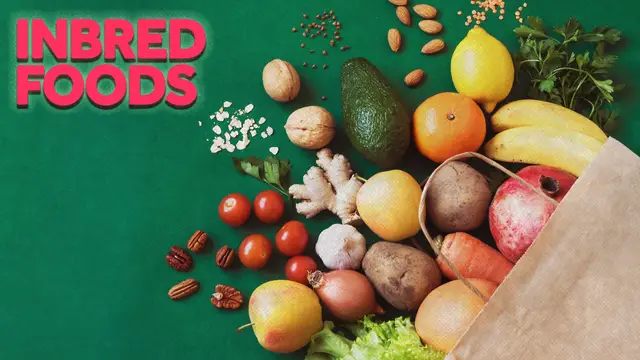
Weird History Food is showing you the fruits and vegetables that seem natural but are actually man-made. Nowadays, many people like to know where their fruits and veggies came from - whether that's an organic farm across the country or an orchard a few miles away. But how many of us actually think about where our produce came from? As in, how it originated as food?
Show More Show Less View Video Transcript
0:00
Head to any grocery store and you'll see rows and rows of food products with labels reading organic and all-natural
0:07
But a lot of things we eat today and recognize as all-natural or organic food were actually human inventions
0:15
That's right, this week on Weird History Food, we're talking about all the fruits and vegetables you never realized were man-made
0:23
Okay, get ready to unlearn everything you thought you knew about nature's bounty
0:27
As a kid, the phrase eat your greens may as well have been engineered by evil mid-century ad consultants trying to ruin American dinner time
0:37
Turns out, that's only half wrong. The engineered part is extremely accurate
0:43
All these vegetables come from the same plant in the Brassicaceae family. Like a blonde family in a George R.R. Martin saga, these varied vegetables are actually the result of over 2,000 years of meticulous selective inbreeding
0:57
Also like the Targaryens, the results were mixed. Lots of hits, but also a ton of man-made invasive species after millennia of farmers trying to play god
1:08
Those years of genetic mutation eventually gave us all the variants with the biggest leaves, kale
1:13
the biggest flower clusters, broccoli, and the biggest what-the-f**ks, a toss-up between wasabi and canola
1:20
Somewhere in this timeline, Brussels sprouts were the Frankenstein result of someone messing too much with a cabbage
1:25
As much as we enjoy a good marzipan, there's plenty to fear from the humble almond
1:33
Back in its wild days, almond nuts were bitter and decidingly deadly
1:38
50 wild almonds contained enough natural cyanide to kill a fully grown man
1:43
That's like 25 almond joys. So how did this extremely poisonous nut become a staple of desserts and trail mixes
1:51
While no one is exactly clear on the timeline, a 4th century Christian text gave an early clue, reading
1:57
Pierce an almond tree in the trunk near its roots, stick a fat plug of pine into its center
2:02
and its almond seeds will undergo a remarkable change. Thus, the bitter almonds lose the acidity of their juice
2:09
and become delicious fruits. Which, wow, sounds like a lot of trial and error
2:14
Pour out some almond milk for all those brave souls who gave their lives beta-testing bear claws and biscotti
2:20
So why the hell did this work? It turns out, jamming pine into almond bark stressed out the trees so much they stopped producing toxins
2:29
The grapefruit. One of nature's gifts that truly is inedible without a special utensil and a whole crap ton of sugar
2:35
What you want to do is, you get a grapefruit, right? And you cut both ends off, as so
2:42
Then you cut a hole in the middle. And it only exists due to sheer laziness
2:49
Millions of years ago, there was only one type of citrus plant. But then it ate from the tree of knowledge or something and got split into the big three
2:57
citron, pomelo, and mandarin. This tangy trio could only be found in Asia until Europeans started coming through in the 1600s
3:04
They grabbed the citrus trees with their grubby mitts and replanted them in the West Indies
3:09
Now, unlike cruciferous greens, a lot of care was taken to keep citrus plants from cross-pollinating
3:15
But in mid-15th century Barbados, sweet orange got a little too close to a pomelo when no one
3:21
was looking, and created a hybrid known as the forbidden fruit, now the grapefruit. Even though
3:26
grapefruits technically came into existence in spite of human intervention modern ruby red grapefruits are the result of tinkering After a happy accident resulted in the popular ruby red grapefruit 50s scientists began using radiation on the fruits to trigger even more colorful genetic mutations
3:43
Today's grapefruit are basically the X-Men of the citrus family, just without the cool
3:47
jet and superpowers. Bananas are often thought to be tropical fruits. In fact, the variety most of us are familiar with today came from none other than jolly
3:58
Old England via a 19th century gardener of the Chatsworth house named Joseph Paxton
4:03
Now, bananas existed to this point, but they bore more of a resemblance to plantains
4:08
which have more of a potato vibe going on. Old Joe knew he had something special on his hands
4:13
Taking extreme care, he nurtured his exotic fruit until it produced 100 bananas by 1835
4:20
In honor of its origins, the fruit was dubbed the Cavendish banana, after the family name of the duke and duchess living in Chatsworth where Paxton worked
4:29
Carrots are known for their orangeness, but did you know that they used to be a totally different hue
4:35
The wild carrot plant actually has white taproots. It wasn't until the year 900 when humans started domesticating them that taproots began turning purple and yellow
4:44
A 6th century Constantinople copy of the 1st century Greek physician Dioscorides' Pharmacopia
4:50
De Materia Medica, is the first record of someone suggesting that anyone eat the roots of these
4:55
weird weeds. Carrots made their way to Spain by the 8th century, and by the 10th century
5:00
India, Asia, and Europe were all cultivating the purple root. In the 16th century, carrots could
5:05
be found all around the world in all sorts of hues, except orange, white, yellow, red, purple
5:10
and even sometimes black. That's the carrot that writes moody poetry. In the 17th century
5:16
the Dutch claim to have tweaked the coloring in honor of the Dutch flag and Willem the Orange
5:21
But modern horticulturists think it's more likely that the carrots were descended from
5:24
selective crossbreeding to create a sweeter version of the bitter yellow root vegetable
5:29
So don't discount those purple farmer's market carrots as a weird fad. They're actually old news
5:36
Poisonberry. The name's so nice you were like, huh, that's a thing
5:39
Mmm, boysenberry! Yes, this delicious pie filling was willed into existence all the way back in the 1920s Anaheim
5:47
when Rudolph Boyzen, a mad horticulturist, tried to create a raspberry-blackberry-loganberry hybrid
5:53
The plants ended up producing large, flavor-packed berries, but Boyzen by that point was distracted trying to sell his farm
6:00
Turns out there's not a lot of money in trying to crossbreed berries. We did say he was mad
6:05
He almost missed the neglected berries completely, had an agent of the U.S. Department of Agriculture, George M. Darrow, not taken notice
6:13
The feds were bowled over by this new type of fruit, but needed an expert's opinion
6:18
Enter neighboring farmer Walter Knott, a renowned berry expert and future theme park founder
6:23
Together, Darrow and Knott's Berry Farms' progenitor propagated these populous purple pods around his property, and Knott's began selling them from his berry stand in 1932
6:34
By the time they hit the shelves three years later, people were going gaga over the new berry. When asked what he called his hybrid fruit
6:40
Knott said boysenberry, after his former neighbor. The peach is an old, old fruit
6:47
There are fossils from 2.6 million years ago that share the same outer seed shell as the modern peach
6:53
Originally, it was believed to have been cultivated first in Persia during the Neolithic era
6:58
but recent studies suggest they were first grown in 6,000 BC in the Shenzhen province of China
7:03
Alexander the Great was thought to have introduced peaches to Greece after his sojourn to Persia and Romans were growing them after the first century The Spanish brought them to the Americas in the 16th century though it took another 100 years before they would reach England
7:16
and the rest of Europe through horticulturist George Minifei. Originally, peaches were small, sour fruits with stones
7:23
that took up 35% of the total fruit. Only by humans effing around with a peach
7:28
have we grown larger, sweeter versions. Today, peaches are only 10% pit
7:32
Roughly the same percentage of the cast of Oceans 11. Strawberries Truly the James Bond of the fruit-verse
7:41
with a sordid history of espionage hiding behind that innocent red tush
7:45
The juicy red berries were small and sour, and long used as decorative fruit
7:49
more like potpourri than something you sliced into cereal. Like most fruit back in ye olde days
7:54
the strawberries were small and sour, though by the 1300s, French farmers began cultivating wild strawberries to make them sweeter
8:00
but still really tiny. In 1714, a French military spy named Amédie-François Frezzier was tasked with navigating through pirate-infested waters by Louis XIV and ended up in Chile
8:14
Incidentally, Frezzier means strawberry in French, and his ancestor, whose name was, we kid you not, Julius de Berry, had been knighted after bringing strawberries to the crowd
8:25
While living off the grid in Chile, Frezzier noticed that the country was growing much larger and tastier strawberries
8:31
When it came time to return to France, Bratier brought three plants back on the ship
8:36
But the Chilean strawberries remained barren for years because they just weren't crossbreeding well with their French cousins
8:42
Which sounds wrong, hearing it out loud. Fast forward 50 years when a 17-year-old horticulturist named Antoine Nicolas Duchesne presented Louis XV with a large pot of the Chilean strain of fruit
8:55
Louis flipped out. He loved the fruit so much, he had the castle gardens of Versailles populated with hundreds
9:01
of strawberry plants, to which Duchenne introduced a Chilean genus. That led to a happy accident
9:07
By putting the non-replicating Chilean strawberries next to Virginia strawberries that had been
9:12
recently imported, the result was the modern strawberry. The fruit that you're picturing when you hear the word watermelon are actually new watermelons. Bingo
9:22
Whoa, whoa, whoa! For centuries, watermelons were mostly seeds with a white rind throughout the inside
9:29
So in case you thought these melons were hard to eat today, imagine how difficult it was to make a novelty margarita in the 17th century
9:37
In fact, for most of history, watermelons weren't treated like food at all
9:41
They were portable water units, since they, like cacti and camels, could store a ton of liquid to transport in the desert
9:48
Early versions of watermelons were first discovered near the Dead Sea, and 5,000-year-old prehistoric seeds have been found in the area where Libya currently sits
9:57
Cultivated in India in the 7th century and reaching China's shores by the 10th century
10:02
the old watermelons reproduced fast, because of all those seeds you see
10:06
but they would bear smaller, more bitter fruits. By the time European farmers began producing them en masse in the 17th century
10:13
they were tweaking the natural formula, selectively breeding fruits with fewer seeds and more red, juicy pulp
10:19
An apple a day keeps the doctor away. But did you know if it wasn't for human intervention
10:25
we'd probably never get to eat the same kind of apple twice? That's because, like snowflakes and fingerprints
10:31
an apple's seeds are each uniquely different from the other. Even if you planted two seeds from two apples of the same tree
10:38
you'd get different types of fruit. So how could farmers keep tabs on their crop yield of Red Delicious to Green Granny apples Orchardists had to learn to graft the qualities they wanted to see in the fruit onto rootstock trees
10:51
Today, there are over 7,500 unique types of apple cultivars, from Abram, which are small and tender, with red skin and white flesh
10:59
to Zuccamaglio, which are greenish-red, crispy fruits that are more juicy and aromatic
11:04
Huh, guess you really can compare apples to apples. Like eggplants and peppers, tomatoes are part of the nightshade family, which can be, well, deadly
11:15
Plus, tomatoes give off a putrid odor, hence throwing rotten tomatoes at performers as a visual metaphor for stinkiness
11:21
which may have put people off eating them. Around 7,000 years ago in the area we know today as Mexico
11:27
Aztecs began cultivating wild blueberry-sized tomato, which the Spanish renamed tomates when they brought it back home
11:34
From there, the fruit, yes, tomatoes are fruit, spread like wildfire all over Europe
11:39
eventually making its way back to North America, only a few hundred miles from its birthplace
11:44
Culinarily, tomatoes are a vegetable, despite them technically being berries that grow in a vine
11:49
That's because tomatoes have a much lower sugar content than fruits. Also fruits
11:54
Affirmationed peppers, cucumbers, avocados, eggplants, squashes, green beans, like a bunch of stuff
12:00
Why does any of the classification matter? In 1887, the U.S. put a tariff on the import of vegetables, but not fruit
12:08
leading to the landmark case in 1893, Nix v. The United States
12:13
The result of the ruling determined that for legal purposes relating only to tariffs and not, you know, taxonomy
12:20
tomatoes were actually vegetables since that's how we use them in cooking. Corn is one of the most essential foods in the world
12:28
And not only because 6% of all calories come directly from corn
12:32
We use it to fuel our vehicles, feed livestock, and make syrup. Get the corn out of my face
12:37
Corn, or maize as it was called by Aztecs living in Mexico 10,000 years ago
12:42
didn't really resemble the bright yellow cobs we'd recognize today. Through genetic testing, it's been determined that ancient corn actually descended from a plant called Teosinti
12:51
and looks more like grass than the long stalks that populate farms
12:55
Teosinti plants only produced a few dark kernels per stalk, So early cultivators had to be very selective in their breeding
13:02
saving only the biggest kernels to plan for the next year's stock stock. Eventually, those bigger genetic offspring became maize
13:09
But it definitely took some early human engineering. For one, Teosinti seeds had a tough outer shell that was hard to crack
13:16
Theories and evidence support several possibilities of how humans crack the corn puzzle
13:21
Some say it was by heating and ultimately popping the kernels. Some point to early grinding mills
13:26
Still, others say our ancestors crushed the shells in our teeth to get at the seeds, which, if you've ever tried to chew a popcorn kernel, is no easy task
13:34
So we just want to say thank you to the intrepid souls who stuck with shelling and popping proto-corn in order to replant mutated strains with more rose, softer shells, and sweeter fruit
13:45
Today, corn, a cereal grain, though the kernels are also considered fruit as we play things fast and loose in the taxonomy department
13:53
has overtaken rice and wheat production worldwide. It's the most widely grown crop in America, with 284 metric tons grown a year
14:03
And 85% of corn grown in the U.S. are genetically modified organisms, or GMOs
14:10
So take that corny talk about organic, all-natural foods with a grain of salt and a butter pat
14:16
We wouldn't have corn as we know it today had we just left it up to Mother Nature