Up next in 10



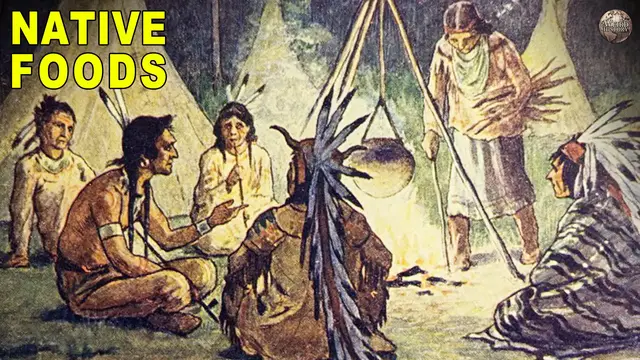
The creativity with which Native American groups brought ingredients together reflected an awareness of and respect for the environment. When it comes to what kind of foods Native Americans ate in the past, their meals were often about both sustenance and ceremony.
Show More Show Less View Video Transcript
0:00
The meals indigenous Americans ate in the past were often as much about the ceremony as they were about sustenance
0:08
The Native Americans brought ingredients from their surroundings together in creative ways, using the most from what the environment offered
0:15
And many of those recipes are still part of their culture and life in modern times
0:19
So, today we're going to take a look at what Native American tribes in the Old West were eating
0:24
In general, Native American groups of the Old West thrived on staple foods like corn, beans, and squash
0:35
When available, meat, fruit, and other vegetables were mixed into their diets, which could also include things like roots and greens
0:41
Many foods Native Americans ate were high in fat, protein, and carbohydrates
0:46
Their recipes were often intentionally loaded with nutrients in order to combat many of the potential hardships and struggles that were endemic to living in the Old West
0:54
On the other hand, it wasn't all about hardships. Food was also used for celebrating and bringing people together
1:00
Like in many other cultures, a good meal was seen as a social tool that could strengthen
1:05
communal bonds. Navajo kneel-down bread, traditionally called nitzetikoa, was named for how it looks after preparation
1:18
The bread was made of corn, which was a staple of the Navajo diet. That corn would be ground down before being wrapped in corn husks and then boiled or baked
1:26
Because the ends of the husk were tucked in or folded, the whole thing looked something
1:30
vaguely like the legs of a kneeling person. Kneel down bread was soft once it was cooked, but it also often came with a crispy outer layer
1:38
Kneel down bread was sometimes given to medicine men in payment for services or for a blessing
1:42
and it could be offered to tribal elders as well. In some places, kneel down bread is alternatively known as a Navajo tamale, but this isn't a
1:50
universally accepted identifier. Pashofa was a dish that included a mixture of pork, corn
2:01
and water and required numerous hours of work to prepare. Pashofa, which could be kept for over a
2:06
month, took the form of a soup that was almost always made in large quantities because it was
2:10
typically served to bring members of the Chickasaw community together. To make pashofa, corn was
2:15
cracked and then put into boiling water. The mixture would then be stirred for hours and hours
2:20
allowing the corn to soften. When the corn was halfway cooked, pieces of pork were then added in
2:25
It was important to keep the corn from sticking to the pot, something that necessitated paddles just for that purpose
2:31
Paddles made of hickory or oak would often be passed down for generations
2:36
specifically for the purpose of stirring pots of pashofa The Chickasaw and Choctaw also sometimes engaged in a healing ritual known as the Pashofa Dance During the ritual a medicine man would say a formula over a sick person in order to drive out the affliction
2:51
while others danced outside. In the afternoon, Pashofa would be served to all the dancers
2:56
before a second round of dancing ensued. Ato isn't so much a particular meal
3:05
as it is a general term for stew, soup, and mush. That being said, Ato'o often included meat from wild game
3:12
like rabbits. Stews, soups, and mushes typically incorporated vegetables such as celery, onion, and wild spinach
3:20
with squash, corn, and potatoes as well. As Native American tribes transitioned
3:24
from hunting to animal husbandry, meat from goats, cows, and sheep also eventually found their way into Ato'
3:30
Mutton Ato'o was made by sautéing the meat before adding it to a pot of boiling water
3:35
Once vegetables were added, the mixture was cooked for a short time, after which seasoning
3:39
and more water were added. More cooking time then followed, and when it was finally served, it was often accompanied
3:46
by some sort of bread or tortilla. As another commonly found item among Navajo groups, fry bread found many uses
3:57
Making darte ni el gage was relatively simple. It mostly just involved mixing flour, milk, water, and shortening, which is to say Navajo
4:05
frybread was really just unleavened dough fried in a pan. Once the mixture was fried on both sides
4:10
it could be topped with a number of things, including cheese, tomatoes, beans, or vegetables
4:15
In many ways, Navajo frybread served in this fashion resembled a taco. The frybread was often
4:21
served with atu, the aforementioned soup and stews, but it could be drizzled with honey to
4:25
sweeten it as well. Once Native American tribes were relocated to low-quality farmland on
4:30
reservations, they became increasingly dependent upon rations provided by the United States
4:35
government. Fry bread, however, was one of the few indigenous foods that could be made using the
4:40
lard, flour, and other supplies to which Native Americans had access. Wasna roughly translates to anything mixed together, and the Sioux people, made up of the
4:55
Lakota, Dakota, and Nakota, believed in both its nutritional and spiritual importance
5:00
According to legend, wasna, which consists of a mixture of dried meat, fruit, and fat
5:06
was the lifeblood of the Sioux people. Due to its high caloric value, wasna, which is sometimes also known as pemmican, was highly
5:13
valued because it could keep warriors and hunters going for days on end
5:17
It's like the Old West equivalent of Red Bull. To make wasna Native Americans took dried meat most often beef buffalo or venison and mixed it with dried berries It was coated in melted kidney fat or lard and then eaten with a spoon or by hand Wasna was also put into pouches or bladders
5:34
but is now often shaped into balls, patties, or squares for easy travel. Common among California's payamkacham, or luceños, as they're called by the Spanish
5:46
we wish was also traditionally associated with Miwok peoples, native to the northern part of the state
5:51
Wee Wish was a stew that was made out of acorns, which, as you probably know, are the highly
5:56
nutritious nuts that fall from oak trees. Well, maybe you didn't know they were highly nutritious
6:01
With more than 10 kinds of acorns prevalent in Northern California, Wee Wish blended several
6:05
different types of flavors, while giving its eaters essential fats, carbohydrates, vitamins
6:10
and protein. The first step in making Wee Wish involved collecting acorns each autumn
6:15
Once gathered, acorns were dried and stored until needed. In preparation for making Wee Wish, the acorn would be broken open, and the kernels were
6:22
removed from the shells. Their skin was then peeled, and the acorn kernels were ground into flour
6:28
The flour was mixed with water, leached to remove bitterness, and then cooked into a
6:32
mush, bread, or stew. When botanist and author Charles F. Saunders traveled to the American West during the early
6:38
20th century, he ate some Wee Wish and commented on the experience in his writings
6:43
According to Saunders, In taste, it is rather flat, but with a suggestion of nuttiness that becomes distinctly
6:49
agreeable. Saunders continued on to say that based on his own experience with We Wish
6:54
he would pronounce it about as good as an average breakfast food mush. Nonetheless
6:58
it was his observation that cream and sugar and a pinch of salt are considered needful
7:03
concomitants by non-Indigenous consumers of the dish. We Wish was just one of several Native
7:09
American dishes that used acorns, which were also eaten by members of tribes including the
7:13
Apache and the Yavapai. According to archaeological findings, members of the Pueblo tribes in the
7:23
American Southwest were drinking a corn-based beer some 800 years ago. Today, however, Tiswin
7:29
is more often associated with the Apache, which is a separate group that had extensive contact
7:34
with Pueblo groups. Da Testa, a member of the Apache who was with Geronimo when he surrendered
7:39
in 1886 claimed that Tiswin was relatively easy to make. According to her, you simply grind corn fine
7:46
on a grinding stone, or matati, then build a big fire and boil the cornmeal for 20 minutes
7:51
Once cooked, you take it out and squeeze the mash, separating out the grounds
7:56
Then you throw the grounds away, take off what's left, put it in a jar, and let it ferment with yeast for 24 hours
8:02
Datasta indicated the fermentation process took longer without yeast Often weeds and roots were added and the grinding process could be done several times Another type of tiswin involved using the mezcal plant or other cacti a process that took days or
8:16
weeks of crushing, boiling, and fermenting. Much of the literature on the Apache tribe refers to
8:22
tiswin drunks. However, the role of this alcohol in Apache society has been dismissed by members
8:27
of the tribe as mostly being a myth. The reason for this is that tiswin had a relatively low
8:32
alcohol content. Victor Randall of the Mescalero Apache once commented to historian Eve Ball that
8:38
it takes a lot of drinking to get drunk on Tiswin. According to Randall
8:43
most of the so-called Tiswin drunks were really drunk on tequila or other hard liquors
8:51
Piki, a thin cornbread made by the Hopi, was similar to Navajo paper bread. Piki was made
8:57
using blue or red corn that was mixed with ash and water. While the dough was often thick
9:02
The piqui itself was usually very fine and thin. Women would take handfuls of piqui dough and spread it over a hot, flat stone
9:09
Once cooked, the piqui could be folded, left flat, or rolled and served with a variety of other foods
9:14
The art of making piqui was something women acquired over years of practice
9:19
and the piqui stone was located in a small room or house that was often reserved for making piqui
9:24
The importance of the hickory tree for Native Americans can be seen in the use of hickory nut oil for cooking and medicine
9:36
Hickory nuts could be crushed and made into a drink, but they could also be boiled, strained, and made into what was called hickory milk
9:43
One recipe that was common among Cherokee peoples was kanachi, or hickory nut soup
9:49
During the early autumn, women gathered fallen hickory nuts and let them dry for several weeks
9:53
The meat from the nuts was extracted, ground, and formed into balls
9:57
After being stored for a time, the balls were added to a vat of boiling water
10:01
Once the mixture was strained for any residual shell pieces, Cherokee women added hominy and, at times, sugar or honey
10:14
Wojopi was made using choke cherries, root flour, and sugar, which were mixed together, brought to a boil, and thickened as needed
10:22
Considered to be a sweet treat, Bojapi was common among Sioux populations
10:26
most notably the Dakota and Lakota, who lived in South Dakota. Bojapi was sometimes eaten as pudding
10:32
but it could also be served over fry bread. Despite its sweet taste, Bojapi was not considered a dessert
10:38
but rather it was one of several traditional meals. It's also stored and served on special occasions
10:42
and at ceremonial gatherings. The use of choke cherries in the recipe
10:46
was demonstrative of the importance of Bojapi. These same berries were common in Wozna
10:51
and were prized for their medicinal properties