Up next in 10



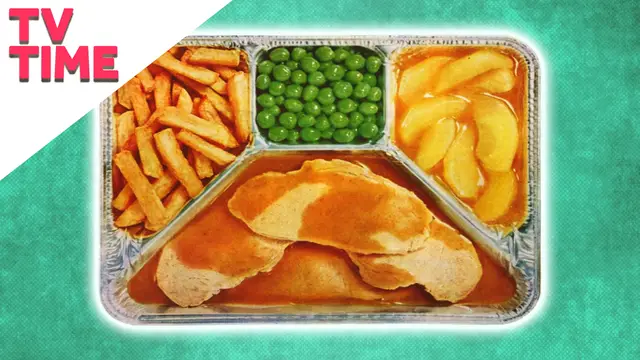
Weird History Food is peeling back the foil on this history of TV Dinners. With its aluminum or microwaveable plate, with separate compartments for meat, vegetable, and dessert, the TV dinner has a special place in food history and culture in the belly of American memories.
Show More Show Less View Video Transcript
0:00
Way back in the day, TV dinners symbolized the future
0:04
It was a compact multi-course meal that took 15 minutes to bake, didn't require you to scrub any dirty pots, pans, or dishes afterwards
0:12
and they were also always incredibly affordable. Some of them even tasted good
0:17
Lucky me, my wife uses Watson TV turkey dinners. And make your husband lucky too
0:22
But the TV dinners we're familiar with today have a very sordid origin story
0:28
which is only rivaled by its messy final days. Today on Weird History Food, we're going to talk about the history of TV dinners
0:36
And now, let's peel off that aluminum foil lid and get some nice, crunchy corners
0:44
Like the light bulb, the telephone, and penicillin, the frozen TV dinner is one of those game-changing innovations
0:51
that has more than one party claiming they invented it. Gilbert and Clark Swanson of the Swanson brand
0:56
claimed they invented the TV dinner in 1953. But history shows that their marketing department
1:02
was really stretching the truth. Here's how TV dinners were really invented
1:06
It all started almost 10 years earlier in 1944. William L. Maxson, a successful New York inventor
1:13
got the idea for packaging an entire frozen meal several years earlier when he planted too much cauliflower
1:18
on his property. And who hasn't had to deal with that problem before
1:23
He cooked the excess cauliflower, seasoned it, froze it, and then forgot about it
1:27
About a year later, Maxson said he thawed his frozen cauliflower, reheated it, ate it, and realized that his year-old veggies
1:34
were as good as the first day he prepared them. Of course, it's cauliflower, so that is not saying much
1:41
Always looking for his next invention, Maxson's cauliflower experiment inspired him to create a good-looking frozen meal
1:47
that tasted great but was pretty basic. One single serving of meat and vegetables set and separated
1:52
in a round, partitioned, glossy paper tray about 12 inches in diameter and a paper lid
1:58
He didn't develop these pre-made meals for public consumption, though. Maxson took his invention to the private sector
2:05
For his new revolutionary frozen meals, Maxson approached the Navy. Navy officials love the idea of light, compact meals that cost pennies to make
2:14
because aircraft carriers are pretty expensive. Now, instead of receiving the usual canned mystery meat
2:20
compressed cereal, biscuits, and cigarettes, enlisted personnel on the aircraft of the Naval
2:25
Air Transport Service would be served hot meals with food that looked, smelled, and tasted
2:29
surprisingly good. And just in time for World War II. These frozen meals consisted of a main course
2:37
steak, meatloaf, beef stew, corned beef hash, ham steak, or breaded veal cutlets
2:41
with either two separate servings of vegetables or veggies and hot bread. These meals were called
2:46
Maxon Skyplates, and they were heated on another Maxon invention, the Maxon Whirlwind Oven, a sort of convection
2:53
oven. This special compact oven could warm six skyplates at a time
2:58
although Maxon would develop the same oven to be able to heat up to 120 frozen meals at a time for the US War Shipping Administration merchant vessels That quite an upgrade Can anyone buy those ovens Or eventually Maxson agreed to an exclusive deal with Pan American Airways to serve the exact same
3:15
frozen military meals to domestic passengers with civilian packaging. And as news of his
3:20
revolutionary invention began making its way to the public, it was only a matter of time before
3:25
the public wanted Skyplates for home consumption. So in September of 1946, one year after World War
3:32
two was over, Maxson rebranded Skyplate as the Stratomeal, presumably because it would knock your taste buds
3:39
into the stratosphere. The GI Bill gave returning WWII veterans the ability to buy homes, allowing their Rosie the Riveter
3:47
wives to leave the workforce and raise families in the suburbs. And that is who Maxson's Stratomeals were designed for
3:54
housewives who were busy raising their kids and taking care of the household while their husbands
3:58
were at work in the city. It was marketed as a full meal you could pop in the
4:02
oven with no need for prep time or cleanup afterward. You just throw everything in the trash, which is part of the fun
4:08
It's way more exciting to toss the dishes than do the dishes
4:12
The meals began to catch on, and soon other smaller frozen food companies tried their
4:17
hand at frozen dinners. By 1952, Maxson had enjoyed six years of being the only option in grocery stores
4:24
But that year, Quaker State's Foods came in and changed the game forever, with lightweight
4:29
aluminum trays featuring a thin aluminum lid. Soon, other small regional companies joined in
4:36
the frozen food race, like Frigid Dinner, which expanded their frozen meal choices with beef stew
4:41
with peas and corn niblets, veal goulash with potato chunks and peas, and chicken chow mein
4:46
with egg rolls and fried rice. And who does not love a good reheated goulash? Technological
4:52
advancements in frozen meals were coming fast, but they were still considered a novelty. While
4:58
Maxson, Quaker State Foods, and Frigid Dinner were not seeing a decrease in sales, they weren't
5:03
seeing much growth either. That is, until September 10th, 1953. On September 10th, 1953, Swanson
5:12
which was a very popular and trusted brand name at the time, launched their own version of the
5:17
frozen prepackaged meal. My wife never panics. She just takes Swanson TV turkey dinners from the
5:24
freezing compartment of our refrigerator when I'm a little off schedule. It consisted of a few
5:28
slices of turkey, cornbread dressing with peas and sweet potatoes. There's also a famous origin
5:34
story about Swanson's invention. Swanson family lore claims that the Swanson Company developed the
5:41
idea for a pre-packaged frozen meal when they realized that they were looking at 520,000 pounds
5:47
of surplus turkey that went unsold after Thanksgiving the previous year. While the
5:52
brother Swanson tried to figure out how to unload all that turkey, it's alleged that all 520,000
5:58
pounds of the frozen bird parts were loaded onto refrigerated train cars to buy time. As this turkey
6:04
train crisscrossed America, the Swanson company desperately tried to come up with ideas on how to
6:09
save those turkey parts And that idea came from either Gilbert and Clark Swanson or Jerry Thomas one of Swanson best salesmen That right not even Swanson can get the Swanson TV Dinners legend straight Thompson claimed the concept for the frozen prepackaged meal
6:26
came to him while on a return flight from a business trip, during which he was served a warm three-course meal
6:31
in a disposable trisectional tray. And if you haven't put it together, I'll do it for you
6:36
Thomas was on a Pan-American flight, and they were serving Maxson's Strato meal
6:41
which had already been on the market for seven years. Thomas returned to the office and pitched the concept he'd just invented
6:48
And I was putting some pretty hard air quotes around invented. That concept would take all the frozen Swanson turkey and use it to create a pre-assembled turkey dinner in an aluminum tray
6:58
which their customers could then reheat, eat, and throw away. Over the decades, the controversy has brewed and only gotten muddy over time
7:05
Did Jerry Thomas invent the pre-packaged frozen meal? Former Swanson employees and family heirs who were around back then
7:13
stated in interviews that it was Gilbert and Clark Swanson who came up with the idea, not Thomas
7:20
But the truth is, neither party did. The Swanson Company just took Maxson's concept and Quaker State's Foods all-aluminum tray
7:27
and repackaged it in a great-looking box. The only reason anyone believed the Swanson story is because it was a multi-million dollar company
7:35
with an established name and a bigger marketing budget. Oh, hello, Steve Jobs
7:39
While the Swanson brothers had absolutely nothing to do with inventing frozen prepackaged meals
7:45
it's been proven that Jerry Thompson did actually have a hand in the product's success
7:49
He gave it a name. As the decades have gone on since the mid-1950s
7:56
Jerry Thomas' origin story about the trains and the frozen surplus turkey parts has proven to be false
8:03
That said, it's been confirmed that Thomas came up with the name for Swanson's frozen meals
8:08
He called them TV dinners. Thomas said he came up with the TV dinner concept when he noticed how popular the TV tray was becoming
8:15
which began showing up in commercials and newspaper ads. Ironically, no one's really sure who invented the TV tray
8:21
I'm surprised Thomas didn't take credit for that one, too. We only know that TV trays came about because home television sales skyrocketed after World War II
8:29
which enabled America to lift the manufacturing freeze and make more television sets
8:35
And there is nothing more American than eating your meals in front of the television
8:39
Of course, Thomas did have some help with the branding. M. Crawford Pollock, Swanson in-house marketing chief
8:45
came up with designing the TV dinner's outer packaging to look like a television set
8:50
Swanson only sold 5,000 units of their debut Thanksgiving-themed turkey TV dinner for 98 cents
8:56
But the following year in 1954, the first full year of production, they sold a whopping 10 million trays
9:04
The following year, they sold 25 million. And with that, an American institution was born
9:12
Because the Swanson brothers had the money and name recognition, their TV dinners completely obliterated smaller regional brands like Maxson, Quaker State Foods, and Frigid Dinner
9:23
Ghiblet gravy and sliced turkey But they didn stay in the TV dinner game for long In 1955 Gilbert and Clark Swanson sold their TV dinner brand to the Campbell Soup Company
9:36
for a huge chunk of Campbell stock. Hmm, beef stock or chicken stock
9:41
While they kept the rest of their business, the Swanson brothers retained no further connection to TV dinners except in name
9:48
While many popular products begin to decline in quality once they've been bought out by a massive conglomerate
9:53
The TV dinners only got better with Campbell's Soup at the helm. How's this for innovation
9:58
In 1960, Campbell's Soup added a fourth compartment to their tray, a dessert tray
10:04
It usually included apple cobbler, cherry pie, or brownie. This is arguably the most significant invention in modern history
10:13
In 1969, they started making breakfasts with a TV dinner tray featuring pancakes
10:18
scrambled eggs, sausage, bacon, and home fried potatoes. Soon after, they called their breakfast offerings Great Starts
10:25
and included Canadian bacon and egg breakfast sandwiches. And then, in 1973, Campbell introduced the granddaddy of them all
10:34
the Hungry Man. The Hungry Man TV dinner featured bigger portions of protein
10:39
and a badass marketing campaign, with cool commercials featuring the Pittsburgh Steelers' Mean Joe Green
10:45
and Rocky Blyer as the Hungry Man spokesman. Look at all that meat
10:50
Swanson knows I'm a second-hipping man. During the 80s, other contenders such as Banquet, Morton, and Libbyland
10:57
attempted to fight for the remaining grocery store shelf space. Chicken? Turkey? Sounds very safe. Not bad
11:04
But by then, Campbell launched Le Menu and overtook the industry. Le Menu TV dinners featured a revolutionary microwavable plate
11:13
with more mature and sophisticated cuisines for the lazy person with refined tastes
11:19
These gourmet frozen meals included entrees like pepper steak with rice pilaf, sweet and sour chicken
11:26
chicken breast Florentine with Savoy spinach, and turkey scallopin with garlic Parmesan Dutchess potatoes
11:33
I don't know what half those words even mean, so it must be good. By the 90s, people began eating healthier, and heavyweight frozen meal brands like Stouffer's
11:43
targeted the diet food market with its reduced-calorie Lean Cuisine line. Campbell's never caught up with the health craze
11:50
and eventually sold the Swanson TV Dinner brand to Vlasic Foods International
11:55
By 2001, Vlasic changed their name to Pinnacle Foods, which promptly discontinued the Swanson TV Dinner brand
12:01
and just began calling all of its frozen meals Hungry Man Dishes
12:06
The Great Starts breakfast line became the Aunt Jemima breakfast line, but the Aunt Jemima brand was permanently discontinued
12:13
after a product recall in 2017. Today, all that's left is the Hungry Man Microwaveable Meal
12:20
which is now owned by a company called ConAgra Brands. Sure, maybe it doesn't have the excitement of mean Joe Green
12:27
ripping off freezer doors, or Steve Garvey and Tommy Lasorda enjoying double servings of meat in the Dodgers stadium dugout
12:33
while the game is in play. But the brand still makes $9 million a year
12:37
which ain't bad for frozen food