Up next in 10



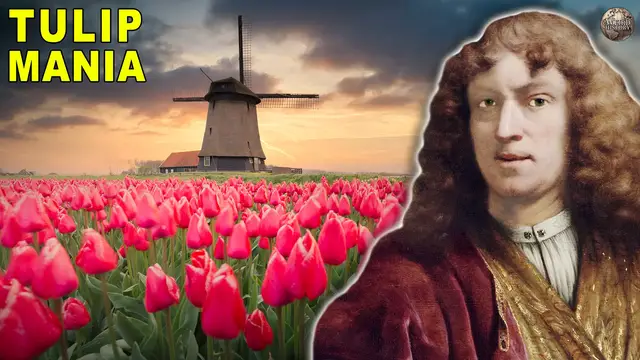
When Bitcoin came screaming back into the public consciousness in late 2017, there was a lot of talk about whether or not Bitcoin is an economic bubble. The crypto currency flew under the radar for several years and then all of a sudden it skyrocketed in market value. But what goes up must come down and nowhere was this more evident than the Tulip Mania which inflamed Europe in the 1630s.
Show More Show Less View Video Transcript
0:00
Recently, it's not hard to come across someone talking about Bitcoin and cryptocurrencies
0:05
But before Bitcoin entered the public conversation in late 2017, there was a lot of discussion about whether or not it could be considered an economic bubble
0:14
Cryptocurrency largely flew under the radar for years until a sudden rise in market value
0:18
propelled it into the public eye. But Bitcoin and Dogecoin have nothing on the bizarre tulip
0:24
mania that engulfed Europe in the 1630s. Today, we're exploring how tulips became
0:29
the Bitcoin of the 1600s. Amsterdam during the 17th century was a thriving international port
0:38
Largely thanks to the spice trade, wealthy merchants were drawn to the city, like spice
0:42
merchants looking for some quick cash. That's true what they say. The spice extends life
0:49
The spice expands consciousness. That's the wrong spice. Wealthy merchants put down roots in the
0:55
city. They liked to put on airs, too, living in opulent mansions surrounded by flowers
1:01
Their favorite flower, the humble tulip, was considered exotic during the period
1:05
Much like the modern day, rich people assigned crazy value to the flowers
1:09
and they began to build up wealth. Tulips eventually became as valuable as diamonds
1:14
It reached a disgusting height when, in 1636, a single Semper Augustus tulip bulb was worth
1:21
150 florins. That's roughly $25,000 if you're calculating things in today's money. That's 10
1:27
times what a skilled craftsman made during the period. Shelling out $25,000 for a flower seems
1:32
insane, but it gets even stranger than that. Few people would ever see the tulip blossom into a
1:37
flower. They just pass the bulb around, each owner hoping to make a bigger profit than the last
1:42
That sounds familiar. But as the craze went on, prices fluctuated. Speaking of changing values..
1:51
When you're hoarding and trading tulips for financial gain, there's nothing better than
1:55
something new coming along to change the entire game. Multicolored flowers with streaks of
2:00
contrasting colors did just that. Due to a virus that damaged the pigmentation inside the flower's
2:06
bulb, the petals developed unique colors, and tulip traders went nuts for them. Years later
2:12
scientists discovered the cause to be tulip-breaking virus, but the rich folks just thought they were Cool
2:17
Going crazy for a diseased tulips seems like something straight out of a farce
2:22
But sometimes the truth is stranger than fiction. Tulips became a fad, with whole flowers selling
2:27
for up to 10,000 guilders is at the height of the craze. Now that's an economic bubble waiting to burst
2:33
Tulips nearly ruined Holland economy which is crazy when you consider they not actually from there at all When you think of the Dutch pop culture tends to focus on wooden clogs and windmills
2:46
But there's a much more fascinating and rich cultural history behind the Netherlands that
2:51
essentially gets overlooked. Tulips are a big part of that. Tulips and other flowers are strongly
2:55
associated with the Netherlands. Tulips, in particular, adorn Dutch streets. It's virtually
3:01
impossible to walk down the road in Amsterdam without encountering that pretty-looking flower
3:06
But this country's national flower did not originate there. The floral icon may have
3:12
originated in what's now modern Kazakhstan. Woe woe woe woe woe woe woe woe woe. Enterprising
3:19
Dutch traders brought bulbs home from their travels, never realizing diseased tulips would
3:24
eventually break the economy. And about those diseased tulips, while the multicolored flowers
3:32
were uniquely appealing, it turned out the bulbs were much more valuable. Considered durable goods
3:39
the bulbs' value grew exponentially. Sure, tulips do take years to grow from a bulb
3:44
but that didn't matter. The bulbs were sturdy and didn't suffer damage as folks passed them
3:48
around elite circles. On the other hand, trading the actual flowers would likely have slowed things
3:54
down. The flowers were light and delicate, but the bulbs were sturdy and could take some
3:58
punishment as they were traded around. On the note of crazy trades, at the height of the tulip
4:05
mania bubble, those diseased tulips commanded some insane prices. They went for even more if
4:11
the colors resembled a candy cane pattern. Known better as a Switzer pattern, it was a rare
4:17
specimen indeed. Sinterklaas would be proud. Even during the 1600s, the housing market was rough
4:23
One merchant was so desperate to obtain the diseased tulips that he traded his house for 10 bulbs
4:29
Others became homeless when the bubble popped only one year later. Other families fell into a nightmare of financial ruin
4:36
The fallout from the tulip mania greatly affected the Dutch moral consciousness
4:40
A saying coined sometime after the mania rings true to this day. Do not seek inconsistent wealth before honor
4:47
The inconsistent wealth, in this case, is the tulips with the ever-changing values
4:51
While the saying is not uniquely Dutch, it is similar to the Dutch phrase
4:55
er boven hoot, or er boven reikdom, which means honor above goods or honor above wealth
5:03
respectively. Wise words indeed. But housing issues weren't the only problem. Tulip mania made people not pass go and go directly to jail
5:13
Some states have particular laws like requiring pickles to be bouncy or not having picnics in cemeteries But one crime during tulip mania makes those look like jaywalking One day a hungry sailor sat down to his meal of a delicious herring sandwich
5:29
Feeling it needed a little something extra to enhance the flavor, he reached for what he thought was an onion
5:35
The sailor carefully laid the onion on his sandwich and began to munch away
5:39
When the merchant who owned the boat discovered the culinary catastrophe, he charged the sailor with a felony and threw him in jail. The sailor got the raw end of the deal
5:48
in two ways. Imprisonment for a simple mistake was bad enough. But to make matters worse
5:54
tulip bulbs are mildly poisonous. The merchant's bulb, a sumper Augustus, routinely sold for the
5:59
cost of a small mansion in Amsterdam. The merchant lost a fortune at lunchtime, which serves him
6:05
right for leaving those delicious-looking tulip bulbs lying around. Of course, this story's
6:10
apocryphal at best. According to author Anne Goldgar's Tulip Mania, Money, Honor, and Knowledge
6:15
in the Dutch Golden Age, the idea of tulips being used as food was ludicrous. That is until World
6:21
War II hit, but that's a story for another time. While the idea of tulip trading might seem absurd
6:29
to us today, it was all about distinctiveness and one-upmanship. This was especially true for Dutch
6:34
botanists. The botanists had a knack for experimentation, combined with a healthy
6:39
interest in outdoing each other. If they could create a rare and unfamiliar color combination
6:44
the flowers would become increasingly more valuable. Plenty of crossbreeding and experimentation ensued
6:50
The competition grew spectacularly fierce. Sometimes, they gambled with their tulip bulbs
6:55
It was a crazy time to be alive. Botanists playing the long game were in for a nasty shock
7:00
however. Tulip seeds take from 7 to 12 years to become a bulb. By the time any of their franken-tulips got to that point
7:07
the bubble had long since burst. It was indeed a crazy time while it lasted
7:11
And folks liked to have some fun with their tulip trading. Botanists may have been fiercely competitive over their tulip bulbs
7:20
but other traders were just as enthusiastic, and they loved drinking and gambling
7:25
Bulb trading morphed into a high-stakes, alcohol-fueled endeavor. Craftsmen and interested parties routinely stopped by the bar to see how the game was going
7:33
It was like a spectator sport where people bragged and exaggerated stories
7:37
about how awesome their tulips were. brings a whole new meaning to the phrase
7:40
stop and spell the flowers, doesn't it? Of course, it all started as a gentleman's game
7:45
but it quickly devolved into a series of barroom brawls, ruined friendships, and financial loss
7:50
all over a flower they couldn't even see. There nothing like a plague to mess with the economy Some historians believe the plague helped facilitate the beginning of tulip mania Patterns of risky behavior tend to emerge in times of great turmoil And what could be more dangerous than placing unusually high monetary value on diseased flowers The 17th century saw
8:10
the bubonic plague make its way across Europe. An outbreak of the scourge was busy ravaging the
8:15
Dutch municipality of Harlem. That's where the collapse of the tulip trade began. When word of
8:21
confirmed plague infections got around, folks decided to avoid the city's tulip auctions like
8:26
Well, you know, the plague. After all, no one wants to be infected by a horrible disease when they could easily avoid it
8:34
As time passed, the bottom fell out of the tulip market, and the bubble popped
8:38
But no one is sure why. As time passed, consumers kept going nuts over tulips
8:46
They were willing to part with more and more money until someone realized it didn't make any sense
8:50
Things didn't quite add up. People were losing their homes and savings over tulip bulbs
8:55
It wasn't right. and the negative sentiment rapidly spread. Bulb values plummeted
9:00
Contracts weren't honored. The government stepped in to help pay some of the lost money to the merchants
9:05
The merchants licked their wounds and continued to sell stuff thanks to the government bailout
9:09
Oh, that sounds kind of familiar. But like any other economic bubble, tulip mania was destined to fail
9:15
and take its place in our collective memory as a true cautionary tale
9:19
History likes to claim tulip mania caused the entirety of the Dutch to go mad with tulip fever
9:27
But some recent research tells a very different story. Per Ann Golgar, only a select number of people were actually involved in the tulip trade
9:34
Her estimates put about 285 out of an estimated population of 42,000 in Harlem alone
9:41
She found similar estimates for other cities. But these findings do little to diminish the impact of the tulip trade as a cautionary tale for the economic future
9:49
One need look only at the Beanie Babies craze of the 1990s
9:53
Sure, everyone wishes they had their own Princess the Bear, but collectors were warned the sensation might be a simple case of tulip mania
10:00
No one listened. Now, Beanie Babies are a dime a dozen on eBay
10:04
Now's the time to buy. They're going to bounce back. They are going to bounce back
10:08
A similar case occurred in the late 2000s when California realtors sold asbestos-ridden single-story homes for over a million dollars apiece
10:16
It was just another case of tulip mania. While the original tulip mania lasted a scant two years, its infamy let it become shorthand for describing economic bubbles
10:25
As a fable and a cautionary tale, it goes to show the bad things that can happen when a commodity rises too far above its average value
10:33
In a way, tulips truly were the cryptocurrency of the 1600s. even if they had only a brief moment of flying too close to the sun
#Finance
#People & Society