Up next in 10



Important people from history left behind art, innovative ideas, political change - and, on occasion, body parts. Placed for all to see in museums and mausoleums, historical figures' remains provide strange yet intriguing forms of remembrance.
Show More Show Less View Video Transcript
0:00
When the most famous and important people in history
0:03
shuffled off this mortal coil, they left behind their art, their ideas
0:08
and, more often than you'd think, their body parts. Viewing such remains can be a strange yet intriguing form
0:14
of remembrance. If that sounds like a hot time to you, then good news
0:19
Because today, we're going to take a look at some historical body parts you can still visit today
0:26
Time to get a leg up on some history. As the author of The Theory of Relativity
0:34
Albert Einstein is arguably the most brilliant scientist who ever lived. That being said, he's mostly remembered for his hairstyle
0:42
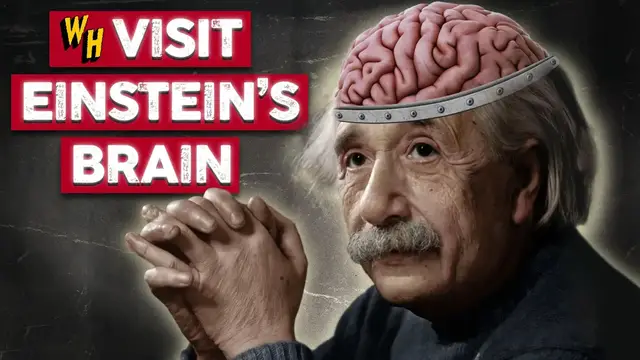
After passing away in 1955, researchers dissected his brain, eventually donating a few slices to the Muta Museum
0:49
in Philadelphia, Pennsylvania, where it now remains on display. His hair, unfortunately, was not saved
1:00
In 1916, a group of Russian nobles murdered the mystic, healer, and recurring hellboy villain
1:06
Grigory Rasputin. According to a legend that's a little hazy on the details, Rasputin's body
1:12
was castrated and his roughly 13-inch long appendage ultimately wound up at the Museros
1:17
Museum of Eroticism in St. Petersburg, Russia. Skeptics, however, maintained the organ actually
1:23
belonged to a cow. Dang, Rasputin. Former U.S. President Grover Cleveland, who is sadly unrelated to the Muppet Grover, died in 1908
1:37
But during his second term in office in 1893, he had a secret operation to remove an oral tumor
1:43
To keep it on the down low, the surgery was performed on a yacht, and the press was told the president was on a fishing trip
1:50
Cleveland is long gone, but the tumor found a permanent home in a glass tube at Philadelphia's College of Physicians Mütter Museum
2:00
Most people want to be buried or cremated after they pass, but philosopher Jeremy Bentham was not most people
2:08
For reasons way too esoteric to delve into here, he wanted his skeleton dressed up, his head preserved
2:14
and the whole thing put on display with a sign reading, Auto Icon
2:18
Unfortunately for Bentham, after he died in 1832, the Embalmers accidentally disfigured his head
2:24
They replaced it with a wax head that's still on display in a specially made cabinet at the University College London, England
2:31
in the Student Center on Gordon Square. Galileo Galilei's many accomplishments in physics, philosophy, math, and astronomy
2:42
earned him a revered place in the history of science. But given how he was forced to recant his life's work
2:48
you have to imagine there were a whole lot of folks he would have loved to give the finger to And strangely that worked out pretty well He died in 1642 But someone dug him up 95 years later and removed several body parts including his middle finger
3:03
It eventually turned up in an auction and became part of a collection at the History of Science
3:08
Museum in Florence, Italy, if you give a flip. Charles Babbage was known as the father of the computer
3:17
which makes him sound like some sort of cyborg. But sadly, no such luck
3:22
He was, however, the creator of the first mechanical computer, which inspired many of
3:26
the devices people continue to use today. When he died in 1871, he generously donated his brain to science, giving half to the Royal
3:34
College of Surgeons in London, England, and the other half to the Science Museum in London
3:42
Vladimir Lenin was the leader of Russia's Bolshevik Party, a famous communist revolutionary
3:47
and the principal songwriting partner of Paul McCartney. Or was that a different Lenin
3:53
This Lenin died in 1924. And in direct contravention of his family's wishes
3:58
his body was subject to an array of experimental embalming and preservation methods
4:03
In a comic book, that would mean he was going to come back as a super zombie. But in real life, it just means that his body
4:09
can still be seen resting in a glass case at the Lenin Mausoleum, located in Red Square in Moscow, Russia
4:15
If the way the Russians preserved Lenin's body impresses you, you're not alone
4:24
In fact, the North Vietnamese must have been pretty impressed, too, because when their president, Ho Chi Minh, died in 1969
4:32
his followers asked Russia for help preserving the body. They wanted to memorialize their revolutionary leader forever
4:39
And what better way to do it than glorified taxidermy? Min is still on display in his mausoleum in Hanoi, Vietnam, but only the most dedicated
4:48
fans will want to make the trip because it's been said he no longer resembles himself
4:56
And while we're on the topic, North Korean leader Kim Il-sung suffered a heart attack
5:01
in 1994. He immediately called his doctors, who weren't able to save him, but were able to preserve
5:07
his body, which we imagine wasn't really what Kim had in mind when he called
5:12
After mourning him for 10 days, North Koreans draped a Workers' Party flag over his lower body
5:17
and placed their late leader in a glass coffin. That coffin and the body are now located at the Kumsusan Memorial Palace in Pyongyang, North Korea
5:27
And in December 2011, North Korean leader Kim Jong-il succumbed to a heart attack
5:32
North Koreans, who you can tell by now are big on the whole body preservation thing
5:37
preserved his body. It was placed in a glass coffin in his father Kim Il-sung's mausoleum at the Kumsusan Memorial
5:43
Palace in Pyongyang, North Korea, where it still resides today. If there are three things we all know about Garfield it that he loves lasagna he hates Mondays and his spine is on display at the National Museum of Health
6:00
and Medicine in Silver Spring, Maryland. Although, come to think of it, we
6:04
might be mixing up that orange cartoon cat and US President James A. Garfield
6:08
President Garfield was shot twice in 1881. His wounds were manageable, but in their efforts to save him
6:15
doctors used unsterilized equipment. Garfield later succumbed to a serious infection. The museum still keeps part of Garfield's spine, which doctors removed during his autopsy
6:26
When James A. Garfield passed away in 1881, the cause of death was technically an infection
6:31
but authorities still held the man who shot him, Charles J. Gatteau, legally responsible
6:36
Gatteau suffered clear bouts of mental instability and even pleaded insanity at his trial
6:42
Despite representing himself in writing a one-act play denouncing the injustice of his trial
6:46
Goteau was unable to convince anyone he was crazy and was hanged in 1882. Professionals removed the
6:53
presidential assassin's brain, which now rests at the Mutter Museum in Philadelphia, Pennsylvania
7:02
Speaking of heads of state and the men who shot them, when John Wilkes Booth bit the dust on April
7:07
26, 1865, after taking out President Abraham Lincoln, the U.S. Army removed and kept several
7:13
of his vertebrae. Those remains are on display at the National Museum of Health and Medicine
7:18
in Silver Spring, Maryland. Lincoln, of course, was best known for being the 16th President of
7:23
the United States and wearing a cool stovepipe hat. He was slain at Ford's Theater in 1865
7:29
and that very same National Museum of Health and Medicine in Silver Spring, Maryland
7:33
now houses several fragments of Lincoln's skull, some of his hair, and remains of the bullet that
7:38
slayed him. Hey, is anyone thinking about a night at the museum sequel where Lincoln's skull
7:43
fragments come to life at night and fight with John Wilkes Booth's vertebrae? Get on the horn with Hollywood
7:49
Make it happen. At age 14, Bernadette Subirous allegedly saw visions of the Virgin Mary at Lourdes, France
8:01
on 18 separate occasions, which is a lot of separate occasions. Mary told Subirous of a nearby spring with remarkable healing powers, and soon a shrine
8:11
was built on the spot. Those healing powers apparently had their limits, though, as she passed away from tuberculosis in 1879
8:18
The Catholic Church, later named Soubirous a saint, exhumed her body, covered her face in a light layer of wax
8:24
and displayed her in Nevers, France, at the chapel of Saint-Gilles-d'Arc. There are few things quite as unsettling as a gravedigger who collects body parts from his cemetery
8:37
But after the famous composer Wolfgang Amadeus Mozart died in 1791, gravedigger Joseph Rothmere stole his skull
8:45
Despite the fact that tests to determine the skull authenticity of the alleged Mozart skull are so far inconclusive it become a part of the collection of the International Mozarteum Foundation in Salzburg Austria in 1902
8:58
We hear that Salieri's skull is incredibly jealous. After writing 722 compositions in 45 years
9:10
composer Ludwig von Beethoven died in 1827, at the not-quite-as-old-as-he-probably-hoped age of 56
9:18
Based on what happened to Mozart, composer's skulls are apparently a big deal
9:22
And that may be why Beethoven's physician secretly saved several fragments from the great composer's skull
9:28
Those bone pieces passed through several hands before ending up on loan
9:31
to the Ira F. Brilliant Center for Beethoven Studies at San Jose State University in San Jose, California
9:38
Mao Zedong, the former communist leader of China, wished to be cremated
9:46
But as Mick Jagger once said, you can't always get what you want
9:50
After his passing in 1976, Mao's widow and a whole bunch of other Chinese officials decided he should be preserved
9:56
The eight-day process was apparently a success, and Zedong's body can now be viewed in a glass coffin
10:02
located in Tiananmen Square Hall in Beijing, China. Inventor Thomas Edison was the boyhood hero of Ford Motor Company founder Henry Ford
10:14
And much to Ford's amazement, the two would eventually become close friends. They traveled together, went camping together, raced wheelchairs with each other
10:22
and even bought neighboring vacation homes. They were such good pals, Edison even left Ford a test tube
10:27
supposedly containing one of his last breaths. It's on display at the Henry Ford Museum in Dearborn, Michigan
10:32
But since you can't see breath, it's probably not much to look at. On June 25, 1876, members of the Cheyenne and Lakota Sioux Native tribes clashed with Colonel George Armstrong Custer in eastern Montana during the Battle of the Little Bighorn
10:50
And if you know anything about Custer, then you know things didn't go so hot for him
10:55
In fact, by the time reinforcement troops arrived, everyone in Custer's unit was dead, except for a horse ironically named Comanche
11:02
Comanche had a wound but was still alive. People celebrated the horse as a hero, and when Comanche passed in 1890
11:09
taxidermists from the University of Kansas Natural History Museum stuffed his remains and displayed him in their collection
11:19
Finally, Siddhartha Gautama achieved enlightenment and became the Buddha. So you know he had to have some seriously perfect teeth
11:27
He passed away sometime between 410 and 370 BCE, And from his cremated ashes, the follower reportedly
11:34
took several relics, including one of those teeth. The tooth is now enshrined in a chamber
11:39
at the Temple of Sacred Tooth Relic in Kandy, Sri Lanka, an eternal reminder of the rewards of seeking enlightenment
11:46
and brushing and flossing regularly