Up next in 10



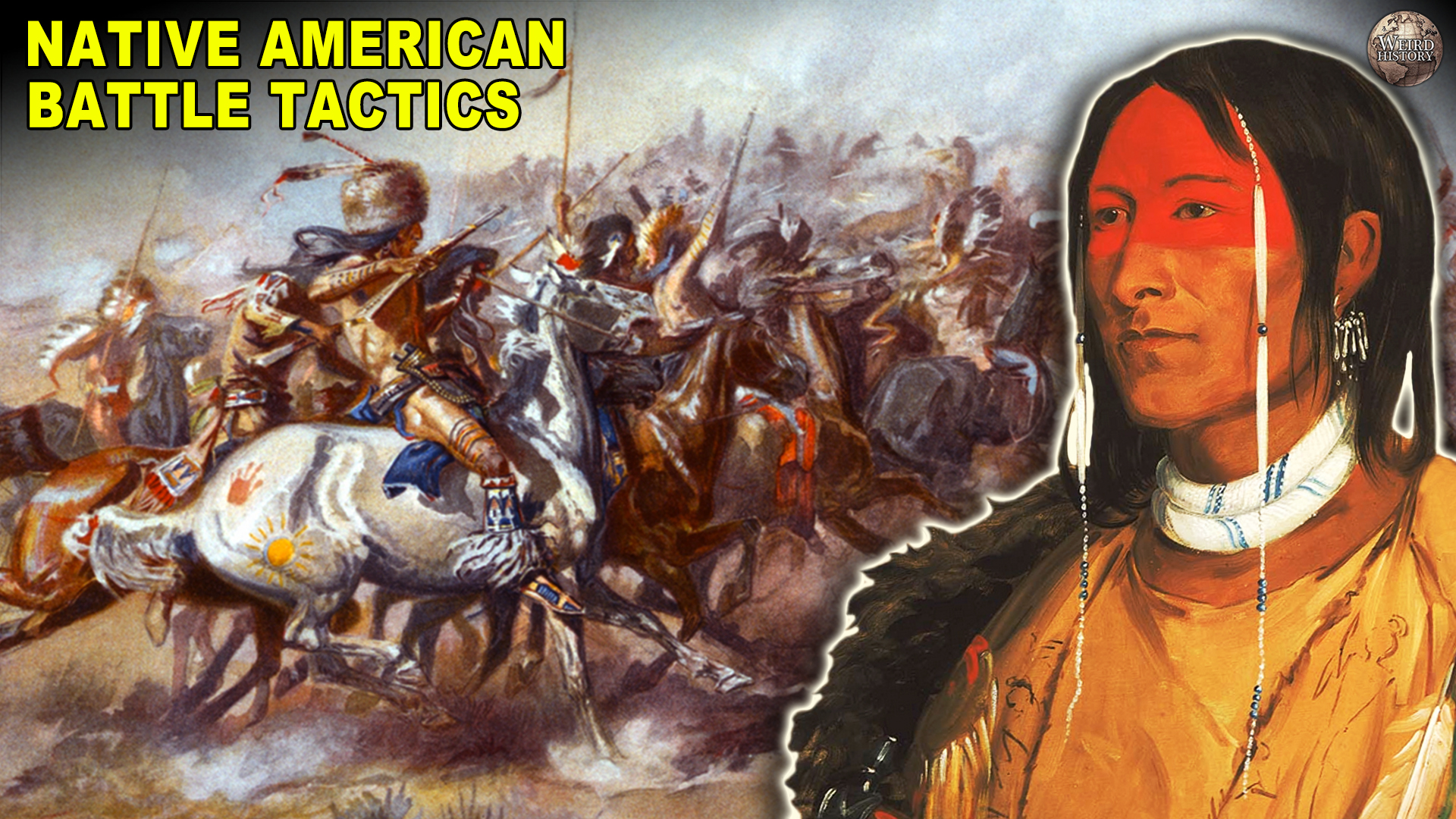
Long before the first Europeans set foot on American soil, the native people who lived there had spent centuries perfecting the art of combat. Even after visitors arrived from across the vast oceans with superior technology and weaponry, Native American guerilla tactics prevailed so thoroughly that the invaders were forced to adopt similar strategies. From the Mourning Wars tactics to the tactics of the French and Indian War, Native American soldiers and scouts proved themselves capable of immense cunning and incredible feats of military prowess.
Show More Show Less View Video Transcript
0:00
Long before the first Europeans set foot on American soil
0:04
the indigenous people who lived there had spent centuries perfecting the art of combat
0:09
From the Morning Wars to the French and Indian War, Native American soldiers proved themselves capable
0:15
of immense cunning and incredible feats of military prowess. So today, we're going to take a look
0:21
at the guerrilla military tactics of Native American tribes. OK, prepare for battle
0:30
When European colonizers arrived on the shores of the New World, they were probably quick to assume their superior technology and weaponry would make it easy to steamroll right over the native population
0:44
But they were in for a surprise. In fact, Native American guerrilla tactics proved to be so effective that the invaders were forced to adopt similar strategies just to keep up
0:54
For the following century and beyond, the American Indians fighting to protect their
0:59
territory would continue to forge new means of defense against the people who were slowly
1:04
spreading across the continent. The success of their tactics eventually led to American forces
1:09
adopting their combat style, and centuries later, some of the greatest strategies in modern warfare
1:14
would acknowledge their genius. For example, when asked about his plans for fighting in the Pacific
1:20
during World War II, General George Marshall explained, go back to the tactics of the French and Indian days
1:26
Study their tactics and fit in our modern weapons. And you have a solution
1:30
Basically, do what they did, but with a bunch of machine guns. It's often said that size does matter
1:41
usually in reference to pickup trucks, cheeseburgers, and atomic monsters. But bigger isn't always better
1:47
For example, whether they were mounting an offensive on open terrain or striking from wooded territory, Native American soldiers tended to rely on small
1:55
raiding parties and quick hit strategies. These quick targeted raids could be devastatingly
2:01
effective. And more often than not, the striking force barely experienced any losses. Attacks
2:07
often took place just before dawn, with warriors brandishing bows and clubs while rushing the enemy
2:12
who was presumably just sitting down to do their crossword with the morning coffee
2:16
Indigenous tribes also knew it was wise to keep their warriors motivated
2:20
Therefore, rewards were often given to those who took someone out in such a raid
2:25
These lightning tactics and early morning raids were not random, but rather part of a carefully
2:30
laid battle strategy designed to preserve the lives of their warriors. The tactic predated
2:35
the arrival of European settlers, but even after they encountered the foreign soldiers
2:39
Native Americans still focused on preserving their own combatants' lives. Later chiefs would
2:45
refine these older tactics, but they still used ambushes whenever possible. This overwhelming emphasis on keeping their soldiers alive
2:52
meant there was no shame in retreating to fight another day If the odds didn look good they were encouraged to beat feet back to base camp The only shame was in surrender So you know don get caught
3:04
Teamwork makes the dream work. And indeed, men who were enlisted in European armies
3:08
during the French and Indian War were trained to work as one cohesive unit
3:12
much like their Roman predecessors. But that's not necessarily how indigenous guerrilla
3:17
combatants did things. In the Native American tradition, men fought independently of their fellow warriors
3:23
Chiefs could instruct their men on the ultimate goals of the conflict and a general idea of what to do
3:28
But once their men hit the field, it was every warrior for himself
3:32
Kind of sounds like Little League soccer. You'd think this would lead to chaos on the battlefield
3:38
But the natives' ability to think and act independently while working toward a common goal actually just confounded the rigid European forces
3:46
The system also produced all-stars like a modern-day sports franchise. And warriors who managed to distinguish themselves on the battlefield
3:53
won a claim among the tribes. When a Native American raiding party
4:03
or assembled tribal battalion drew their handmade weapons, they obliterated anyone in their path
4:08
And we do really mean anyone. Women and children weren't necessarily spared
4:13
In most cases, any survivors from a defeated tribe were simply brought back home and incorporated
4:19
into the winning tribe. But at least one Native American nation took a darker approach
4:24
The Iroquois were known for systematically harming any warriors they captured in battle
4:29
sometimes going as far as burning them alive. That's pretty harsh. More often than not, raids were initiated
4:36
as an act of revenge, intended to make amends for casualties suffered by an attacked tribe
4:41
This means that captives were often taken back to the prevailing tribe's home in order
4:45
to fill the spot of a lost relative. So basically, if an enemy tribe killed your brother
4:50
you launch a raid and take a prisoner. And boom, you've got a new brother
4:55
That may be a bit of an oversimplification, but several people who ended up assuming the role
5:00
of a deceased person were adopted wholly, even going so far as to marry into the tribe
5:05
European settlers weren't excluded from this treatment. More than a few actually found themselves
5:10
being full-fledged members of whatever tribe had originally captured them. You know, like in that John Wayne movie
5:16
where he's searching for his niece. What was that one called again? The Native American tradition of combat used several psychological strategies to destabilize the enemy and strip them of their will to fight
5:32
In other words, they did some intense things to try and scare the hell out of their opponents and make them give up
5:38
One of the most popular methods of scoring a terrified response was the practice of scalping
5:43
And if that don't scare you, nothing will. While often taken as a prize in combat or to frighten the populace
5:50
scalps also served a valuable social purpose in Native American cultures They were hung in villages given to spouses and even traded for rewards like Pepsi points only slightly more violent
6:07
During the colonial era, European armies aimed a battle in wide open landscapes because it made
6:12
it easier for commanders to direct the fight. It also essentially boils down to both sides of a
6:18
conflict dutifully lining up to get shot. However, Native American chiefs were considerably less
6:23
accommodating than the Europeans were used to. Rather than the line-up method, the indigenous
6:29
folks used the terrain to their advantage when they drew up a plan. For example, Chief Crazy
6:34
Horse once misled General George Crook and his troops to the bottom of a valley. As the troops
6:39
were taking a break, they were surprised by 1,500 Sioux warriors. Crook was presumably surprised
6:45
that they didn't recognize the noble tradition of time out. Most Native American nations were reasonably well-versed
6:52
in horsemanship, but their cavalry tactics were widely different from the Europeans they fought
6:57
Rather than riding in line formations, indigenous horsemen preferred to travel in a seemingly chaotic club, and the reason why
7:03
is pretty simple. It prevented defenders from wiping out entire attack waves
7:08
with a single volley, and once the loose formation had hit its intended target, the grouped warriors
7:12
were in a position to take a big chunk out of a focused area. All in all, it was a fairly effective way to cripple a defensive line with very little risk
7:25
While they did prefer to fight individually, Native American warriors also knew how to follow their chief's lead when the occasion called for it
7:33
But how did the chief call audibles to his team in the days before field radios
7:38
Well, at the Battle of Little Bighorn, the legendary combatant Crazy Horse used mirrors to relay orders to his men
7:45
Several other chiefs used signals sounded from eagle horns, which are bellowing whistles carved from the leg bone of an eagle
7:51
making them supernaturally awesome. The Native Americans' trademark combat whoops were also used as a means of communication on the front
8:00
If you have any doubts as to how effective such a system of communication
8:03
might have been against a technologically superior enemy, go look up what happened to General George Armstrong Custer
8:10
Native American tribes would also take control of buglers. the Europeans' preferred method of battlefield communication
8:17
Sioux and Cheyenne men would often capture buglers or bring bugles into battle
8:21
in order to confuse British servicemen. At the same time, settling the American West wasn't really much of a priority for the United States
8:34
The government had different things on its mind during the mid-19th century. Bloody civil wars tend to soak up a lot of your attention
8:41
As a result, the War Department tended to staff the Western frontier with men who picnicked
8:46
and hunted significantly more than they trained. The Native Americans on the other hand spent their lives devoted to mounted combat Contrary to old cowboy movies that often depicted Native Americans exclusively using bows and arrows in their conflicts with American soldiers the indigenous warriors actually
9:02
adapted to modern combat very quickly. More often than not, the Native Americans
9:07
were even better prepared than the men they were fighting. As one member of Custer's 7th Cavalry reported
9:12
sending raw recruits and untrained horses to fight mounted Indians is simply sending soldiers
9:17
to be slaughtered without the power of defending themselves. And he fought with Custer, so he knows what he's talking about
9:23
In the years following the French and Indian conflict, even tribes who had allied themselves with the British were taken advantage of
9:31
Treaties were repeatedly overturned and dishonored, and Europeans refused to acknowledge Native American traditions
9:37
such as the aforementioned custom of bringing survivors into the tribe. As the result of repeated infringements
9:43
Native Americans banded together under the leadership of Pontiac, a brave chief whose name would later be appropriated by General Motors
9:49
for a line of automobiles. Probably not the tribute he would have chosen
9:53
but the Firebird, it's a pretty sweet ride. Having observed the British and French armies in battle
9:59
Pontiac educated his men on disciplined formation-based combat. Of course, he injected his own style
10:04
instructing his men to form a series of patterns, including half moons, squares, circles, lines, and columns
10:11
These new formations could be shifted on the fly and were even effective on rough terrain
10:19
In 1755, General Edward Braddock gathered 1,400 British soldiers and led them towards the French outpost known as Fort Duquesne
10:29
Ben Franklin warned Braddock about the formidable Native American warriors, but Braddock arrogantly told him
10:35
these savages may be a formidable enemy to your raw American militia
10:39
but upon the king's regular and disciplined troops, sir, it is impossible they would make any impression
10:45
As it turns out, they absolutely did make an impression. Approximately 10 miles from the destination
10:52
just after crossing the Monongahela River, the British force was set upon by a combined militia
10:57
of 900 Frenchmen, Canadians, and Native Americans. Trained in tactics used by Native American forces
11:04
the small militia completely destroyed Braddock's forces. In the end, the French side lost just 39 people that day
11:11
while the British lost an astounding 977 men, including Braddock himself. A young lieutenant colonel named George Washington recognized that he was beaten
11:22
and got his remaining men the heck out of there. The tactical retreat earned him the title of Hero of the Monongahela
11:29
which may have been sarcasm. It's genuinely hard to tell. Dubious title notwithstanding, Washington and his commanding officer
11:38
General John Forbes, learned an incredibly valuable lesson in the defeat. As General Forbes wrote
11:43
We must comply and learn the art of war from enemy Indians
11:48
Washington would later employ many of those indigenous tactics during the American Revolution
11:53
He did much better in that war