Up next in 10



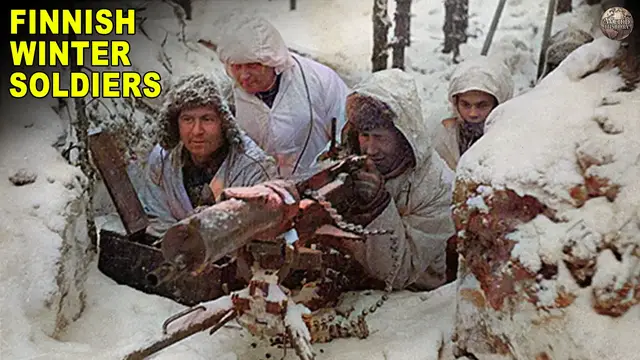
When thinking about World War II, it's really easy to focus solely on the fighting in the Atlantic or Pacific theaters. But there were other theaters of war that were just as harsh, and the Finnish warriors of the Winter War prove it. When faced with an overwhelming invasion from the Soviet Union, the Finns stayed and fought to defend their homeland with little more than grit and determination on their side.
Show More Show Less View Video Transcript
0:00
When thinking about World War II
0:02
it's really easy to focus solely on the fighting in the Atlantic or Pacific theaters
0:06
But there were other theaters of war that were just as harsh, and the Finnish warriors
0:10
of the Winter War prove it. So today, we're going to take a look
0:14
at some incredible little-known facts about the Finnish soldiers of World War II
0:19
OK, time to finish what we started. Oof, sorry, Finland. In the early days of World War II
0:29
the Soviet Union, eager to scoop up more territory, invaded Finland with about 1 million soldiers
0:35
Hey, when opportunity knocks, you'd better answer. Sometimes that knock is a world war
0:41
They bombarded the Finnish people with artillery to weaken their defenses, who, thanks to their small number of outdated batteries, had no chance of returning fire in
0:49
any meaningful way. The Soviets also entered the country with several armored divisions
0:54
and more than enough ammunition to eradicate the population of the country many times over
0:58
Yet despite this overwhelming material advantage, by the time the war was over, the Soviets couldn't
1:04
retreat from Finland fast enough. The Winter War would last less than a year, but it resulted in
1:10
more horrors than other entire regions saw during the duration of World War II. For even though
1:15
they were facing an overwhelming invasion force from a militarily superior enemy, the Finns stayed
1:20
and fought to defend their homeland with little more than grit and determination on their side
1:25
and extreme cold. Never underestimate the power of bad weather. They stopped at nothing to beat their enemies
1:32
Self-destruction, gruesome improvisation, and psychological warfare were all parts of their guerrilla campaign to stop the Russian invasion
1:44
The Russians invaded Finland with a ton of tanks at the ready, while the Finns had almost no armored units at their disposal
1:51
In terms of the board game risk, they were stuck in Scandinavia with no cards and a handful of infantry units
1:56
But if you thought the Finns were going to let that stop them, well, you're right, at least as far as their tanks were concerned
2:02
The Finns did manage to field a few of their tanks for an early morning attack, but the tanks
2:07
were not equipped with radios. This made any kind of battlefield coordination nearly impossible
2:12
Furthermore, some of those tanks had to fall back due to technical problems, and some
2:16
ended up getting stuck on terrain, like Robocop's ED-209 trying to navigate a staircase
2:21
Still, this did not stop the tenacious Finns from launching an attack on the Russians
2:26
But heavy losses forced them to withdraw after just a few hours. Their inferior numbers, lack of hardware
2:32
and inexperienced crews meant their armored division stood no chance against the Russians
2:36
So what do you do when your enemy's tanks are too good? You make it so they can use them The Finns knew that mobility was the key to winning the winter war And while the Finns kept to the harder snowier regions of the countryside the Red Army had to stick to the roads on account of their tanks and trucks Should have brought more ATVs Knowing that with all of
2:55
their heavy equipment, the Russians would have to use the country's infrastructure to move around
2:59
the Finns simply destroyed it. In the autumn of 1939, the Finns destroyed as many roads and
3:05
bridges as they could in anticipation of the Russian invasion. They also tried to tear down
3:09
any structure that would be able to house their troops from the cold outside. The Finns went even
3:14
so far as to make entire towns unlivable by poisoning drinking water and booby-trapping
3:18
areas with mines. Their strategy worked, and Soviet troops suffered from the first day of
3:23
the invasion. But wrecking the place wasn't the only tactic the Finns used against Russian tanks
3:29
The general idea of the Molotov cocktail had been around since the Spanish Civil War. And while it
3:34
does kind of sound like something they served at the 2014 Winter Olympics, it's actually an
3:39
improvised explosive device made by filling a glass bottle with a flammable liquid, like gasoline
3:43
or alcohol, and a source of ignition, like a kerosene-soaked cloth. The Finns perfected the
3:49
recipe for this IED and gave it its popular nickname. So, why is it called a Molotov cocktail
3:55
Well, during the early days of the Winter War, Stalin's Minister of Foreign Affairs
4:00
Vyacheslav Molotov, insisted that Soviet planes were actually dropping supplies, rather than bombs on Finland
4:07
Well, bombs are technically supplies, depending on how they're delivered. The Finns started ironically calling Soviet bombs Molotov's picnic baskets
4:16
and eventually started referring to their own IEDs as Molotov cocktails. Contrary to popular belief, Molotov cocktails weren't used against infantry
4:24
Their primary use was to take out Soviet tanks. Finnish cocktails added tar to the flammable liquid, which produced heavy smoke
4:31
The explosives would shatter against the tanks, sending smoke into the interior and making it impossible for the drivers or gunners to breathe
4:42
Made up of outdated planes, the Finnish Air Force was small and weak compared to the Soviets
4:47
and had little hope of taking the Russians head-on. So they didn't. Instead, they used
4:52
similar tactics as in their guerrilla ground campaign. The aircraft, of which there were far
4:57
too few, were typically only used in a defensive capacity or to conduct precision attacks on small
5:03
formations. This strategy proved to be extremely effective. All in all, the FAF, including bombers
5:09
fighters, and reconnaissance planes, flew about 5,900 combat missions during the war and shot
5:15
down 190 enemies, losing 47 of their own planes in the process. That's roughly four Russian planes
5:22
eliminated for every Finnish one. Not too shabby for a ramshackle Air Force
5:26
The Finns used anything and everything at their disposal to win the war with the Soviets Usually in conflicts such as these
5:38
there was a gentleman's agreement between both sides that would allow them to retrieve and bury their dead
5:42
during periods of ceasefire. But if the Finns were going to have a chance to beat the Soviets, they were going
5:47
to have to break the rules. They were waging a guerrilla campaign
5:51
and that meant striking fear into the hearts of their enemies. So the Finns would take the frozen bodies of fallen Russians
5:56
and prop them up for their comrades to find, like skeletons in a haunted funhouse. This had a
6:02
devastating impact on enemy morale. Not only were the Russians horrified to find the frozen corpses
6:07
of their comrades, but it also made it clear that the Finns would do whatever it took to win
6:12
But despite enduring these frightening tactics and sustaining heavy losses, the Soviets were absolutely determined to break the finish lines, and they threw everything they
6:20
had at achieving that objective. Take, for example, the large infantry invasion launched
6:25
by the Russians near the Taipale River. The Soviets pulled out all the stops to get the job done
6:31
But Finnish ski troopers used their mobility and expert knowledge of the terrain
6:34
to set up automatic weapon emplacements. Yeah, ski troopers, an idea that is both extremely practical
6:40
and completely badass. You get to shred the enemy and some powder
6:45
As the Soviets advanced, the Finns mowed them down in droves for days
6:49
Casualties were so high, the Russians were forced to use the frozen bodies
6:53
of their fallen comrades as cover from the machine guns. Both sides really got a lot of use out of those corpsicles
7:02
While the Russians had larger numbers and superior technology, they were also a lumbering force that was slow to move
7:09
The Finns took advantage of their superior mobility and adopted a hit-and-run mentality
7:14
Practically speaking, this meant that the Finns would draw large pockets of the Soviet army after them
7:18
then break apart and surround them. kind of like the Raptors in Jurassic Park
7:23
After the Finns surrounded the invaders, it was just a question of wearing them down
7:27
with long-range fire from all directions. Between this tactic and the extreme cold
7:32
more on that in a bit, the Russians found themselves mired in a war of attrition
7:36
they simply couldn't win. Speaking of attrition, the Finns used many snipers
7:40
during the Winter War, but no one in their army or the entire history of warfare
7:44
matched the overwhelming efficiency of Simo Haoha. You remember him, right? We mispronounced his name for an entire episode on Weird History
7:53
I remember that. Got a lot of comments. I'm trying to do a better job this time
7:57
A farmer and a hunter, he had won awards for his marksmanship and was called into military service during the invasion
8:03
Adorned in white camouflage and using his iron-sided Mosen-Nagon M91, Haoha became the deadliest sniper the world has ever known
8:13
He found sniper perches within view of important roads Since the Soviets couldn travel through the thick snow he would then wait for targets to appear sometimes even staying in place for days on end In fact his patience saved his life several times including a time he was engaged
8:28
in a day-long sniper fight with a Soviet marksman. By the end of the war, he had racked up over 500
8:33
confirmed kills. His ruthlessness earned him the nickname The White's Death, a nickname he notably
8:39
shares with the shark from Jaws. Despite the fact that they vastly outnumbered the Finns
8:44
the smaller country's guerrilla tactics eventually overwhelmed the Soviets. And after a while
8:49
the superior troop numbers of the Russians meant nothing. In total, the Finns lost about 26,000
8:54
soldiers between the fighting and the harsh elements, with another 44,000 wounded. The
8:59
Soviet casualties, on the other hand, are a bit harder to pin down. In 1940, the official count
9:04
according to the Soviets, was about 49,000 KIA and 158,000 sick and wounded. In 1997
9:12
Russian military historian Grigory Krivosayev put the numbers at about 127,000 KIA, or MIA
9:20
and 189,000 sick or wounded. Historian Pavel Petrov claimed in 2013 that the Russian state
9:27
military archive confirmed approximately 167,000 dead or missing. This means that almost
9:34
half of the Soviet army was wounded or killed by an enemy force less than half their size
9:39
with much worse equipment. One of the biggest tactical mistakes the Germans made was invading Russia and staying for the winter
9:49
So you'd think the Russians themselves would know enough not to make the same exact mistake
9:54
But they didn't. In fact, they committed pretty much the exact same blunder in their invasion of Finland
9:59
Maybe they figured that as Russians, they were immune to the cold, like polar bears or the
10:03
deadly ninja sub-zero. The winter between 1939 and 1940 was especially unforgiving
10:09
with temperatures plummeting to negative 45 degrees Celsius during mid-January. Imagine trying to do anything in those conditions, let alone sit in a trench
10:17
The weather also caused some serious problems with Russian machinery. The lubricants in vehicles
10:22
froze, which meant that the car-reliant Red Army lost mobility. Artillery also became harder to
10:27
operate, as the fluid in the recoil system began to freeze as well. Basically, anything that could
10:32
freeze did freeze. Finally, it's worth mentioning that the soldiers who first fought the invading
10:37
Russians were not officially part of the Finnish army. They were essentially an unorganized
10:42
militia defending against an attack comparable in scale to the Allied invasion of Normandy
10:47
They had shortages of equipment, ammunition, and even uniforms. Most were dressed in civilian
10:52
winter gear, wearing skis and armed with their personal hunting rifles. And they fought off one
10:57
of the fiercest world powers of the mid-20th century, permanently crossing Invade Finland
11:02
off the Soviet Union's vision board