Up next in 10



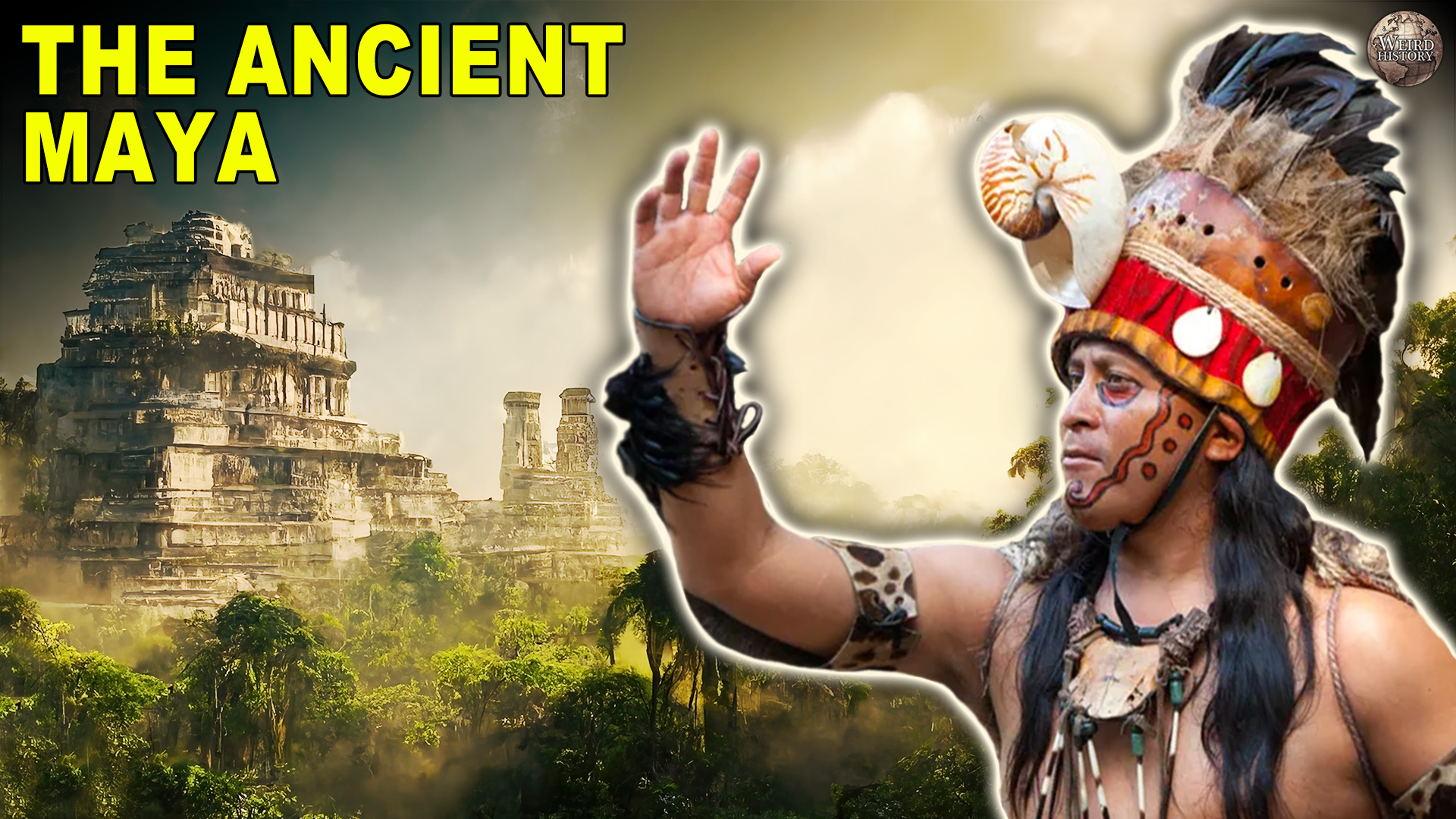
Forget the movie Apocalypto – the real Mayans of pre-Colombian America were more than stone pyramids and bloody rituals. From about 200 until the so-called “Mayan collapse” around 900 CE, the Maya people were at the height of their influence. They were one of many civilizations – like the Olmecs and the Aztecs – that animated Mesoamerica before the arrival of European colonizers.
Show More Show Less View Video Transcript
0:00
Between 200 and 900 CE, the Maya people were one of many civilizations that thrived in Mesoamerica
0:06
before the arrival of European colonizers. A rich and complex culture centered in the Yucatan Peninsula
0:13
the Maya are remembered for their towering pyramids, intricate calendars, and written language
0:19
But there's a lot more to this ancient civilization than you may have known
0:23
Today, we're looking at some unique facts about the ancient Maya. Okay, let's get exploring
0:30
The Maya civilization was nestled in Central America's most geographically diverse region
0:38
the Yucatan Peninsula, where modern-day Guatemala and Belize are located, in addition to parts of Mexico, Honduras, and El Salvador
0:45
The geographic diversity provided the Maya a ton of resources that ultimately shaped their culture
0:50
such as limestone, jade, and rubber. Their position in the center of Central America meant they had access to trade across the region
0:57
So the Maya traded everything from food like maize and cacao to more exotic materials like obsidian
1:04
If you're a fan of ancient architecture or pseudo-scientific cable TV shows about ancient aliens
1:10
you're probably already well-versed in the Maya's amazing ancient buildings. Maya pyramids are an architectural phenomenon
1:17
They relied on intricately carved stone to create their iconic stair steps
1:21
These pyramids served different functions depending on the region. In addition to their pyramids, Maya engineers also constructed bridges, arches, and pressurized
1:29
water systems. The great city of El Mirador, where 200,000 Maya once resided, was a prime example of
1:36
their engineering expertise. And just like other cultures, the Maya constructed nearly everything with locally sourced materials
1:43
This meant limestone, sandstone, and cinnabar to handle everything from basic construction
1:48
to painting. Before the Maya arrived, the Almecs were living it up in modern-day Veracruz and Tabasco
2:00
The Almecs were a fascinating culture, and similar to the later Aztecs and Maya
2:04
they had some seriously impressive stonework, including pyramids and those colossal heads
2:09
They really tie the room together. So what's the connection between the Almecs and the Maya
2:14
Did the Maya descend from the Almecs, or did they just happen to live in the same area
2:18
the same way you probably aren't related to the people who lived in your apartment previously
2:22
The answer is, nobody knows for sure. As author John Noble Wilford of the New York Times notes
2:29
archaeologists have split sharply over how much influence the Olmecs had on contemporary and subsequent Mesoamerican cultures
2:35
Were Olmecs the mother culture, or were they one among sister cultures
2:39
whose interactions through the region produced shared attributes of religion, art, political structure, and hierarchical society
2:46
Much of the Olmec society and history is shrouded in mystery, and the world may never know their relationship
2:51
if any, to the Maya. Instead of the traditional 12-month calendar, the Maya used a few different calendars to track all the unique aspects of their lives Meanwhile the rest of us typically only use more than one calendar when we can decide between Harry Potter or Garfield The Maya used one calendar for a 365 year and another as a
3:14
260-day religious calendar. The 365-day calendar, the Hab, consisted of 18 months of 20 days each
3:22
and one month, Ua'eb only lasts five days. Take that, February. The religious calendar is called the So'kin
3:31
consisting of 20 13-day periods. The two calendars progressed together in 52-year cycles
3:37
and plenty of significant events coincided between the two. And if that is not confusing enough
3:43
the Maya had a third calendar. This calendar, known as the Long Count Calendar
3:48
tracks, well, longer periods of time. Those cycles are about 2,880,000 days long, or approximately 7,885 solar years
3:59
That's a pretty thick calendar. You probably couldn't hang that up without losing your security deposit
4:04
The long-count calendar is where the doomsday theory that the world was going to end in
4:08
the year 2012 came from. But as it turned out, all that really happened was a John Cusack movie
4:14
Plus, the Maya didn't really subscribe to those predictions. 2012 was just a year when many of their calendars reset
4:20
like a new century in the Gregorian calendar. Math is a universal language
4:29
and a big part of nearly every civilization in human history. That's why we put a bunch of math on that gold disk we sent into space
4:36
You know, in case the aliens are nerds. But math actually evolves
4:41
Although most societies use base 10 systems now, base 10 originated with Indian and Arab cultures
4:47
and spread as merchants traded their wares worldwide. The Maya, on the other hand, used a base 20 system
4:53
revolving around three symbols. They'd arranged the symbols in different ways to represent numerical values
4:59
Entwined with their complex calendars, the number system helped them create engineering marbles
5:04
build elaborate structures, and inform the design of massive parts of their entire civilization
5:09
Additionally, the Maya system had something many cultures didn't, the concept of zero as a number
5:15
But it wasn't all math. The Maya also had what's considered to be one of the most sophisticated writing systems
5:20
in all of pre-Columbian Mesoamerica. As a literate society, they used a language composed of pictorial glyphs to represent
5:28
different words or speech patterns. Think of it like Egyptian hieroglyphics, or ancient emojis, if that helps you
5:34
Scholars are now able to interpret around 75% of Maya writing, which is good because
5:39
the Maya were extremely prolific writers. They chronicled a great deal of their world using a variety of materials like ceramic
5:45
and stone. However, Spanish colonizers burned many Maya records, and only some survive today
5:51
Made from bark, the records, or codices, are a window into pre-Columbian Maya life circa the 1100s
5:58
The Dresden Codex contains a font of astronomy knowledge. The Paris Codex discusses religious rituals while the Madrid Codex covers farming and hunting But that not all There another codex the Maya Codex which is a religious text stored in Mexico City
6:14
Yeah, Nicolas Cage is going to steal one of those things in the next National Treasure Movie
6:19
The question is, which one? Approximately 6 million people still speak Mayan languages today
6:25
But like any language, it has changed over time. For example, take contemporary English, the kind we're speaking right now
6:32
It sounds nothing like 10th century old English. Seriously, you might as well not even bother getting out of your time machine
6:39
Similarly, Maya languages have developed and changed over thousands of years. Each dialect became its own distinct language
6:46
There are approximately 30 languages in this group, including Sotil, Yucatec, and K'iche'
6:52
Like many societies, religion was a big part of the Maya way of life
6:59
It was part of their days, part of their calendar, and the center of many traditions
7:03
One of their religious texts, the Popol Vuh, chronicles many Maya religious stories, including
7:08
a creation myth. The Maya believed the world contained several different realms, the upper realm, the middle
7:14
realm, and the lower realm. And each realm was bound together by a ceba tree, a sacred tree for the ancient Maya that
7:20
represented the universe. There are many thematic connections, but in a nutshell, the roots were the underworld
7:26
the trunk was the earth, and the branches represented heaven. Wait, does Sabatris have nuts
7:35
War is part of every civilization, and the Maya were no exception
7:40
Their weapons of war included axes, spears, and arrows, along with a truly unique weapon
7:45
hornet bombs. Yeah, they are exactly what they sound like. Well, technically, it wasn't a bomb so much as it was a jar of hornets you huck at the enemy
7:53
But you get it. They were similarly brutal with their strategy. the Maya employed the concept of total war, which meant that instead of limiting warfare
8:00
to the perimeter of the battlefield, they drew civilians into conflict. Historical records show that they were sometimes ruthless, often employing a scorched-earth
8:09
tactic to make certain areas uninhabitable. And nothing scorches the earth like a jar of hornets
8:15
When there wasn't a battle to fight, the Maya often used a ballgame to serve as a proxy
8:19
for war. Before soccer became the most popular sport in the world, some civilizations played unique sports
8:25
Many pre-Columbian Mesoamericans played one particular sport unique to their culture. Known simply as the ball game, the sport was popular for thousands of years
8:34
The earliest evidence of the game dates back to 1600 BCE. But the weird thing is, historians and scholars know almost nothing about it
8:41
Like, it almost surely had a name, right? They called that game something. Ted, maybe
8:46
Its exact rules are lost to the sands of time, but some aspects of it are pretty clear
8:51
First, the game involved a rubber ball. It also had an eye-shaped ball court
8:55
And the court was a major community gathering spot in cities that had one
8:59
For instance, Guatemala, one of the Maya's early major cities, had over 500 ball courts
9:04
You didn't have to travel far to find a pickup game. According to historical accounts of Spaniard to witness games it played much like modern soccer but was a lot more dangerous Players would keep a heavy rubber ball in the air by hitting it with their arms hips or thighs The balls could vary in size
9:19
and some of them were heavy enough to cause injury or even death. The goal was to score the most
9:24
points, but the game had a more critical cultural purpose. It played a role in the Maya trade and
9:29
religious traditions. It was also used to resolve disputes, as a proxy for war, and sometimes just
9:34
For fun, it was a game. However, some historical accounts tell of rigged games played between captured prisoners and the ruling class
9:43
who were pitted against one another. The winners got all the glory. As for the losers, let's just say they didn't get another shot at the championship
9:56
Most Maya cities had been abandoned by the end of the first millennia CE
10:00
Some larger ones, like Chichen Itza, still flourished until the Spanish showed up in the 16th century
10:05
and turned it into a cattle ranch, and that is not a joke
10:09
A few centuries later, Maya ruins became a point of fascination for the American and European public
10:14
after the book Incidents of Travel in Central America, Chiapas, and Yucatan
10:18
by John Lloyd Stephens and Frederick Catherwood was published in 1841. The book took the world by storm and coincided with renewed interest in excavating Maya ruins
10:28
It also sparked interest in other Mesoamerican cultures and cultures around the world
10:33
kicking off a wave of discovery and research. For instance, Copan was once a thriving Maya city, but by the time Spanish colonizer Diego
10:41
Garcia de Palacio arrived in the 16th century, its ruins were all that remained
10:46
It wasn't until 300 years later that a systematic study of the site's archaeology occurred
10:51
thanks to renewed interest. Even today, archaeologists are unearthing Maya cities. As recently as 2022, a team of archaeologists worked at Sheol, a Maya city site close to modern-day Merida
11:07
Around 800 to 1000 CE, the Maya civilization was changing. Their classic period was ending
11:14
People were fleeing the cities, and monuments tumbled. Records from the period dropped off
11:19
So what caused the Maya civilization to collapse? The short answer is that no one really knows
11:24
But historians generally agree that several factors contributed to its decline. Some suggest climate change wreaked havoc on the Maya
11:32
Less rainfall led to a drought, which forced people from the cities. Researchers have found evidence of a great drought in the lakes the Maya typically would
11:39
have used, so it seems like a plausible theory. Other theories posit that they became overpopulated with limited resources
11:46
At the same time, more wars were breaking out and life was growing complicated
11:50
But then again, the reports of their demise might just be exaggerated
11:54
As anthropologist Lisa Lucero told Live Science, it was the Maya political system that collapsed, not their society
12:02
The over 7 million Maya living today in Central America and beyond attest to this fact
12:06
By the time Europeans began entering and colonizing the Americas, the Mesoamerican political system was dominated by a different cultural group
12:15
the Aztec people. But that's a tale for another day