Up next in 10



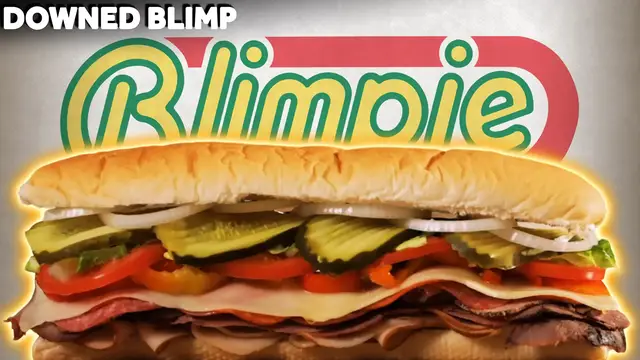
These days, when most people are hungry for a sandwich they head to places like Subway, Panera Bread, Jimmy John’s, Jersey Mike’s, or maybe even Firehouse. But once upon a time, not too long ago, the first name in sandwich shops was Blimpie. It even sounds delicious, like you’re going to get a whole lot of sammie for your buck. So what made this once-giant franchise go the way of the Hindenburg?
Show More Show Less View Video Transcript
0:00
These days, when most people are hungry for a sandwich, they head to places like Subway, Panera Bread, Jimmy John's, Jersey Mike's, or maybe even Firehouse
0:11
But once upon a time, not too long ago, the first name in sandwich shops was Blimpy
0:17
It even sounds delicious, like you're going to get a whole lot of Sammy for your buck
0:21
So what made this once giant franchise go the way of the Hindenburg? Well, today we're going to take a look at whatever happened to Blimpy
0:30
Okay, time to torpedo this sub shop. The first Blimpy opened its doors in May of 1964
0:41
Located at the corner of 7th and Washington Streets in Hoboken, New Jersey, the business was the brainchild of Angelo Baldessari, Tony Konza, and Peter DiCarlo
0:50
The trio attended high school together in nearby Jersey City. And while we'd love to tell you that they were struck with a wholly original bolt of sandwich inspiration
0:59
that's not exactly what happened. The idea for Blimpy was actually just copied
1:03
from another successful sandwich business located in Point Pleasant, New Jersey. At the time, that business was called Mike's Submarines
1:11
and it eventually grew into a chain of its own, but you more likely know it by its current name, Jersey Mike's
1:17
Baldessari, Konza, and DiCarlo were only too happy to copy Mike's business model
1:22
But Konza, at least, wasn't too hot on its name. In fact, he didn't like the idea
1:26
of calling the sandwiches submarines at all. That's because he associated the term with this small, cheap, short-order restaurant
1:33
sometimes known as Greasy Spoons, of which he wasn't a fan. To avoid the association, Kanza wanted to call the sandwiches Hoagies
1:41
which is what they were known as in Philadelphia. Unfortunately for him, most people in New Jersey either had no idea what a hoagie was
1:49
outside of a character from Jaws the Revenge, or flat-out refused to use the name
1:53
Determined to come up with something better than submarine, Kanza started searching through the dictionary
1:59
and eventually hit on the word blimp. Kansa thought the shape of a blimp resembled the shape of the bread on a submarine sandwich
2:05
and decided that blimpy would be the perfect name. The first blimpy was a success, so it quickly grew into a chain
2:16
And by 1967, that chain had 10 locations in Manhattan alone. Most of those locations were franchised
2:23
but four of them were personally owned by Kansa and DiCarlo, Baldessari having left the franchise in 65
2:29
Despite their ambition, however, neither Kanza nor DiCarlo had a formal business education, and it came back to bite them
2:36
They severely miscalculated the price of goods and employee salaries, and quickly dug themselves into a hole they could only climb out of by selling all four of the locations they owned
2:47
After that they wisely decided to concentrate on franchising and to that end they worked on selling franchises all over the Northeast and Mid states After that everything ran pretty smoothly for a while But in 1976 the Blimp encountered some turbulence
3:03
Kanza wanted to continue franchising efforts into the South, while DiCarlo didn't
3:08
The usual way to resolve such business disputes is with a steel cage match
3:12
But instead, the two decided to just split the company in half
3:16
Both of the new companies would retain the name and trademark for Blimpie. But DiCarlo would be in charge of the original company under the name International Blimpy Corporation
3:25
while Konza would be in charge of a new company called Metropolitan Blimpy for the sophisticated hoagies
3:31
Once that was all decided, Konza started franchising to everyone in sight
3:35
After all, it worked for McDonald's, so it would probably work for Blimpy too, right
3:44
Lacking the management experience and business savvy of a Ronald McDonald, Kansa's plan for rapid expansion had a few holes in it
3:52
For starters, a lot of the new locations were spaced too far apart. That meant that unlike other franchise chains
3:58
individual locations weren't able to benefit financially from cooperative efforts such as joint advertising and promotional campaigns
4:05
Kansa also had a hard time keeping all the new blimpy franchisees in line
4:09
For example, some of those new locations added unauthorized items to their menus
4:15
like pizza and Chinese food. At the same time, many of them developed a reputation for having unsanitary conditions and poorly trained employees
4:24
Customers hated it, and even Konza would later admit that his poor management ultimately did real damage to the blimpy brand
4:31
The company went public in 1983, but their IPO opened at just 90 cents a share
4:36
That doesn't sound like a lot today, and it didn't then either. Turns out Wall Street didn't have much faith in the submarine sandwich market, and apparently neither did Konza
4:45
Looking to diversify, in 1984, he opened up the first Border Cafe in Manhattan
4:51
Border Cafe was a casual dining restaurant that served Mexican food and drinks
4:55
And it did pretty well. At first, so well in fact, Kansa opened up two more locations in 1986
5:02
One in a different area of Manhattan and the other in upstate New York
5:06
But while it showed early promise, Border Cafe ultimately turned out to be a loser
5:11
Despite $4.5 million in revenues in 1987, the company wound up down almost $400,000, and it closed down the following year
5:21
Adding to the disaster was the fact that while he was all caught up in launching Border Cafe, Kanza was neglecting his responsibilities to blimpy
5:29
The chain opened up just 30 new restaurants in 1987, and the stock price tumbled
5:34
And if that wasn't bad enough, while Konza was distracted by his failed
5:38
border cafe brand, a relatively minor competitor known as Subway was steadily gathering
5:44
steam like a steam blimp Is that a thing Thanks to Subway America was falling in love with the submarine sandwich
5:57
And Kanza decided it was time to buckle down and cash in. To that end, he set off on a mission to repair the damage he had done to the company
6:04
He started by visiting his locations, talking to his employees, and getting a better sense of what was working and what wasn't
6:11
And once he had a grip on the issues, Kanza got to work. The rehabilitation of Blimpy started with a program designed to improve employee morale
6:20
Along those lines, Kansa also made a concentrated effort to clean up the unsanitary conditions
6:25
that had become all but synonymous with the franchise. He also launched a Blimpy newsletter called No Baloney News
6:33
which was designed to provide guidance to well-intentioned Blimpy franchisees. It came with a phone number for a corporate hotline that franchisees could use to get immediate advice
6:42
or just complain about whatever problems they were facing. At the same time, Kanzer realized that the locations that were adding new menu items
6:50
were doing so because they were struggling to compete in their markets, to help them out and to further compete with Subway
6:56
which was gaining a reputation as a healthy alternative to fast food
7:00
He decided to expand Blimpy's menu by adding low-calorie options like tuna, turkey, and crab
7:05
The new menu was known as the Blimpy Light Menu, which seems a little confusing because all blimps are light
7:12
but we don't need to bring science into this. Along the same lines, Blimpy also started serving gourmet salads, which they marketed under the awkwardly named Blimpy Freshery
7:22
It was a ton of work, but it all paid off. In 1990, Blimpy's sales skyrocketed north of $120 million
7:30
By 1993, the company had something in the neighborhood of 670 locations worldwide
7:35
And thanks to their Simply Blimpy ad campaign, those locations were doing better than ever
7:41
The franchise got an unexpected boost from the declining sales of cigarettes during this era
7:47
As well, convenience stores that used to clean up by selling packs of Marlboros went looking for a way to make up for all of that lost income
7:55
And Blimpy had the answer. In-store franchises. Thanks to its mostly sandwich-based menu, opening a mini Blimpy inside a convenience store didn't require a full-sized kitchen, so startup costs were low
8:07
That same factor made Blimpy a popular option for other venues, like college campuses, hospitals, and sports stadiums
8:15
Heck, there were even Blimpy vending machines, which sounds like a dare
8:20
The franchise continued to grow, and by 1995, it had over 1,000 locations
8:26
By 2001, Blimpy had hit its zenith, with almost 1,900 locations that did $300 million worth of business per year
8:34
Flush with cash Blimpy International spent the late 90s buying other chains like Maui Tacos Smoothie Island and Pasta Central But what goes up must come down
8:51
Due to a host of factors that include drastically increased competition and a habit of overexpanding, by 2001, Blimpy was losing money again
9:01
Apparently lacking the gusto to see the company through another downturn, Kanza sold it to an investment group for roughly $26 million
9:08
He stepped down as CEO and took on the title of advisor, but that arrangement didn't last long
9:16
In 2006, that investment group sold Blimpy to a franchising company known as Kahala Brands
9:21
which also owns Cold Stone Creamery, Pinkberry, Baja Fresh, and about two dozen other recognizable brands
9:28
Kahala, which also bought out the assets of DiCarlo's metropolitan Blimpy company
9:33
then gave it the old college try. But Blimpy continued to struggle
9:37
By 2011, the chain was back down to just 739 locations and 115 million in sales
9:46
There is no one silver bullet that burst Blimpy's balloon. But thanks to an economic recession, the early odds were tough on a lot of old franchises
9:54
Some of them failed to update their menus to keep with the times, and others just saw their brands fall out of favor and lose their cultural cachet
10:02
But long story short, a new generation of casual dining restaurants stole the thunder from old chains like Ponderosa, Bob's Big Boy, TCBY, Tony Roma's, Bennigan's, and yes, even Blimpy
10:20
Blimpy may have crashed and burned, but it wasn't completely destroyed in the process
10:25
As of 2025, the chain still has just about 100 locations in the U.S. and one at Kuwait International Airport
10:33
However, the vast majority of those are franchises, with the company itself owning just a handful
10:39
Subway, meanwhile, has over 20,000 locations in the U.S. alone and almost as many overseas, so they're way easier to find
10:47
That being said, if you're nostalgic for the taste of Blimpy and you're determined to locate one, the best way to do it is probably through their website
10:55
As for the menu, it will still look pretty familiar to anyone who's been to one in the past decade or so
11:00
It still includes their famous classic, premium, and hot sandwiches, as well as the occasional limited-time offer meal, like the Italiano Blimp
11:09
mac and cheese with pulled pork sandwich, or the zesty grinder. As far as it appears, Blimpy doesn't seem to have any big plans for the future
11:17
so a comeback doesn't look like it'll be happening anytime soon. However, Blimpy now does catering
11:22
So if you're having a gathering or an event or a lonely Saturday, you can still order a giant sandwich, boxed lunches, sliders, wraps, a meat and cheese tray, and even a cookie tray
11:35
There is no way you'd be able to fit all that in a carry-on. So maybe it's a good thing Blimpy was grounded for good