Up next in 10



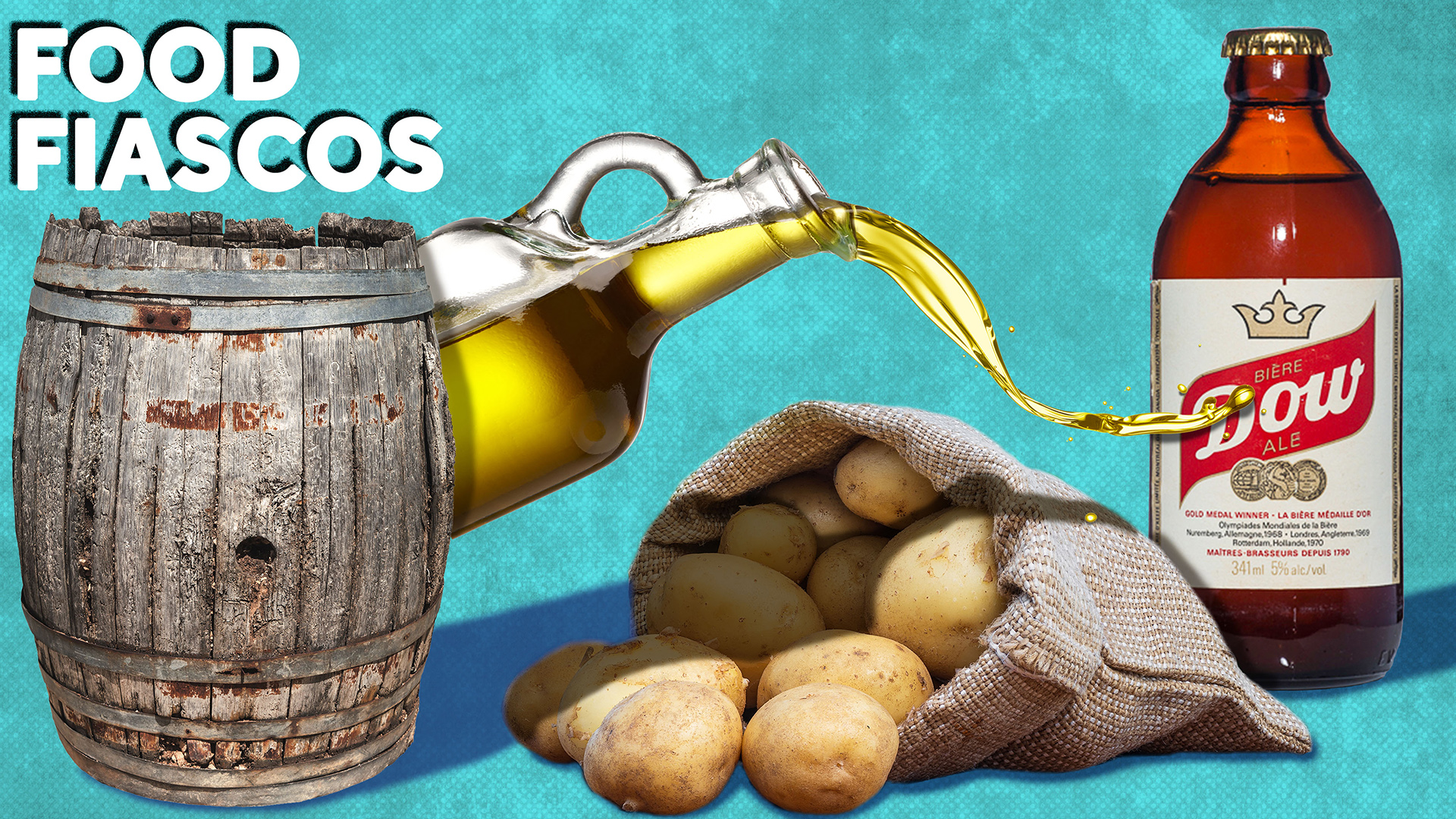
Weird History Food is going to show some really crazy Food-Related Catastrophes. Food and drink are meant to be enjoyed, right? Not always. Surprisingly, food has been the focal point of several catastrophes throughout history. Shortages, overabundance, and even tainted food preparation have caused calamity in ways we never thought imaginable.
Show More Show Less View Video Transcript
0:00
Food, glorious food, everybody chowing down on their favorite meal, unless it's trying to kill them
0:06
And that kind of thing happens a lot more than you might think. In fact, food has been behind a number of lethal disasters throughout history
0:14
So today, we're going to take a look at some food-related catastrophes in history
0:20
Turns out some kitchen nightmares are too serious even for Gordon Ramsay
0:30
We've probably all heard the phrase, as slow as molasses. So you might be surprised to learn that molasses can actually move fast enough to smother you
0:39
And that's not theoretical. Molasses has killed before and it will kill again
0:43
On January 15, 1919, a steel tank holding more than 2 million gallons of molasses broke open
0:50
sending a wave of the sticky sweet liquid through the streets of Boston's north end
0:54
It's fun to think of the streets of Boston overflowing with oatmeal glaze, turning the city into some kind of Willy Wonka-style wonderland with people sledding
1:02
down molasses hills and building molasses men with their families. But that's not how it went down
1:08
Initial reports from the Great Molasses Flood in Boston indicated 12 people perished
1:12
but the final toll grew to 21 total lives lost in the muck. How could there possibly be so many
1:18
Because the molasses moved so quickly that the people, who had been told their whole lives that
1:23
molasses was easy to outrun, were caught completely by surprise. Buildings crumbled
1:28
vehicles overturned, and humans and animals alike were trapped or simply asphyxiated by the substance
1:34
According to one source, rescue attempts were slower than molasses, hindered by cold temperatures
1:38
that gradually hardened the molasses until it was basically just gluing the rubble together
1:43
The owner of the tank that caused all the mayhem, U.S. Industrial Company
1:47
claimed the structure had been sabotaged. But since Batman villains hadn't been invented yet
1:52
nobody really believed that someone would intentionally flood the city with liquid sugar
1:57
Subsequent legal action against the company resulted in damage payouts in the millions
2:02
the equivalent of roughly $17 million in 2023. The disaster also prompted new safety regulations
2:08
in Massachusetts that influenced building standards around the country. Despite all that
2:14
molasses still can't shake its slow reputation. But it will make them pay. It will make them all pay
2:22
St. Anthony's Fire is a type of food poisoning that can lead to things like gangrene and convulsions
2:31
Not to be confused with St. Elmo's Fire, a 1985 Brat Pack film which may also cause gangrene and convulsions
2:40
Named for St. Anthony and the monks dedicated to him who treated people with the disease
2:44
St. Anthony's Fire results in skin inflammation and a burning sensation. The condition has long been associated with both erysipelas and ergotism
2:53
diseases with similar symptoms. During the Middle Ages, St. Anthony's Fire was likely caused by ergotism
2:59
which resulted from fungus found in rye and wheat. Observers noted the aforementioned gangrene and convulsions, as well as dancing epidemics
3:07
An epidemic of cut and rugs may sound like fun, but at the time it was associated with evil and supernatural danger probably by party poopers Ergotism has been posited as contributing to the symptoms that led to accusations of witchcraft during the 17th century and some scholars attribute the hallucinations
3:24
crawling skin, and muscle spasms experienced by the accused to eargot poisoning
3:29
So if you're a Hocus Pocus fan, you're got to thank bad wheat. Bless you
3:34
The Irish potato famine sounds like the stuffiest disaster of all time
3:44
like it wears glasses and reeds while the other disasters are playing basketball
3:48
But in actuality, it was an unspeakable tragedy that claimed a million lives
3:53
close to 25% of the Irish population. Uh, kind of feel bad about the basketball gag now
3:58
During the famine, also called the Great Hunger and the Blight, failed potato crops and unjust policies concerning the export of food to England
4:05
deprived hundreds of thousands of Irish residents of essential nourishment throughout the 1840s and
4:11
1850s. Extreme hunger, malnutrition, and disease devastated the population of Ireland while
4:16
prompting mass migration. One to two million Irishmen and Irishwomen packed up and relocated
4:22
particularly to the United States, where they founded Bennigans and the Boston Celtics
4:26
Researchers have since determined the blight was caused by phytothora infestans, a pathogen believed to have originated in South America
4:34
The trade policies that contributed to all the deaths, however, originated right there in the UK
4:44
Beer made by Dow was among the most popular kinds of beer in Canada during the 1960s, eh
4:50
But nothing lasts forever and the Quebec City-based brewery took a big hit to its reputation
4:54
after putting a bunch of beer drinkers on ice. We are referring to the tainted beer crisis of 1966
5:01
when nearly 20 customers of Dow beer experienced cardiomyopathy, a potentially lethal form of heart disease
5:08
Investigators would later determine that between 1965 and 1966, nearly 50 individuals, predominantly men considered heavy drinkers
5:16
developed the same condition. Dow looked into its product and was unable to identify any potential cause
5:22
although later research into Dow beer revealed that the syndrome appeared a month after the addition of cobalt sulfate
5:28
to stabilize the foam. Dow denied responsibility, but dumped a significant amount of their beer to be safe
5:35
Wasting any amount of beer is a tragedy, so this was a pretty convincing gesture
5:39
Even so, 16 people perished during the tainted beer crisis. The public relations nightmare couldn't be undone, and the company began to go flat
5:53
Floating through the streets of London along a river of beer sounds like a Willy Wonka dream for unemployed adults
5:59
But for the people of London in 1814, it was a Willy Wonka nightmare
6:04
You know, the one on the boat. It all started when a clerk at the Horseshoe Brewery in London
6:10
checked the vats on October 17, 1814 and found a broken ring
6:14
a simple piece of metal meant to reinforce the wooden structures. He made a note to have the ring fixed, and within the hour, the vat exploded
6:22
The flood of thick beer broke open a nearby cask that, in turn, pushed open additional barrels
6:28
A chain reaction began among all the vats at the brewery and ultimately a total of 323 gallons of beer flooded the surrounding area More than enough for Spuds McKenzie to serve Hundreds of thousands of gallons of beer overtook the streets of St Giles Rookery
6:44
in a poor part of London, where many of the residents lived in cellars
6:48
People scrambled to escape the sudsy tide, but many residents were trapped
6:53
Eight people perished, casually, accidentally, and by misfortune in what was later determined to be an act of God
6:59
God apparently being the name of that brewery clerk. The brewery only narrowly avoided financial collapse after the incident
7:05
and managed to stay open until 1921. The industry as a whole began to move away from the use of large wooden tanks
7:12
and started replacing them with concrete containers. It takes way more beer to bust those open
7:25
When you hear that olive oil sent 300 people to an early grave
7:29
you might instantly become concerned for Popeye. But we are actually referring to the Spanish olive oil disaster
7:35
which was triggered when some industrial denatured canola oil was illegally refined by a shady company and sold as olive oil
7:41
causing a wave of fatalities. The colza, also known as rapeseed oil
7:46
had been slated for industrial use, but was instead sold as olive oil
7:50
and then consumed by roughly 20,000 Spaniards during the early 1980s, including children
7:56
Approximately 300 people perished as a result, with about 1,000 others developing chronic health conditions
8:02
The mysterious disease, later called Toxic Oil Syndrome, caused widespread panic in Spain
8:07
Investigations into the cause of the illness, characterized by acute pneumonia-like symptoms
8:12
along with chronic weight loss and physical deformity, led to the arrests of several olive
8:16
oil merchants who knowingly used Colza oil in their product because it was cheaper
8:21
The fact that it was also an industrial-grade poison was just a pesky detail
8:28
In 1874, the Washburn A. Mill was built in Minneapolis, Minnesota. It was a new process mill that was said to be the largest, most complete, and modern mill in the country
8:41
The universe took that boast personally, because on May 2, 1878, the most complete and modern mill in the country was rocked by a series of explosions
8:50
that sent flames and debris soaring into the sky like a firework show
8:54
The blast was reportedly so powerful that it could be heard by residents of St. Paul, Minnesota, roughly 10 miles away
9:01
An eyewitness later described the scene saying, Each floor above the basement became brilliantly illuminated
9:07
the light appearing simultaneously at the windows as the stories ignited one above the other
9:12
That actually sounds kind of wicked. As if that wasn't cataclysmic enough, the witnesses reported that
9:18
The windows burst out, the walls cracked between the windows and fell, and the roof was projected into the air to great height, followed by a cloud of black smoke through
9:26
which brilliant flashes resembling lightning passed to and fro. It literally blew the roof
9:31
off the joint. The blast and accompanying flames eradicated all 14 men working at the mill
9:37
with another four perishing as the fire spread to nearby mills. As firefighters tried to put out
9:42
the flames, the structure was, according to newspaper descriptions, leveled to the ground
9:47
Despite suspicion about the cause of the fire an inquest determined it had been likely caused by millstones that sparked and ignited flour dust Did you know flour dust is combustible Because it super is When the mill expertly named owner Cadwallader Washburn rebuilt the factory in 1880 and 1881
10:06
it was even bigger and better than the original, but this time he included safety features to prevent another disaster
10:11
The Kentucky meat shower sounds like Colonel Sanders' terrifying final vision
10:21
but the real-life event isn't much further from what you're imagining. Reported as the carnal rain by the New York Herald in 1876
10:30
pieces of meat fell from the clouds and landed near Olympian Springs, Kentucky
10:34
on the farm of Alan Crouch. According to Crouch's wife, less than half a bushel of meat
10:39
which she neither inspected nor smelled, fell from the heavens above between 11 a.m. and 12 p.m. on March 3rd
10:47
It kind of sounds like Mrs. Crouch was mad there wasn't more meat. Theories about what kind of meat it was and where it came from varied widely
10:54
Two men, whom you can probably picture in your minds, volunteered to taste it
10:58
presumably on a dare, and decided that it was either lamb or deer
11:02
One onlooker thought it had fallen out of the basket of a ballooner overhead, while another suggested it had been thrown up by passing birds
11:09
In other words, they were just tossing out guesses. Whatever it was, a similar incident was reported in Europe sometime later
11:16
One scientist identified the so-called meat as nostoc, a type of cyanobacteria
11:22
Another concluded it was lung tissue from either a horse or a human infant
11:27
We're not sure which is right, and until someone figures it out, it's best not to taste any sky meat for yourself
11:39
The Irish love whiskey, except when it's burning the city to the ground
11:43
And even then, it could go either way. That is exactly what happened in 1875 when fire broke out in the Liberties area of central Dublin
11:52
Alcohol from some 5,000 barrels of whiskey burst open due to the heat
11:55
erupted into flames, and burned everything in its path as it spread. The fire is believed to have ignited in Lawrence Malone's bonded storehouse
12:03
on the corner of Artie Street sometime after 4.30 in the afternoon
12:07
but no one knows what started it. The blaze caused an immense amount of damage. Adjusted for inflation
12:13
the lost whiskey alone was worth 6 million pounds. Luckily, though, nobody perished
12:18
at least not as a result of the fire. Excited Dubliners ran out into the streets to partake
12:23
in the freely flowing booze, which led to more than a dozen deaths by alcohol poisoning
12:29
According to the Irish Times, Caps, Porringers, and other vessels were in great requisition to
12:34
scoop up the liquor as it flowed from the burning premises. And disgusting as it may seem
12:39
some fellows were observed to take off their boots and use them as drinking cups. I mean
12:44
they're already drinking street whiskey, the boot can't make that much of a difference
12:48
Summing up the human carnage, the paper reported that eight men were carried in a comatose state
12:53
to Meath Hospital, 12 to Jervis Street Hospital, 3 to Stevens Hospital, and one young man to Mercer's
12:59
hospital. And even these numbers do not represent the entirety of the persons disabled by the drink
13:05
In other words, the fire may have caused more property damage, but nothing is deadlier than hundreds of gallons of free hooch
#Food & Drink
#Food
#Accidents & Disasters