Up next in 10



Weird History Food is going to shock you with some news about the age of your favorite food brands. Some of the most common foods you see on grocery store shelves have been around for decades - if not centuries.
Show More Show Less View Video Transcript
0:00
You may assume that the brands you grew up with are fairly modern, but did you know that
0:04
some of the most common brands that you see on grocery store shelves have been around
0:08
for decades, sometimes even centuries? In some cases, your favorite foods are so old they actually witnessed major historical
0:15
events like an edible Forrest Gump. So, today we're going to take a look at some popular food brands that have been around
0:22
way longer than we thought. Okay, time to stock up the pantry with some weird history
0:34
Pretty much everyone knows the Keebler elves. They're the well-dressed little monsters who allegedly make every batch of Keebler cookies in their hollowed-out tree
0:42
Which is probably not true. If they really cooked those things in a tree, grasshopper cookies would have actual grasshoppers in them
0:49
Unless that's what they're trying to tell us. If you've ever wondered who the Keebler in Keebler Cookies is, the answer is Godfrey Keebler
0:56
who was not an elf and didn't live in a tree, as far as our research can tell
1:00
Keebler was a German immigrant who opened a bakery in Philadelphia, Pennsylvania, way back in 1853
1:06
He enlisted his sons into the business, and together they found success through regional distribution
1:11
eventually growing into a massive corporation. What this means is that Keebler's cookies and crackers were already being baked in the decade preceding Abraham Lincoln's presidency
1:20
perhaps even making their way to Washington, D.C. In other words, it's entirely possible Lincoln was eating Keebler cookies during the American Civil War
1:28
Well, part of it, anyway. He probably wasn't housing fudge stripes for the entire war
1:34
In fact, according to some sources, Keebler provided bread to the Union Army in the form of hardtack
1:39
Could it be because Lincoln had an affinity for their baked goods? Probably not, but it's our responsibility to blindly suggest that maybe he did
1:46
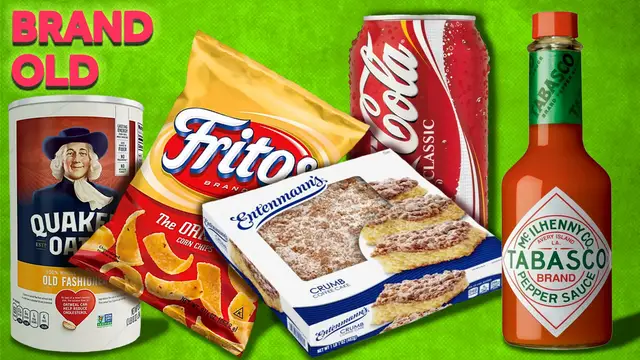
Everyone has at least one person in their circle who asks for a bottle of Tabasco sauce at every restaurant
1:55
and that person is usually their dad. It's arguably the most recognizable brand of hot sauce
2:00
so it may surprise you to learn that it's been heating up mealtimes for 150 years
2:05
Tabasco traces its origins to 1868, when Edmund McElhenney created what would become Tabasco Original Red Pepper Sauce from his home state of Louisiana
2:14
using the same recipe that remains popular today. Michel Henny came up with a hot sauce that would add a kick to bland southern food
2:20
incorporating seeds from the capsicum frutissans, which is a fancy name for a type of chili pepper
2:26
During the first year of production, Michel Henny sold just over 650 bottles of hot sauce
2:31
mostly to regional outlets along the Gulf Coast. Two years later, Michel Henny got a patent for his
2:36
sauce and expanded his product to markets across the United States and abroad. Customers were happy
2:41
to scoop up the spicy condiment because a lot of American cuisine in the 19th century tasted like
2:45
rocks if it wasn't literally rocks. Founded by Henry John Hines in 1869 near Pittsburgh
2:56
Pennsylvania, the Hines Company initially produced pickles, horseradish, and vinegars, which are foods most commonly used to punish children for swearing
3:05
Petty, but with just a touch of mellow smoothness. The company expanded into making catsup in 1876
3:12
a move achieved on the heels of Heinz filing for bankruptcy just one year earlier
3:17
Apparently, he realized he needed to expand to products that people actually enjoy
3:21
After the introduction of Sweet Pickles in 1876, Heinz branched out even further, offering his 57 varieties by 1896
3:29
Interestingly, when he picked the 57 varieties slogan, Heinz's company actually had more than 60 products on the market
3:36
So why 57? It was just a number Heinz believed was lucky. And maybe he was a big Ricky Jackson fan
3:41
The Heinz Company is so old, Henry John Heinz was laying the groundwork for a condiment empire
3:46
when carrier pigeons were still flying overhead, and we don't mean a type of drone. Using birds as
3:52
modes of communication traces back to the ancient world and, during the late 19th century when Heinz
3:56
started slinging ketchup and horseradish, it was still very much a thing. During the Franco-Prussian
4:01
War of 1870 pigeons were regularly dispatched in and out of Paris Carrier pigeons were again used during World War I when France had as many as 30 carrier pigeons at the ready Pigeons even found additional uses during World War II and were put into service by the French in Vietnam long after anyone was using them to transport delicious Heinz ketchup
4:25
Pillsbury is perhaps best known for the Pillsbury Doughboy, the adorable mascot that has been
4:30
perpetually harassed by giant fingers for our amusement. The Baked Goods Company has been
4:36
putting flaky rolls and toaster strudels into our bellies for decades. But its origins reach back
4:40
as far as 1869, when it first produced flour from its mill in Minneapolis, Minnesota. The company's
4:47
founder, Charles A. Pillsbury, acquired more mills during the early 1870s and soon grew to dominate
4:53
the flour market in the United States, in large part due to the incorporation of increasingly
4:57
efficient grain, elevator, and steamrolling technologies. You gotta get in on the ground
5:02
floor with that kind of stuff. Pillsbury is so old that it was taking off as a company around
5:06
the same time that legendary outlaw Jesse James was busily working on his legendary status
5:12
James fought with Confederate guerrilla troops during the American Civil War, staging his first bank holdup only one year after the conflict ended. With his brother Frank and a
5:20
member of the James Younger gang, James held up trains, stages, and banks from Minnesota through
5:25
Kentucky and into Mississippi. Like the Pillsbury Doughboy, Jesse James achieved folk hero status
5:30
during his life. But unlike the Doughboy, he was whacked by one of his associates in 1882
5:36
While there have been several attempts on the Doughboy's life, none have been successful
5:45
While the Del Monte brand is now associated with canned and packaged fruits and vegetables
5:50
and the part of your lunch that always got thrown away with the bag, the name was actually first used way back in 1886 to sell coffee. But it wasn't a mass market
5:58
product. Del Monte coffee was made by the Oakland Preserving Company in California for the Hotel
6:03
Del Monte in Monterey, which is where the name comes from. So how did it become the name of a
6:07
fruits and vegetables brand? It's kind of complicated, but basically, a group of food
6:12
producers in California combined to form the California Fruit Canners Association, or CFCA
6:17
in 1899, and they kept using the Del Monte name on their premier brands. Del Monte was applied to
6:22
products from the San Jose Fruit Packing Company and, after the California Packing Corporation
6:27
joined the CFCA, it was stamped on their products as well. It's essentially just a name that got
6:32
passed around, like the Dread Pirate Roberts. But at the same time California's food producers
6:36
were consolidating to meet consumer demand, drive down prices, and extend their influence
6:41
in the market, Native American groups in the United States were coming to the end of their
6:44
resistance to the federal government. And after a lifetime of clashes with Mexican and American
6:49
settlers alike, Apache leader Geronimo surrendered to the United States on September 4, 1886
6:55
The same year, branded coffee first appeared in the lobby of the Hotel Del Monte
7:03
There are few things more American than Coca-Cola, the staple drink of every great memory you have before the age of 18
7:10
and probably several not-so-great ones. We've been throwing back Cokes at movie theaters, sporting events, sleepovers
7:17
camping trips, school functions, and dinner tables for decades. But the soft drink, with its bright red can and stylized lettering, feels distinctly modern
7:24
Which is why it might surprise you to learn that Coca-Cola first tickled consumer soup coolers way back in May of 1886, roughly a century and a half ago
7:34
Coke was created by Atlanta-area pharmacist Dr. John Pemberton as a hopeful replacement for the crippling morphine addiction he'd gained during the Civil War
7:42
He would not be the last person to use sugary drinks as an addiction replacement
7:47
Pemberton patented his Coca-Cola syrup and extract the following year. In 1892, the businessman Asa Candler completed his purchase of the Coca-Cola Company and
7:56
incorporated it in the state of Georgia. Coca-Cola expanded widely under Candler's leadership
8:01
As syrup plants emerged nationwide, the distinct Coca-Cola flavor, script, and packaging proliferated
8:07
around the United States. By the early 20th century, Coca-Cola had become an iconic part
8:11
of Americana, with advertisements for the drink even greeting newly-arrived immigrants from around
8:16
the world. Heck Coca ads are partially responsible for the modern depiction of Santa Claus the avatar of gift receipts American children pray to every year In fact Coca is so old and so entwined in American culture that the incorporation
8:29
of Coca-Cola in 1892 coincided with the opening of Ellis Island. Located in the upper New York
8:35
Bay, Ellis Island became a central immigration processing center in the United States
8:39
In contrast to state-run immigration centers, Ellis Island was run by the federal government
8:44
in order to centralize, streamline, and scrutinize individuals entering the country. Between 1892 and 1954, Ellis Island produced more than 12 million immigrants
8:55
Upon arrival, immigrants underwent medical examinations and legal inspections before being sent forth into the United States, presumably to buy things like Coca-Cola
9:08
Intimates have been filling impulse buy racks with their baked goods for decades
9:12
Their sweet treats can be found in grocery stores across the country, and while they may not overtake Chips Ahoy or Oreos as most people's first choice
9:19
you're never sad to see that blue and white box at a morning meeting. Founded in Brooklyn, New York, the same place that brought you J.C. and Mr. Potato Head
9:27
the first Entenmann's Bakery was opened by William Entenmann in 1898. As a German immigrant who was pretty much born into baking, sort of like a German fairy tale
9:35
Entenmann learned the craft from his father before working in a bread factory in the United States
9:39
Once he had his own shop, Entenmann baked cakes, breads, and rolls, taking them to sell
9:44
via horse-drawn wagon. Okay, so it was exactly like a German fairy tale
9:48
William Entenmann Jr. later took over for his father, helping the company thrive throughout
9:52
the early 20th century. The bakery became so popular that one of William Jr.'s best customers was Frank Sinatra
9:59
We would give any amount of money to watch old Blue Eyes demolish a crumb cake
10:03
Over time, Entenmann stopped making bread to focus on pastries instead. While Entenmann was bringing baked goods to doorsteps in Brooklyn, the United States was
10:10
in a conflict with Spain and declared war on April 25, 1898. After the formal declaration of war
10:16
the United States undertook a three-month campaign in Latin America and the Pacific
10:21
In the Caribbean, military troops and volunteers, including Theodore Roosevelt and the Rough Riders
10:26
pushed the Spanish fleet out of Santiago Harbor, ultimately sending Admiral Pasquale Cervera and
10:31
his ships into the hands of the United States Navy. Teddy looks like a man who could do some
10:35
serious damage to a box of Entemans, so we can only assume that his Rough Riders charge
10:40
was at least partially fueled by delicious baked goods. The conflict ended with the Treaty of
10:44
Paris signed in December 1898, but Entemans is still around. While it's tough to get excited about a can of plain Quaker oats, there isn't a kid on this
10:58
planet who wouldn't fistfight you over a package of peaches and cream Quaker instant oatmeal
11:03
And while you're probably all out of surprise by this point of the video, you might still
11:07
raise an eyebrow after hearing that Quaker Oats is well over 100 years old
11:12
On second thought, maybe you won't. That logo looks pretty dusty. With roots that extend back into the mid-19th century, Quaker Oats became the first trademark
11:20
breakfast cereal in 1877. In 1881, the owners, Henry Seymour and William Heston, sold their Quaker Mill Farm in Ohio
11:29
as well as their cereal to Henry Parsons Crowell. then united with fellow oat millers to create the American Cereal Company in 1888, and it was that
11:37
entity that changed its name to the Quaker Oats Company in 1901. By 1901, Quaker was producing
11:43
more than just oat cereal, having branched out to many more products including wheat, cornmeal
11:47
and baby food. Wait, isn't all oatmeal baby food? You don't exactly need teeth to slurp up some
11:53
Quaker. They'd also revolutionized marketing, sending out sample-sized boxes of Quaker oats
11:57
and printing recipes on their products, which was such a good idea that pretty much every food
12:02
product continues to copy it to this day. And as the Quaker Oats Company added wares to store
12:06
shelves, two famous crooks were breaking the law in the American West and setting up Paul Newman and
12:11
Robert Redford for the roles of a lifetime. Butch Cassidy's real name was Robert Leroy Parker
12:17
and he was the leader of a gang of outlaws called the Wild Bunch, a nickname they've presumably
12:21
earned for their irreverent style at the roller rink. The Sundance Kid was born Harry Alonzo
12:26
Longabout and he met Butch at some point during the mid Collectively the Wild Bunch held up banks and trains from Idaho to Wyoming to New Mexico wrecking such havoc that the federal government sent the Pinkerton Detective Agency to apprehend them The group held up its last express car on July 3 1901 boarding the Great Northern Railroad in Montana the same year
12:47
Quaker began sowing its oats, so to speak. Nothing is more modern than Kraft macaroni and cheese
12:57
specifically Kraft Easy Mac, a meal-sized cup of instant microwave delight specially designed for
13:03
the on-the-go teen of the future. But Kraft Foods began as a small dairy business back in 1903
13:09
Canadian James L. Kraft and his brother Charles delivered cheese to local retailers
13:13
incorporating their enterprise in 1909. Because who doesn't want to get into the cheese business
13:18
with their brother? Along with their two other brothers, they honed a cheese process that
13:22
prevented spoilage and turned out to be ideal for serving military troops during World War I
13:27
That genius process also allowed for their cheese products to camp out on store shelves for extended periods of time without going bad
13:34
During the 1920s and 1930s, Kraft developed additional products, including Velveeta, Miracle Whip, Parquet Margarine, and its near-mythical macaroni and cheese
13:43
But while Kraft was busy cornering the processed cheese industry, the United States was focused on its efforts to link the Pacific and Atlantic Oceans by building the Panama C across the Isthmus of Panama
13:53
which is sort of like linking macaroni with cheese, if you think about it
14:02
Despite their legendary blandness, cornflakes have maintained a constant presence on store shelves
14:07
and they're not as bad when you add sugar. Dr. Kellogg first served his cornflakes at a sanitarium in Battle Creek, Michigan
14:15
which, uh, makes a lot of sense. The exact original recipe for cornflakes is unclear
14:20
with various sources asserting that they were made out of flour, oats, and cornmeal as early as 1877
14:26
Every box of cornflakes we've ever opened has tasted roughly that old
14:30
In other tellings, however, cornflakes were first made by chance in 1898
14:34
when fermented wheat dough was rolled out and baked to prevent it from going to waste
14:39
Still, another story indicates they resulted from an unsuccessful batch of granola
14:43
That's history for you. But regardless of when cornflakes were made, Kellogg's brother Will eventually developed a recipe that became the core product of the Battle Creek Toasted Corn Flake Company in 1906
14:55
Within a few years, Kellogg's cornflakes were being produced in large numbers and bran flakes followed suit in 1915
15:02
Wow, corn and bran? What's their next flavor? Pine cones? Cornflakes are so old that they were being mass-produced right alongside the Ford Model T
15:11
which makes sense because each box feels vaguely like an antique. Known for their unique curly shape, Frito corn chips are a snack time treat for anyone
15:23
looking to eat as much salt as possible without cutting into their daily allotment of processed
15:27
corn. The popular chip comes in a number of different flavors and has been haunting convenience
15:32
store aisles since we were old enough to go on road trips. But believe it or not, the
15:36
humble Frito is actually older than the American interstate highway system. Charles Elmer Doolin
15:41
began producing corn chips in San Antonio, Texas in 1932, using factory methods comparable to those
15:47
practiced by automobile manufacturers. He didn't know it at the time, but he was about to open up
15:52
a market that would soon have nationwide appeal. Doolin first sold Fritos out of his car, which
15:57
might be the most appropriate place Fritos have ever been distributed. Doolin's success caught
16:01
the attention of potato chip manufacturer Henry Lay during the mid-1940s. Lay's company, which
16:07
sold popcorn, potato chips, and other snack foods, had begun to dominate the snack market in the
16:11
southeastern United States during the 1940s. He added Frito corn chips to that list in 1945
16:17
after entering into a cooperative business agreement with Doolin. Doolin and Lay's
16:21
companies merged to become Frito-Lay in 1961, nearly three decades after Amelia Earhart became
16:27
the first female aviator to make a solo flight across the Atlantic Ocean. And in 1932, the year
16:33
Fritos were first produced, Earhart piloted her transatlantic solo flight from Newfoundland to
16:37
Ireland amid poor weather and mechanical difficulties to earn international acclaim, possibly while eating Fritos she'd bought from Charles Elmer Doolin's car
#Food
#Condiments & Dressings