Up next in 10



The ancient hobbies of years gone by are fascinating and fraught with interesting facts that many of us might not know today. People of the past didn’t have the modern luxuries most of the developed world has now, so for entertainment, a fair amount of imagination had to be invoked. Bizarre and outrageous hobbies arose during the time of ancient Egypt, the Middle Ages, 19th-century Victorian England, and even during the 1950s in America.
Show More Show Less View Video Transcript
0:00
When you're bored, you have the luxury of playing video games, downloading a book
0:05
or pulling up a YouTube video about how strange history can be
0:09
You should probably do more of that last one. But back in the day, folks had to get creative when looking for ways to pass time
0:16
And I mean, alarmingly creative. Today, we're going to tell you about some extreme hobbies from the past that sound made up
0:25
but totally aren't. Okay, get ready to dust off that pog collection, because it's time for some weird history
0:37
Humanity's obsession with the macabre did not begin with 80s slasher films or classic Hollywood
0:43
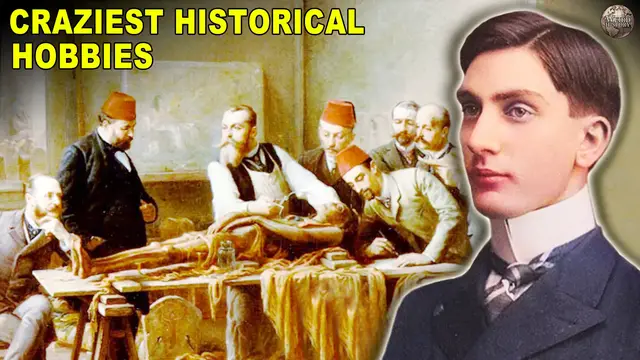
monster pictures. It turns out people have always enjoyed gruesome get-togethers, and few are more ghoulish than mummy unwrapping parties. While the word mummy is classically
0:54
associated with ancient Egypt, we're actually looking quite a bit further ahead on the calendar
0:59
to 19th century Victorian England, where the richest, most influential weirdos would buy up
1:05
all the mummies they could get their hands on. Important members of high society would be invited
1:09
to view these cadavers, ironically, in the middle of the living room, being unwrapped and often
1:15
degraded in front of a light audience, like a burlesque show for dusty skeletons. You had to
1:21
possess a bit of showmanship to host one of these eloquently eerie soirees, like famous surgeon
1:27
Thomas Pettigrew, who was renowned for being one of the best mummy undressers in the business
1:32
that is, before criticism caused the parties to fall out of fashion. Normally, the morgue is reserved for people with temperatures well below 98.6 degrees
1:44
but 19th century Paris was able to turn, hey kid, you want to see a dead body
1:51
into a booming business model. In 1886, a newspaper article reported on a four-year-old girl who died from only a bruise on her hand
2:01
Morbidly curious members of the public flocked to the morgue to get a look at the poor deceased soul on display
2:06
That frenzy is believed to have shifted the morgue business from a way to identify the remains of loved ones
2:12
into an exciting pastime for French citizens and British visitors alike. By the end of the 19th century, the morgue
2:19
was considered a must-see destination in France. Bodies were displayed in morgue windows for all to see
2:26
sometimes for several days at a time. Obviously, this practice has since fallen out of fashion
2:32
but it paved the way for modern-day mannequins. Just kidding, or am I
2:41
These days, a Civil War picnic is where you and the rest of your fifth-grade history class go to watch a bunch of part-time actors
2:48
pretend to shoot each other in period-accurate clothing. But back during the Battle of Bull Run
2:53
the first land battle of the American Civil War, many were able to witness the real thing
2:58
while enjoying a light snack Many people went out and set up picnics near the battlefield to witness the combat firsthand convinced that the Union forces would rapidly claim victory
3:09
Nobody quite knows why anyone thought it would be a good idea to enjoy a basket of finger food while their friends and neighbors
3:16
shot cannons at each other. But suffice it to say, their decision
3:19
to treat the conflict like a croquet match was swiftly regretted once the actual fighting got underway
3:25
Reports of spectators rushing to escape have been described as utter chaos
3:30
Roads were clogged with broken down carriages trying to get away from the action in what became known as the Great Skedaddle
3:39
Before the NFL, the Super Bowl, and Tom Brady's televised divorce, there was mob football
3:46
Most of modern football was derived from this early version of the sport, originally created in the 12th century
3:52
Much like today, the game was played with a pigskin ball, which would be fought over
3:56
by two opposing teams trying to score a goal. Unlike today's game, however
4:01
you had to score three times before receiving one point. Jeez, their injury reports must have been a horror show
4:08
Other than that, there was pretty much only one rule. No murdering
4:13
It was a brutal game, less a sport than a segment on Jackass
4:17
But its popularity can't be denied, as it stands the test of time over 900 years later
4:24
Yep, that's right. The original version of Mobball is still played in the UK
4:28
with two-day-long matches held every year on Shrove Tuesday and Ash Wednesday for thousands of fans
4:38
Around the 17th century, the hottest accessory wasn't jewelry or fancy clothes
4:43
It was a literal flaming barrel of tar you would carry down the street. Huh, wonder if you can wear one on a chain, like Flava Flav
4:50
The bizarre tradition dates back centuries in England's Ottery St. Mary, where the custom of carrying flaming barrels of tar down the road
4:58
has been time-honored since 1605, just after Guy Fawkes' infamous gunpowder plot. The tar barrels
5:04
are meant to symbolize the 36 barrels of gunpowder used by Fawkes in his attempt to blast Parliament
5:10
sky-high, like a gender-reveal party. Originally, the barrels were rolled down the street. Today
5:16
the barrels are carried down the streets on the backs of giddy participants. The first Cotswold Olympic shin-kicking event was held in 1612 near Chipping Campden
5:29
For many in the English countryside, the hobby is still going strong over 400 years later
5:35
The game is an offshoot of what is called Cotswold Wrestling, with the aim being to trip an opponent by hooking their legs
5:42
It has since evolved to include players kicking shins, hitting, and tussling until the opponent is down on the ground
5:49
Basically, it's the pastime of little brothers and retired shuffleboard players drunk on
5:54
Irish coffee. Famed lawyer Robert Dover is believed to be the father of Olympic shin kicking
6:00
The event went on for nearly 200 years straight before being suspended in 1642 during the English Civil War But shin kicking was revised in 1965 and has gained amazing traction ever since
6:14
with thousands of participants joining in year after year. Back in 1951, the detonation of an atomic warhead
6:25
above the Nevada deserts gave birth to a fad known as atomic tourism
6:30
Like today, Las Vegas was no stranger to capitalizing on profit when opportunity arose
6:36
So the powers that be wasted no time on branding Vegas as the country's atomic tourist capital
6:42
Throughout the Strip in the 1950s, you could find showgirls wearing mushroom cloud-inspired clothing
6:47
atomic cocktails being served at the bars, and even areas where one could go watch a live detonation
6:53
for themselves from a relatively safe distance. Sort of like a Disney character breakfast
6:58
with the most terrifying weapon ever constructed. Fans swept up in the hype would frequent Vegas in the 50s to view the atomic clouds
7:07
buy collectible postcards or calendars, and breathe in a crisp lungful of fallout
7:13
Eventually, the limited test ban was put into place in 1963, which prohibited above-ground
7:18
nuclear testing. The fad may have been brief, but the memories and radiation poisoning will last a lifetime
7:25
During the Industrial Revolution, the emerging middle class in Victorian England found themselves
7:35
with expendable income and nary a Beanie Baby or Funko Pop figure in sight to spend it on
7:41
In their absence, Staffordshire factory's colorful figurines became the must-have collectibles of the day. Featuring likenesses of mermaids, pirates, and even a depiction of
7:51
a jealous wife, these porcelain statuettes were highly sought after by collectors. But by far
7:56
the hottest statues to put on your shelf were those of infamous murderers. Notorious slashers
8:02
at the time were forever immortalized as six-inch ceramic figurines, sort of like an edgelord
8:08
precious moments collection. And because Victorian England already had quite an obsession with the
8:13
macabre, the statues sold like hotcakes. You could collect them all, including grisly figures
8:18
like the deranged farmhand James Bloomfield Rush or William Corder, who perpetrated the
8:24
Red Barn murder. People still buy up Staffordshire ceramics to this very day
8:33
Another way Victorian England indulged its obsession with macabre was the headless photograph
8:39
fad, which is exactly what it sounds like. Likely concocted by pioneering photographer
8:44
Oscar Gustavo Reylander in 1856, headless photography was one of the early forms of
8:51
photographic manipulation. The method involved working with the original negatives as well as
8:55
cutting and pasting. With actual scissors and paste, not just hitting control C. The main
9:02
challenge was to make the separate images appear as though one photo was taken. The other challenges
9:07
involved explaining why you had a photo of a headless person Experimental photographers were able to use various methods to create legitimate decapitations all in the name of morbid fun
9:19
Novelty photographs such as these were commissioned during the 19th century and required superior photography
9:25
skills in order to pull off. These were the pioneer days before Adobe Photoshop
9:30
when skilled artists would have to complete their work in actual photoshops
9:38
The ancient Egyptians held many animals in high regard, but none more so than those in
9:43
the cat family. Egyptian royalty had large cats, such as lions and cheetahs, which they used in their hunting
9:49
parties or simply kept as exotic pets. There wasn't a Department of Fish and Wildlife back then
9:55
Anyone was able to keep a menagerie of exotic pets like a Miami Coke Baron
9:59
The favorite was the cheetah, which held a special reverence to Egypt's people
10:04
You could find cheetahs in many influential households throughout the region. It was a popular pastime to house train cheetahs, since they could be used to hunt mice and snakes
10:13
as well as big game. You know, big game, like that neighbor who likes to work on his Trans Am at 3 in the morning
10:19
Cheetahs were so revered that you could often find them buried alongside their owner
10:23
which really isn't too different from modern cat owners, is it? Sir James Carey may have proven that making goofy faces can be a lucrative career
10:37
But did you know it's also a competitive sport? Originating in 1267 at the Egremet Crab Fair in the UK
10:45
gurning, or contorting one's face, was created to celebrate the beginning of the crab apple harvest season
10:52
Participants would push their faces through a horse collar while trying to gurn the best face
10:57
Or the worst face. We're still a bit iffy on the wording. They called it gurning through a braffin
11:03
Hmm, sounds like a sting lyric. The contests are still held today in the UK during mid-September
11:09
when the world's best gurners travel to the small town to see who can turn the best gurn
11:18
When a sport gets boring, drop it in the water. As the old saying goes
11:23
that was the hope the creators of water jousting had when they took traditional jousting and moved
11:28
the whole operation to the river. It is believed that water jousting dates as far back as ancient
11:33
Egypt and was popularized in France around 570 BC as a source of entertainment for French royalty
11:39
The idea is similar to normal jousting, except it is played while standing in a boat on a river
11:43
instead of riding a horse. Oarsmen would row toward the opponent while the jouster tried to
11:48
knock them into the water. An oarsman? No motorboats or airboats. Are we sure it's not
11:55
supposed to be less boring? Predominant matches were held along the Seine River in Lyon, where
12:00
it is rumored that Queen Elizabeth I even watched one of the tournaments. The hobby is still
12:05
practiced today in France and remains quite popular. You can visit the country in August
12:09
during the Saint Louis Festival to watch teams joust each other to the soundtrack of medieval
12:14
songs, just as their ancestors intended