Up next in 10



We learned a lot this year - new information, reminders of things we uncovered long ago, and tidbits that confirm what we already know. And much of it had to do with medieval history. In 2022, we discovered things about the Middle Ages that blew our minds. Deaths, dragons, and massive Mongol broods are among our favorites, but they're only the beginning.
Show More Show Less View Video Transcript
0:00
When most people think of the Middle Ages
0:02
they think of things like Charlemagne, the Crusades, and little villages teeming with plague-infested rats
0:08
However, a lot of other things happened in the Middle Ages that aren't as famous but are just as interesting
0:14
And thankfully, none of them involved rats. So today, we're going to take a look at some crazy facts
0:20
we just learned about the Middle Ages. All right, Malcolm, let's get you in the middle
0:24
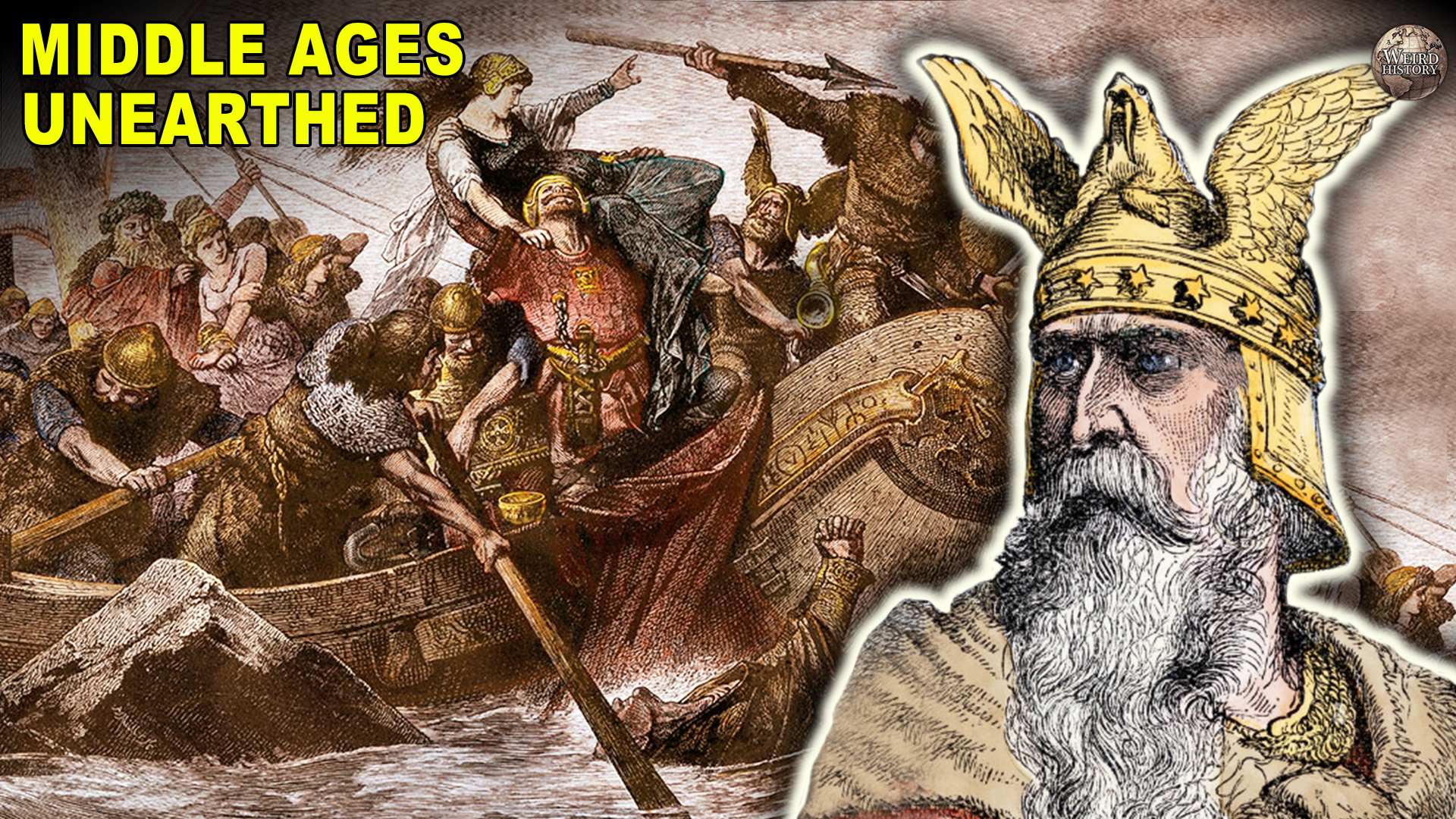
Olaf Tryggvason, also known as King Olaf I of Norway, was influential in the spread of
0:33
Christianity in his country, and you would have hated for him to come door to door
0:37
His dedication to the faith exhibited itself when Norse seafarer Hraud the Strong refused
0:43
to have his ship blessed by a bishop. Olaf and his men apprehended Hraud, beat and eliminated
0:49
members of his crew and then offered Hrao baptism. Hrao made a scoff of God, which we take to mean he
0:55
declined the offer, so Olaf had him placed in the Middle Ages equivalent of a trap from a Saw movie
1:01
Olaf had Hrao bound to a board face up with his mouth forced open. Then, as was recorded
1:07
the king put his horn into his mouth and forced a serpent to go in by holding a red hot iron before
1:13
the opening. So the serpent crept into the mouth of Hrao and down his throat and gnawed its way out
1:18
of his side. And thus, Klau perished. Ouch. Game over. If you've never heard of the Drevlians
1:28
they were a neighboring tribe to the kingdom of the Kievan Rus. If you've never heard of the kingdom of Kievan Rus
1:34
it was a political force in Eastern and Northern Europe from the late 9th to the mid-13th century
1:39
And if you've never heard of Europe, um, maybe start with a different video
1:44
When the Drevlians killed King Igor I of Kiev in the year 945
1:48
Igor's wife Olga became the regent for their young son, and she understandably wanted revenge
1:54
So when the Drevlians sent messengers to invite her to marry their prince
1:58
she asked them to come back the next day for her reply. When they returned, she had her guards capture
2:04
the messengers and bury them alive. So is that a yes? Olga then sent her own emissaries
2:10
to the Drevlians with a message that they should send their distinguished men to negotiate with her
2:15
And since they were a little slow on the uptake, they did. Those distinguished individuals were taken into a bathhouse
2:21
and burned alive. It's like that classic saying, fool me once, shame on you
2:26
Fool me twice, burn me in a bathhouse. In another round of messaging, Olga reportedly
2:31
told the Drevlians I am now coming to you So prepare great quantities of mead in the city where you killed my husband that I may weep over his grave and hold a funeral feast for him Look we don want to say the Drevlians were naive
2:46
But once again, they did as Olga instructed. After the feast, her men dispatched as many as 5,000
2:52
drunk Drevlians, in a betrayal that was pretty betraying. After that, tricking the Drevlians started to feel too easy
2:59
So she returned to Kiev to gather forces just to wipe out the whole tribe once and for all
3:04
After a year of besieging their city, she asked the Drevlians, why do you persist in holding out
3:10
All your cities have surrendered to me and submitted tribute, but you had rather die of hunger without submitting to leave
3:16
So finally, they all agreed to make peace. And as part of that arrangement, Olga demanded each house give her three pigeons
3:23
and three sparrows as a form of tribute. And the poor Drevlians just nodded and went along with it one last time
3:30
Olga being Olga, she took the birds back to Kiev, attached a piece of sulfur bound with small pieces of cloth
3:36
and sent them back to the Drevlians with their flammable cargo. When they landed, they set the entire settlement on fire
3:42
As the Drevlians fled, Olga's men caught or eliminated every one they encountered
3:47
Her revenge was complete, and the Drevlians were no more. When Olaf R. Hallason and Turgiel Höger
3:56
arrived in England in the year 1009, they brought with them more than their awesome names
4:01
namely Vikings, lots of them, more than ever before, according to the Anglo-Saxon Chronicle
4:07
And in the years that follow, Torgel, Olaf, and their fellow Viking raiders ravaged the English
4:12
landscape until King Athelred the Unready offered tribute in exchange for peace. Oh, I guess that's
4:18
why they call him the Unready. Torgel and Olaf accepted, but then attacked Canterbury and received
4:24
even more money from Athelred. At that point, many of the Vikings left England, though Torgel
4:29
remained and befriended the king. Once Athelred and Torghiel were allied, Torghiel actually fought
4:35
for the English when Sven Forkbeard, a name that's simultaneously both awesome and not awesome
4:41
went after England in 1013. It was purportedly during Sven's London onslaught that Olaf led the
4:47
effort to tear down London Bridge on Athelred's behalf, alongside Torghiel and other Vikings
4:52
But some historians doubt the destruction of London Bridge ever took place, largely because
4:57
there's not a word about it in the aforementioned Anglo-Saxon Chronicle. And even if something like that did happen
5:03
the exact bridge in question is unclear, because many different bridges have
5:06
been referred to as London Bridge over the centuries, sort of like the Gallagher of bridges
5:11
The 11th century Norse poet Ohtar Svarta however included these lines in one of his works London Bridge is broken down Gold is won in bright renown Shields resounding Warhorns sounding
5:25
Hilda shouting in the den. Arrows singing. Mailcoats ringing. Oathen makes our Olaf win
5:32
While it doesn't prove the story is true, some historians and folklorists believe this poetic tribute
5:38
to the legendary battle is the foundation for the popular nursery rhyme, London Bridge is falling down
5:43
And from this legendary tale of Viking destruction, we got an absolute banger by Fergie
5:49
Ain't history grand? Basil II was a Byzantine emperor for nearly five decades
5:56
and he was nicknamed the Bulgar Slayer, which should give you an idea of what his interests were
6:02
As a skilled horseman and adept general, he led his forces into battle, quashed rebellions
6:08
and fought against his Muslim neighbors. But like that ambiguous nickname suggested
6:12
it was the Bulgars who really brought out his wrath. After a Bulgarian army defeated Basil at Trajan's Gate in 986
6:19
he was determined to exact revenge. Tsar Samuel of Bulgaria tried to stop Byzantine incursions into his territory
6:26
by blocking the Kleidion Pass, and repeated attempts to break through failed until Basil's general
6:32
Nikiforos Fokas, circled from behind and trapped the Bulgarian forces. Thousands of Bulgarians perished at the Battle of Kleidion on July 29, 1014
6:42
as Basil attacked from the front, and Nikiforos hit him from the back in an epic Bash Brothers
6:47
routine. Basil took some 15,000 prisoners that day. And as the story goes, he ordered that 99
6:53
out of every 100 captives be blinded, like with a knife. The rest of the prisoners weren't
6:58
completely spared, though. They still lost one eye, but were left with the other so they could
7:03
lead fellow troops back to Tsar Samuel. When Samuel saw his disfigured soldiers, he was
7:08
allegedly so horrified that he immediately went blind himself and collapsed. As if that wasn't enough, he succumbed
7:14
to a heart attack a few months later. One of the major figures in the 13th century Icelandic myth
7:21
known as the Njáls saga is Gunnar Hammondarsson, a 10th century chieftain who was such a talented warrior
7:28
that he was considered invincible. This is a helpful trait for a warrior chieftain
7:33
His skill as an archer, stone thrower, and wielder of the polearm were apparently only outdone
7:39
by his good looks. However, he also had a penchant for hitting his wife
7:43
and that misdeed would come back to bite him. One day, as his enemies attacked his house
7:48
he fired arrow after arrow to hold them off. When his bowstring broke, he said to his wife
7:53
give me two locks of thy hair and ye two my mother and thou twist them together in a bowstring for me In modern English that translates to hey babe could you and mom make me a wife hair bowstring real quick
8:05
When his wife asked why she would do what he asked, Gunnar told her his life depended on it
8:10
His wife took the opportunity to respond, well, now I will call to thy mind that slap in the face
8:16
which thou gavest me, and I care never a whit whether thou holdest out a long while or a short
8:22
or in modern English, kick rocks. She never gave Gunnar the hair bowstring
8:27
and he was struck down soon after. In the 1260s, Persian historian Juveni noted
8:34
of the issues of race and lineage of Genghis Khan, there are now living in the comfort of wealth and affluence
8:39
more than 20,000. That's a lot of birthday cards to keep track of
8:43
Sensing that people were going to think he was full of it, Juveni added, more than this I will not say
8:48
lest the reader should accuse the writer of exaggeration and ask how from the loins of one man there could spring in so short a time, so great a progeny
8:57
In other words, the scholar knew his readers wouldn't believe him. Furthermore, how do you
9:01
know how many living descendants Genghis Khan has is an excellent question for a 13th century
9:06
historian. They didn't exactly have 23andMe back then. What Gioveni couldn't know was that in 2003
9:12
scientists would find evidence that he wasn't exaggerating at all. That year, researchers
9:16
announced their findings from a study on blood collected from populations throughout the former
9:21
Mongol umpire. Evolutionary biologists yzed blood from 16 different populations and found
9:26
unusual features in the Y-chromosomal lineage. They concluded that approximately 8% of the men
9:33
in the region carry it and it thus makes up about 0.5% of the world total. The pattern of variation
9:38
within the lineage suggested that it originated in Mongolia approximately 1,000 years ago
9:44
The implication was that this lineage is the male-line descendant of Genghis Khan
9:48
And the reason it's so widespread is due to all of his, shall we say, conquests
9:53
Based on the global male population in 2003, about 16 million men were estimated to have
9:59
DNA tracing back to Genghis Khan. Maury Povich must have been strutting down the street for weeks
10:04
Other researchers have urged caution regarding these results, noting that claims of connection
10:09
are merely speculative. If true, though, Genghis Khan and his successors likely had the same number of female progeny
10:15
as they did male. So their genetic legacy might have an even further reach than what the science indicated
10:20
in 2003. Because women do not carry Y chromosomes, however, it's difficult to determine any
10:26
potential connection. That said, women can trace their descent from Genghis Khan through their male relatives
10:31
The bottom line? No matter how you slice it, there are probably a lot of Khans running around out there
10:37
Let's hope they're not full of wrath