Up next in 10



Rich families of the Gilded Age lived lives nearly unimaginable today. How so? One need only look around one's hometown and see where the enormous, glorious mansions of the late 19th century have either been turned into private or public museums – or are peeling and rotting away – to get a glimpse. In most cases, it is simply too costly to maintain them as private residences anymore. So, imagine just how incredibly rich the handful of mid- to late 19th-century families had to be to keep up such lavish appearances. The Gilded Age wealth disparity was so extreme that people today often compare them to what modern society terms the "one-percent" class.
Show More Show Less View Video Transcript
0:00
Wealthy families of the Gilded Age lived lives of nearly unimaginable indulgence
0:06
From designer clothing and jewels, to mind-boggling elaborate meals, to sprawling homes that would rival Neverland Ranch
0:13
If you were among the elite, you didn't do anything halfway. So, today we're going to take a look at the most unbelievable excesses by rich people during the Gilded Age
0:23
Okay, time to kick back for an episode of 19th Century Cribs
0:30
The rich of the Gilded Age literally had more money than they knew what to do with
0:37
So they were always looking for new and interesting ways to spend it. Because giving to the needy was out of the question
0:44
Ostentatious costume balls and themed parties became popular as a way to make a show spending huge amounts of cash
0:50
on items that would be used for just one occasion before being tossed out or closeted away
0:55
Picture one of those mutants from my super sweet 16 throwing themselves a party every month
1:00
and you get the idea. One of the most famous events was held on March 26, 1883. It was an
1:06
extremely elaborate costume ball to mark the housewarming of Cornelius and Oliva Vanderbilt's
1:11
New York townhouse, which was being built in the design of a French chateau. There was a bit of a
1:16
problem, though. The Vanderbilts were new money and not established in New York society. This was
1:22
a humiliation, especially to Alva. So she planned the party to end all parties
1:28
and even invited the media in to tour the new house and view the fancy party decor
1:33
Most of us only see reporters at a housewarming when they follow the police there. The costumes were all custom-made and imported from Europe
1:39
depicting real and mythological figures from throughout European history, like Henry V and, I don't know
1:45
Hagrid, probably. The house was decorated in silver and gold finery, and the floor was transformed into a tropical garden
1:51
Not too shabby. While most people struggled to make ends meet, the only concern faced by the Gilded Age elite
2:02
was competing over who had the biggest, the most, and the best of everything
2:07
Arguably, the fiercest competition was over who had the most lavish home
2:11
The competition was so fierce that home construction of the super-rich was covered in the local
2:15
newspapers on a daily basis, like a precursor to Lifestyles of the Rich and Famous and modern
2:21
news gossip. Newport, Rhode Island was prime real estate for the 19th century one percenters
2:26
and they worked hard to outdo each other. For example, when Cornelius Vanderbilt constructed
2:31
his famous home, the Breakers, it was an attempt to one up his brother, William K
2:35
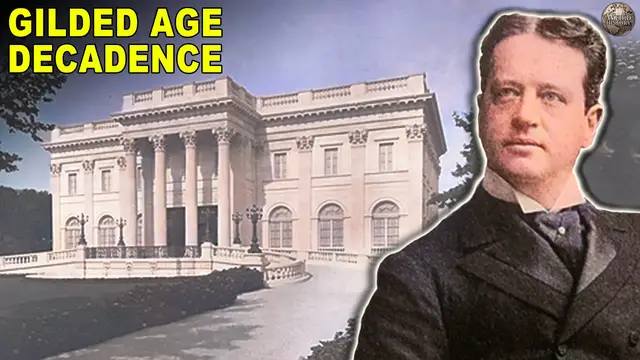
Vanderbilt specifically William latest home Marble House Kind of sounds like a pancake joint I eat there You want to go to Marble House Yeah Williams specifically designed Marble House to outstaff outdress and outparty his older brother
2:49
and other Gilded Age clout chasers. The Newport Mercury reported that Marble House contained
2:54
500,000 cubic feet of imported marble. That's a bit on the nose
2:59
As well as paneled walls portraying gods from the classical age. Some of the walls were even coated in 22-karat gold leaf
3:06
All of it painstakingly applied by hand. Not all the great estates of the Gilded Age
3:11
were in New York City or Newport, Rhode Island. Freezing northern winters inspired the super-rich
3:16
to build palatial getaways in the South. Most famous is the Biltmore Estate near Asheville
3:21
North Carolina, constructed by George Washington Vanderbilt II between 1889 and 1896
3:27
The Biltmore remains in the ownership of the Vanderbilt family to this day, and it is the largest privately owned home
3:33
in the United States. The estate covers nearly 11 miles, meaning it would take an average groundskeeper between
3:38
two and three hours just to walk from one end to the other. The main house alone is nearly 200,000 square feet, roughly the same size as Disneyland's Adventureland
3:49
Imagine losing your car keys in that place. It's just easier to buy a new car. Construction was such an undertaking that an entire village was erected nearby to house
3:56
the necessary workforce of over 1,000 people. A three-mile railroad spur was even built just to transport building supplies to the
4:03
construction site. Not to be outdone, a railroad tycoon family called the Garretts bought the
4:09
illustrious Evergreen Estate near Baltimore, Maryland in 1878. They immediately began remodeling
4:15
the place to be even grander than before. One upgrade involved building a theater, complete
4:20
with a stage, seating, and a ticket window, where the matron of the house could perform for her
4:25
guests and apparently sell them tickets. That's a lame party invite. Probably the most ostentatious
4:31
update, however, was a golden bathroom, which still exists today. The bathtub alone is covered
4:36
in 23-carat gold leaf, and the room contains the only confirmed golden toilet seat in the United
4:42
States. It doesn't count if you just spray-painted gold. Huh, didn't know the rest of the world had
4:47
so many golden toilet seats, and the US only has one. Come on, US, we can do better
4:52
One of the main objectives of life during the Gilded Age, if one could afford it
5:02
was to see and be seen in the most luxurious way possible, and the arrival of the age of
5:07
railroads was no exception. Luxury cars hadn't been invented yet, so trains were the next best
5:13
thing. By the 1870s, private railroad cars were the most fashionable way to travel
5:18
But humble wooden coach seats wouldn't do. These cars needed to be opulently decorated or else why bother being seen in them No The decor inside these private cars was closer to a governor mansion than a passenger train Walls were lined in velvet
5:33
Seats were upholstered in plush. And many of them even included bedrooms, running water
5:38
and a private water closet. Nowadays, all that money just gets you three inches of leg room
5:47
The Gilded Age went big on everything, especially when it came to eating
5:52
Most meals were elaborate affairs and almost always held indoors. However, there were certain notable exceptions
5:59
The more outlandish, elaborate, and expensive, the better. For example, in some cases, the meal was served on horseback
6:06
On one such occasion, millionaire C.K.G. Billings hosted a horseback dinner at a swanky New York restaurant
6:12
Even the horses were treated like millionaires, as they were provided with their own individual bags of oats
6:18
It's hard to imagine polishing off multiple courses while steadying your mount and juggling
6:22
china, crystal, and silver, but they pulled it off somehow. Stuff enough eating a Big Mac in the back of an Uber without getting pickles everywhere
6:29
Billings' bill came to $50,000, somewhere in the neighborhood of $1.5 million in today's bucks
6:35
But for Billings, it was a pittance, a small price to pay to show off for his frenemies
6:39
That being said, some guests reported the experience as being the worst sort of torture
6:44
And it does sound difficult to enjoy five-star dining on the back of a galloping animal that
6:49
poops without warning. Enormous appetites and equally enormous waistlines were also encouraged
6:55
A portly physique was seen as a symbol of status, presumably because much of the rest
6:59
of the country was literally starving at the time. One standout eater from the era was railroad tycoon Diamond Jim Brady
7:07
Now that's the name of a competitive eater. You can rarely picture Diamond Jim Brady putting a herd on some pizza
7:13
A prominent restaurateur reportedly once claimed that Brady was the best 25 customers I ever had
7:18
Brady would start early with an elaborate lunch each day, often including two lobsters
7:23
deviled crabs, clams, oysters, and even beef. Dinner might include even more dishes than lunch
7:28
He was the most formidable opponent any surf and turf buffet ever faced. When it came to beverages
7:34
Brady was a teetotaler, abstaining from all alcohol and preferring to wash down his rich
7:38
courses with a river of orange juice. His gal pal, Lillian Russell, was also a big eater
7:44
On at least one recorded occasion, the two decided to have an impromptu corn on the cob eating competition
7:51
just like two characters in an old-timey cartoon. Not every access to the Gilded Age
8:01
was meant for the public eye. Prostitution was effectively legal at the time
8:05
And what better way to express one prowess than in the bedroom One street in particular was known for its variety of high quality brothels 39th Street west of 7th Avenue Known as Soubrette Row Soubrette being the French
8:18
term for a saucy, flirtatious woman, this region of the Tenderloin was located conveniently around
8:23
the corner from the Metropolitan Opera House. Apparently, all sorts of indecencies were on
8:28
offer at the fancier brothels, with some practices considered so scandalous that the women who
8:33
engaged in them were often shunned by their peers. Presumably, trains and food were involved
8:38
But this was the Gilded Age, so for the right price, anyone could have their fantasy fulfilled
8:49
If Gilded Age wives were in a furor over their husbands' lecherous activities
8:53
at least they had money to comfort them. After all, no self-respecting robber baron would want
8:58
his wife going around looking like some dirty mere millionaire. To that end, Gilded Age ladies
9:03
were all but dripping with jewelry and other finery. Famous jewelers of the period
9:07
including Marcus and Company and Tiffany and Company, designed an array of pieces using rare materials
9:12
including ebony, diamonds, sapphires, pearls, emeralds, aquamarines, enamels, and of course, silver and gold
9:20
Silver and gold. These precious metals and stones would be fashioned into tiaras, pendants
9:27
elaborate necklaces, watches, dresser sets, earrings and bracelets, and more. enough bling to turn any Gilded Age gal into a blinding avatar of wealth and access
9:38
and to keep her off her husband's back while he visits Subrette Rowe. But jewels weren't the only gaudy fashion trend. The elite didn't care about anything except
9:46
indulging themselves, and spending money like Willy Wonka makes it easy to shut out the
9:50
consequences of your actions. For example, during the late 19th century, fashionable women became
9:55
enchanted with the luminous feathers of the snowy egret, incorporating the feathers into hats
10:00
dresses, fans, and even home decor. Yeah, 19th century rich people were burning through cash
10:06
to build a literal birdhouses. Now, these weren't just any feathers. These specific feathers were the ones the delicate birds
10:12
grew during breeding season, when they were preparing to give birth to their young
10:17
Consequently, in many cases, egret hunters would kill and skin the mature birds right
10:21
in front of their recently hatched young, leaving the babies to fend for themselves. Woo, turns out that Simpsons episode was barely a parody
10:28
The demand grew greater and greater until the snowy egret became endangered and was nearly
10:33
driven to extinction. To the credit of at least two society women, the species was saved at the last minute
10:39
An enormous campaign to protect the snowy egret and other birds killed for their feathers
10:44
resulted in the Migratory Bird Act of 1913, which ultimately became the Migratory Bird
10:49
Treaty Act of 1918. So something good did come from all that spending, even if it was totally by accident
#Social Issues & Advocacy