0:00
imagine walking through a land where
0:02
writing was invented cities first rose
0:05
from the earth and kings ruled under the
0:08
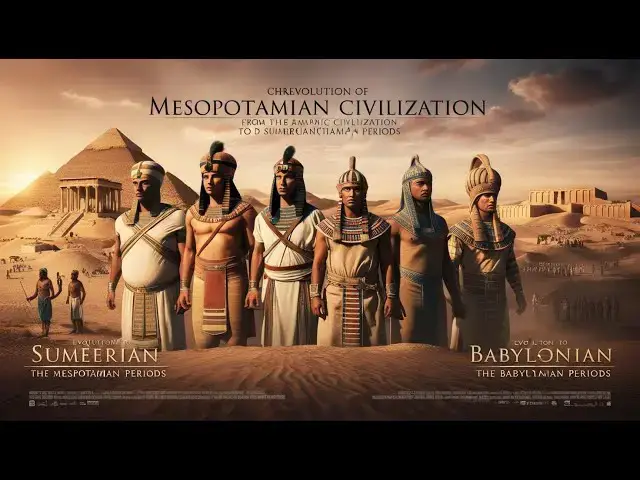
gods this is Mesopotamia the cradle of
0:12
civilization a region nestled between
0:14
the Tigris and Euphrates rivers that
0:16
gave birth to some of the world's
0:18
earliest and most influential
0:20
cultures to understand the foundation of
0:23
modern society you must explore the
0:26
incredible timeline of Mesopotamian
0:28
civilization the story begins with the
0:30
Sumerianss around 3,100
0:34
B.CE they established some of the first
0:36
city states like UR and
0:40
Aridu it was here that the earliest form
0:42
of writing Cunia form emerged initially
0:46
used for recordeping but quickly
0:48
evolving into a tool for literature law
0:53
the Sumerianss also pioneered
0:55
advancements in irrigation mathematics
0:58
and astronomy creating a framework for
1:01
future civilizations as the Sumerianss
1:04
declined the Acadian Empire rose under
1:06
the mighty Sargon the Great unifying
1:09
Mesopotamia in the first known empire in
1:12
history the Acadians adopted much from
1:15
the Sumerianss but expanded their
1:17
influence through military strength and
1:20
integration after a period of
1:22
instability the power shifted again by
1:26
the early 2nd millennium B.C.E the city
1:31
prominence under Hammurabi Babylon
1:34
became a powerful kingdom and his code
1:36
of laws became one of history's most
1:40
documents babylonian contributions to
1:43
science literature and urban planning
1:48
they refined the calendar studied
1:50
planetary movements and built ziggurats
1:53
that inspired myths of towers reaching
1:55
the heavens mesopotamian civilization
1:58
was not a monolith but a dynamic
2:00
succession of cultures and
2:02
innovations each era built upon the
2:05
achievements of the last creating a
2:07
legacy that shaped law governance
2:10
religion and writing for centuries to
2:12
come today traces of Mesopotamia are
2:15
everywhere from the justice systems we
2:17
use to the ways we measure
2:19
time exploring this chronology is not
2:22
just a history lesson it's a journey
2:25
into the origins of who we are as a
2:27
society which Mesopotamian legacy do you
2:30
find most fascinating and why