
How the Clavicle Unlocks the Shoulder
Sep 20, 2026
The clavicle (collarbone) plays a central role in "unlocking" shoulder mobility and function through several key biomechanical mechanisms:
1. Axial Rotation ("The Little Key")
The term clavicle comes from the Latin clavicula, meaning "little key," reflecting its resemblance to an old-fashioned key
.
Similar to how turning a key operates a lock, lifting your arm causes the clavicle to rotate along its long axis, allowing the full range of movement in the shoulder
.
2. Acting as a Structural Strut and Brace
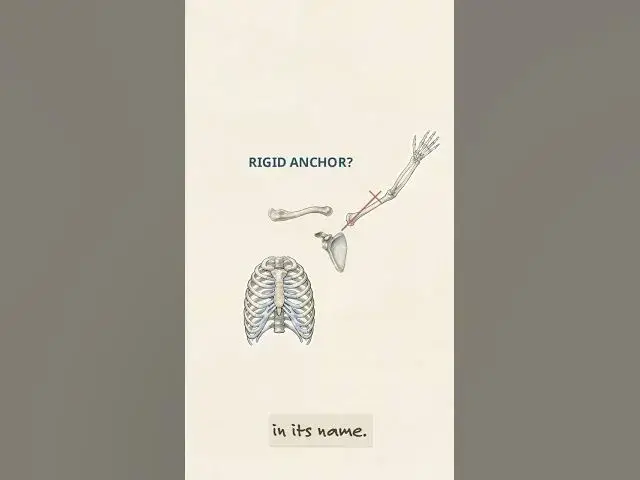
The clavicle serves as a rigid strut and brace that links the upper limb to the trunk (axial skeleton) as part of the shoulder girdle
.
By keeping the shoulder blade (scapula) held firmly in position away from the body, it enables a wide range of motion while maintaining structural stability
.
3. Multi-Directional Joint Articulation
Sternoclavicular Joint: Anchors the clavicle to the manubrium of the sternum, allowing key movements such as elevation, depression, protraction, retraction, and rotation
.
Acromioclavicular Joint: Connects the outer end of the clavicle to the acromion of the scapula, maintaining the proper physical relationship between the two bones during arm movement
.
4. Force Transmission & Load Suspension
It functions as a bridge to transmit physical forces and load from the upper extremity back to the central axial skeleton
.
Strong structural supports, specifically the coracoclavicular ligament (composed of the conoid ligament and trapezoid ligament), effectively suspend the weight of the entire arm from the clavicle
.
5. Protection of Vital Structures
In addition to enabling motion, the bone's anatomical position provides a protective cover over underlying nerves and blood vessels that supply the upper limb
Show More Show Less