Up next in 10


Ever wondered how much a cardiologist makes?
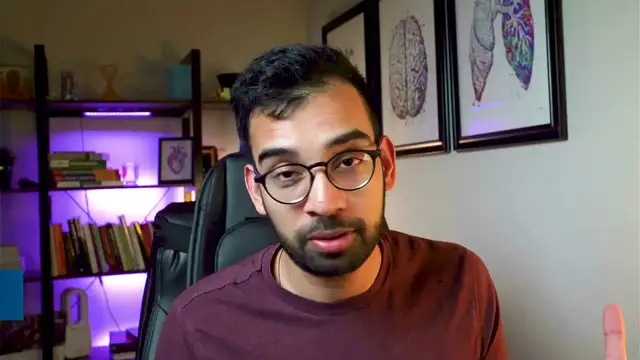
In this video, I will share with you the real numbers behind the income of a cardiologist based on my research and personal experience in the field.
Join me as I discuss the factors that influence cardiologists' earnings, including scope of practice, location, and years of experience.
I'll also shed light on the various opportunities for cardiologists beyond clinical practice that can significantly impact income potential.
Whether you're aspiring to become a cardiologist or simply curious about the financial aspects of the profession, this video provides valuable insights into the earning potential in this specialized field.
//Creative Commons Attribution Licence video (Reuse allowed)
Show More Show Less View Video Transcript
0:00
Hey guys, welcome back to channel in case you're new here. My name is lux. I'm currently a cardiology fellow and on that note as
0:04
I've been making more content behind the scenes in my life as a cardiology fellow One of the questions you guys always ask is how much money do you make
0:10
It's always in the comment section sometimes a little bit too blatantly a little bit rude
0:14
So in the future what i'm gonna do is i'm gonna make this episode now answering all the questions of how much money I make
0:18
Now how much money I expect to make as well as how much general cardiologists make interventionals cardiologists will break a bunch of things down
0:24
I'll add them to the timestamps down below in the description in case you're interested In the future one of you guys asked me how much a cardiologist makes i'm just gonna go ahead and link this video
0:32
To hopefully answer your questions So first we have to talk about the different factors that play in a role and how much money you ultimately make as a cardiologist
0:38
But first we need to break down the factors that actually play a role in how much money you make as cardiologists
0:42
These are very similar across all fields in medicine These include things like location where you work your scope of practice
0:47
Are you somebody who's doing more procedures or somebody who's seeing more patients in clinic? In addition, you have to consider things like volume
0:52
How many patients are you seeing in the scope of practice that you're practicing? And then finally you have to consider both your experience as well as the roles you play now
0:58
All cardiologists are only solely clinical cardiologists some work in things like trials
1:03
Some are doing more administrations or kind of leading larger groups and so the further and further you get into your journey
1:08
As a doctor in general, you may have more doors of opportunities open to you So now that we know the factors that are in play in regards to your salary as a cardiologist
1:15
Let's go ahead and break down individual specialties and as well as different parts of your training in terms of how much you make
1:19
So first let's talk about the salary of a cardiology fellow now a little bit of background
1:23
Exactly what a fellow means when you're in medical school, it makes sense You're a medical student when you graduate medical school, technically you're a doctor
1:29
But you still have to go through some type of residency additional training of the specialty you're interested in
1:33
So if you're going to be a pediatrician you get three years in pediatric residency
1:37
If you're going to be a cardiologist for adults, you first have to master general internal medicine for adults
1:41
And so that requires three years of internal medicine residency That's something that I did after finishing medical school
1:46
And so when you're in residency, you are called a resident and then finally if you choose to do further training in a specialized field
1:51
Such as cardiology nephrology oncology That means that you're dedicating the rest of your life to that specific field
1:57
You go into something that we call a fellowship and that's somebody who is in their fellowship training
2:01
Which is anywhere from one year to three years depending on the specialty you pick is called the fellow cardiology is three-year fellowship
2:08
So currently i'm in my first of a three-year cardiology fellowship Now my salary currently is a cardiology fellow is right around 71 to 72 thousand dollars
2:16
It increases about another thousand ish every single year So i'll probably be making around 74 75 000 by time i'm a third year cardiology fellow now
2:24
That salary is going to vary depending on where you're doing your training in the country There are some places where there's a high cost of living and so ideally the program is trying to mitigate that by also giving you
2:33
A higher average salary for being a fellow on the other side I know that there's programs where their average salary may be in the 60 000
2:39
That's usually because they also have a lower cost of living thus You're able to stretch that dollar a little bit further now
2:44
the biggest difference between all the specialties that we talk about and your salary as a fellow is that
2:48
Exactly that you are salaried which means that for that academic year, whatever your contract says mine says like 72 000
2:53
It's exactly how much i'll make no more no less. I don't get any more bonus pay
2:57
I don't get productivity bonuses like I would have when I was working as a hospitalist is 100
3:01
Salaried now on the flip side this does vary from program to program But a lot of cardiology fellowships will allow you to do what's called moonlighting
3:07
I'm going to break this down more in detail in a separate video altogether But essentially as a cardiology fellow you are likely also internal medicine board certified you finish three years of residency
3:15
You know how to be a general medicine doctor ideally and so if there are other job positions either at your own
3:21
Institution or somewhere else that needs a medicine doctor ideally you'd be able to fill it and do those roles
3:25
So for example I used to work as a hospitalist for a year and sometimes the group that I used to work for has a few openings
3:31
For a few shifts where they need coverage I can easily pick up a shift here and there on days that i'm not working as a cardiology fellow for example a weekend
3:37
Or a vacation week those can be easily used to kind of offset my income and as a reference
3:40
These moonlighting shifts are about anywhere from 10 to 12 hours where you're making a little bit about 1000 to 1500
3:46
Depending on the role that you're playing again This will vary from your institution if you're first even allowed to moonlight and then to the moonlighting gig you ultimately get
3:52
So now let's talk about the salary of a general non-invasive cardiologist now a little bit of again nomenclature non-invasive cardiologist basically means somebody who is
3:59
Not doing interventional procedures So if you need a stent, for example, your non-invasive doctor is not putting those in that would be your interventional doctor
4:06
There are still some procedures you get to do as a non-invasive doc kind of boils into your scope of practice
4:11
Are you doing like transesophageal echoes? Are you reading stress tests? Are you reading images or are you just seeing patients in clinic and building our views based off how many patients you may be seeing
4:19
In the consults or in the clinic there is a lot of ways you can make money as a general cardiologist
4:24
Again, just depends on how your clinical breakdown is on from a week to week over a month perspective
4:29
And depending on the source salary will vary a little bit So for example in 2023 doximity put out a physician compensation report where they reported that the general non-invasive cardiologist was making on average
4:39
544,000 on the flip side if you look at the salaries reported from the mgma Which is a common resource that doctors will use to compare salaries both locally regionally in the field
4:47
They're interested in they're reporting that the general cardiologist will make about 559,000 and again
4:51
like we mentioned those four factors that I mentioned location being one of the most important can really have a big wide array of how
4:56
Much you're making for example this chart right here shows you in a state like oklahoma you may be making closer to 700 to 800 thousand dollars as a general cardiologist because they just may not have as many available cardiologists to
5:06
Practice in a population that still very much needs that care on the flip side other states like louisiana massachusetts and wisconsin
5:13
You may be making 300 to 400 thousand dollars And so on a personal note knowing that I live in central texas in a large metropolitan area where the market is a little bit
5:21
Saturated and usually that means the salaries of individual doctors are a little bit lower compared to places that are more rural
5:26
I know that I probably won't be making that 350,000 at least straight out the gun i'll probably be making closer to that 425 450 475 plus bonuses
5:33
Depending on again the scope of practice that i'm ultimately in and the last important piece of information here is to remember that
5:38
After your three years of cardiology fellowship, you can become a non-invasive cardiologist
5:43
You don't need further training to do anything The thing that we talked about here and then the biggest takeaway here is that these salaries are basically assuming that you've done a three-year
5:50
Cardiology fellowship and no further training perhaps somebody does An extra year or two of advanced imaging where they're learning to be a little bit more adept to things like echoes and mris
5:59
And PET scans, but usually your non-invasive cardiologist will go ahead and go through all three years of cardiology fellowship
6:05
And then go straight into the working field on the flip side Let's go ahead and break down the salaries of cardiologists that actually require a little bit more training even after fellowship
6:12
First let's talk about the field of interventional cardiology, which we've kind of already breaking down our cardiologists that are focusing more
6:17
On doing interventions so putting in stents ballooning lesions and coronary arteries putting in things like mechanical assist devices
6:23
At least temporarily do things like valve repairs things like tavers or mitra clips and there are even some interventional cardiologists
6:29
I'll focus on things that are don't always necessarily seem like heart per se Things like pulmonary embolism or managing diseases like peripheral artery disease and doing those various interventions in those specific fields
6:38
And so an interventional cardiologist again on average depending on location and a variety of your scope of practice can have a salary
6:43
The average is about six hundred and ninety four thousand dollars Next let's talk about the field of electrophysiology. These are pretty much what we call our rhythm doctors
6:50
You're these are electricians if you're interventionalists or your plumbers These are your electricians for things like arrhythmias people who need pacemakers people who need defibrillators ablations
6:59
Lots of cool procedures really smart doctors and their average salary will come out to about six hundred and forty four thousand dollars
7:06
Again, there'll be a wide variety where some doctors are making significantly more some significantly less
7:10
But again all according to those factors that we broke down earlier And then finally in the breakdown of super sub specialized cardiologists people who are requiring even additional fellowship after fellowship are your advanced heart failure
7:20
Doctors, these are your transplant doctors who are working really sick patients with really poor hearts and working them to being evaluated for things like
7:29
A ventricular assist device or an LVAD or things like transplant So not only being involved in that process but taking care of them when they're likely in the ICU getting them through their procedure
7:37
Of getting their LVAD or their transplant, but also taking care of them after they get their transplant
7:42
So avoid or minimize things like rejection These doctors in my opinion are probably the most invested and most hands-on in their patients care make sense of why
7:50
From start to finish but unfortunately despite the extra amount of training and amount of attention they require and give their patients
7:55
They still tend to make a little bit lower than the rest of the cardiology fields on the average salary about five hundred and seventy
8:01
Two thousand dollars now My personal hope is that this changes over time because there's a great need for amazing advanced heart failure doctors and transplant doctors
8:08
But right now that's the current situation that we're in now the final specialty That I want to break down for completeness sake for this episode is the field of pediatric cardiology
8:15
Which obviously as an adult doctor I have very very limited experience. I think I did a one week rotation during medical school
8:21
That's pretty much it so I could be completely wrong on the salary breakdown If so, just let me know in the comment section down below if you happen to have more information than I do
8:27
But this salary breakdown comes from the 2021 mgma report Which basically says that your average pediatric cardiologist in the 50th percentile is making about three hundred and fifty thousand dollars
8:37
Those in the 90th percentile are making anywhere from five hundred to thirty thousand Those who are in the 25th percentile are making about three hundred thousand so really significantly different than the adult colleagues
8:46
But that's kind of again the breakdown generally throughout the field of pediatrics in the first place
8:50
Now those are the breakdowns of the salaries but the big takeaway that I want to have for this video is that if you're interested in pretty much any field in medicine is
8:56
Really as they say do not go into it for the money just as a personal reference is the making of this video
9:00
I'm currently 30 years old I graduated in college when I was like 21 going on to 22
9:05
And I knew that if I picked another field that was more money intended Let's say I went into business or finance
9:09
Which I had some interest in back in my college days and like to think that by eight or nine years
9:14
I would be able to Go and grow myself where I could be making six figures and at least not having to work as hard as I probably do
9:20
As a doctor where i'm working anywhere from five to six days a week easily working 10 to 12 hour shifts on most weeks
9:25
And on the flip side even if you were to pick a field that maybe you weren't going to make as much money
9:29
As you perhaps would as a cardiologist or another kind of doctor There are tons of people who are in medicine who ultimately get to where I am or even late in medical school as i've seen
9:37
Unfortunately or in residency and they realize that this is not going to be the career that they ultimately want to do for 10 plus
9:43
Years a lot of you guys may have seen my episodes of my life as a hospitalist which paid really well
9:47
It was every other week off. I was essentially making six figure salary I wasn't a six figure salary and I had half of the year to be off to go on things like vacation with my wife
9:56
And just hang out and chill But I knew that that was not going to be a 10-year career for me
10:00
This is why I ultimately made the decision to go back to cardiology fellowship in the first place
10:03
So salary isn't everything right now. I'm very happy with what I do
10:07
I feel intellectually driven by the field of cardiology I know the money is going to be a nice perk because i'd be able to provide for my family most importantly
10:13
But even on a fellow salary right now we're able to have the life that we need despite having a home
10:17
And a daughter and the budget being very very tight We're still able to live the life we want on the seventy two thousand dollars that i'm making
10:24
And so more money doesn't necessarily mean more happiness I know personally I tend to be a glass half full kind of person more optimistic about the entire field
10:31
That's the whole platform of this channel But a lot of that comes from me realizing that I really do enjoy what I do
10:36
That's not the case for everybody who wants to pursue medicine So just because the money is good or seems good on paper videos like this make the numbers seem high
10:44
Understand that that comes with 10 plus years of sacrifice where you're not making anything in medical school
10:49
Nothing during college very little during residency and even less during fellowship for the amount of time that you're putting in
10:56
And eventually there's going to be a moment of reward financially You have to ask yourself are you going to be happy with the career that you pick
11:02
So all of you guys that are asking questions about how much so and so makes ask yourself Does that field even interest you
11:07
You know, I would not want to be a neurosurgeon despite them making seven eight hundred thousand dollars
11:11
It just doesn't seem like the field that I'd want to go into Orthopedic surgery seemed like a really cool thing early in medical school because the money was nice, right
11:18
And it seemed like a very dude thing to do But I hated the surgery in the OR room. It's clearly not something I want to do and thus I never pursued it
11:25
So that's my closing statement of reminding that yes The money is nice when you ultimately get there
11:29
And if you realize it doesn't then it's better probably to pick a field that drives you where you can actually see yourself doing
11:34
For 20 30 or 40 years and develop a wealth of both experience happiness
11:37
And of course financially that you'd be able to do over the course of those decades Now if you enjoyed this episode
11:42
All I really ask before you click off is you hit that like button To help us reach this goal of a hundred thousand that we're trying to do by the end of 2024
11:49
As well as just making more content like this based off of your interest So if you show us that you like these kinds of videos
11:54
I'm going to make you more Behind the scenes of my life as a cardiologist and just kind of life as a doctor in general
11:59
If you are on your medical journey and you're struggling you want some help On how to make it just a little bit easier try to learn from my seven years of experience of making tons of failures and mistakes
12:08
First resource that we have which is absolutely free is a document that i'm updating on a weekly basis
12:12
It's called our med school handbook pretty much a new tip every single week of step-by-step strategies of something
12:17
I just wish somebody said here you go This is how you do better in medical school as a resident as a doctor and I never got that
12:22
So i'm making that for you guys and i'm updating it on a weekly basis So if you want that and access to it plus your newsletters that we're putting out on a weekly basis
12:28
That'll be linked down below again It's absolutely free number two If you want my a to z blueprint on pretty much everything you should do at every phase of the medical journey
12:35
So if you're a pre-med If you're in your first year medical school if you're in your clinical rotations if you're studying for step one or step two
12:41
And you're just like what the heck should I be doing definitely check out our med school blueprints our flagship program
12:46
Of everything we've ever made here at the md journey as well as anything that we make in the future
12:50
All in one place and often my best response is just let the students who have tried it over the past six years
12:55
Go ahead and just be our voices in terms of how it works So if you're interested in just seeing what the results have been click that down below
13:01
And then finally if you're somebody who just needs some more hand-holding of having somebody show you how to do things like study better
13:06
So you can see the grades you ultimately want without spending the endless amount of hours Definitely consider checking out some of our study coaching programs and again
13:13
Just check out the results over the past two or three years of our students Let them speak for themselves
13:18
And again, if you're interested double link down below if you're not interested in any of those by no means am I hurt or offended
13:23
I appreciate you guys making to the end of this video. I appreciate you guys learning from me Let me know in the comment section what you want to see in future videos
13:30
And then finally we're trying to hit that hundred thousand subscriber mark at the end of 2024
13:34
That requires me to put out better content for you guys But hopefully you guys can support it by hitting that like subscribe notification bell
13:39
And if you enjoyed this episode You'll enjoy this episode right here On my q a of my life as cardiologist as well as this right here of my day in the life as cardiologist
13:47
Hopefully you guys enjoy these and as always thank you so much for being a part of my journey Hopefully I was a little help to you guys and yours and i'll catch you guys in the next one. Peace
#Finance
#Health
#Health Foundations & Medical Research
#Medical Facilities & Services