Up next in 10

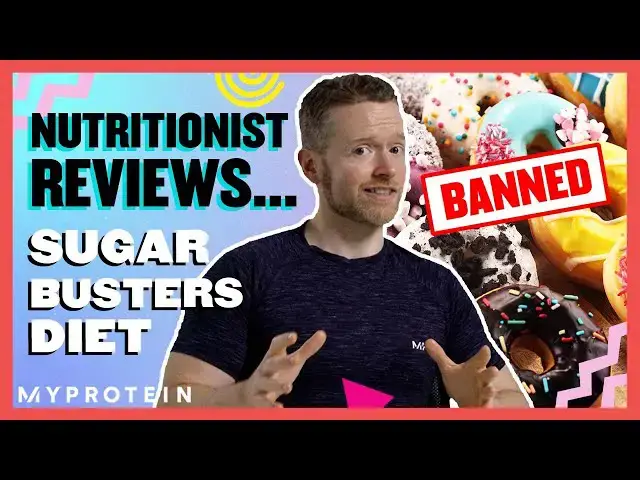
Why You DON'T Need To Cut Sugar To Lose Weight | Nutritionist Reviews... | Myprotein
Jan 30, 2025


Expert nutritionist reviews the ‘Sugar Busters’ diet and reveals why you DON’T need to cut sugar to lose weight.
Everyone’s favourite nutrition expert, Richie Kirwan, is back for a brand new series — “Nutritionist Reviews…”
The PhD researcher will take a closer look at popular diet trends and athlete supplement routines to separate the facts from the fiction.
In this episode, we’re throwing you back to the 90s with a review of the ‘Sugar Busters’ diet. This diet is based on a book that soared to number one on the New York Times bestsellers list when it was published by a group of doctors in 1995. Since then, some have dismissed it as just another restrictive fad diet, while others still appear to swear by it for helping with weight loss, managing blood sugar levels, and supporting heart health. Sounds like it could be too good to be true, right?
Find out exactly what the diet is all about, if there's any truth in it, and whether our expert nutritionist has any bones to pick with it. Spoiler alert: yes, yes he does.
Find Richie on Instagram: @be_more_nutrition
*********************************
Subscribe to our channel: https://www.youtube.com/user/MyproteinUK?sub_confirmation=1
If you like this, you'll love this: https://youtu.be/5dp-YSwKSAo
Find more expert nutrition advice on diets here: https://youtube.com/playlist?list=PLkb17OgnhB-GlU-cb35t7GhOBv_VxLPTx
Show More Show Less View Video Transcript
0:00
today we're going to talk about
0:01
sugarbusters i don't know if a diet book
0:03
published in the 2020s would be allowed
0:05
to say that if you remember tamagotchis
0:08
this sound
0:09
and arguably some of the greatest
0:11
cartoons ever made there's a good chance
0:14
you lived through the 90s and just like
0:15
any decade the 90s had its fair share of
0:18
diet trends one of which we're going to
0:19
look at today
0:20
[Music]
0:22
how's it going guys my name is richie
0:23
kirwan and today we're going to talk all
0:25
about a diet that became popular in the
0:27
90s and which luckily for us didn't
0:29
survive long after that decade we'll
0:31
talk about how it worked what it claimed
0:33
to do and what was wrong with it we'll
0:34
also talk about what actually works for
0:36
weight loss as always i want to point
0:38
out that i'm not recommending any
0:39
particular diet in this video in fact
0:42
i'm going to be really blunt right now
0:43
and tell you that i don't think you
0:45
should follow any specific diet at all
0:48
you can follow sensible nutrition
0:50
guidelines and eat well without putting
0:52
a name on your diet now with that said
0:55
let's get started today we're going to
0:56
talk about sugarbusters which was
0:58
originally self-published by the authors
1:00
in 1995 but was then published
1:02
nationally and went on to become a new
1:04
york times bestseller i should also
1:06
point out that the three doctors are an
1:08
endocrinologist a cardiovascular surgeon
1:10
and a gastroenterologist
1:13
now i have no doubt that they are all
1:15
fantastic in their specific fields but
1:17
this is what's known as an appeal to
1:19
authority doctors are widely respected
1:22
and if you put a doctor's name on
1:24
something to do with health people
1:25
automatically give it a huge amount more
1:28
credit the thing is none of these
1:29
doctors are nutritionists so nutrition
1:32
is not their specialist field and that's
1:34
something that we should all be aware
1:35
about when listening to nutrition
1:37
information from doctors don't get me
1:39
wrong there are some doctors out there
1:40
that have genuinely studied nutrition
1:42
and understand it well but there are a
1:44
lot of cowboys out there too even with
1:47
the initials md after their name so what
1:49
does the diet actually look like the
1:51
diet focuses on foods with a low
1:53
glycemic index or gi which is supposed
1:55
to help keep your blood sugar levels
1:57
steady the glycemic index scale ranks
2:00
foods by how much they increase your
2:01
blood sugar after you eat them foods
2:03
like apples and beans have low glycemic
2:06
index because they don't increase blood
2:07
sugar very much and in turn don't raise
2:10
insulin all that much either on the
2:11
opposite end of the scale foods like
2:13
white bread and refined table sugar have
2:15
a high glycemic index because they raise
2:17
blood sugar a lot which in turn raises
2:19
insulin the sugar buster's diet
2:21
encourages you to avoid foods with added
2:23
sugar and also encourages you to avoid
2:25
processed and high gi carbohydrates like
2:27
white flour white rice white bread
2:29
refined pasta and even potatoes and
2:31
that's where i draw the line on the
2:33
other hand you can eat all the
2:34
vegetables that you want except for
2:35
things like parsnips because they have a
2:37
high glycemic index and you can eat
2:39
whole grains fruits except high gi fruit
2:41
like watermelon bananas
2:43
lean red meat dairy products as long as
2:45
they do not have any added sugars oh and
2:48
you have sugar-free ice cream in case
2:50
you need a sweet fix so the diet book
2:53
makes the following claims lose weight
2:55
lower your cholesterol achieve optimal
2:56
wellness increase your energy and help
2:58
treat diabetes and other diseases now
3:02
this last point about helping to treat
3:04
diabetes and other diseases i don't know
3:06
if a diet book published in the 2020s
3:08
would be allowed to say that in the uk
3:10
at least saying something treats a
3:12
disease is a very big health claim and
3:14
would require actual evidence that it
3:16
does
3:17
and i don't think that this book has
3:18
that evidence that it needs now let's
3:20
have a read of the back cover it's time
3:22
to face facts low fat diets don't work
3:25
thousands of dieters on low fat high
3:27
carbohydrate regimes gain back the
3:29
weight and more often wreaking unhealthy
3:31
havoc on their bodies okay let's stop
3:33
there for a second the truth is the
3:34
majority of people who follow a diet no
3:36
matter what type of diet it is end up
3:39
regaining the weight that's an
3:40
unfortunate truth that is not just
3:42
limited to low fat diets weight
3:44
maintenance is very very difficult and
3:46
often the best way to achieve it is
3:48
through long-term behavior and lifestyle
3:50
change but let's keep reading why
3:52
because the culprit isn't too much fat
3:54
it's too much sugar and low-fat food is
3:56
full of it so this is a really common
3:59
strategy of diets that end up becoming
4:01
very very popular and that is to create
4:04
a villain in this case sugar when you
4:06
create a villain you give people
4:07
something to hate something to fight
4:09
against and when people have something
4:10
to fight against it's a really powerful
4:12
motivational tool especially for
4:14
creating a community or a tribe and it's
4:17
a really common strategy seen in many
4:19
different diets some aim for sugar some
4:21
aim for fat animal products gluten even
4:24
vegetables as a rule of thumb if a
4:26
diet's main focus is on eliminating a
4:28
specific
4:29
evil food
4:31
it's probably a good diet to avoid let's
4:33
continue reading the truth is sugar
4:36
causes the production of insulin which
4:37
in large amounts keeps you from losing
4:39
weight no matter how strictly your diet
4:41
or how often you do exercise so this is
4:43
something i hear all the time people
4:45
really hate on insulin and i feel sorry
4:47
for that poor hormone never did anything
4:49
bad for anyone
4:51
it's just there doing its job which is
4:53
helping to keep you alive we'll talk
4:55
about insulin a little bit more later so
4:57
what do i think well the basic idea of
4:59
the diet is sound the diet focuses on
5:02
mostly unprocessed foods especially
5:04
fruit vegetables and whole grains with
5:06
lean meats and dairy products by
5:07
eliminating foods with added sugars
5:09
you're going to be avoiding the vast
5:11
majority of processed foods available so
5:13
you're seriously limiting your food
5:14
options that means that someone
5:16
following this diet is automatically
5:18
going to be eating fewer calories
5:20
genuinely it sounds like a pretty
5:22
healthy diet but and it's a big bot the
5:25
principle of the diet is absolute
5:28
first off let's talk about the glycemic
5:30
index it was a very very popular concept
5:33
back in the 90s and early 2000s because
5:35
everybody was convinced that insulin
5:37
caused weight gain the thing is diets
5:39
based around the glycemic index do not
5:41
outperform other weight loss diets when
5:43
they're matched for calories that's
5:45
because the most important thing when it
5:46
comes to weight loss is calorie balance
5:48
another issue with the glycemic index is
5:50
that it's measured for individual foods
5:53
but when you put all of those foods
5:54
together in a meal mixed with proteins
5:56
and fats there's no way to know what the
5:58
glycemic index will be and one thing i
6:00
always find funny is that if you're only
6:01
eating foods that have a low glycemic
6:03
index that means you can't eat whole
6:05
foods like potatoes bananas and
6:07
watermelon which are fantastic sources
6:09
of fiber vitamins and minerals but
6:11
technically you can eat ice cream
6:13
because that has a very very low
6:14
glycemic index thanks to the amount of
6:16
fat it contains now
6:18
finally i just want to touch on the
6:20
importance of the insulin so yes insulin
6:22
is an important storage hormone when you
6:24
eat anything with carbohydrates it gets
6:26
digested to sugar and that enters your
6:28
bloodstream which causes your body to
6:29
produce insulin insulin's job is to
6:31
bring your blood sugar levels back down
6:33
to normal because if they're too high
6:35
it's not good for your long-term health
6:37
it does this in two ways it stops your
6:39
body from burning fatty acids so your
6:41
body can start burning carbohydrates
6:43
that are now in your bloodstream and it
6:44
also encourages your body to store the
6:46
extra carbohydrate in two ways either it
6:49
sends carbohydrate to your muscles
6:50
quickly to get stored as glycogen or it
6:52
sends carbs to your fat cells where it
6:54
gets converted into fat now i'm sure
6:56
many of you are listening to this and
6:58
thinking oh my god insulin sounds like
7:00
it really does cause people to gain
7:01
weight and stop losing fat here's the
7:03
thing
7:04
insulin only has those effects when its
7:06
levels are elevated and insulin levels
7:08
in healthy people often remain high only
7:10
for a short period after somebody eats
7:13
so a couple of hours after eating
7:15
everybody goes back to their normal
7:16
state which is burning fat then you also
7:19
have to remember we also spend a good
7:21
proportion of the day not eating food
7:23
think of those eight hours that you're
7:24
spending asleep in bed there have been
7:26
plenty of experiments that have shown
7:28
that people can still lose weight even
7:30
when their insulin levels are high and
7:31
just to put another nail in the insulin
7:33
theory coffin recently a study was done
7:36
by kevin hall at all where they compared
7:38
a high carb plant-based diet with a
7:41
low-carb keto diet despite the fact that
7:43
the high carb diet resulted in higher
7:45
glucose levels and higher levels of
7:47
insulin people on that diet lost more
7:50
weight than the ketogenic diet because
7:51
they ended up eating fewer calories so i
7:55
hope you found that interesting and if
7:56
you've ever tried the sugarbusters diet
7:58
or if there are any other diets that
7:59
you'd like me to review let me know in
8:01
the comments below and remember like and
8:02
subscribe to my protein youtube channel
8:04
for more great evidence-based
8:06
information
8:09
[Music]
8:14
you
#Weight Loss
#Health Conditions
#Obesity
#Nutrition
#Special & Restricted Diets
#Healthy Eating