Up next in 10



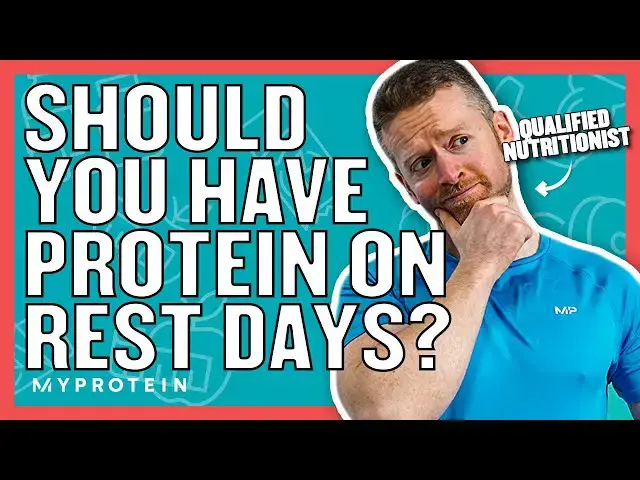
You take protein on training days but do you take it on rest days? Our expert nutritionist explains all.
In this video, Richie Kirwan, nutritional consultant, talks us through protein timing and distribution, plus how and when we should actually take it. The importance of taking protein and the easy and convenient ways to increase your protein intake and frequency.
***
Chapters:
00:00 - Intro into protein distribution
01:06 - Am I getting enough protein?
02:36 - How do I stimulate MPS?
03:43 - How do I increase my protein intake?
04:39 - What are the benefits of protein?
05:45 - Got any more questions on protein?
*********************************
Subscribe to our channel: https://www.youtube.com/user/MyproteinUK?sub_confirmation=1
If you like this, you'll love this: https://www.youtube.com/watch?v=u4VUFYgSiNk
Which protein powder is best for your goal? 👉 https://youtu.be/ehtwRITE_1o
Show More Show Less View Video Transcript
0:04
you only need to take protein
0:06
on daisy train right
0:08
let's talk about that
0:12
how's it going guys my name is richie
0:14
kirwan and today we're going to talk all
0:15
about something a lot of people get
0:17
confused about protein timing and
0:19
distribution let's get started just
0:21
before we get into it i just want to
0:23
mention that i'm not talking just about
0:26
protein supplements or powders in this
0:27
video i'm going to be talking about
0:29
protein in general so that includes
0:30
protein from your food like meat eggs
0:32
fish dairy products tofu and other
0:34
vegetarian protein sources remember you
0:36
should always try and improve your
0:38
nutrition by focusing on your food first
0:40
that said protein powders and shakes can
0:42
be a really easy and convenient way to
0:44
increase your protein intake and
0:46
frequency and i'm going to explain why
0:48
that's important okay so to make this
0:50
video as easy to understand and direct
0:52
as possible i'm going to talk about
0:53
taking protein with just one goal in
0:56
mind and that's building muscle or as
0:59
the fancy pants like to call it
1:00
hypertrophy and in reality if you're
1:02
watching this channel there's a good
1:04
chance that that's what you're
1:05
interested in too now whenever someone
1:07
finds out i'm a nutritionist you know in
1:09
the real world i always get grilled on
1:11
nutrition questions and one of the most
1:12
common is am i getting enough protein
1:14
well i'm not psychic so when i ask if
1:16
they take a protein powder the most
1:17
common answer is
1:19
yeah sure on days i work out right after
1:21
the gym and that's it now don't get me
1:23
wrong it's great to take protein powder
1:25
or to increase your protein intake after
1:27
training
1:28
but with a little planning most people
1:30
can get much better results from it
1:32
which is what we're going to talk about
1:34
here so everyone loves to talk about how
1:36
much protein you should get in a day and
1:38
don't get me wrong that's super
1:40
important but so is something called
1:42
protein distribution which is when you
1:45
take your protein during the day you
1:47
probably already know you should be
1:48
getting somewhere between 1.6 and 2.4
1:51
grams of protein per kilogram of body
1:52
weight if building muscle is your goal
1:54
and before i go any further if you have
1:56
no idea how much protein you're getting
1:57
at the moment and want to find out
1:59
download a free calorie tracking app
2:01
almost any will do and track your food
2:03
for a few days
2:04
knowing how much you're eating now is
2:07
the first step in figuring out if you
2:08
need to eat more or not now assuming
2:11
you're eating enough protein you're good
2:12
right
2:13
well not so fast most people have an
2:16
uneven protein distribution during the
2:18
day what that means is that breakfast
2:20
tends to be the lowest protein meal of
2:22
the day because most people focus on
2:23
things like toast cereal or fruit lunch
2:26
tends to have a little more protein and
2:27
dinner is usually the most protein heavy
2:30
meal of the day to build muscle the most
2:32
important thing you can do besides
2:33
training hard in the gym is stimulating
2:36
muscle protein synthesis or mps and we
2:38
do this by eating enough protein to
2:41
stimulate mps enough we need to get
2:43
enough protein at each meal and that
2:46
works out at around 0.4 to 0.5 grams of
2:50
protein per kilogram of body weight per
2:52
meal as a general rule of thumb for a 70
2:55
to 80 kilogram person that works out at
2:57
about 30 to 40 grams of protein per meal
3:00
and here's the thing
3:01
eating more than that doesn't increase
3:04
mps so eating crazy amounts of protein
3:06
in one meal won't make up for not
3:08
stimulating mps enough in your other
3:10
meals that's why it's a good idea to
3:13
evenly distribute your protein over all
3:16
of your meals so think of it like this
3:18
if you're currently getting 10 grams of
3:20
protein with your breakfast 20 grams
3:22
with your lunch and 60 grams with your
3:24
dinner for a total of 90 grams a day
3:26
you're only maximally stimulating mps
3:28
once at dinner time so to improve
3:31
distribution you could increase protein
3:33
at breakfast and lunch and reduce it a
3:36
little at dinner so you're getting at
3:38
least 30 grams in each meal that's a
3:40
good way to improve protein distribution
3:42
that's the first step you can also
3:44
increase the number of meals you have a
3:46
day to further stimulate mps so say you
3:49
train immediately after work after you
3:51
train you could have a protein shake
3:52
with 30 to 40 grams of protein and that
3:54
will stimulate mps again then you wait a
3:56
few hours and have your dinner another
3:58
chance to stimulate mps and muscle
4:00
growth and if four meals are good maybe
4:03
more meals could be better this is where
4:05
planning is going to be really important
4:07
we know that after we stimulate mps we
4:09
have to wait a certain amount of time
4:11
before we can start it again by eating
4:13
more protein this is called the
4:15
refractory period and it lasts about
4:17
three hours that means that technically
4:19
we could restart mps with a dose of
4:21
protein every three hours or so assuming
4:24
you sleep for a solid eight hours which
4:25
you should be doing by the way if you
4:26
want to build muscle that means you can
4:28
probably fit in six protein doses one
4:31
every three hours while you're awake and
4:33
we do have some evidence that this much
4:35
protein might be necessary in young
4:37
bodybuilders to maximize muscle growth
4:39
and finally another point about protein
4:42
for everyone that only takes protein on
4:43
the days they train
4:45
we know that weight training increases
4:47
fbs we also know that you can further
4:50
increase mps after weight training by
4:52
eating enough protein and we also know
4:54
that the effect on mps from weight
4:56
training can last for up to between 24
4:59
and even 48 hours that means for up to
5:02
two days after you trained your muscles
5:05
are primed to take advantage of more
5:07
protein so if you were trying to get the
5:09
absolute maximum muscle protein
5:11
synthesis from the moment you finish
5:13
your gym session you could eat some
5:15
protein every three hours or so and get
5:18
benefits and that can be food or protein
5:20
powder for convenience now eating every
5:23
three hours or so is not for everyone
5:25
but even if you are getting four high
5:27
protein meals or shakes a day even on
5:29
days you don't train that is putting you
5:31
in a much better place to build muscle
5:33
than if you just have a shake after your
5:35
workout personally i think four meals a
5:38
day is a good balance between optimizing
5:40
muscle growth and having an actual life
5:42
that doesn't revolve around your food
5:44
schedule so what do you think
5:45
did that clear up the protein confusion
5:48
as always if you have any questions let
5:50
me know in the comments below and
5:51
remember to like and subscribe to my
5:53
protein youtube channel for more great
5:54
evidence-based nutrition information
6:00
[Music]
6:06
you
#Fitness
#Nutrition
#Vitamins & Supplements
#Jobs & Education