Up next in 10

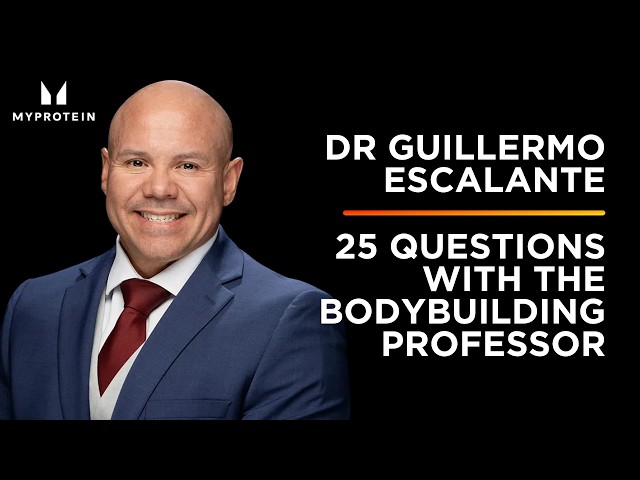
Bodybuilding Professor Debunks Fitness Myths and Answers Your Questions | Myprotein
Feb 16, 2026


Dr Guillermo Escalante is currently a Professor of Kinesiology and Associate Dean for the College of Natural Sciences at California State University, San Bernardino.
In this sit down with him, he explores beta-alanine and its proven ability to raise muscle carnosine levels, improving buffering capacity and supporting high-intensity efforts lasting 30 seconds to around 10 minutes. He explains dosing strategies, why total intake over time matters, and the science behind the “tingling” sensation. Creatine is also unpacked — how it works as a rapid energy buffer, who it benefits most, and why it’s effective for strength and repeated sprint performance.
Beyond supplements, the discussion shifts to long-term health. Sale highlights why skeletal muscle is critical not just for strength, but for metabolic health, fall prevention and longevity. He explains age-related bone loss, sex differences in peak bone mass, and why resistance and impact-based training are essential for maintaining bone density.
The episode also covers optimal protein intake (1.2–1.6g/kg), meal distribution, pre-sleep protein, the importance of sleep for recovery and adaptation, and why a mix of endurance and resistance training is best for lifelong health and performance.
Show More Show Less View Video Transcript
0:00
My name is Dr. Guiermo Escalante and I'm on the scientific performance advisory board for my protein. Um, and I love
0:06
being part of that. Uh, my background specifically is uh quite varied. I I have a doctorate in athletic training.
0:13
Uh, and I also a sports nutritionist at a certified strength and conditioning specialist. I'm the vice president of
0:18
the International Society of Sports Nutrition. And for my full-time job, I'm a associate dean for the College of
0:25
Natural Sciences at California State University, San Bernardino. and I'm a full professor of kinesiology. I'm also
0:31
a bodybuilder. I've been bodybuilding for over 25 years and I still compete to this day. Uh it's definitely a big
0:38
passion of mine and uh I've been able to bring my passion for health, fitness, and exercise uh that I started just as a
0:46
young kid and I've been able to make a career out of that and and really study the science behind health, fitness, and
0:52
nutrition. One of the biggest mistakes I see people make when they start a fitness program is I think they they try
0:58
to change exercises too frequently and they they don't stick to something long enough. Uh so instead of actually going
1:06
through a program and uh sticking through specific exercises and learning
1:11
those exercises appropriately and progressing those exercises appropriately, they want to change from exercise to exercise to exercise and
1:18
from program to program. uh and you really need to uh show up consistently and uh really follow through with a
1:24
program and uh really learn how to execute that program. So I think uh changing programs too frequently is uh
1:31
not necessarily uh the best way to start. Training for athletes uh versus regular gymgoers can be a little bit
1:37
different because uh you might have different goals. So an athlete needs to be uh training very specifically for
1:43
their sport. Uh so you might need to do very specific movement patterns or train specific muscle groups uh because that
1:50
might be what they how they use them or what they use. Uh for example uh uh let's say somebody that's a sprinter is
1:57
going to need to have a lot of power and explosiveness uh whereas uh somebody that is uh you know ne necessarily a gym
2:04
goer maybe that that might not be part of their their primary goals to be able to to exercise. Uh so same thing with a
2:11
with a bodybuilding type of program. Um, I think a lot of gymgoers do specific bodybuilding type programs and that may
2:18
work for some individuals. Uh, but again, it really you need to customize a program based on your whatever your
2:23
specific goals that you're trying to achieve. There's definitely an optimal balance between strength training and
2:28
cardio, but it really depends on whatever your fitness goals are. So, if you're an endurance athlete, uh let's
2:35
say you're a triathlete or uh a long-distance runner, then definitely
2:40
the major part of your programming should be endurancebased. Uh conversely,
2:45
if you're a a strength training athlete, um you probably need to leverage a little bit of cardiovascular training uh
2:51
into your program. But if if strength or hypertrophy are the main goals of your program, uh then you can't do a lot of
2:57
cardiovascular exercise because that's going to potentially interfere with uh some of your your gains that you're
3:02
trying to achieve. So it really boils down to uh what are you trying to achieve? Uh and you may be able to
3:08
achieve certain goals in specific segments. So you maybe you maybe want to uh focus on a particular time frame
3:15
where you're focusing on strength, another time frame when you're focusing on hypertrophy. So, if that's the case during those phases, you'd probably be
3:21
doing less aerobic training. Uh, but maybe you want to lean out a little bit. At that point in time, you still want to maintain your your strength training uh
3:28
and your resistance training. Uh, and you may need to ramp up your cardiovascular training work uh if
3:34
needed. You can do it in other ways as well by taking more steps and other things, but but uh that is one tool you
3:39
can use is implementing more cardiovascular training. Obviously, if you're trying to improve your cardiovascular system and your
3:46
endurance, then you need to leverage that more and pull pull on the aerobic component of your training a little bit
3:51
more. So, people actually can lose uh strength uh not quite as fast as they
3:57
think. Uh but, uh within one or two weeks, you're typically not going to see a lot of losses, but typically within 3
4:04
to four weeks, you'll start to see some uh slow decrements. Um, and one of the things that we actually see is the the
4:10
more experience you have in strength training, the longer it takes for that for that process to takes place. So,
4:16
somebody who's got a little bit more of an advanced uh training background who's been lifting for several years, uh, that
4:21
might deteriorate a little bit slower, but nevertheless, you know, by by the 4 to 8 week mark for most people, you're
4:27
going to start seeing uh significant decreases in in strength slowly but surely. Uh, and same thing in in muscle
4:34
size. Uh the nice thing is is if you're an advanced trainer at least uh those gains actually can come back rather
4:39
quickly. So there are many nutrition myths that are out there. Uh some of the ones that that I often hear for example
4:45
is that a uh high protein intake uh can damage your your kidneys or is bad for
4:51
your health. And uh the reality is is there's been a lot of studies that have been published and actually we actually
4:57
don't see any evidence of that. So, uh, if you're a healthy individual with healthy kidneys, uh, you can actually
5:03
have a relatively higher protein intake, definitely much higher than, uh, the recommended daily allowance of 0.8 grams
5:10
per kilogram of body weight. Uh, in fact, uh, double that is usually what what's recommended for most strength
5:15
trained individuals. Uh, anywhere from 1.6 to 2.2 grams is usually what is recommended. Uh, and that is a
5:21
relatively high protein intake compared to the recommended daily allowance. uh but uh we actually see that uh people
5:29
actually are able to gain muscle mass effectively with that dose and uh they they're actually tolerated quite well.
5:35
Timing of your meals uh is important depending on uh the nuances that you're
5:40
trying to to achieve. So, um, if you're in a calorie deficit and, uh, you're
5:45
you're depriving yourself of calories, then I think a nutrient timing becomes a little bit more important because you're
5:51
not getting enough calories throughout the day to to keep your body going. Uh, therefore, uh, it becomes more important
5:58
to kind of fuel around your meals. So, that pre-workout meals are and planning is is actually quite important uh to
6:05
probably time your protein and carbohydrate intake. maybe within 1 to two hours before the training and then
6:10
within one to two hours after the training. Now, if you're in a calorie surplus or maintenance, uh that becomes
6:16
a little bit less of importance. Uh but nevertheless, uh I like to say uh we
6:21
know that the body's going to be most responsive and most anabolic um you know, shortly within that that
6:26
pre-workout window. Uh so there's no downside to initiating uh the the meal
6:33
process of getting in the carbohydrates, getting in the protein. uh there's really no downside to it. Uh there may
6:39
not be any extra upside if particularly if you're in a caloric maintenance or a surplus, but because there's no
6:45
downside, I say why not spread out your meals accordingly and just use that periodout we w window to go ahead and
6:51
fuel your body for uh the process of of building muscle or uh enhancing your
6:56
workout. intermittent fasting is is a great way to actually leverage how you
7:01
manage your your caloric intake and it can work for the the average person uh
7:07
just because uh it's it's an easy way to manage how you take in your calories. So
7:12
you you have a specific time window where you're maybe going to consume the food that may be an eight hour window
7:18
for most people and then uh you have now uh you know maybe a 16 hour window where
7:23
where you don't consume that food. So, uh you're going to it's going to make it fairly easy to manage the calories. Um
7:30
and we actually see some studies that actually show that uh there's really no
7:35
no downside in uh for example, some of the loss of muscle mass uh over a period of time from doing the intermittent
7:41
fasting. Now, that being said, I think if you're if you're an athlete, um, and let's say you're a bodybuilder, you're a
7:47
strength trainer, uh, that might not be your best bet because I think the Perry workout training, uh, you can actually
7:54
benefit from, uh, from getting the meals in accordingly uh, during that time frame. And, uh, you may also want to,
8:02
um, not feel hungry for 16 hours out of the day. uh particularly when when you're in a calorie deficit uh just for
8:09
for mental purposes and and other uh approaches of uh getting to that goal.
8:14
So I think for the average individual intermittent fasting is probably a a good tool to use, but I think if you're
8:21
um a more advanced uh trainer, I think you probably want to maybe leverage
8:26
using uh other approaches to achieving your goals. In today's fitness world, there's definitely uh a lot of uh
8:33
supplements that are available today, but uh not all of them are are backed by science and uh you really have to be
8:40
careful uh how you choose uh those those dietary supplements. So I I think uh one
8:46
of the best ways that you can uh look at u whether dietary supplements are uh
8:52
evidence-based is uh you know looking at at the the scientific literature is is
8:57
one way to go. So you can you can literally see uh you know what products actually have some studies behind them.
9:02
And when you're looking at studies, I think it's important to uh not just look at studies that are done on rat or mice
9:09
uh or cell cultures. You actually want to look at studies done on humans. And I think uh you want to see if if that the
9:16
the applied product is actually going to have um an applied uh impact uh positive
9:22
impact on you. So uh some examples of evidence-based uh products for are uh
9:28
well whey protein is is definitely been studied very much and quin protein is another one uh creatine monohydrate is
9:34
another wellstied uh dietary supplement uh beta alanine so there's definitely uh
9:40
some good products out there that uh have some scientific backing and then there are others that I think um maybe
9:46
no evidence exists but there's some initial emerging evidence um and uh again those are not necessar necessarily
9:53
the ones that um are bad for you or that I would say stay away from, but you may
9:58
you may see no benefit uh because there's just not a lot of uh evidence with those. Uh so you have to kind of be
10:05
careful with uh where where you put your money and uh whether you want to invest in those. That being said, it's not bad
10:11
to maybe try something as long as it's safe. Maybe you want to try it, see how it works for you and see how it's
10:17
effective for you. So that's uh it's an N of one uh and it may be something that that is effective for you. Uh but you
10:23
definitely want to be careful with uh dietary supplements that are I want to say uh highly tuda to cure a lot of
10:30
things or to help a lot of things. If it if it helps to do too many things um and it's not uh very clear as to where
10:37
they're getting that information from um I think you you definitely need to be careful. uh and uh supplements that uh
10:44
are typically uh third party tested seem to uh usually
10:49
kind of stand the the test of uh you know that you're getting a good product. One of the supplements that's probably
10:55
most underused by athletes, believe it or not, is creatine monohydrate. So, a lot of people talk about it. uh a lot of
11:02
people know that it has benefits but I think uh still even though this product has been around for for literally
11:09
decades and there's been thousands of scientific papers to show uh that that
11:14
it works in in many different ways. Uh in fact now we see creatine monohydrate working in in even clinical populations
11:20
for um uh different uh types of uh disease states uh or or potentially
11:26
beneficial but creatine monohydrate for athletes uh particularly for power strength athletes is uh very effective
11:33
and and again I think it's still um there's still a little bit of um for
11:39
some reason hesitance in in using the product. Some fear it may damage the kidneys or there may be some other
11:45
health concerns although there's really no evidence to show that uh any of those things are true actually it's one of the
11:51
the safest dietary supplements that is out there. Uh so creatine for the athletic population um we actually see
11:57
improvements in strength improvements in uh lean body mass uh we see uh a lot of
12:03
improvements in short aerobic uh anorobic type of activities not aerobic anorobic type of activities. So for
12:09
example, short sprints, jumps, uh we actually see uh creatine monohydrate being most effective in in that
12:16
particular athletic population. So anything that's that requires power, strength, uh or muscle mass, uh you're
12:24
going to see a benefit uh with uh with creatin monohydrate in most individuals.
12:29
Um particularly if you're if you're actually an individual who doesn't consume a lot of meat products. If
12:34
you're vegetarian, you're vegan, uh you're probably going to benefit the most from from creatine monohydrate supplementation. Um now in terms of the
12:41
clinical populations, uh again there's still this is this is some of the evidence that's just starting to kind of
12:47
come up. Um but we see it uh with things for example like with head injuries, uh
12:52
traumatic brain injuries, uh we see it with people with Alzheimer's. So, we're actually beginning to see some evidence
12:58
that uh creatine may have some positive effects with uh those clinical
13:03
populations. Uh pre-workouts can be effective. Uh and and and there's definitely a lot of marketing that goes
13:09
behind some pre-workouts. I think you need to be careful in the type of pre-workout that you have. Uh but there
13:14
are some uh good evidence-based products. Uh typically, one of the the ingredients that you see that's uh very
13:21
effective is caffeine. Uh so two to 300 milligrams of caffeine is uh one of the ingredients that you may want to look
13:27
for in in a pre-workout. Um another thing that you may want to see is uh beta alanine. Uh that's another product
13:34
that can actually uh help facilitate uh some of the the performance enhancement products or uh binan is another uh type
13:41
of performance enhancer product that you may see. Uh citrulin malate is another product uh that again uh that
13:47
combination of of those ingredients typically tends to uh provide you with uh the necessary tools to have an
13:54
excellent workout. People often associate uh caffeine with energy but uh but really caffeine doesn't give you
14:01
energy directly. It actually uh just help to stimulate your central nervous system which is then going to help you
14:07
perform better. So, uh, really, uh, that's that's essentially how how it how caffeine is is is really going to work.
14:15
Uh, one supplement that I would recommend for general health is is creatine. Uh, so, uh, we typically see
14:20
that, uh, in in most individuals, we consume about, uh, one maybe one and a half grams of of creatine per day. Uh,
14:28
and, uh, that's what our body naturally produces, and that's what we we're going to we're going to consume. So, we typically need a little bit more than
14:34
that, and we're going to be deficient in in creatine. So creatine supplementation is is an easy way an easy fix to
14:42
saturate the muscle uh creatine levels which is going to then in turn help you perform. Uh moreover uh we're we're
14:49
seeing some um preliminary evidence that uh creatine can actually uh help in uh
14:54
your your brain performance so in cognitive skills uh your reaction time.
15:00
Uh so we actually see some uh potential positive benefits for uh cog cognition
15:05
uh with creatine supplementation. So supplement development I think um you have to be you have to be really
15:12
strategic in how you develop supplements because uh there are always upand cominging ingredients uh however not all
15:18
of them are effective. Um, and uh, when we're when you're reading the scientific literature, um, you may you may get
15:24
excited about a particular ingredient that shows some promise and maybe it shows promise in cell cultures. Well,
15:30
that's a great preliminary start, but um, I wouldn't necessarily put something that's effective in a cell culture uh,
15:37
as a dietary supplement. That's probably a little too early to start. Um next uh
15:42
after you see it effective on in cell cultures, the next level of testing uh
15:47
from a scientific perspective is going to typically be in some sort of animal models. Uh let's say rat or mouse
15:53
models. And again uh that's going to again show some promise. Uh but um again
15:58
uh we're humans. We're not mice. So it's important to understand that there may not be some carryover. But again, if you
16:05
see some positive effects in in these mice uh or in this animalbased model, uh
16:10
you're going to probably be a little bit more intrigued maybe to try a little bit more. So, where I really like to kind of
16:16
uh start bringing a a supplement to to market would be once we have some actual
16:21
clinical trials with humans. So, after you maybe see two or three animal model
16:26
uh different trials that are effective, that are safe, uh then you want to look into human trials. Uh first thing I want
16:33
to look at is safety, right? So is it safe for humans to consume? So I want to look at some of some safety measures to
16:39
make sure that the products aren't going to be harmful. And then uh simultaneously or maybe the next step
16:44
would be to see if the product is actually going to be effective in uh whatever whatever that product is trying
16:51
to achieve maybe is increase muscle mass, improve performance, uh whatever whatever the objective measures are uh
16:57
improve body composition. So, you want to have uh at least uh hopefully one set
17:02
of clinical trials uh to show that it's safe and effective. Um and then I would
17:08
go ahead and uh maybe branch out into potentially marketing that um you would also want to have other clinical trials.
17:14
So hopefully you don't want to just rely on one study. Uh it would be good to have, you know, at least two or three
17:20
studies from different labs. Uh that way you uh don't have any biasing in that regard. And uh you also want to make
17:26
sure that it maybe you're studying it in different populations. So it may be some products may be very effective in one
17:32
particular population but not as effective in another. Uh so if you want to market it for different populations
17:38
then you want to make sure that you try the product in those particular populations and have clinical trials for
17:44
th those particular demographics. Consumers should be wearing the u supplements that they purchase because
17:50
you can definitely waste your money in a lot of supplements that that are not effective. Uh so uh one thing that uh I
17:56
think I would want to look for um is uh number one is is is there some sort of
18:03
scientific literature on humans that uh that shows that the product is effective
18:09
and even if may you may not find a particular product is effective but at least the ingredients in the product are
18:15
effective. So, um, kind of backtracking from that, when you're looking at the
18:20
ingredients, you want to make sure that the the product that you're taking, uh, has the appropriate dosage, uh, that
18:26
that has shown to be, uh, clinically effective. Uh, so, for example, if a if
18:31
a product says, uh, it's got one gram of creatine, um, okay, great. Well, we know
18:37
creatine to be effective, but but one gram doesn't doesn't give you enough creatine to actually make make a
18:43
difference. We we actually know that about three to five grams is the minimum effective dose. So if you're getting a
18:49
product that only has one gram, you have a product that's got um an ingredient that is effective uh but it's at the
18:56
wrong dosage. So you have to kind of look at a few things. Number one, are there clinical trials for that
19:01
particular product um to show that it's effective for whatever your goals that you're trying to achieve to use that
19:06
supplement for? And then number two is is is there an effective dose in the product that you're taking? Um, I will
19:12
say there are not a lot of products, finished products that uh do uh trials
19:18
on their particular finished product, but they definitely have uh trials on the ingredients of those particular
19:24
products. Injuries are going to happen uh when you're when you're doing uh any type of activity. It's it's usually uh
19:31
just part of the game uh as as you're progressing, but you can definitely try to mitigate those risks uh by uh doing a
19:38
few things appropriately. So, I'm going to go specifically to the gym. In the gym setting, I think uh one of the ways
19:45
that you can uh avoid injuries. Uh I always say number one is leave your ego at the door. Right? So, a lot of people
19:51
try to pile on and progress so quickly um and uh they pile on so much weight uh
19:57
so quickly uh that it puts a lot of um I'm going to say undo stress on muscles,
20:03
tendons, maybe ligaments. Um and you're really sloppy on form. uh and that's
20:08
going to just set you up for failure and and definitely getting an injury. So, uh I think investing in uh learning
20:15
appropriate technique uh perhaps hiring a uh a professional that can actually help you making sure that you're
20:20
executing the exercise appropriately I is a good um investment uh for your
20:25
health. Uh that way you can ensure that you're executing exercises uh effectively. Um and again make sure that
20:32
you're progressing the exercise uh slowly but consistently. So progressive overload should definitely be
20:37
implemented but you don't want to be too aggressive or too quick in how quickly you progress. Nutrition plays a huge
20:44
role in recovering uh from exercise and in fact we actually even see it play a
20:49
very important role even in uh the rehabilitation of injuries. So uh whenever you have an injury for example
20:56
um there's going to be an increased metabolic demand uh for a muscle to heal or for a ligament to heal. Um so uh
21:04
let's say after you're recovering from uh an ACL reconstruction uh there's a
21:09
metabolic cost uh for for muscles to be rebuilt and for that ligament uh to actually eventually uh come back to to
21:17
doing what it's supposed to do. Uh so you have to definitely ensure that you take in number one enough calories
21:22
throughout the day. Uh so if you're deficient in calories you're not going to provide your body with enough energy
21:28
to be able to to do what it needs to do. Uh second most important to that is going to be adequate protein intake. Uh
21:34
so typically in rehabilitation uh we want to see a minimum of 2.2 grams per kilogram of body weight. Uh maybe even
21:41
upwards of 2.7 to 2.8 because uh protein is very king in terms of helping uh
21:48
different injuries heal and uh you may actually need a higher protein intake uh
21:53
to help that happen. Uh so a relatively higher protein intake of again of at least 2.2 two grams per kilogram of body
22:00
weight is is typically what we see. Um so number one is total energy, number
22:05
two is going to be protein intake. There are going to be also some dietary supplements that may actually help. Uh
22:10
for example uh anti-inflammatory uh supplements like omega-3 fatty acids
22:15
can actually help the inflammatory process uh which can actually facilitate some of the healing uh after that
22:21
initial inflammation phase. You want a little inflammation to take place initially, but uh one to two weeks in,
22:27
you actually want to try to minimize that inflammation. Omega-3 fatty acids can actually play a role. Um again,
22:33
creatine can actually play a role in in uh healing as well. Uh because we know that uh very often when you're
22:40
recovering from an injury, let's say uh again a surgery, you're going to typically have muscle atrophy that
22:45
occurs. Uh so creatin is going to help build muscle mass. It's going to help build strength. Um, and then of course
22:51
all that needs to happen with enough calories and with enough protein. So if you put them all synergistically
22:56
together, all of a sudden your ability to recover from injuries is greatly enhanced. Muscle atrophy um is going to
23:03
occur after after an injury. Uh so we typically need a synergy of uh enough
23:08
calories, enough protein, and uh dietary supplements such as creatine, uh perhaps
23:14
even an omega-3 fatty acid to help facilitate with the inflammation. uh and then uh having the synergy of those
23:21
together can actually really help in the rehabilitation process. Warming up has uh sometimes been I think underestimated
23:29
in its ability to help prevent injuries and and I would say because there's been a misnomer into what warming up means. I
23:36
think uh some people think that warming up quote unquote means just doing static stretching and you're absolutely right.
23:42
If you're just doing static stretching as your warm-up, that's really not going to help in preventing an injury. There's
23:48
a time and a place for doing static stretching. Uh, however, there's a lot of benefits to warming up uh prior to an
23:54
exercise. You're going to help increase blood flow. You're going to help increase core body temperature. This is going to uh help increase uh the um
24:02
flexibility and pliability of the tissues around the area. So, doing a uh a dynamic warm-up can actually help
24:09
enhance uh not only your performance, but potentially set you up for u minimizing the risk of of injury.
24:16
athletes have a difficult balancing task between uh training hard and uh staying healthy long term. And I think a lot of
24:22
that comes down to appropriate recovery, being able to stay in tune with your body, listening to your body, uh perhaps
24:29
seeking uh some uh external help, uh whether it be from a physiootherapist, a chiropractor to kind of uh help in the
24:36
healing process of certain things. Uh making sure that you're feeding your body accordingly, uh taking appropriate
24:42
rest breaks. All of those are are very important for longevity and and I'm also a big advocate for all athletes to get
24:49
uh regular checkups with their physicians, uh looking at regular blood work. Um so at least once a year,
24:55
preferably two or three times a year, uh to make sure that you're looking at all of your biomarkers over time. Um, I'm
25:01
also a big advocate of uh checking your blood pressure regularly, uh checking your resting heart rate regularly, uh so
25:07
you can actually have these uh metrics over time and then if any of them uh are
25:13
out of sync, you can do something about it early rather than uh putting your head in the sand and not acknowledging
25:18
that they're there because obviously you don't know that there's a problem unless you're actually uh keeping track over
25:23
time. So, uh, to keep an athlete healthy, I think it's important to, uh, work with a team of professionals that
25:29
you yourself can put together. Uh, and again, that's going to be a a physician you can count on, maybe a massage
25:35
therapist and or a physical therapist andor a chiropractor that can help keep you healthy. Um, uh, in incorporating
25:43
appropriate recovery tools, um, making sure that you're eating appropriately, enough calories, enough protein, uh, and
25:50
then, um, overall just listening to your body. Bodybuilders are very special in
25:55
that they put their body through a lot of different stresses, particularly those that are enhanced bodybuilders
26:00
that are using performance enhancement substances. Um you're going to put um higher stress on your body and it's
26:07
important for you to make sure that you're monitoring your health. Uh so really for any bodybuilder, but
26:13
particularly for those that are enhanced, uh visiting a physician and having a relationship with a physician,
26:19
getting appropriate blood work is extremely important. Um and this can help you make decisions into uh you
26:26
know, maybe the kind of substances that you're using, the kind of dosages that you're using, uh making sure uh that
26:32
you're checking your blood biomarkers, making sure you're checking your blood pressure, um making sure you're testing
26:37
your fasting blood sugars. All of these can be affected over time and uh putting your head in the sand is uh not the way
26:44
to go. You actually want to be proactive about your health and really uh really
26:49
take the lead on it and uh be proactive in your approaches because uh if you
26:55
don't pay attention to those things then you can actually go 5 10 years down the
27:01
line and then now you realize you've really put your health at risk. Whereas you can actually mitigate some of these factors uh by again uh probably uh
27:09
managing your dosages, maybe taking other ancillary medications that your physician can prescribe uh based on your
27:16
body's needs and uh therefore having a a good relationship with a physician uh is
27:21
very important. Not only that, but a after a competition, even if you're a natural competitor, u you're going to
27:27
have a a very dramatic impact on your hormones. So, you're going to see your thyroid levels really deplete, your
27:33
testosterone levels are going to really go down as a natural competitor. Um, and you want to make sure that those levels
27:39
come back up, and uh you can actually do blood work and work with a physician to help ensure that uh your your body is
27:47
going back to to normal after a competition. Red flags that someone is overtraining are uh very typically you
27:53
see that in in in your performance, right? you're going to typically see your performance uh you're you're going
27:59
to reach a plateau or per perhaps typically see a decrease in your performance levels. So you maybe are not
28:05
running as fast. You maybe are not as strong. Maybe your motivation to go to
28:11
the gym or to do your workout is beginning to lessen. You may be getting sick. Uh so you may have uh you know
28:18
more colds, uh more uh stomach issues, digestive issues. You're going to have an inability to sleep. Um, so, uh, all
28:25
of these are are signs that you're probably pushing a little bit too hard. Um, and it's maybe a time to to actually
28:32
drain a d-train or de load a little bit. Um, so, uh, you want to definitely
28:37
listen to your body and it is important to progress, but, uh, when when you get to the point of overreaching, um, that's
28:44
usually the time where you actually want to maybe let off the gas a little bit and take a few rest breaks. training is
28:50
something that is obviously essential for you to progress and to reach your health and fitness goals. But uh there's
28:56
also a thing known as too much of a good thing, right? So you need to take uh some rest periods and uh one thing that
29:02
I always like to tell people is uh remember that your recovery is just as important as your gym time. So uh in
29:09
fact uh you do uh you do help to build muscle mass in the gym, but just as
29:14
important than that, you actually your muscles also grow and recover outside of the gym. Uh so uh you know training uh I
29:22
recommend a minimum of uh three days a week for strength training. Uh but you can probably train up to four to five.
29:28
Uh maybe even six if you were going to push that for a little bit, but you definitely need, you know, two rest
29:34
days, one rest day at minimum uh in in your overall training period. Uh so you
29:39
want to definitely push your body. Uh but I would say if you're if you're training six days a week, you can only
29:45
handle that for so long. you're probably going to uh four to five days a week is typically a sweet spot where you're getting, you know, two or three death
29:51
days per week to be let your body recover. Sometimes when people start working out, they feel that if uh
29:57
they're not sore that they didn't have a good workout. And uh the reality is is that uh you're probably going to get
30:03
sore when you begin a new exercise program or if you try a new exercise, try a new technique. Uh you're probably
30:09
going to be sore because your body hasn't adapted to that yet. And that is normal. But you do that exercise long
30:15
enough or you do that technique long enough and after two or 3 weeks that soreness is going to subside. That
30:20
doesn't mean that that exercise or that technique is no longer effective. Uh it just means that your body is becoming a
30:26
little bit more used to that. So um I'd like to say soreness is not necessarily
30:31
uh the holy grail to ensure that you're having a beneficial workout. In fact uh you don't need to be sore after every
30:37
single workout. Um you may have a a little bit of a general soreness. Uh but
30:43
to the point where you can't walk, uh that's that's not necessarily indicative of I had a great workout. Women can
30:49
certainly lift weights and they should lift weights uh aggressively and they should lift weights with progressive
30:54
overload. Um and there is a myth that uh women are going to get uh super bulky,
31:00
but it I wish it was that easy to get that bulky. Uh it just simply isn't. And uh women are uh just physiologically are
31:08
going to have a much lower testosterone levels than uh than men. uh therefore their ability to to get to huge levels
31:15
of muscularity um naturally is is going to be fairly limited. Now we do see
31:21
women that uh do have a lot of muscularity but uh I will say that the majority of women who have large muscles
31:28
are typically not all natural. They're usually enhance uh enhancing with some sort of performance enhancement
31:34
substances. Uh so uh for a a woman that is just a natural lifter uh you can
31:41
definitely not worry about getting bulky even though there is a little bit of interindividual variability in terms of
31:48
testosterone levels with some women having slightly higher or slightly lower but at the end of the day it's going to
31:53
be significantly less to what males carry in terms of testosterone. Uh so being bulky uh as a natural female
32:00
lifter you don't really need to worry about that. Carbs have gotten a bad name uh over the last few years particularly
32:07
with uh ketogenic diets uh you know being on the rise and being so popular.
32:12
Uh but carbohydrates uh are are not the culprit and in fact carbohydrates are actually essential to help you in in
32:19
your performance. Um uh indeed when you actually see what uh most uh bodybuilders actually consume is they
32:26
actually consume a a fairly high uh quantity of carbohydrates even in their dieting phases. So even if they have a
32:32
relatively lower carbohydrate diet, uh the the lower carbohydrate diet is still actually fairly high in carbohydrates,
32:39
uh and if they go through phases where they go through lower carbohydrates, um or extremely low carbohydrates, it's
32:45
typically short-lived. Uh and they're going to have days where they're going to have significantly higher carbohydrates. So at the end of the day,
32:51
carbohydrates are not going to make you fat. What makes you fat is going to be uh just overconumption of food in
32:57
general. Um I'm going to also say this caveat. Some people actually think uh when they think of carbs, they think of
33:03
rice, they think of potatoes, they think of bread. Um but realistically the the
33:10
foods that are often also associated with carbohydrates are things like donuts, cookies, ice cream, but those
33:15
are yes, they're high in carbs, but they're also high in fat, which means that they're also very high in calories.
33:21
Uh so if you actually take those out, take the cookies out, take the uh donuts
33:26
out, take the ice cream out, and then focus on better quality carbohydrates such as rice, such as oatmeal, uh such
33:33
as potatoes, such as fruits. Um those are not the culprit and actually uh those can actually help you in your
33:39
performance, help you re help you get all of your antioxidants, help you get your vitamins, help you get your minerals, help you get your fiber. Uh so
33:46
carbohydrates can be your friend and not your enemy. Supplements will never replace a well- balanced diet. Uh
33:53
supplements, as the word implies, are a supplement to a well-maintained diet, and it can actually help you reach uh
34:00
whatever shorefalls your your overall diet may actually um not not help you get there if you're not consuming enough
34:06
enough nutrients. Uh so, and supplements can also be used for convenience, right? So, uh I like to think of whey protein,
34:14
for example. Uh, well, if if I'm going to try to consume 200 grams of protein a day, um, I might not necessarily want to
34:21
eat that much chicken or that much eggs or that much cottage cheese or that much Greek yogurt. Uh, so it may be a
34:27
convenient way for me to get, say, uh, 30 to 40% of my protein intake from a a
34:33
source such as a whey protein or maybe a protein bar to actually help me reach those goals. And it's going to uh taste
34:40
a little bit differently and and and kind of give you more mix to your diet. I'm excited to be part of the my protein
34:46
performance advisory board because uh we get to work together with other scientists that are the from different
34:52
parts of the world that are very well respected and uh we're able to really brainstorm together and uh really
34:58
provide some of our guidance and some of our feedback uh to help guide my protein
35:03
in uh providing and continuing to provide uh sciencebacked products.
#Vitamins & Supplements
#Bodybuilding