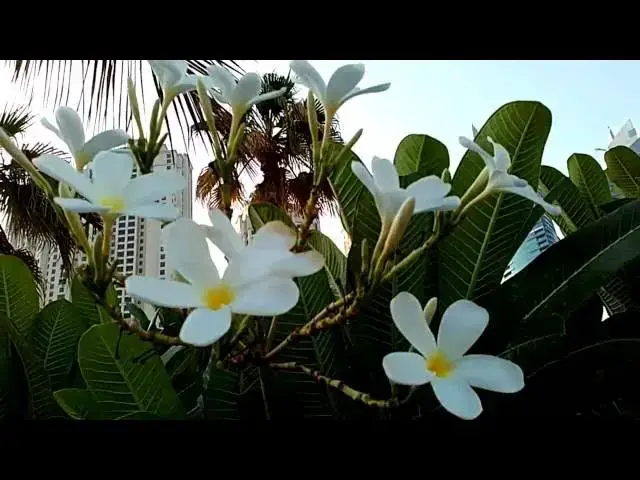

Araliya flowers - Plumeria
May 8, 2024
(Video captured @ Dubai)
Plumeria is related to the oleander, Nerium oleander, and both possess an irritant, rather similar to that of Euphorbia. Contact with the sap may irritate eyes and skin.
Each of the separate species of Plumeria bears differently shaped alternate leaves with distinct form and growth habits. The leaves of P. alba are narrow and corrugated, whereas leaves of P. pudica have an elongated shape and glossy, dark-green color. P. pudica is one of the everblooming types with non-deciduous, evergreen leaves. Another species that retains leaves and flowers in winter is P. obtusa; though its common name is "Singapore," it is originally from Colombia.[citation needed]
In Mesoamerica Plumerias have carried complex symbolic significance for over 2000 years, with striking examples from the Maya and Aztec periods into the present.
Plumeria flowers are most fragrant at night in order to lure sphinx moths to pollinate them. The flowers have no nectar, however, and simply dupe their pollinators. The moths inadvertently pollinate them by transferring pollen from flower to flower in their fruitless search for nectar.
Show More Show Less