Up next in 10



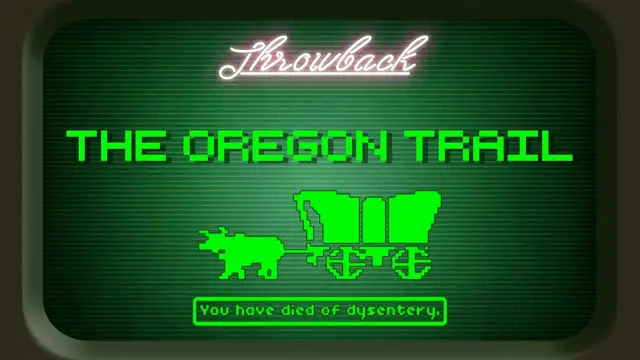
The Oregon Trail is perhaps the most successful educational computer game of all time, but its humble origins include a stint in a converted janitor's closet and the casual deletion of every line of its initial code. In this episode of Throwback, Erin traces the history of your favorite computer lab activity.
The surprising history of the Oregon Trail changed computing, helped Apple achieve classroom dominance, and gave countless young people digital dysentery.
Don't miss a video! Subscribe NOW: https://www.youtube.com/@MentalFloss?sub_confirmation=1
About Mental Floss:
Mental Floss is where curious people come for trivia-tastic information. Mental Floss produces lists of fun facts, debunks common misconceptions, and tells untold stories from history, science, culture and more.
Website: http://www.mentalfloss.com
Twitter: http://www.twitter.com/mental_floss
Facebook: https://facebook.com/mentalflossmagazine
Copyright Notice: This video and YouTube channel contain dialog, music, and images that are property of Mental Floss. You are authorized to share the video link and channel, and embed this video in your website or others as long as a link back to this YouTube Channel is provided.
2025 Mental Floss
How The Oregon Trail Took Over Computer Labs | Mental Floss
https://www.youtube.com/@MentalFloss
Show More Show Less View Video Transcript
0:00
If you were a teacher walking the hallways of Bryant Jr. High School in Minneapolis
0:03
Minnesota in the winter of 1971, you might have found it odd that students were congregating
0:08
just outside of a janitor's closet. Were the kids canoodling? Smoking the devil's lettuce
0:15
What you probably wouldn't have guessed was that the teenagers were lining up to play a text-based computer adventure game about the westward movement of the 19th century
0:22
that involved hauling food and watching your loved ones die of pneumonia. It's the game
0:26
that went on to transform classrooms, popularize Apple, and nearly sent Barbie to the frontier
0:32
to suffer doll dysentery. It's the story of the Oregon Trail, and it's next on Throwback
0:43
Welcome back to the series where we take a deep dive into some of the most fascinating
0:46
pop culture stories and events you might remember from your childhood. I'm your host Erin McCarthy, and I too was once a virtual settler, embarking on a dangerous
0:54
2,000-mile journey from Independence, Missouri, to the promise of a better life in Willamette
0:59
Valley, Oregon. I forded rivers, took aim at deer and rabbits. Those freaking bunnies were so fast
1:05
and I don't think I ever hit a single one. Checked out virtual versions of iconic landmarks
1:11
like Chimney Rock, tended to the sick, and wrote my own name on a tombstone when I finally succumbed
1:17
to a germ I hadn't even known existed. It was all part of life on the Oregon Trail. Perhaps the most
1:22
successful educational computer game of all time. In the 1970s, 1980s, and part of the 1990s, kids across the country learned about this
1:30
pioneering part of American history in computer class, typing in commands and hoping they
1:34
had enough food to feed their party. It was a lesson in history, economics, and pure survival
1:40
Not only for players but for the game's creators, too. I hadn't heard of Don Rawich until we started researching this video
1:51
But it turns out he helped shape my childhood. While he was a 21-year-old student himself at Carleton College in Minnesota, Rawitsch
1:57
was also teaching an eighth-grade history class in North Minneapolis. He sometimes dressed up as historical figures, including Meriwether Lewis, and encouraged
2:05
kids to take an active interest in history. In the fall of 1971, Rawitsch decided he wanted to teach his lesson on westward expansion
2:11
a little differently. He started to work on a board game in which players could follow a map of the Oregon Trail
2:17
In the 1800s, thousands of pioneers had traveled westward and covered wagons, covering 10 to
2:22
20 miles a day on a six-month trip. Rawitsch wanted to communicate to his students just how harrowing this journey was, and how
2:28
everything from bad weather to disease could prove fatal. While Rawitsch was working on the board game, he started discussing it with his two roommates
2:36
Bill Heinemann and Paul Dillenberger. Both were aspiring teachers who also attended Carleton College and taught math at schools
2:42
in South Minneapolis. The difference was that they knew how to do some computer programming
2:46
They suggested to Rawich that the Oregon Trail would make a perfect text-based computer game
2:51
Rawich was intrigued, but there was a problem. His lesson was set to begin in just two weeks
2:56
That was enough time to work up a board game, but would it be enough time to program an entire
3:00
computer game? Heinemann and Dillenberger assured him they could do it. If that sounds impossible, try to take into consideration the state of computing at the time
3:09
If schools had a computer at all, it was a giant mainframe that dominated a room
3:14
Students would use a teletype machine, which was essentially a typewriter connected to a phone line, to type commands
3:20
There was no screen and no graphics. While writing the game's 800 lines of code took up a lot of time, Heinemann and Dillenberger
3:27
didn't have to worry about a complex user interface. At the end of the two weeks, they had the game loaded and ready to go
3:34
In fact, the two of them gave it a test run at Bryant Jr. High School, which is where
3:38
the students stood waiting their turn to play at the teletype machine in the converted janitor's closet
3:43
The computer room. The initial response was promising, but how would Rawwich's own class respond to it
3:49
And how would this simple text-based adventure game somehow find itself in school computers across the country Don Rawwich wheeled his school teletype machine into his history class on December
4:02
3, 1971 with a mixture of trepidation and excitement. He explained to his students that he had a game for them, called the Oregon Trail, and
4:10
that they would be separated into groups to play. While this allowed students to be engaged, it was also a practical matter
4:16
The school only had one teletype machine. Students quickly developed a simple division of labor
4:21
They would pick the group member they felt was the best typist, and sit that person in
4:25
front of the teletype to input commands and receive responses from the program, which
4:29
was loaded in the mainframe computer. Another student would be in charge of the budget, keeping track of money spent on supplies
4:36
like food and clothing. And another would follow the map provided by Rawwitch that gave them a visual reference
4:42
for the trail and its landmarks. The teletype would spit out questions on printer paper, which operated at a speed of 10 characters
4:49
per second. Originally, the game just gave you some money and then let you loose on the trail
4:54
The classic difficulty levels of banker and two other professions that no one ever played
4:58
as were added later. The game would ask questions like, how much do you want to spend on your Oxen team
5:04
Do you want to eat poorly, moderately, or well? Do you want to hunt or continue
5:09
Answers were typed in numerically. The program would then inform players of their progress
5:14
A hallmark of the Oregon Trail is that life in the game was horrible, and that anything
5:18
from disease to starvation could result in your dramatic and untimely demise. To survive
5:24
you'd have to hope you spent wisely on food and were a good shot when aiming at deer
5:28
That's because despite being a primitive technology, the teletype could still gauge
5:32
how quickly a player could shoot down their dinner. To fire a weapon, players typed BANG
5:37
and the computer measured how accurately and how quickly they typed it. If someone's fingers
5:41
slipped and your team accidentally typed BONG, your party might starve to death
5:48
Anybody who's played the Oregon Trail — and that's most kids who grew up in the
5:53
1980s and 90s — remembers that the game offered more gruesome ways to die than a Friday
5:58
the 13th movie. But was the real Oregon Trail that dangerous? In a word, yes
6:03
And actually, maybe worse. In 2019, The San Francisco Gate interviewed Lee Kruitzer, an expert on the actual Oregon
6:10
Trail, to find out how obstacles in the game stacked up to the problems faced by settlers
6:14
Kruitzer addressed that most popular of Oregon Trail deaths — dysentery. For those blissfully unfamiliar, dysentery is usually a bacterial infection in the intestines
6:23
that results in severe diarrhea and dehydration. Left untreated, it can be fatal
6:28
While people did contract dysentery, the leading cause of death on the Oregon Trail was probably
6:32
cholera, another infection that also causes gastrointestinal distress. Cholera was contracted by settlers drinking contaminated water from bacteria-infested rivers
6:41
and streams. Settlers rarely boiled anything because they didn't know anything about pathogens
6:47
Though not represented in the game, freak accidents were also responsible for interrupting trips
6:52
Women's skirts would get caught underneath wagon wheels, dragging them underneath and
6:56
crushing them to death under massive carriages carrying supplies. Men sometimes inadvertently shot themselves or others with their hunting rifles
7:04
If you managed to not get crushed under a wagon or shot in the face, you could still be struck
7:08
by lightning or drowned during a river crossing. While a watery demise was common in the game, real settlers usually had the good sense to
7:15
pay for a ferry across the river when one was available. If you survived all that, you could still look forward to the occasional murder
7:22
Tempers could flare during a six-month journey, after all. Or simply losing your mind
7:27
Both outcomes that were not reflected in the game. All in all, an estimated 1 in 10 settlers attempting the journey died, their bodies buried
7:35
in shallow graves along the trail. As morbid as the Oregon Trail could be at times, it wasn't quite as dangerous as the
7:40
real thing. Even though the Oregon Trail would eventually lead students on countless voyages of deadly
7:49
diarrhea kids loved it Right from the start it was a huge hit in Rowich history class and he soon entered it into the timeshare system that allowed programs to be used by the entire Minneapolis school district It made learning history fun And then
8:03
at the end of the semester, Rawich deleted the game. This wasn't some complex
8:07
computer game that he had spent months or years working on. It was a simple
8:11
text-based learning tool that appeared to have outlived its usefulness. Rawich's time at the high school was up, and both he and his two roommates were about to
8:18
graduate. There was no reason to think the Oregon Trail would resurface. What Rawich didn't know
8:23
was that classrooms were about to undergo a radical transformation, first in Minnesota and
8:27
then throughout the country. Since the 1960s, the state had been home to a number of computer
8:31
hardware manufacturers, like IBM and UNIVAC, and a number of groups and educators believed
8:36
computers belonged in classrooms. In 1973, they formed the Minnesota Educational Computing
8:41
Consortium, or MECC. One of MECC's key figures, a math teacher named Dale LaFriends, believed there
8:47
going to be a revolution in education in the coming year and MECC managed to get teletypes
8:52
in classrooms across the state hardware of course needs software and MECC got a major break in 1974
8:59
when LaFrance got a call from a professor at Carleton College who told him he knew a man who
9:04
had been drafted into military service but was a conscientious objector and was looking for work
9:09
his name Don Rawich Rawich had originally wanted to be a social studies teacher but needed to find
9:15
a job that met the government's standard of benefiting society for those refusing to enter
9:19
the war. He went to work for MECC as a liaison between the group and local community colleges
9:24
As the group began building a library of software titles, Rawich had an idea
9:29
After consulting with Heinemann and Dillenberger, he told MECC about the Oregon Trail. Fortunately
9:34
he had printed out the code for the game before deleting it three years prior. Over Thanksgiving weekend of 1974, he entered all 800 lines into MECC's system. There were
9:43
There were still no computer screens, and therefore no graphics at this point on the devices being used to play the game, but Rawich was still able to make some improvements
9:51
He was able to reference actual diaries, written by settlers that were stored at the University
9:56
of Minnesota Library. That gave him accurate prices of goods, and it also gave him information on how frequently
10:01
those familiar mishaps, like a broken wagon wheel or a thunderstorm, occurred
10:06
If a settler had a 20% chance of running out of water on the real Oregon Trail, for example
10:10
players would have a 20% chance of running out of water in the game. Rawwich also made events geographically accurate
10:16
It was most common to see snow or deal with an oxen injury beginning at the South Pass in the Rockies 950 miles into the trip, so that's where players would begin to see them
10:24
in the game. There was also the matter of how the game portrayed Native Americans
10:28
The earliest version of the game took a cue from old westerns and made Native Americans
10:32
one of the villains. At MECC, Rawwich realized that Native Americans historically were actually more likely to help
10:38
people on the Oregon Trail, which was reflected in the updated gameplay. The villain characters
10:43
were reimagined as generic ruffians. The new, more historically accurate version of the
10:47
Oregon Trail hit the MECC system in 1975 and was soon being accessed thousands of times
10:53
a month by schools all over Minnesota. In fact, it was the second most popular program
10:57
on the system. Only an early email program got more of that sweet, sweet teletype traffic
11:02
Don Rawich had gone from drawing a crude map of the trail on paper to seeing a computerized
11:06
version of the game being played by thousands of students in the state. But the Oregon Trail was just getting started
11:17
Remember MECC's basic mission statement? That computers were headed for every classroom in the country
11:23
By the end of the 1970s, that was becoming a reality. Hardware manufacturers had been successful in developing and producing desktop personal
11:30
computers with dedicated processors, keyboards, and screens. In 1978, one of MECC's coordinators went to a conference in California, where he was
11:38
shocked by the tiny computer he saw. MECC soon went to California to negotiate with the young Steve Jobs and Steve Wozniak
11:46
Their Apple II computer was sleek compact powerful and perfect for schools MECC ordered 500 of them to distribute across Minnesota each one loaded with MECC software like an updated version of the Oregon Trail
11:59
The partnership between MECC and Apple blossomed, and soon Apple found themselves
12:03
at the forefront of classroom computing. School districts bought computers from Apple
12:07
and acquired software from MECC, which had built up a library of educational titles
12:12
like number munchers and word munchers. schools and even entire states paid a fee
12:17
and were then allowed to copy the software as many times as they liked
12:21
to distribute it to any of their classrooms equipped with Apple IIs. By the early 1980s, roughly 5,000 school districts
12:27
or one third of all districts in the country, had a deal in place with MECC
12:32
The game was giving increasingly better graphics. Together, these developments meant the Oregon Trail was everywhere
12:38
and with six color monitors and the ability to etch their own names on tombstones
12:42
kids considered the game as much a part their school week as Trapper Keepers and Square Pizza
12:51
The Oregon Trail and other titles were so successful that MECC no longer needed to be
12:56
tied to the state. It started making games available at retail, where a growing number of consumers who now
13:01
owned home computers were buying both entertainment and educational software. In 1991, MECC was sold off to venture capitalists for $5.25 million
13:12
It was later acquired in 1996 by Softkey, later named The Learning Company, which was
13:16
bought by Mattel in 1999 for $3.8 billion. That's where Barbie comes in
13:21
Mattel supposedly wanted to slot some of their popular characters into the game
13:26
But by that point in the late 1990s, most of the company's best programmers had left
13:31
And The Learning Company didn't seem to be as valuable as the purchase price indicated
13:35
causing Mattel's stock price to plummet. Mattel shareholders sued and won a $122 million settlement
13:42
MECC faded away in 1999. The Oregon Trail is now owned by Houghton Mifflin Harcourt
13:48
With over 65 million copies sold and a place in the Strong Museum's Video Game Hall of Fame, it's become a classic
13:54
The game has gone through several versions and expansions over the years, including mobile games
13:59
and even a game called The Amazon Trail, which took players on a trip up the Amazon River
14:04
And while companies have tried to upgrade its graphics or gameplay over the years, that was never really the point
14:09
For millions of school kids, The Oregon Trail was an opportunity to make some very adult choices
14:15
Choices about family, about travel, and about survival. The Oregon Trail was a 19th century settler simulation, but it was also looking forward
14:23
to a future that would be driven by technology. Of course, today it also provides a hit of nostalgia
14:29
You can even play The Oregon Trail 2 in your browser. I'm still lousy at shooting deer and rabbits, though I did learn in researching
14:36
this script that when the game tells you you were only able to carry 200 pounds of food
14:40
back from your metric ton of animal carcasses, it was actually meant to represent the reality
14:45
that additional food would spoil. Not that your team was too lazy to bring back the life-sustaining digital bear
14:51
So what about Don Rawwich, Bill Heineman, and Paul Dillenberger? Heineman and Dillenberger realized their dreams of becoming teachers and have since retired
15:00
in Minnesota. Rawwich is still working as a tech consultant and has recently been working on a new educational
15:05
software venture. None of them could have foreseen what the Oregon Trail would become, and they weren't
15:10
thinking of profit participation. None of those million-dollar transactions involved them. But all three have expressed satisfaction that the game they created has been so instrumental
15:20
in education over the years. And in 1995, the three of them received public acknowledgment of their achievement when a
15:26
new version of the game debuted at the Mall of America in Minneapolis
15:30
With a real bison standing nearby, the three signed their names to a giant map of the Oregon Trail
15:35
unlike many of the players, they had made it to the end. I'm Erin McCarthy, and I gotta go buy some oxen. If you have any suggestions for a future installment
15:43
of Throwback, leave them in the comments below. But please don't tell me I died of dysentery
education