Up next in 10



From organizing her own thoughts to working with researchers, the creator shares how her channel has evolved over the past decade
Show More Show Less View Video Transcript
0:00
I made the mistake early on of prioritizing like the hard skills
0:03
Like can you, like how good are you at animating? How good are you at editing? How good are you at these skills
0:08
And I didn't prioritize enough the soft skills of how are you with collaborating with the
0:12
rest of the team? Are you an easy person to work with? Can you take feedback? Now I really prioritize the soft skills a lot more
0:20
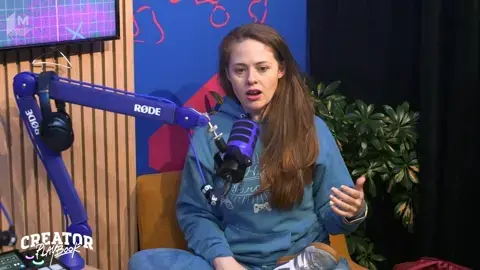
All right. So we are here with Jessica McCabe, who's also known as HowToADHD on YouTube
0:25
Jessica, thank you so much for joining us. Thank you for having me. This is exciting. So I want to get started with you telling us a little bit about how you got started in your content journey
0:33
What brought you to YouTube? I was failing really hard at life and I decided to put some of my energy that I've been putting into trying to achieve what I was trying to achieve
0:42
Like what if I take some of that energy and put it into figuring out like what's getting in my way and more importantly what do I do about it
0:48
And I had kind of come across articles here and there in the past of like oh that that's helpful but then I would like lose the article and then forget about the strategy and then when I was ready to go look for it again I couldn't find it
0:58
And I was like, I lose everything. Like, I lose notebooks. I lose phones
1:01
My mom said that I would lose my head if it wasn't attached. And so I was like, what won't I lose
1:06
And I remember, like, anytime I wanted to show people this one really funny video on YouTube, I could find it
1:11
So I was like, YouTube. I won't lose YouTube. I can't, right? I will always be able to find it
1:15
So I decided to put my content, everything that I was learning, on YouTube and make it public in case it was helpful for anybody else
1:21
But really, it was a place for me to put my notes as to what I was learning on YouTube
1:27
Yeah. So it's like a blog, but like the purest version of a blog. Yeah
1:30
You know what? In retrospect, a blog would have probably been a lot less work, but then we wouldn't
1:35
be here. Then we wouldn't be here. That's fair. Happy accidents. Tell me a little bit about the research process, both when you initially started out and how
1:43
that's evolved over time, because you are putting out a lot of scientific information, a lot
1:47
of information about mental health. What does that process look like for you? The research process has definitely evolved
1:52
It started out as me Googling things and I was like, I have ADD
1:56
What does that mean? A lot of articles say it's not called ADD anymore
1:59
It's apparently all ADHD now. Okay. And oh, it doesn't just impact focus
2:04
it impacts executive function too. I didn't know that. Eventually it was, hey, I'm an ADHD researcher
2:10
Would you like help? I see you're trying to disseminate good scientific information about ADHD
2:13
Like, would you like some help with that? And I was like, God, yes
2:17
So I started working with researchers. And even then it took a little bit. The first researcher that I worked with was like very pedantic
2:23
and wanted to use very research language. I was like, I'm trying to disseminate to a lay public
2:28
I need to be able to simplify a little bit. I need to do that in a way that doesn't lose important nuance
2:34
But I do need to be able to restate it in words that anybody can understand
2:37
So the current researcher that I work with, his name is Dr. Patrick Laccount He now our chief science officer and he reviews everything on our channel So if you see that we have the little badge on our channel that says like we on the health shelf you know trusted you know
2:52
like it's a channel from a trusted provider or whatever. That's because Dr. Patrick will count reviews everything that I put out before I put it out
2:58
It's really important to me to make sure that the information we're putting out is accurate
3:02
especially the fast pace that you have to go to as a content creator, like where you're posting every week or maybe sometimes more often than that
3:08
It's really easy for things to kind of slip through the cracks. Right. So it's really important to me to have that review process of like, is this accurate
3:17
Because if it's not accurate, then what am I doing? Before you had researchers working with
3:21
you, like how did you handle that without also having a consistent posting schedule
3:26
I did have a consistent posting schedule and I am a recovering perfectionist, but I gave my
3:31
perfectionism a different target. I was like, okay, you can get as perfectionistic about this as you
3:35
want. You can read as many articles to make sure that everybody's agreeing with you and that you're
3:39
giving the right information as you want, as long as you can get that video out on Tuesday. And that
3:43
was non-negotiable for me. I'm like, got to get it down on Tuesday. And for a while I was able to do
3:48
that. But then at some point, the amount of information that I was trying to include and the scripts were longer, the videos were getting longer, it became harder and harder to hit that
3:55
But what that means for me now is I'm not researching a brand new topic every week
4:00
like I did at the beginning. I've played around with different ways of doing it. One was like
4:04
okay, for this month, I'm learning about this topic and all of the content will be about this
4:08
topic. Now it's a lot of, oh, I already know this stuff. I've already researched this stuff. I can
4:14
make another video about the same topic. But at first it was, I was killing myself because it was
4:18
a brand new topic every single week. And I was researching from scratch. At what point did you
4:23
decide like, oh, I need to build out the team here and I need to bring like a researcher on
4:28
or I need to bring an editor on. And how did you approach that process? So at first it was
4:32
my boyfriend at the time, Hey, like you're an editor. Can you throw a couple of graphics on
4:37
this. Like, let me edit it as best I can by myself. And he would take like a few hours to
4:41
punch it up a little bit. But over time, it became clear that what I was doing was really
4:46
meaningful to people and could turn into something right more than just a personal project
4:51
So he did more and more until I was like, okay, I got to pay this guy. So like I was paying him
4:56
and I ended up actually hiring him on full time before I was full time. Oh, wow. I was still
5:01
waiting tables. But then when that marriage fell apart, I had to hire a team. So there were a
5:07
couple of people that I had actually met at VidCon who were like, oh yeah, like we can do some
5:12
editing for you and we can do some animation. So I was like, great. So I started working with them
5:16
in the pandemic. I started working with Patreon on kind of a mini business course. And they were
5:21
like, yeah, you need to be doing this and you need to be doing that. And I was like, I cannot. I apparently like digital organization was such a big struggle for me still as someone with ADHD that I ended up hiring somebody literally to organize my shit Like hey digital organization because my files were everywhere My scripts were all over the place
5:38
Like, taxes, like when are taxes due? And like, oh, quarterly taxes now that I'm in business
5:43
It was just a lot. So I ended up hiring somebody for that. Our community manager had been volunteering for free in our Discord for a long time
5:51
And finally, after a couple of years, I was like, we should hire you, though. So basically, my whole strategy was as soon as I had enough money to hire a new person
5:58
I brought on a new person. So I have a pretty robust team. I know some creators, it's like
6:02
yeah, they're great at being a creator, but like running a business, essentially, that's a very different skillset. It is a very different skillset. And also moving from like
6:09
I'm going to have people I know help me with this thing, or like whoever's willing to help
6:13
because I can't really pay them what they would be worth otherwise. Moving from that mindset into
6:18
like, oh, I am hiring for a position and I need to vet that person was an interesting thing. And
6:25
And an ADSG creator friend of mine, Danny Donovan, recommended a recruiter that she had worked with
6:29
because she was also in the same boat of like, she kept hiring friends. And so we, for the first time, used a recruiter
6:35
who found us our current producer. And I was like, this person's amazing
6:41
I would love to talk about your relationship with your audience. Because I imagine it has like grown and evolved
6:45
over the years and like looked all sorts of different ways. But I feel like especially being a mental health creator
6:50
there's like an extra weight to that really. And I imagine people come a lot
6:54
with their personal experiences. So how do you navigate that? It's tough because I started out
6:59
and I was a peer to my community. I was somebody who was learning about my ADHD
7:04
for the first time, they were learning about theirs and we kind of came up together and that was a really cool experience
7:08
But it also meant that if somebody was struggling, it was almost like I was struggling, right
7:13
Like we were the same, we were in the same boat and like my boat was starting to float
7:19
and I didn't want to let them sink. So I wanted to respond to every comment
7:22
I wanted to help everybody. And as the channel grew, I would get to the point where I would be overwhelmed with taking
7:29
on a lot of people's pain and needs and all of that. And so I would need to step away for a little bit, but then I would come back and there
7:34
would be like so many messages. What happened one day is I went to respond to the first message
7:39
And by the time I got through like five messages, that first person had responded. Now I'm in a conversation with that person
7:43
And I was like, I can no longer respond to people one-on-one
7:47
And so that's when I had to evolve it to let me read the comments. Let me hear what people are saying
7:52
but then I need to make content that speaks to that struggle that is going to be for more than
7:57
just that one person. So one of the things that we're doing now that I'm really excited about is
8:01
I'm going to be starting to coach people one-on-one so I can get that one-on-one that I really value
8:08
But then we put that content online where other people can benefit too. So that way I, yeah
8:14
I can work with somebody one and they can get that support And then hopefully other people watching will will will benefit too As a mom do you feel like the way that you approach either the content itself or the
8:25
way that you approach the work of making the content has that changed at all? It has changed
8:29
Yeah, I mean, the first change is obviously like having to take a break, right
8:34
As a content creator, you're producing content week after week after week, maybe day after
8:38
day after day. But maternity leave is a thing, right? That is apparently important
8:42
So I had to figure out like, how do I keep putting out content while I'm away and set
8:49
my team up for success to do that? It was really rough that first year to try to create content because it was like, my
8:57
brain had been hijacked by this new passion, this new child. My brain had literally been rewired
9:03
Matrescence is a massive transformation. And so it also coincided with finishing my book and putting that out into the world
9:10
I'm like, I finished my project of learning everything that I can about my ADHD brain and
9:14
putting it somewhere I can find it again, making it available to other people. I'd finished that project and I was embarking on this new one of motherhood
9:20
And suddenly my entire hyper focus was being a mom. And I do not have a channel about being a mom
9:25
I don't want a channel about being a mom. So like most of what I was learning was no longer something that made sense to share with
9:31
my community. And so we changed up how we were doing content. I was no longer just on a blue wall talking head
9:38
We were able to do different kinds of content, but it was very much an exploration of what kinds of content is my brain going to be able to focus on
9:46
What kind of content do I want to make and what kind of content is the audience responding to now
9:51
What are your hopes for the mental health content creation space going forward
9:56
And kind of a two-parter, if there are any mental health creators that you want to call out that you think more people should be watching, should be knowing about, we'd love for you to share
10:04
Yeah. So therapy in a nutshell is great. Dr. Tracy Marks is great. Also, Daniel from the Aspie world is the reason why I'm here
10:11
We're doing a couple of panels tomorrow. He's great for anybody who's dealing with autism
10:15
A lot of people who watch my channel are like, can you do this? But like for autism and I'm like, I don't have autism, but my friend does
10:21
Right. Go check out his channel. What I'm hoping for from this space is that we get more people with lived experience connecting
10:29
with people who have the research backed evidence based information. And then we're disseminating that
10:35
Right. There's a lot of people who are academics and researchers like speaking to it, and then there's a lot of people
10:40
speaking from personal experience. But I would love to see more people doing what I'm doing
10:45
which is speak about your personal experience, but as a vehicle, as a vehicle to share
10:51
evidence-based information so that it's not just, oh, well, this one thing worked for me
10:57
It's, hey, this is what works for a lot of people with ADHD
11:01
and it worked for me. Maybe it will work for you too. Thank you
Celebrities & Entertainment News