Up next in 10


"Get 15% off OneSkin with the code COWBOYKENT at https://www.oneskin.co/COWBOYKENT
#oneskinpod"
Go to https://OmahaSteaks.com and use promo code COWBOYKENT at checkout for $35 off. Minimum purchase may apply.
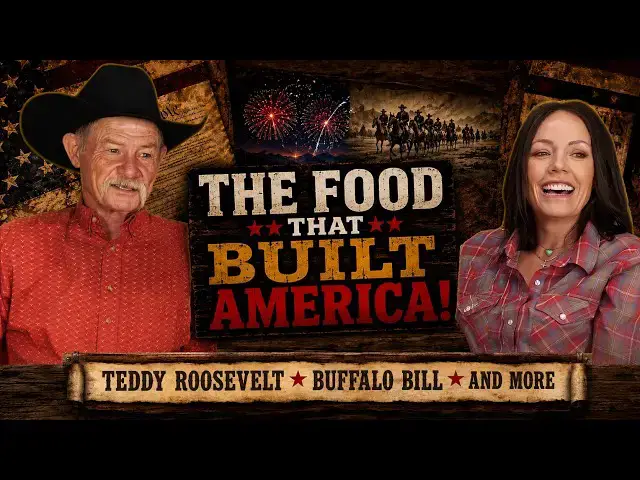
Happy 250th birthday, America! Shannon and I pull up a chair to talk about the food that built this country. We'll ride the transcontinental railroad too, and the folks who laid that track. From the White House to the chuckwagon, every one of these dishes carries a story about who we were and how far we've come. So grab a cup of coffee, and celebrate this country's 250th with us!
Cowboy Coffee Hour Podcast
Podcast available on Apple, Spotify and your favorite podcast platform!
Check out our BEST SELLING cookbooks. Get your copy here: https://www.kentrollins.com/shop
Also available at bookstores nationwide, and Amazon www.amazon.com/shop/cowboykentrollins
---------------------------------
Connect with us!
https://facebook.com/cowboykentrollins
https://instagram.com/cowboykentrollins
https://twitter.com/Kent_Rollins
---------------------------------
Kent Rollins
Cowboy Cooking, Cast Iron, Outdoor Cooking, Grilling, Dutch Oven Cooking
Show More Show Less View Video Transcript
0:00
There is another figure we want to talk
0:02
about
0:03
>> who actually brought the story of the
0:08
American cowboy to the world.
0:10
>> Y
0:11
>> and one guy that you really find quite
0:14
interesting.
0:19
>> Howdy. My name is Kent Rollins. I've
0:22
been a cowboy and a chuck wagon cook for
0:24
over 30 years cooking for ranches all
0:26
across America. You might have seen me
0:28
on the Food Network or alongside my
0:30
beautiful wife Shannon on our YouTube
0:32
show where we share cowboy cooking from
0:34
the trail. But now we're going to take
0:36
you behind the scenes to real campfire
0:39
conversations. Join us as we share
0:41
humor, cowboy wisdom, and stories full
0:43
of history, heart, faith, and of course,
0:46
a little fire. So grab you a cup of
0:48
coffee, pull up a chair, and welcome to
0:51
the podcast.
0:57
Hey, thank y'all for joining us and
0:59
happy Independence Day. We have come to
1:02
celebrate it, Shan. We have.
1:04
>> This is our first July 4th episode.
1:06
>> That is right. And you know, we've all
1:08
heard about the battles and speeches and
1:10
the turning points of America, but did
1:13
anybody ever tell us about the food back
1:15
then? I don't think so. You know, and
1:17
the food really has a story all in its
1:19
own. It played a big part in the major
1:22
decisions of the country as it went
1:23
along. I don't think that's something
1:25
that people realize or think about. It
1:27
was very important. And if you guys have
1:29
been watching our Wednesday cooking
1:30
episodes, we are just finishing up a
1:33
four-week series where we celebrated
1:36
America's 250th birthday with the
1:39
historic food and the people that help
1:42
shape our nation. So, we've done uh
1:44
Thomas Jefferson and James Hemmings with
1:46
Mac and Cheese. Yep. Dolly Madison's ice
1:48
cream and Sally Shad. Um, Johnny cakes
1:53
with George Washington. It got them
1:55
through the battle. Um, so we thought,
2:00
let's keep this going as the grand
2:02
finale, our July 4th episode. We're
2:04
going to talk about the food that built
2:06
this country and sort of reference, if
2:07
you guys haven't seen it, some previous
2:09
videos that we did quite a long time
2:11
ago.
2:12
>> Um, about the food. So, if you are
2:15
interested in these recipes that we're
2:16
going to be discussing, please go back
2:18
and check those out. We'll have them on
2:19
our YouTube channel and also on the
2:22
printable recipes on our website. Just
2:24
go to kent rollins.com.
2:27
>> But I I would like to say if you
2:29
watching this series and you didn't go
2:30
back and watch the very first one,
2:32
>> what's the very first one?
2:34
>> George Washington.
2:35
>> Oh yeah.
2:36
>> Uh and the ho cakes.
2:37
>> Yes.
2:38
>> I had the best outfit in the world Shan
2:42
had ordered. And the only thing I really
2:45
didn't like about my outfit was the wig
2:48
I had to put on and the little hat.
2:50
>> Okay, first of all, you weren't that
2:51
excited about the outfit when I was
2:54
buying it.
2:55
>> No,
2:56
>> the Amazon exclusive.
2:58
>> Yeah,
2:58
>> I can't even remember what it was
2:59
called. It was like
3:00
>> the colonial period dress.
3:02
>> It It was pretty good.
3:04
>> Was a little warm, too, but it Yes. But
3:06
it was good. Y'all be sure you go back
3:08
because you need to start that series at
3:10
the first and go all the way through.
3:11
>> It's fun. It's interesting and it's
3:13
uncovering a lot of things that you
3:14
wouldn't know about food and also the
3:17
people. But I want to kick this off with
3:21
one of the most surprising
3:24
recipes and foods we've ever done, I
3:28
think. And that kicks off with our boy,
3:32
President Lincoln.
3:33
>> Yes. You know, President Lincoln. And
3:35
when you think about Lincoln, always
3:37
just see this tall, thin, sort of
3:39
ghostly like figure. You know, this man
3:41
didn't eat much.
3:42
>> And that's the reason we found out,
3:44
which makes sense, because he was under
3:46
so much stress. We've got the civil war
3:48
going on. He didn't really eat. He was
3:51
so stressed out and worrying about what
3:53
was happening with the country. And his
3:56
wife, Mary Todd, we got to give we got
3:59
to give it to this lady.
4:01
>> She figured out a way to get him to eat
4:04
and to get his health up so then he can
4:08
run the country. And the way she did
4:10
that was with a good old comfort food. I
4:13
think we all go back to comfort food.
4:16
And that was chicken ficacy,
4:18
>> you know. And when you hear the word
4:20
fricacy, the first time I ever heard
4:22
that word, you know where it was on a
4:23
Bugs Bunny cartoon.
4:25
>> Oh, you know.
4:26
>> Yeah.
4:26
>> And I'm thinking fricy, but really it's
4:28
French inspired.
4:30
>> It sounds super fancy. And it sounds
4:32
like something like, well, I would never
4:34
make that,
4:36
>> but but we did. And it was easy, simple
4:39
comfort food.
4:40
>> Yeah. I mean, she had to get Abe to sit
4:43
down. She'd invite company over just so
4:45
he'd take time to sit at the table to
4:48
sit there and eat and sit and visit. Cuz
4:50
a lot of times to him, food might be,
4:52
"Hey, I'm going to have an apple day and
4:53
a glass of milk." You know,
4:54
>> that's crazy. That was his meal
4:56
sometimes. I mean, I get it. There was a
4:58
lot going on and he probably wasn't even
5:00
in the mood to eat. But for her to kind
5:03
of devise this plan like, "Oh, okay. I'm
5:05
going to invite some people over so you
5:06
have to sit down.
5:07
>> And this was his favorite meal.
5:09
>> Yeah.
5:09
>> You know, and usually it is like ve or
5:13
rabbit or chicken.
5:15
>> Okay.
5:15
>> That is really brazed in like a butter
5:19
sauce that you start out with. But when
5:21
we were researching this and going back
5:23
through this recipe and looking and it
5:24
had two ingredients that I'd never seen
5:26
before in my life. One of them was mice.
5:30
>> That's m a c e.
5:32
>> Yes. And the other was margarm.
5:35
>> Margarm. Yep.
5:36
>> Yeah. I I've never heard of them.
5:38
>> Neither had I. But um you know, we've
5:41
done a lot of historical foods and mace
5:44
is actually, tell me if I'm correct, the
5:46
outer casing or coating of nutmeg.
5:49
>> Yes.
5:50
>> And so it has kind of a similar taste.
5:52
And nutmeg and mace were used a lot in
5:55
cooking. Now, today we think of nutmeg
5:57
more as a dessert y
5:59
>> kind of ingredient, but back then it was
6:02
used a lot in savory ingredients.
6:06
>> So, try it because it gives it a really
6:09
wild kind of different flavor.
6:11
>> Does that
6:12
>> And you you started with we we made this
6:15
in the Dutch oven. It was butter and
6:17
cream. Yeah.
6:18
>> What can go wrong?
6:19
>> Got to be good. And then you use chicken
6:21
thighs because
6:23
>> more flavor. When you're looking at a
6:25
piece of chicken that you're going to
6:26
cook, thighs are cheaper, number one.
6:28
Number two, I think they have so much
6:30
more flavor. And you can debone them
6:32
yourself or you can buy them from the
6:34
butcher that way. But they, to me,
6:37
there's nothing that brings out more
6:38
flavor of meat than just the chicken
6:40
thigh. And when we put all this
6:42
together,
6:43
>> and all you do is you season the chicken
6:46
with this mace and margarm kind of
6:48
combo. Salt and pepper. I think maybe a
6:50
little garlic.
6:51
>> Season the chicken, put it in this
6:53
butter and cream, cover it, and let it
6:56
cook. Yeah.
6:57
>> And that's it, guys. That's what chicken
6:58
freak or freacy basically is.
7:01
>> Then after that chicken cooks, you took
7:03
it out and then made thickened that
7:06
leftover broth
7:08
>> to a gravy.
7:09
>> Yes.
7:10
>> With some biscuits.
7:11
>> Yes,
7:12
>> guys. This is not fancy cooking. And
7:14
that kind of reflects Lincoln himself,
7:18
too. He was an old country boy.
7:20
>> Yep.
7:20
>> You know, he was a farm, grew up in
7:22
extreme poverty.
7:23
>> Yep.
7:24
>> And so he grew up on those simple
7:27
comfort foods. And what I think is
7:30
interesting, he he took that to the
7:32
White House. So he's in in this
7:34
incredibly powerful position. Um, and
7:37
all he wanted was comfort food. And I
7:39
think we could all kind of
7:41
>> when I was looking at it, you know, and
7:42
thinking about Abe and all the pressure
7:44
he's under, it was a country divided in
7:47
half. There was so this wasn't like the
7:50
Revolutionary War. This was the United
7:53
States of America at war with each other
7:55
>> on your own soil.
7:56
>> And I mean, I think that's why he looks
7:59
so bad. This this got to weigh heavy on
8:01
your mind.
8:02
>> Yeah. Um, and I also have to give
8:04
another shout out to Mary Todd because
8:05
if we going through this series, we've
8:08
looked at a lot of the unsung heroes and
8:10
the people, the behind the scenes, and I
8:12
think Mary Todd definitely was one of
8:14
those. And she kind of got a bad
8:16
reputation after this because
8:19
Mary Todd's legacy was well, she went
8:20
crazy.
8:21
>> Yep.
8:21
>> Well, come on, guys. Like, she went
8:23
through a lot. She lost, I think, all
8:26
four of her boys.
8:27
>> Yep.
8:28
>> One of them was during the Civil War.
8:31
She lived through the Civil War, had to
8:33
take care of Lincoln so he could do his
8:35
job running the country. lost her four
8:38
boys, watched her husband get
8:40
assassinated, and then later one of her
8:43
boys,
8:43
>> one of her own,
8:45
>> one of her own boys put her in a mental
8:48
>> had her committed.
8:49
>> So, shout out to Mary.
8:52
>> Yes. Thank you, Mary Todd. Now, we
8:54
talked about old honest Abe, you know,
8:56
and he was sort of a reserve person that
8:58
was quiet, you know, and stuck to
9:00
himself and let the problems of life
9:03
just sort of run him down in the ground.
9:05
didn't want to take time to eat. But
9:08
when we talk about this fell, he was
9:10
totally opposite. He loved to eat. He
9:15
loved exercise. He went through a lot of
9:18
hardships. He was to me one of the
9:21
greater people that inspired so many
9:23
others to do great things. And that's my
9:26
buddy that I'd love to have in camp,
9:28
Teddy Roosevelt.
9:30
>> And he is America's cowboy president.
9:32
Right.
9:33
>> I didn't know this about him. Um, of
9:35
course we've heard of Teddy and the
9:38
Rough Riders and he has a really
9:41
interesting legacy, but he was America's
9:44
true cowboy president. And when we say
9:46
cowboy, a lot of that is,
9:48
>> you've said it before, all hat, no
9:50
cattle. Yeah.
9:50
>> Um, it was interesting, too. He made a
9:53
comment roughly saying that the West is
9:56
what shaped him and made him into a
10:00
president. I think that's a really
10:02
interesting concept. I think the west or
10:05
the idea of the west, especially during
10:07
the west westward expansion shaped a lot
10:10
of people, right?
10:12
>> Yeah. I I read in a book a long time ago
10:14
in high school. I barely remember it
10:15
because that was like back before it had
10:17
electricity. Uh that he said the wet the
10:21
west shaped me. It didn't break me. M
10:25
>> and there was it was hard work, you
10:28
know, but he when we go back and you
10:30
look at him and he built his own
10:31
gymnasium, his own workout deal for him
10:34
to think the only way I'm going to get
10:36
over this asthma. The only way I'm going
10:37
to get over this being a little weak kid
10:39
is I'm going to have to exercise every
10:40
day. I'm going have to work hard every
10:41
day. This is what Cowboy stands for.
10:44
>> You know, work, integrity, honesty, and
10:48
never give up.
10:49
>> When you said the West made you, it
10:52
didn't break you. Yeah. I think we can
10:54
take that away in a lot of situations in
10:56
our life.
10:57
>> How do we approach obstacles?
11:01
Um, and what are we going to do about
11:02
it? Are we going to let it break us down
11:04
or are we going to look for the bright
11:06
side? Are we going to look for a way
11:08
around it?
11:09
>> Um, and I think that was the spirit of
11:10
the West.
11:11
>> Yes, it was.
11:20
>> You know, we spend a lot of time out
11:22
here in the sun. The wind, smoke, and
11:24
weather, they can be pretty tough on
11:26
your skin. That's why we're glad to
11:28
partner with One Skin.
11:30
>> Kent, you know this, but I am kind of a
11:33
fanatic when it comes to skin care.
11:35
There's a lot of influencers and a lot
11:38
of information out there about all this
11:40
skin care. And what's important to me is
11:43
really to look at the science behind it
11:46
to know, are we just going to waste our
11:48
money or is this stuff going to really
11:49
work? So, one skin has developed a
11:52
scientifically backed peptide called
11:55
OS-01,
11:58
and it targets skin aging at a cellular
12:01
level. It improves skin health, it
12:04
reduces the look of fine lines, and it
12:06
also supports your skin barrier, which,
12:08
as you said, since we're outside so
12:10
much, that's really important. I've been
12:13
using it. Kent's been using it a little
12:14
bit. And we really love that this is
12:18
quality skin care. And that not only
12:20
that, but it's backed by science.
12:22
>> Born from over a decade of longevity
12:25
research. One skins OS-01
12:28
peptide is proven to target the visible
12:31
signs of aging.
12:33
>> And with skin care, you don't just want
12:34
to target your face. You want to make
12:36
sure you're taking care of your whole
12:38
body. And on one Skin offers also a full
12:41
body lotion that we love. For a limited
12:44
time, try Oneskin with 15% off using
12:47
code cowboy Kent at onkin.co/cowboykent.
12:53
That's 15% off. oneskin.co
12:57
with codec cowboyk. After you purchase,
13:00
they'll ask you where you heard about
13:01
them. Please support our show and tell
13:03
them we sent you.
13:09
He loved food.
13:10
>> Yes, he did. He loved to eat,
13:11
>> but he loved hearty food. And a lot like
13:15
Lincoln, he loved simple food. And what
13:19
we did was created the Teddy Roosevelt
13:23
breakfast hash.
13:24
>> Yep.
13:25
>> And this was a hearty dish, very simple.
13:29
And and hash, if you all didn't know,
13:31
comes from the French word hasher,
13:34
meaning to chop. And if you've watched
13:37
our cooking videos, Kent has an old
13:39
cowboy hash knife. It's similar to an
13:42
ulu, Alaskan ulu knife, but it is shaped
13:46
a little bit differently. Um, and it's
13:49
its whole reason was that chuck wagon
13:50
cooks in the 1800s going down the trail,
13:53
this was their go-to tool because it was
13:56
an all-purpose kind of thing. It would
13:58
scrape, it would chop, it would it was
14:00
used for hashes.
14:02
>> And how did hash like originate? Hash
14:04
was something that was really brought
14:06
about by, hey, we had this meat left
14:10
over from last night. Whether it be like
14:13
a corned beef or a brisket or a piece of
14:16
buffalo meat, you know, elk, whatever.
14:20
How are we going to use this for
14:22
tomorrow? I know what we can do. We can
14:26
chop this up and make a hash with it.
14:28
Serve it for breakfast. Put some eggs on
14:30
top of it. Mix in some potatoes. This
14:34
was a meal that was simply put together
14:37
by we have leftover product.
14:39
>> It was the creative genius of the
14:42
leftovers. Yes. Right. And he
14:45
particularly liked this because he was
14:47
on the road a lot traveling and just a
14:49
good hearty hash, especially potatoes.
14:51
Like
14:52
>> potatoes are such a great ingredient to
14:55
enhance flavor but also make a meal go
14:59
farther. I mean, I used to think when
15:02
I'd go to a restaurant and I'd see hash
15:04
on the menu or like corn beef hash, I
15:06
think, well, not me
15:08
>> cuz you're not a corn beef fan.
15:10
>> But when we did this video and recreated
15:13
Teddy's little hash there,
15:15
>> it won me over. I do love it.
15:19
>> And honestly, like it is a good um quick
15:23
meal in for breakfast.
15:25
>> Oh, yeah. Don't take no time to make
15:27
>> got the ingredients. Usually they're
15:28
already prepped. is just kind of throw
15:30
them in a skillet. And it's one of those
15:31
you can throw anything in.
15:33
>> Oh,
15:33
>> we kept it simple. We kept it more
15:35
traditional in our video, but adding
15:38
bell peppers, any kind of pablanos would
15:40
be a great one. Um,
15:42
>> sprinkle some cheese on it, whatever you
15:44
got to do. But them fried eggs over
15:47
easy. And when you bust that and that
15:50
yellow just runs out across that hash on
15:52
that plate, you're thinking, I'll go up
15:54
San Juan Hill with you, Teddy.
15:57
Well, speaking of Teddy and one of his
16:01
best known roles has got to be The Rough
16:04
Riders, right?
16:05
>> And so the Rough Riders came about,
16:08
Spanish American War Breaks Out. At the
16:10
time, Roosevelt is the assistant
16:13
secretary of the Navy. Yep.
16:14
>> Big time. Like, this guy is going
16:16
places.
16:18
And he's like, you know what? No, I've
16:21
got a bigger purpose here. So he resigns
16:25
from his position
16:27
and he goes out and he's like, I'm just
16:29
going to make up a calvary.
16:31
>> Yeah.
16:32
>> And what made this successful, probably
16:36
one of the most successful calvaries in
16:38
the nation's history,
16:41
he finds
16:43
a the most miscellaneous group of guys.
16:46
We have Ivy League Ivy League athletes,
16:50
lawyers, farmers,
16:52
>> immigrants,
16:53
>> immigrants, Native Americans.
16:55
>> Yes.
16:56
>> And I'm trying to think how does a guy
16:59
back then before social media, we can't
17:01
just make a Facebook post like, "Hey,
17:03
anybody need a job?"
17:05
>> Um, how's he doing this? And the reason
17:08
is he had gained so much respect from
17:13
not only his time in Washington and
17:14
building up, he was also the governor of
17:16
New York.
17:17
>> Yep.
17:17
>> Then went to the Navy secretary. Um, but
17:20
it was his time in North Dakota in the
17:24
Badlands and
17:26
creating I I don't want to say character
17:28
because that makes it feel like it's it
17:30
wasn't wasn't true, but creating this
17:32
persona where he was hardworking. He
17:36
didn't just talk the talk, he walked the
17:38
walk.
17:38
>> Yeah. And and people knew they could
17:40
trust him. They'd have I mean, he would
17:42
have your back. You know, if you were in
17:44
a battle or you were digging a post hole
17:46
or you were sitting down eating hash
17:47
with him, he was your buddy and he he
17:50
let it be known.
17:51
>> So to a president with a lot of a lot of
17:54
character, a lot of drive,
17:58
>> but who could also appreciate simple
18:01
hearty meals. I think that's exactly who
18:03
he was.
18:03
>> Yeah. And he and he had a great time for
18:05
me because um he came to Oklahoma, you
18:09
know.
18:09
>> He did what?
18:10
>> He came to Oklahoma.
18:11
>> Oh, okay. You mean like doing like for a
18:14
tour or what was or
18:16
>> Well, he come to hunt.
18:17
>> Oh. Oh, okay.
18:18
>> And uh and Teddy was was really a
18:21
liaison too with the Native Americans in
18:24
a way. you know, when they were going to
18:27
have this big wolf hunt, uh, which when
18:30
I was at Hollis, it was probably 65
18:33
miles over towards Frederick, Oklahoma,
18:36
and in some of that country, but he he
18:40
was hunting there with a man that people
18:43
may know too that was also a great
18:46
leader of another nation, and that was
18:48
Quana Parker.
18:50
>> Uh, they become dear buddies. Teddy even
18:52
had him up to the White House, you know,
18:54
so it has a tie back to my own old home
18:57
state, but I would have loved to have
19:01
sat down with him at the wagon and had a
19:04
cup of coffee,
19:05
>> you know? I think it would have been a
19:07
great deal.
19:07
>> Can you imagine the stories coming from
19:09
that guy?
19:10
>> It would have been great.
19:10
>> That's definitely one of those like when
19:11
you get like, who would you like to have
19:13
a meal with, alive or dead? Definitely
19:14
Teddy.
19:15
>> Old Teddy. So, while Teddy was America's
19:19
cowboy president, there is another
19:22
figure we want to talk about who
19:26
actually brought the story of the
19:29
American cowboy to the world.
19:31
>> Yep.
19:32
>> And one guy that you really find quite
19:35
interesting, Buffalo Bill Cody.
19:38
>> Oh, Bill Cody.
19:39
>> And I want to start off too, guys. So, I
19:42
was introduced to him. Of course, I, you
19:44
know, knew about him.
19:46
>> Oh, you got to meet him.
19:46
>> Well,
19:48
>> I knew the name.
19:50
>> Oh, I I thought when you said you were
19:51
introduced to him, you actually got to
19:52
meet him.
19:53
>> No, but I a while back I read a book
19:58
called The Galloping Gourmet by Steve
20:02
Fryzen, I think. Um, I accidentally came
20:05
across this, thought it was interesting.
20:08
If you are at all a foodie, a historical
20:11
foodie like the American West or just
20:14
have an interest in maybe Bill Cody,
20:16
highly recommend this book. This is
20:18
fascinating because he was such an
20:21
incredible man and he was such a foodie
20:26
and he really introduced the western
20:29
lifestyle, the American frontier,
20:32
not just to people in the United States
20:35
but overseas. This man was a was a great
20:39
diplomat for what the West was about,
20:43
>> you know, and I I admire him a great
20:45
deal. You know, this I would uh would
20:48
have loved to have went with him, but he
20:49
was a scout. He was a Pony Express
20:52
rider. He worked for the railroad.
20:54
>> He again, he did all sorts of crazy
20:56
things. So, he was actually born in
20:57
Iowa, 1846. And here's a thing, guys,
21:01
that you're going to pick up on. When he
21:04
was, I think around six years old, his
21:06
father died and so he was then in charge
21:09
of kind of taking care of the family.
21:10
So, are we seeing a pattern here?
21:13
>> Stuff tough.
21:14
>> Hang on a minute, Shan.
21:15
>> What?
21:16
>> Do you hear that Schnowzer snoring?
21:18
>> I don't know if anybody can else can
21:20
hear it on the mic, but the the
21:22
schnowzer snoring. If you guys are
21:24
watching on YouTube, you know you've
21:25
seen every episode we have our schnowzer
21:28
sitting here. And I I don't want to take
21:31
it personally that he completely passes
21:33
out during all of our
21:34
>> Yes.
21:34
>> podcast recordings, but
21:36
>> it's hard work.
21:37
>> I think I I would hope we're more
21:38
interesting.
21:39
>> Yeah.
21:39
>> But anyway, sorry. Going back to um the
21:43
pattern is these people who started off
21:47
having a rough go and taking that
21:50
challenge as kind of education. Yeah.
21:53
>> And a way to push forward and say,
21:55
"Nope, you're not going to take me
21:56
today."
21:57
>> Um, so then, like you said, he did a ton
22:00
of different things. I think,
22:02
>> so he was a Pony Express rider.
22:03
>> Yeah.
22:04
>> That ain't no easy job.
22:06
>> No, ma'am. He, you know, when when you
22:09
think about that and you're you're
22:11
riding such long distances and when
22:14
you're have adversaries that might want
22:17
to do away with you, you know, a lot of
22:20
them Pony Express riders, they didn't
22:22
live much past 25, 26 years old. You
22:25
know, uh, hard on horses, but really
22:27
hard on people, too.
22:28
>> Let's talk about how he got his his
22:31
nickname.
22:31
>> Well,
22:32
>> he was, um, working for the Kansas
22:34
Pacific Railway. Um I think it was
22:36
grading for them.
22:38
>> Yes.
22:38
>> And
22:39
>> and we might need to understand what
22:41
grading is. Not like grading a road.
22:43
It's oh
22:44
>> like surveying, you know, grading the
22:48
the elevation, the levelness, you know.
22:51
>> Oh, interesting. I did not know that. So
22:54
he's working for them and he's getting
22:56
kind of hungry and there of course all
22:58
these bison out there. He's like, I'm
23:00
just gonna kill one for the meat.
23:03
>> Yeah.
23:04
He takes and and these guys are watching
23:07
as he's doing this, these other crew
23:08
members, and I believe he takes a 12
23:13
shots and kills 11 bison.
23:16
>> Yeah.
23:17
>> So then obviously they nickname him
23:20
Buffalo Bill, but I do want to say he
23:24
wasn't killing them just for meaningless
23:28
slaughter.
23:28
>> Yeah.
23:29
>> This meat was actually put to use. And
23:31
later in life, he was a very staunch
23:34
advocate for the preservation of the
23:39
bison. He felt what was happening with
23:41
the hunting was absolutely horrific.
23:44
>> Yeah. I mean, he he was doing this. They
23:46
weren't a trophy, you know, that they
23:48
were going to mount. This was food to
23:50
feed workers, to fuel people that were
23:53
doing such hard jobs, you know, the
23:56
railroad workers, all the people.
23:58
>> Well, and so we cooked bison meat. Yes,
24:01
>> we have never Well, I had never had
24:03
bison before.
24:05
>> And it is not wild and gy if you haven't
24:08
had it like you may think. It was It's a
24:10
very It's a great cut of meat.
24:13
>> Oh, yeah. It's one of the healthiest
24:14
things. I mean, you you take wild game
24:17
out there. Elk, deer, bison, you know,
24:20
there's they're leaner, but there's no
24:23
cholesterol noticed in there. And it's
24:26
really, you have to understand too when
24:28
you're cooking those types of meats, you
24:31
you can't overcook them.
24:33
>> Oh,
24:34
>> you know, because when you do, because
24:35
there's not as much fat or marbling,
24:38
especially back during Buffalo Bill
24:40
Cody's time, you know, there was no
24:42
grain-fed bison that you're going to see
24:44
in the grocery store was very lean meat,
24:47
you know. So, one of his favorite cuts,
24:50
his favorite dishes was a bison
24:52
tenderloin. and you would cook it
24:54
upright, whether you would braze it, you
24:56
know, and then put it on a on a fire and
24:59
finish it low and slow, but to mix it
25:01
with a horseradish sort of cream sauce
25:03
right there.
25:05
>> I I would eat some right now.
25:07
>> You did. You made a horseradish cream
25:08
sauce. So, guys, grab that recipe and
25:10
and that you could also use that with
25:12
beef.
25:12
>> Oh, yeah. Primary.
25:13
>> And same same kind of protocol there.
25:15
>> Yep. Um,
25:17
and so he was also because he was out on
25:22
the prairie in the west, wild game in
25:24
general would have been very popular
25:26
with him along with like the chuck wagon
25:29
cooks. Correct. What else would they be
25:31
making? When you have so much wild game
25:33
out there like that, it's a lot of stew,
25:35
a lot of chili being made, you know,
25:38
because you you're talking about an
25:40
animal that you're going to get 12,300
25:42
lb meat off of if he's full grown,
25:44
weighing 2,000 lb. You know, you're
25:46
going to get 60% of what they weigh on
25:48
the carcass. And uh there's a lot of
25:51
different dishes you can fix. You know,
25:54
I I don't know when they went to really
25:56
grinding meat to get all this, you know,
25:58
ground up, but so many cuts that might
26:02
not have been as tender as that tender
26:04
loin were were cooked down, stewed down,
26:07
you know, to where they could become
26:09
tender and put in soup, stews, chilis.
26:11
>> And I imagine we're looking at rabbit.
26:15
>> Yes.
26:16
>> And
26:16
>> even rattlesnake.
26:17
>> Rattlesnake a little bit. Not much meat
26:19
on those. Wild turkeys.
26:21
>> Yeah, wild turkeys. There was a lot of
26:22
fish, duck, pheasant.
26:24
>> Oh, when you're coming across
26:26
>> Yes.
26:27
>> Um, interesting. So, I think what Wild
26:31
Bill maybe for the layman is most known
26:34
for is of course his Wild West show.
26:37
>> Yes.
26:38
>> And this is where he really took the
26:41
authentic American cowboy and introduced
26:43
it not only to America because a lot of
26:45
people again, we didn't have media, we
26:48
didn't have TV. So the west and the
26:50
cowboy and the native American, it was
26:52
kind of just all these like stories. He
26:55
brought these people to life through
26:57
this show and even took it across to
27:00
Europe.
27:00
>> Oh yeah. You know, he he had worked for
27:04
the railroad. He had worked for the Pony
27:06
Express. He when he started this Wild
27:10
West show, he wanted to show people what
27:13
the West was really like.
27:15
>> So it wasn't just about him. No,
27:18
>> there was Native Americans. There was
27:20
women there.
27:21
>> But you talk about this big operation
27:24
and
27:24
>> I mean I think of like a three- ring
27:26
circus got these big tents set up
27:28
everywhere out there. You know, this was
27:33
an operation that was not just a, oh,
27:36
we're going to go do this, you know, we
27:38
got 10 people, you know, we're going to
27:40
think about feeding all the people that
27:43
were on this crew. So this is
27:46
fascinating because you have to remember
27:48
at this time what this was at its peak
27:52
there were 1,500 performers, workers and
27:55
staff that they had to feed three meals
27:58
a day. the the whole operation they said
28:03
when they they set up covered about 11
28:05
acres about a half to one acre of that
28:09
was the kitchen because as we'd
28:11
mentioned Buffalo Bill was a huge food
28:15
he loved to eat
28:16
>> which then evolved because he started
28:18
off on the planes in the west wild game
28:21
then as he traveled and did these shows
28:24
his pallet really grew
28:26
>> but I think what is most interesting
28:28
about him is that he had an appreciation
28:33
for all of it. Whether he was in a
28:34
teepee cooking over an open fire or
28:37
whether he was sitting with Queen
28:38
Victoria and eating these luxury meals,
28:42
he appreciated it all.
28:43
>> He did. He never took it for granted. He
28:45
never lost really where his roots began.
28:48
And he, like I say, he was an advocate
28:52
and a diplomat for the American West and
28:55
what it was about.
28:56
>> It's just it's just it's fascinating.
28:58
And um one point I found really
29:01
interesting when he took this to Europe.
29:04
Of course, can you imagine if this is a
29:06
surprise for Americans, what the Wild
29:07
West is like. Can you just imagine what
29:10
Europe is thinking when he brings he
29:13
took a boat, took the whole Wild West
29:16
show, not just people, we have animals,
29:18
horses,
29:19
>> the tents.
29:20
>> I mean, he took it all over there to
29:24
show them what was going to happen. And
29:27
when you get all this set up,
29:30
can you imagine all these folks that
29:32
maybe have read little dime 10 cent
29:35
novels, you know, about the American
29:37
West, and then they get to see this, the
29:39
Native Americans, the Wild West show,
29:41
the shooting part of it. Annie Oakley's
29:43
there. I mean,
29:44
>> it's got to blow their mind.
29:46
>> And you know what was the most
29:47
fascinating thing to the Europeans? What
29:50
Wild Bill introduced?
29:51
>> Popcorn.
29:53
>> Popcorn balls. These people lost their
29:56
mind for these popcorn balls that they
29:59
sold at the little shacks before the
30:01
show. In fact, they had to like
30:03
quadruple their shacks that they made.
30:06
Um, and not only popcorn balls, but he I
30:09
mean, of course, Europeans had corn.
30:11
Yeah.
30:11
>> But he introduced them to like corn
30:13
cakes and cornbread, of course, popcorn
30:15
balls. So it was just um it was an
30:18
interesting way where he shared some
30:20
food culture with Europe as well along
30:22
with taking that culture back with him
30:26
and sharing it with the food tents.
30:28
>> Oh yeah. He I think he he acquired a
30:32
great taste for their food in their
30:35
country over there, you know, when they
30:36
were over there in England. and he he
30:39
wanted to bring that back to be able to
30:41
share it with the people back in the
30:43
United States. And he's another one that
30:47
I would have loved to have sat down with
30:48
and maybe had a little visit.
30:58
Kent, I think what would surprise people
31:01
the most about Omaha Stakes is they
31:04
don't just carry beef and steaks. We got
31:08
a salmon the other day and I'm not a big
31:12
salmon fan, but it was really good.
31:15
>> When you get that package and you get it
31:17
out, that salmon is fresh. It look like
31:19
you just caught it. But always pat it
31:22
dry. Make sure that it's good and dry
31:23
with paper towel. And then I salt it
31:26
pretty lightly. But sometimes I'll score
31:28
it just a tad on the meat to where that
31:30
salt and that spice can get down in
31:31
there. Then I just season it with
31:33
usually a little salt and pepper.
31:35
Squeeze some lemon on it when it's
31:37
through. Pan fry it just right. Get that
31:39
crust on the bottom and the top and then
31:40
eat it. There's nothing better. It's
31:42
healthy and it comes right to your door.
31:45
>> That's one thing that I love too is that
31:47
you don't have to spend time going to
31:50
the grocery store, walking around,
31:52
trying to pick what you want. This comes
31:55
straight to you. You don't even have to
31:57
get out of the car. It comes right to
31:59
your door.
31:59
>> Taste the Omaha steak difference and
32:02
never settle for grocery proteins again.
32:05
Get flavorful, highquality proteins
32:07
delivered by visiting omahaststakes.com,
32:11
plus $35 off when you use promo code
32:14
cowboykint at checkout. That's
32:17
omahastak.com
32:19
code cowboyk. Terms apply. See site for
32:22
details.
32:27
>> You know, Shen Wild Cody, he was out
32:31
west. Pretty flamboyant kind of guy.
32:33
Mhm.
32:34
>> Love food, love to celebrate. Great
32:36
story, you know.
32:37
>> But how did some of this food get there?
32:41
It wasn't Door Dash,
32:44
>> you know. There was a great thing that
32:46
happened and that was the laying of the
32:49
railways that joined America from one
32:51
side to the other that let groceries,
32:54
let people, everything in the world come
32:57
closer in from the water from both
33:00
sides. I think we'd be it would be great
33:02
a miss if we did not talk about the
33:04
railroad like as you said it connected
33:07
the whole country
33:09
>> um the people and of course the
33:12
expansion of food the transcontinental
33:15
railroad
33:16
>> and we have the union Pacific this is
33:20
coming from the west from Omaha
33:23
>> and this is made up of mostly Irish
33:26
immigrants German immigrants we have a
33:28
lot of Civil War veterans
33:30
And then we have the west coast side
33:33
which is the central Pacific. And that's
33:35
what's interesting is a lot of these are
33:38
primarily Chinese laborers that coming
33:40
out of San Francisco and California. And
33:43
I feel really badly for the Central
33:48
Pacific because if y'all don't know,
33:52
there was actually a great competition
33:55
that was created by the government to
33:58
incentivize
34:00
both sides to work harder. They would
34:02
get extra for each like feet of
34:05
>> mile of track
34:06
>> of track that they would lay. So the
34:09
east coast side, the Union Pacific,
34:12
think about the topography, guys. They
34:14
have it so easy. We have the Great
34:15
Plains. They don't get anything until
34:19
they hit the Rocky Mountains, which we
34:22
kind of, you know, go around a little
34:24
bit on the central Pacific side. They
34:28
get caught up in the Sierra Mountains,
34:30
the Sierra Neadas, which is just right
34:33
after they start laying it. So they
34:37
experienced tremendous amount of
34:39
obstacles.
34:40
>> Well yeah I mean and they had some of
34:42
the most dangerous jobs the Chinese
34:44
workers because they were the ones that
34:47
were blasting the tunnels through. They
34:48
were the ones that took all those
34:50
chances of getting in there and there
34:52
was so many that lost their life, you
34:55
know, to do to get this sacrifice to lay
34:57
track. But the thing that I found really
35:00
interesting in it too and they as they
35:01
looked at it was
35:04
the boys coming from Omaha. Salt pork
35:07
and beans and stuff like that.
35:09
>> It was very much like what we we cook
35:11
off the chuck wagon or what they would
35:12
have cooked, you know, on the wagon in
35:14
the 1800s. Very simple.
35:16
>> And you take the Chinese coming from
35:17
that way, bringing their culture, their
35:19
food, rice, some vegetables, bamboo
35:22
shoots, stuff like this.
35:25
Let's just look at this just a minute.
35:28
That's a healthier diet than you putting
35:30
all this salt in your system.
35:33
These Chinese workers were healthier at
35:37
the end of it and going through it than
35:39
the guys coming across from the other
35:41
side.
35:41
>> It's funny. They there was some um
35:43
research done that the Chinese were
35:46
actually healthier.
35:47
>> Yes.
35:48
>> And primarily because of their diet and
35:50
also they had um they were big with
35:53
herbal teas. And so I think that
35:56
contributed a lot to their well-being.
35:59
And especially with how much they were
36:01
struggling with, they got paid
36:02
significantly less than their white
36:04
working counterparts.
36:07
>> Can you think if we started having
36:08
herbal tea at the Chuck Wagon, it would
36:11
instead of coffee?
36:12
>> Do you even know what herbal tea is?
36:13
Like name an herb that's a tea.
36:15
>> Uh, jalapeno.
36:17
>> Exactly. I don't think teas for you
36:20
would make it. I think you're going to
36:22
stick to your cowboy coffee. One of the
36:25
meals that we talked about that was very
36:28
prevalent and and probably more on the
36:31
Eastern side with the Union Pacific were
36:34
meat pies
36:36
because
36:37
>> they were easily totable hand pies. Meat
36:40
pies. Uh what did the Irish call them?
36:44
>> What did the Irish call?
36:46
Well, they actually from the from the
36:48
Welsh.
36:49
>> From the Welsh,
36:49
>> I think. And they were called pasties.
36:52
And we found an interesting tidbit. Yes.
36:54
>> So, you know, on fried pies or hand
36:56
pies, there's that like beveled
37:00
or riged edge on them. The reason for
37:04
that is back in the coal mine.
37:08
>> Yes. In Europe, in in Wales, um they
37:12
would hold those pieces there and eat
37:15
the pie around it and then toss that
37:17
crust edge because the arsenic on their
37:21
hands would be on the food. And so that
37:23
was a way that they didn't get sick.
37:25
>> Just toss that away. Yeah. You know,
37:26
>> fascinating.
37:28
>> But these were a dish that were really
37:30
pretty easy to prepare too. You know,
37:32
and a lot of it, I think, too, come from
37:35
the time of we have some leftover meat
37:37
left, you know, what can we do with it?
37:39
>> It it really was almost like a hash in a
37:42
pastry, right?
37:43
>> Yeah. And it's, you know, they were they
37:45
were deep fried. You could wrap them up,
37:48
put them in your pocket because as we're
37:50
laying track out there
37:53
and they had like where they were set
37:55
up, they had big cookouses, big kitchen.
37:57
>> So, talk to me what like So, this is
37:59
very mobile.
38:00
>> Oh, yeah. If you guys have watched the
38:01
series Hell on Wheels, you you know it's
38:04
just a constant moving and and picking
38:06
up a village and building it back up
38:08
again. So, what were the the the cooking
38:11
or the kitchen situation like?
38:12
>> Well, in the big camps, they were they
38:14
were set up pretty nice. Not as nice as
38:16
Buffalo Bill Cody, you know, but they
38:20
they were putting out some meals. But as
38:22
the workers got further away each day
38:25
from the cook house,
38:28
every day they were getting further,
38:30
they had to take something for lunch.
38:32
They had to have something that they
38:33
could put in their pocketable,
38:35
>> something that was maybe fit in a little
38:37
lunch pail. And that was usually an
38:40
apple,
38:42
some hard cheese,
38:44
and a hand pie or a meat pie.
38:46
>> Mhm. Uh,
38:50
I don't know how many miles of track
38:52
they lay today, but I'm thinking this is
38:55
probably some of the hardest work that
38:58
you could do. I built a lot of fence,
38:59
dug a lot of post holes, but think about
39:03
how much that iron weighs that you're
39:05
tot.
39:10
>> And it wasn't just time or energy that
39:12
was sacrificed. People lost their lives.
39:14
>> Oh, yeah. bringing the country together.
39:17
And when you think about it, everything
39:19
was so localized and regionalized,
39:22
especially food. So after the the
39:26
railroad is built, you could have
39:28
California fruit in Chicago.
39:31
>> You could have the meat that was being
39:34
driven up by cowboys from South Texas up
39:38
to the rail heads in Kansas and then
39:41
sent out coastally.
39:43
You couldn't be enjoying a Texas steak
39:46
in New York.
39:46
>> And the thing too that always surprised
39:48
me is they always go back and you look
39:51
at them old menus or old dishes that
39:53
were prepared lot of oysters.
39:56
>> Oysters was a big a big deal in the
39:59
west.
39:59
>> And now you could get them off the coast
40:02
in California or the coast on the east,
40:06
pack them in ice, you could have oysters
40:09
in Omaha and they were still good. They
40:12
went Pony Express and been in there
40:14
seven months.
40:14
>> They would pack they would have these
40:16
huge ice wagons or um ice rail rail
40:20
cars. Yeah.
40:21
>> And just pack them and take them
40:23
through. Amazing.
40:24
>> We've been down the interstate a lot,
40:26
been on a lot of back roads, seen them
40:28
railroad tracks,
40:30
>> and I mean big old diesel engines
40:31
pulling them going.
40:34
But if you're ever at one of them
40:35
railroad crossings, please stop. Don't
40:37
get run over, first of all. But when
40:39
them things go by, you think about all
40:43
those years before. All them hardworking
40:46
men, all the immigrants, everyone that
40:49
put in so much time and effort to lay
40:52
that track to get us together. A country
40:55
that was once so far apart can now be
40:58
joined. And I think we need to look at
41:01
that as people, too. Whether you're on
41:03
the east coast or the west coast or
41:05
you're on the North Pole or you're down
41:06
there in Australia, we're all family. We
41:09
need to all come together just like that
41:11
railroad. Drive the last spike in the
41:14
ground and be happy that we're all here.
41:17
>> Um I do want to make a mention too, as I
41:20
said, this was kind of toward the end of
41:22
our celebrating America's 250th birthday
41:25
series. We've had our Wednesday cooking
41:28
videos where we celebrated food and the
41:30
people. Um, as a little teaser, the last
41:33
episode in this series is coming up this
41:35
Wednesday and it's going to be about
41:38
Henry Ford. Some fascinating information
41:40
that I had no clue about where he was
41:43
really the person responsible and
41:46
created the backyard barbecue that we
41:49
enjoyed today. So, be sure to check that
41:50
one out. Um, and we are going to start a
41:54
new little segment at the end of our
41:57
shows called One More Cup where we share
42:02
with you the topics that we have been
42:04
rabbit hauling this week and find
42:06
interesting. And so for this week's One
42:10
More Cup, Kent, you had I I asked you
42:14
what was the most patriotic thing that
42:17
you've ever seen or or experienced? And
42:20
I thought that would be a great tiein to
42:22
this particular episode.
42:24
>> You know, there's I've seen a lot of
42:26
Fourth of July celebrations, a lot of
42:28
parades,
42:29
a lot of rodeos. That was a big deal
42:32
where I grew up, you know, and uh I
42:35
remember being in a bull riding fourth
42:37
July
42:39
and
42:41
they got ready right there before the
42:42
rodeo started. Usually the bull riding
42:44
was at the last, but you have a section
42:46
of bull riding at the first. That's what
42:47
everybody wants to see, you know.
42:49
>> But before then, we started and before
42:52
the national anthem and it they turned
42:55
the lights out at the arena and a bright
42:57
spotlight shined on a horse and a rider.
43:01
And as he was coming in, there was just
43:04
enough breeze that that grand old flag
43:07
was just waving as she walked that horse
43:10
around the arena. and they started
43:13
playing to me one of the greatest songs
43:17
written I think about the flag and
43:21
that's by Johnny Cash this ragged old
43:24
flag
43:26
and when it gets to the part to where it
43:28
tells you about all it's been through
43:31
and that spotlight is shining and when
43:33
she comes right up there at the last and
43:35
I mean the lights on her the flag is
43:37
just I mean it's amazing
43:40
and it says in Second, how do you put
43:43
it? Um, oh, and by the way, I am proud
43:47
of that ragged old flag.
43:49
>> Mhm.
43:50
>> If that did I mean, I had tears running
43:52
down my face and was fixing to get on a
43:54
bull, you know.
43:54
>> Yeah.
43:55
>> But folks, there's so much that was
43:59
given up for us to have the freedom for
44:01
Independence Day.
44:03
>> So, y'all, don't forget to wish America
44:06
a happy 250th birthday. We hope you have
44:09
enjoyed our series. um and that you all
44:12
have a safe and wonderful Fourth of
44:14
July. If you need some recipe
44:16
inspiration, please check out our
44:18
website and all the barbecue and
44:21
grilling and back backyard feast ideas
44:24
that we have been coming up with for
44:26
y'all. But as we do every week and as I
44:30
do every day, I I want to tip my hat
44:34
especially today to that grand old flag
44:37
to all the servicemen and women and all
44:39
the veterans and to the ones that gave
44:41
the ultimate sacrifice.
44:43
Uh we have that freedom and freedom was
44:48
not easily attained at times. So, be
44:52
careful, be safe, and when you look up
44:55
at that old flag, you just say to
44:57
yourself, "As a matter of fact, I'm
45:00
proud of that rugged old flag."
45:03
We thank you so much for tuning in.
45:06
Remember, you are not fans, you are
45:08
family, and I appreciate Shan and all
45:11
the hard work you do putting this all
45:14
together. Snails, thank you for sleeping
45:16
through another episode. God bless you
45:18
each and everyone. and we'll see you
45:20
down the podcast trail.
45:31
Pioneer
People & Society