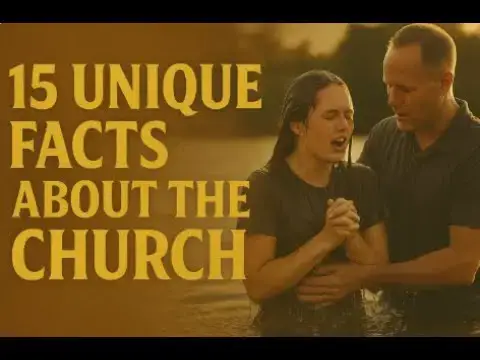

15 Unique Facts About the Church
Nov 27, 2025
15 Unique Facts About the Church (Bible + History)
1. The Church Was God’s Plan Before Creation
Paul teaches the church was in God’s eternal purpose (Ephesians 3:10–11), not an afterthought.
2. The Word “Church” Means “Called-Out Ones”
Ekklesia in the Greek doesn’t mean a building — it means people called out for God’s purpose.
3. Jesus Used the Word “Church” Before Pentecost
Jesus said, “I will build My church” (Matthew 16:18), long before the first gospel sermon in Acts 2.
4. The First Church Grew Without Buildings
Early Christians met in homes, courtyards, marketplaces, and even catacombs — the gospel spread person-to-person.
5. The Earliest Church Prioritized Teaching
The very first description of the church emphasizes doctrine first (Acts 2:42) — teaching anchored everything else.
6. Baptism Was the Entry Point into the Church
In the New Testament, every conversion ended with baptism — it marked the beginning of belonging (Acts 2:41, Romans 6:3–4).
7. Communion Was Originally a Full Meal
The “Lord’s Supper” was celebrated during a communal fellowship meal (1 Corinthians 11) before later becoming symbolic portions.
8. Singing Was A Cappella for the First 600–700 Years
Early church history shows Christians sang without instruments universally until medieval innovations.
9. The Early Church Was Known for Radical Generosity
Christians cared for the poor, widows, abandoned infants, and the sick — and pagans noticed (Acts 4:32–35).
10. The Church Grew Wildly During Persecution
Instead of shrinking, Christianity exploded during Roman persecution — Tertullian famously wrote, “The blood of the martyrs is seed.”
11. Women Played Significant Ministry Roles in the Early Church
Phoebe, Priscilla, Lydia, and others hosted churches in their homes and supported mission work (Romans 16).
12. Elders and Deacons Came from Jewish Synagogue Structure
Church leadership roles were modeled after familiar Jewish leadership offices, making organization natural for early believers.
13. The Early Church Didn’t Have Denominations
For the first centuries, Christians saw themselves simply as “the church,” united by the apostles’ teaching.
14. Sunday Was Chosen to Celebrate the Resurrection
Christians met on the first day of the week (Acts 20:7) because Jesus rose on that day — not because of Roman influence.
15. By A.D. 300, Nearly Half the Roman Empire Had Heard the Gospel
Without the internet, microphones, cars, or church buildings — the message spread through everyday believers sharing their faith.
Show More Show Less