
City of jerusalem video
Jul 10, 2024
15 Unique Bible Insights about the City of Jerusalem
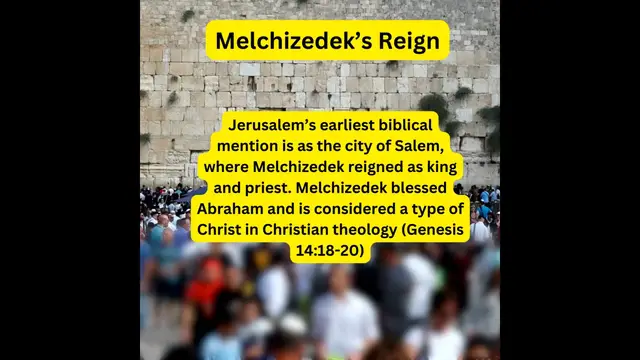
Melchizedek’s Reign:
Jerusalem’s earliest biblical mention is as the city of Salem, where Melchizedek reigned as king and priest. Melchizedek blessed Abraham and is considered a type of Christ in Christian theology (Genesis 14:18-20).
Jebusite Stronghold:
Before King David captured Jerusalem, it was known as Jebus, a fortified city held by the Jebusites. The city’s impregnable nature led its defenders to boast that even the blind and the lame could fend off attackers (2 Samuel 5:6-7).
David’s Capital:
David made Jerusalem the political and spiritual capital of Israel. He brought the Ark of the Covenant to the city, establishing it as the center of worship (2 Samuel 6:12-17).
Solomon’s Temple:
Solomon built the first Temple in Jerusalem on Mount Moriah, the site where Abraham was to sacrifice Isaac. This Temple became the central place of worship for the Israelites (1 Kings 6).
Hezekiah’s Tunnel:
King Hezekiah constructed a tunnel to bring water from the Gihon Spring into the city to protect Jerusalem's water supply during sieges. The tunnel, a remarkable feat of engineering, is still visible today (2 Kings 20:20).
Babylonian Destruction:
In 586 BCE, Jerusalem was besieged and destroyed by Nebuchadnezzar, king of Babylon. The Temple was burned, and many inhabitants were taken into exile (2 Kings 25:8-12).
Nehemiah’s Reconstruction:
After the Babylonian exile, Nehemiah led efforts to rebuild Jerusalem’s walls, facing significant opposition from surrounding enemies. His leadership is celebrated for its dedication and faith (Nehemiah 2:17-20).
Zerubbabel’s Temple:
The second Temple was built under the leadership of Zerubbabel, though it was modest compared to Solomon’s Temple. This Temple played a crucial role in Jewish life until its destruction in 70 CE (Ezra 3:8-13).
City of the Great King:
Jerusalem is often referred to as the "City of the Great King" in the Psalms, emphasizing its importance as God's chosen city (Psalm 48:2).
Jeremiah’s Lament:
The prophet Jeremiah vividly lamented Jerusalem’s destruction, capturing the deep sorrow and desolation felt by its inhabitants. His book, Lamentations, reflects this grief (Lamentations 1:1-4).
Birthplace of the Church:
Jerusalem is the birthplace of the Christian Church. The Holy Spirit descended on the disciples during Pentecost in Jerusalem, empowering them to spread the Gospel (Acts 2:1-4).
Mount of Olives:
The Mount of Olives, located east of Jerusalem, is significant in both Old and New Testament narratives. Jesus often visited this mount, and it is prophesied to play a role in His return (Zechariah 14:4, Luke 22:39).
The Via Dolorosa:
The Via Dolorosa, or “Way of Suffering,” is believed to be the path Jesus walked on the way to His crucifixion. This route is a focal point for Christian pilgrimages, symbolizing Jesus' sacrifice.
Pool of Bethesda:
In Jerusalem, the Pool of Bethesda is where Jesus healed a man who had been infirm for 38 years. This miraculous healing demonstrated Jesus' compassion and divine power (John 5:1-15).
New Jerusalem:
In the book of Revelation, Jerusalem is described as a new, heavenly city descending from God. This New Jerusalem represents the ultimate fulfillment of God’s promises and the eternal home for believers (Revelation 21:2).
Jerusalem's rich biblical history and its role in the faith narratives of Judaism, Christianity, and Islam make it a uniquely significant city. Its stories, landmarks, and prophecies continue to inspire and draw pilgrims from around the world.
Show More Show Less