Up next in 10


47 species had surrendered to the Krill ultimatum immediately. The Krill High Command considered Earth a simple calculation: ten thousand warships against a single planet. They expected panic. They expected bargaining.
Instead, Earth accepted the 24-hour grace period with a terrifying calmness.
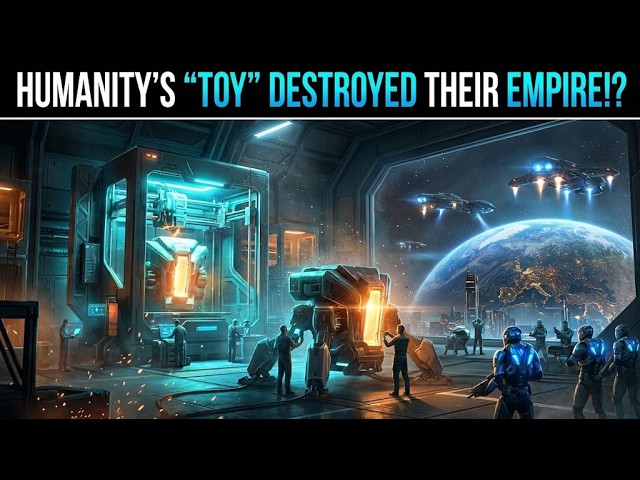
Admiral Vex-Karrath sat in orbit, watching his tea cool, waiting for the inevitable submission. But down on the surface, Director Priya Vasanthakumar wasn't preparing a surrender. She was initiating the "Spite Protocol." The Krill wanted Earth's industrial capacity? Fine. Humanity would give them exactly what they asked for—at a scale, speed, and geometric progression that no conquering fleet could ever hope to control.
This is the story of how the most dangerous weapon isn't a bomb, but a printer left running for exactly one day too long.
#HFY #SciFi #ShortStory #HumanityFuckYeah #CreativeWriting #MilitarySciFi
Show More Show Less View Video Transcript
0:01
They gave us 24 hours to surrender. We
0:04
spent every second of it building.
0:08
>> The krill called it a courtesy. 47
0:11
occupied systems. 47 species who had
0:14
received the same transmission in the
0:17
same format with the same 24-hour
0:20
window. And of those 47, 47 had
0:24
complied, some immediately, some after a
0:27
few hours of what the Krill diplomatic
0:30
corps logged as emotional processing.
0:33
None had waited the full window. None
0:36
had needed to. The Krill High Command
0:38
did not consider Earth a serious
0:41
calculation. What you're about to hear
0:43
is based on reconstructed accounts,
0:45
declassified Terran defense coordination
0:48
files, and postwar testimony from both
0:52
human engineers and krill senior
0:54
officers. Some dialogue has been
0:57
recreated from partial records. Where
1:00
the record is incomplete, that
1:02
incompleteness will be noted. The krill
1:04
called their ultimatum a courtesy. The
1:07
engineers of the North American
1:09
Manufacturing Coordination Bureau called
1:12
it something else entirely. They called
1:15
it 24 hours. They called it enough.
1:18
Admiral Vexarath of the Krill First
1:21
Occupation Fleet had seen planets react
1:23
to his arrival in a number of ways.
1:26
Panic was the most common. A kind of
1:29
frozen disbelief ran second.
1:32
Occasionally, there was the brief hot
1:34
flare of military posturing from species
1:37
who hadn't yet run the numbers. He had
1:40
learned over 30 campaigns that the
1:43
posturing phase never lasted more than
1:46
four or 5 hours. The math always won
1:49
eventually. 10,000 warships in low orbit
1:53
was a number that reduced every other
1:55
number to irrelevance. He had
1:57
transmitted the ultimatum at 0600 hours.
2:01
Terran standard time a clean
2:04
transmission professional. The Krill
2:07
diplomatic package included a realtime
2:10
translation matrix calibrated to 712
2:14
Terran languages, a visual
2:16
representation of the fleet for species
2:19
who responded better to imagery than
2:21
text, and a clearly formatted demand
2:24
structure with three items. cessation of
2:28
military activity, transfer of planetary
2:31
governance authority, and the opening of
2:34
Terran manufacturing infrastructure to
2:37
krill industrial requisition. That last
2:40
item was the point. The krill did not
2:42
particularly want Earth's land. They did
2:45
not want its population beyond a
2:47
manageable labor coefficient. What the
2:50
Krill wanted, what they had always
2:52
wanted in every system they had absorbed
2:55
was the infrastructure, the factories,
2:59
the supply chains, the manufacturing
3:02
capacity that a species accumulates
3:05
across centuries of industrial
3:07
development. Earth had a great deal of
3:09
it. Vex Garath sent the ultimatum and
3:12
returned to his tactical display. He
3:15
expected a response within 6 hours.
3:18
emotional species tended to need time to
3:21
process defeat before they could
3:23
articulate acceptance. He was a patient
3:26
being. He brewed tea from a plant native
3:28
to his home world, sat in his command
3:31
chair, and waited. The response came in
3:34
11 minutes. Not the surrender, not the
3:37
acceptance, the response. A single human
3:41
voice identified in the translation
3:43
matrix as belonging to someone called
3:46
director Priya Vasanthakumer, head of
3:48
the Terran Defense Coordination Council.
3:52
The voice was calm, almost clinical. Vex
3:55
Garath would later testify that this was
3:58
the first moment he felt something he
4:00
could not immediately classify. It took
4:03
him several seconds to identify the
4:05
feeling. Unease, she said. We
4:09
acknowledge receipt of your
4:10
transmission. We are exercising the full
4:13
24-hour window as outlined in your own
4:16
terms. We will respond at 0600 hours
4:20
tomorrow. Thank you for your
4:22
communication.
4:23
And then the channel closed. Vex Garath
4:27
looked at his communications officer.
4:29
His communications officer looked at the
4:32
display. Neither spoke for a moment. The
4:35
krill diplomatic package included the
4:37
24-hour window as a standard clause, a
4:41
formality, a grace period built into the
4:44
process by krill legal tradition, which
4:47
held that an occupied species must be
4:50
given reasonable time to understand the
4:52
terms of its submission. In 47
4:55
campaigns, no species had used the full
4:58
window. Most didn't know the clause was
5:01
there to be used. This one had read the
5:03
terms carefully enough to find it. Vex
5:06
Garath told himself it meant nothing, a
5:09
political gesture. Perhaps their council
5:12
needed time to formally convene. Perhaps
5:16
they had internal structures that
5:18
required ceremonial procedure before
5:20
compliance could be formalized. It was
5:23
unusual. It was not alarming. He
5:26
returned to his tea. On the surface of
5:29
Earth, Director Vasanthaku closed the
5:32
transmission channel, turned to the 17
5:35
people standing in the emergency
5:37
coordination room beneath the Geneva
5:40
administrative complex, and said, "23
5:43
hours and 49 minutes. Start the clock.
5:47
Start everything else." What happened in
5:50
the next 24 hours would not be fully
5:52
understood by the Krill for another 6
5:55
weeks. Post-war analysis from the Krill
5:58
Strategic Intelligence Directory, much
6:01
of which was later obtained through
6:03
treaty disclosure agreements, indicates
6:06
that their surveillance systems were
6:08
monitoring Earth's surface throughout
6:10
the ultimatum window. They tracked
6:12
military movement. They tracked
6:15
government communications. They tracked
6:17
what they believed to be civilian
6:19
evacuation activity. What they did not
6:22
track was manufacturing output by
6:25
installation because no species had ever
6:28
attempted to leverage a 24-hour window
6:31
for production purposes. The thought had
6:34
simply never occurred to them. It had
6:36
occurred to Priya Vasanthaku
6:39
approximately 9 months before the krill
6:41
arrived. She had a habit by her own
6:44
account in postwar interviews of
6:47
thinking about problems from the wrong
6:49
direction. Not what do we do if this
6:52
happens, but what would the enemy assume
6:54
we cannot do and how quickly could we
6:57
prove them wrong? It was a cognitive
6:59
framework she had developed during her
7:01
graduate work in industrial logistics at
7:04
the Chennai Institute of Applied
7:06
Systems, sharpened through a decade of
7:09
work in disaster response supply chain
7:12
management, and then quietly formalized
7:15
into what her team called the Spite
7:17
Protocol. Though that name did not
7:20
appear in any official documentation,
7:23
the Spite Protocol had a more formal
7:26
designation. It was called Contingency
7:29
Framework 7, which told you almost
7:31
nothing about what it actually involved.
7:34
What it actually involved was this. For
7:37
9 months, a working group of 312
7:41
engineers, manufacturing specialists,
7:45
logistics coordinators, and materials
7:48
scientists had been quietly preparing
7:50
for the scenario in which Earth was
7:52
given a fixed window of time before an
7:55
occupying force took control of its
7:58
industrial infrastructure.
8:00
The working group had war gamed dozens
8:03
of scenarios. They had run simulations.
8:06
They had stress tested supply chains.
8:09
They had identified the single question
8:11
that would determine everything. Not can
8:14
we fight them? Not can we evacuate? What
8:17
can we build in the time they give us?
8:19
And what does it need to be? The answer
8:22
to that second part had taken 4 months
8:24
of argument and one very long dinner in
8:27
Chennai at which nothing was eaten and a
8:30
great deal of coffee was consumed. The
8:33
answer was not a super weapon. The
8:35
consensus was unanimous on that point.
8:38
Earth did not have the development time
8:40
for anything that could conventionally
8:43
challenge a fleet of 10,000 warships.
8:46
The answer was a replicator. Not the
8:49
science fiction variety, not an
8:51
instantaneous matter assembler. The
8:54
answer was something considerably more
8:57
humble and considerably more
8:59
devastating. an advanced industrial 3D
9:02
printing system that could manufacture
9:05
copies of itself, self-replicating
9:08
manufacturing infrastructure. The
9:10
concept was not new. It had existed in
9:14
human engineering theory for decades.
9:16
What had always made it theoretical was
9:18
the bootstrapping problem. To build a
9:21
machine that builds machines, you need a
9:24
machine sophisticated enough to do so.
9:27
And building that first machine at
9:29
sufficient scale and precision required
9:32
manufacturing capabilities that
9:34
themselves didn't exist at the needed
9:37
level. The working group had spent 4
9:39
months solving the bootstrapping
9:41
problem. They had solved it as
9:44
engineering problems often are solved
9:47
not through a single brilliant insight
9:49
but through an accumulation of small
9:52
stubborn incremental decisions made by
9:55
people who refused to accept that the
9:57
thing was impossible.
10:00
The machine they arrived at was called
10:02
the Vasanthakui
10:04
distributed fabrication unit. Though
10:07
everyone who worked with it called it
10:09
something else, they called it the toy.
10:11
It was in its initial form not
10:14
impressive to look at. It occupied
10:16
roughly the footprint of a large
10:18
industrial printer which in its
10:21
fundamental architecture it essentially
10:23
was. The print head assembly was the
10:26
part that mattered. It was capable of
10:29
depositing 17 different material types
10:32
in a single pass, including the
10:34
structural polymers, conductive
10:37
elements, and precision mechanical
10:39
components needed to assemble another
10:42
unit identical to itself. The first unit
10:44
took 11 hours to produce its own replica
10:48
under controlled conditions. The replica
10:51
benefiting from a slightly refined build
10:54
profile took 9 hours and 40 minutes.
10:58
Each generation was faster. Each
11:00
generation was more numerous. This was
11:03
the machine that Priya Vasanthacumer's
11:06
team had been building, testing,
11:08
refining, and distributing quietly,
11:11
component by component through supply
11:14
channels that looked to any external
11:16
observer like ordinary industrial parts
11:19
procurement for the better part of 9
11:21
months. When the krill transmission
11:24
arrived and the 24-hour clock started,
11:27
there were 219 complete vasanthacuosi
11:31
units positioned in facilities across
11:34
the planet. They were in warehouses in
11:37
six continents. They were in converted
11:40
factory spaces in cities whose names the
11:43
krill had not yet bothered to catalog.
11:46
They were in underground logistics
11:48
centers and coastal industrial parks and
11:51
a repurposed vehicle depot in a place
11:54
called Ptoria that no krill intelligence
11:57
file had flagged as significant. 219
12:00
units, each one capable of printing a
12:03
copy of itself. Each copy capable of
12:06
printing two more. When director
12:08
Vasanthaku said, "Start everything
12:11
else," she meant begin the cascade. The
12:15
first operational hour was by every
12:17
account the most anxious. The machines
12:20
began running simultaneously across all
12:24
219 locations. Teams of engineers
12:27
monitored print quality in real time
12:30
through a coordination network that had
12:32
been specifically designed to look on
12:35
any external scan like ordinary
12:37
administrative data traffic. Print head
12:40
temperatures were calibrated, material
12:43
feed rates adjusted. Two units in a
12:46
facility in Sao Paulo experienced feed
12:49
malfunctions in the first 40 minutes and
12:52
had to be manually reset. A fact that
12:54
was logged, fixed, and never discussed
12:58
again after the war. Because in the
13:00
context of what followed, two
13:02
malfunctions among 219 units running
13:06
simultaneously in a 24-hour crisis
13:09
window was a number so close to perfect
13:12
as to be almost suspicious.
13:14
By hour two, the first generation of
13:17
replicas was completing across the
13:20
fastest running facilities. 219 became
13:24
431.
13:26
By hour 4, 431 became 860 something. The
13:32
exact count varies by source, and the
13:35
coordination logs from that period show
13:37
the network struggling briefly to
13:40
maintain accurate census figures as the
13:42
rate of completion outpaced the
13:44
reporting cadence. By hour six, the
13:48
Krill surveillance systems were
13:50
detecting unusual thermal signatures
13:52
from industrial sites across Earth's
13:55
surface. The Krill intelligence officer
13:58
who flagged it, a being named Velarak,
14:01
whose postwar testimony is among the
14:04
most detailed records available from the
14:06
Krill side, noted it in the operational
14:09
log and filed a query with the analysis
14:12
division. The analysis division reviewed
14:15
the signatures. They concluded that the
14:18
thermal patterns were consistent with
14:20
emergency heating system activation
14:23
across civilian industrial centers,
14:26
which they interpreted as preparation
14:28
for an extended facility shutdown.
14:32
Exactly what you would expect from
14:33
industrial managers preparing to hand
14:36
over their infrastructure to an
14:38
occupying force. This conclusion was
14:41
wrong in every meaningful sense, but it
14:44
was an entirely reasonable
14:46
interpretation given the Krill's
14:48
existing model of how species behaved in
14:51
the final hours before occupation.
14:54
What the Krill model did not include was
14:56
the possibility that a species upon
14:59
receiving an ultimatum would spend its
15:02
grace period making more of itself. By
15:05
hour 8, there were somewhere in the
15:08
vicinity of 3,400 functional units
15:11
across Earth's surface. They were no
15:13
longer producing only replicas of
15:15
themselves. The original design of the
15:18
Vasanthakuosi
15:20
unit included a capability that the
15:23
working group had debated, including for
15:25
two of their four months of argument. a
15:28
secondary production mode activated
15:31
after replication targets were met at
15:33
each facility in which the units would
15:36
shift from self-replication to
15:38
production of a predetermined set of
15:40
components. The components were not
15:43
weapons in any traditional sense. They
15:46
were communication relay nodes, sensor
15:49
arrays, power distribution junctions,
15:52
automated assembly subunits, the
15:55
building blocks of what the working
15:57
group had internally called the mesh, a
16:00
planetwide integrated manufacturing and
16:03
coordination network that once activated
16:06
would allow any facility anywhere on
16:09
Earth to receive a production
16:10
specification from the central
16:12
coordination system and begin
16:15
fabricating ating it within hours. A
16:18
nervous system for planetary industry,
16:21
the kind of infrastructure that
16:23
according to all available krill
16:25
intelligence assessments, which had been
16:27
studied carefully by the working group
16:30
after being obtained through a contact
16:33
whose name does not appear in
16:35
declassified records, normally took a
16:38
species between 30 and 80 years to
16:41
develop organically.
16:43
The working group had designed a version
16:45
that could be instantiated in 24 hours
16:48
under emergency conditions, leveraging
16:51
existing industrial sites as nodes and
16:54
the fabrication units as the connective
16:57
tissue. It would not be complete in 24
16:59
hours. No one believed it would be
17:02
complete, but it would be undeniable. By
17:05
hour 12, filed a second alert. The
17:09
thermal signatures had not diminished as
17:11
expected. They had intensified spread.
17:15
New sites were showing activity that had
17:17
been dormant an hour before. The pattern
17:20
of activation was not random. It
17:23
followed a geometric progression that
17:25
the krill analysis division upon
17:28
reviewing
17:29
second alert classified as statistically
17:32
anomalous. They did not yet classify it
17:35
as a threat. By hour 14, Vex Garath
17:39
received a direct briefing from his
17:41
intelligence division. The briefing was
17:44
factual and measured. It noted that
17:47
surface industrial activity was running
17:49
at approximately 240% of the level
17:53
observed at the time of the ultimatum.
17:55
It noted that the activity appeared to
17:57
be coordinated across sites that had
18:00
previously shown no direct logistical
18:03
relationship. It noted that power
18:05
consumption across Earth's surface had
18:07
increased by a factor that the briefing
18:10
described with visible discomfort in the
18:13
language as difficult to attribute to
18:16
normal shutdown preparations.
18:18
Vex Garath asked a direct question. Was
18:21
there any indication that Earth was
18:24
manufacturing weapons? The intelligence
18:27
division's answer was technically
18:29
accurate. No, they said the component
18:32
signatures being produced at the active
18:34
sites did not correspond to any known
18:37
weapon system profile. What they did not
18:40
say because they did not yet know was
18:43
that the components being produced
18:45
corresponded to nothing in the krill
18:47
database at all. The krill knew what
18:50
human weapons looked like. They had
18:52
studied them. They had assessed them.
18:55
The assessment was that Earth's
18:57
conventional military capacity, while
19:00
not negligible, was categorically
19:03
insufficient to challenge the first
19:05
occupation fleet. The krill did not know
19:07
what the mesh looked like because the
19:10
mesh had never existed before. By hour
19:14
17, the coordination logs from the human
19:17
side show a system census count that the
19:20
engineers present have described in
19:22
retrospect as the moment the room became
19:25
very quiet in a very different way than
19:28
it had been quiet before. The units were
19:31
no longer countable in thousands. The
19:34
mesh nodes were propagating faster than
19:36
the census system could track them.
19:39
Facilities that had been dark were
19:41
coming online as secondary sites
19:43
received component packages and spun up
19:47
local assembly capacity. The cascade was
19:50
no longer being driven by the original
19:52
219 units. It was being driven by the
19:56
network itself. director Vasanthaku.
19:59
According to the account of her chief
20:01
logistics officer, a man named Tomas
20:04
Reangifo, whose own postwar memoir is
20:07
the most detailed firsterson record from
20:10
inside the coordination room, did not
20:13
cheer. She did not celebrate. She stood
20:17
at the central display watching the
20:19
activation map and she said very
20:21
quietly, "There it is." And then she
20:24
said, "Make sure everything is logged.
20:27
They're going to want to see the build
20:28
rate." By hour 20, Vex Garath had
20:32
stopped drinking tea. His intelligence
20:35
division had finally produced a revised
20:37
assessment. It was significantly longer
20:40
than the previous briefing. It contained
20:43
language that krill military
20:45
documentation rarely uses. Phrases that
20:49
in direct translation approximate things
20:52
like we are uncertain and the pattern
20:55
does not match any cataloged scenario.
20:58
The assessment noted that the thermal
21:01
and power signatures across Earth's
21:03
surface were now consistent with a
21:06
planetwide manufacturing activation
21:08
event of a scale that the krill had no
21:11
precedent for in an occupied species. It
21:14
noted that the geometry of site
21:16
activation suggested a designed network
21:19
topology rather than spontaneous
21:22
industrial response.
21:24
It noted with what reads in the
21:27
translation as a kind of stunned
21:29
precision that the estimated number of
21:32
active fabrication nodes on Earth's
21:34
surface had crossed a threshold that in
21:38
krill industrial doctrine was the
21:41
threshold for planetary
21:42
self-sufficiency.
21:44
The threshold at which a planet no
21:46
longer needed external supply chains.
21:49
the threshold at which an occupation
21:52
becomes significantly more complicated
21:54
than a conquest. Vexarath looked at the
21:57
map his intelligence division had
21:59
assembled. Earth's surface plotted from
22:02
orbit was lit up, not with weapon
22:05
signatures, not with explosions, with
22:08
manufacturing activity. Every point of
22:11
light was a factory producing something,
22:14
and every factory was connected to every
22:16
other factory. He requested a channel to
22:19
director Vassan Thakumer. She answered
22:22
in 4 seconds, he said. And this exchange
22:26
is documented in both krill and human
22:28
records. One of the few direct
22:30
communications from this period
22:32
preserved in full. What are you
22:35
building? She said everything. He said
22:38
we have 10,000 warships in orbit. She
22:42
said I know we counted them. He said,
22:45
"You cannot manufacture your way out of
22:47
this situation." And she said with the
22:50
same flat clinical calm she had used 11
22:53
minutes into the ultimatum window.
22:55
Admiral, I'd like you to look at your
22:57
activation map again. And then, I'd like
23:00
you to think about what your occupation
23:02
would look like if every factory on this
23:04
planet were producing components
23:07
specifically designed to make your
23:09
occupation untenable.
23:11
A pause. Not weapons. She said, "We're
23:15
not building weapons. We're building the
23:18
infrastructure to produce anything we
23:20
decide to build. At a rate your
23:22
logistics models weren't designed to
23:24
account for, we will be at full mesh
23:27
activation in approximately 2 hours. At
23:31
that point, the question isn't whether
23:32
you can defeat us militarily.
23:35
The question is whether you can occupy a
23:37
planet that is at the moment of
23:39
occupation more industrially capable
23:42
than when you arrived and more capable
23:45
every hour after that. She let that sit
23:48
for a moment. You gave us 24 hours, she
23:51
said. We used them. The exact sequence
23:55
of what happened in the krill command
23:57
structure over the following 2 hours is
24:00
something the available records only
24:02
partially capture. What is clear is that
24:05
Vex Garath convened an emergency session
24:08
with his senior staff. What is clear is
24:11
that multiple communications were sent
24:13
to Krill High Command. What is clear is
24:16
that the Krill High Command for the
24:18
first time in 47 campaigns requested a
24:22
delay to the occupation timeline. The
24:26
phrase used in the krill communication
24:28
per translated records was environmental
24:32
assessment period. This was not a
24:35
standard phrase in krill occupation
24:37
procedure. It was as best as analysts
24:41
have been able to determine a phrase
24:43
invented on the spot because no existing
24:46
phrase covered the situation. The krill
24:49
did not leave at hour 24, but they did
24:52
not advance either. They held position
24:56
at hour 23 and 51 minutes. 9 minutes
25:00
before the end of the window she had
25:01
claimed, director Vasanthaku opened a
25:04
channel to Vex Garath. She did not wait
25:07
for him to speak first. She said, "Our
25:10
24 hours are almost up. Before they are,
25:13
I want to give you some information."
25:16
She shared the build rate data, not an
25:18
estimate. The actual logged figures from
25:21
the coordination network. the rate at
25:24
which the mesh had grown hour by hour
25:27
through the window, the projected rate
25:29
of growth through the following week,
25:32
month, year, assuming no external
25:34
interference. She shared the production
25:37
specifications,
25:38
what the mesh was currently capable of
25:41
manufacturing, what it would be capable
25:43
of manufacturing in 72 hours, what the
25:47
krill's own industrial doctrine defined
25:49
as the threshold for a type 4
25:52
manufacturing civilization.
25:54
a designation that per krill records
25:58
Earth had not been assigned because
26:00
their surveys had not detected the mesh
26:03
because the mesh had not existed 9
26:05
months ago. Earth's survey
26:08
classification as of the krill database
26:10
entry used to plan the occupation was
26:13
type one emerging industrial pre-unified
26:17
supply chain manageable. What director
26:21
Vasanthaku presented to Vexarath in the
26:24
final minutes of the window was
26:26
documentation that Earth was as of that
26:28
moment a type four. Not emerging, not
26:32
manageable, networked, distributed,
26:35
self-expanding. She said, "We didn't
26:37
build a weapon. We built the thing that
26:40
makes the thing that makes the thing
26:42
indefinitely." And your occupation
26:45
doctrine, as I understand it, is
26:48
predicated on controlling a planet's
26:50
manufacturing output. I'm telling you
26:53
that as of approximately 40 minutes ago,
26:56
Earth's manufacturing output cannot be
26:58
controlled by external force short of
27:01
planetary destruction, which I trust is
27:04
not your intent since you want the
27:06
factories. A very long pause. The offer
27:09
on the table, she said, is a revised
27:12
terms discussion, not surrender trade.
27:15
You have things we'd like to study. We
27:17
have things quite a lot of things as of
27:19
this morning that you might find useful.
27:21
We'd like to talk. Another pause. We'd
27:25
like to not fight, but we are no longer
27:27
afraid to. Vex Garath's response in the
27:30
translated record is three words.
27:33
Connecting to command. The Krill fleet
27:36
held position for 11 days. During those
27:39
11 days, the mesh continued to grow. The
27:43
fabrication units continued to
27:45
replicate. The exact figures from that
27:48
period are still partially classified
27:50
under Terran defense coordination
27:53
protocols that have not yet expired, but
27:56
testimony from multiple senior engineers
27:59
involved in the build places the end of
28:02
week 2 production capacity at a number
28:04
that one of them in a postwar technical
28:07
panel described as honestly a little
28:10
embarrassing for everyone involved. The
28:12
preliminary trade agreement was signed
28:15
on the 14th day. The Krill fleet
28:18
withdrew to a distance of approximately
28:20
two light towers, close enough to
28:23
maintain presence, far enough to
28:25
constitute in every practical sense a
28:28
retreat. The full treaty, which took
28:31
eight months to negotiate and which
28:34
established the framework for what
28:36
eventually became the Terran krill
28:38
commercial exchange protocol, included a
28:41
clause that the human negotiating team
28:43
had insisted on, and the krill had
28:46
resisted for 3 months before accepting.
28:49
The clause required the krill to
28:52
formally update Earth's manufacturing
28:54
classification in the galactic survey
28:57
registry. Not type one, not an emerging
29:01
industrial world, not a planet of
29:04
primitive beings who had shown some
29:06
unexpected cleverness. The
29:08
classification that was eventually
29:10
entered into the galactic survey
29:12
registry which is accessible to every
29:14
space fairing species that holds
29:17
registry membership reads as follows.
29:20
Terran civilization Saul system third
29:23
planet industrial classification
29:27
type four self-expanding
29:29
survey date updated note classification
29:34
revised following contact event
29:37
survey assessment considered
29:39
non-representative of actual capability
29:42
non-representative of actual capability
29:45
that phrase in the dry bureaucratic
29:49
language of the galactic IC registry is
29:51
the closest the krill ever came to
29:54
saying they had misjudged something
29:56
badly. The Vasanthakuosi
29:58
distributed fabrication unit. The toy is
30:02
in the applied sciences wing of the
30:04
Geneva Technology Museum. both of them,
30:08
the original unit and its first
30:10
generation replica, serial number two,
30:13
which completed printing at hour three
30:15
of the window and is considered
30:18
technically the first machine to have
30:20
been manufactured under crisis
30:22
conditions as part of a deliberate
30:25
species level strategic gambit. There is
30:28
a small plaqueard between them. It does
30:30
not say anything about the war or the
30:33
fleet or the treaty. It simply lists the
30:36
build time of each unit, the materials
30:38
used, and the date of manufacturer. The
30:42
date is the same for both. People stop
30:44
in front of them more than any other
30:46
exhibit in the building. Engineers and
30:49
children and politicians and the
30:51
occasional krill trade delegation
30:54
representative who is trying to
30:56
understand something that their species
30:58
history gave them no framework to
31:00
understand. What they stood in front of
31:03
was not in any conventional sense a
31:06
super weapon. It was a printer. Two
31:09
printers, slightly weathered, a little
31:11
industrial, very ordinary looking. But
31:14
sometimes the most devastating thing in
31:17
a room is the thing that doesn't look
31:19
like a weapon because it isn't one. It's
31:22
something more patient than a weapon.
31:24
Something more durable. something that
31:27
when given 24 hours and a very specific
31:30
kind of human stubbornness produces
31:32
results that no one who wrote the war
31:34
gaming models for occupation doctrine
31:37
had thought to include as a variable.
31:40
The fleet had 10,000 warships. Earth had
31:43
a clock and a printer and 9 months of
31:45
quiet, furious preparation. The clock
31:49
ran out. The printer didn't. Some
31:51
victories are won with force. Some are
31:54
one with patience, and some, the ones
31:57
that rewrite how civilizations think
31:59
about each other, are one with a
32:01
question that nobody on the winning side
32:03
asks out loud, but that hangs in the air
32:07
long after the fleet withdraws and the
32:09
treaty is signed. The question that was
32:12
never spoken, but that every krill
32:14
military analyst has grappled with
32:17
since, is this. If humans can do that
32:20
with 24 hours and what they already had,
32:23
what do they do with more time? The
32:26
galaxy, to its credit, decided it would
32:29
rather not find out the hard