Up next in 10


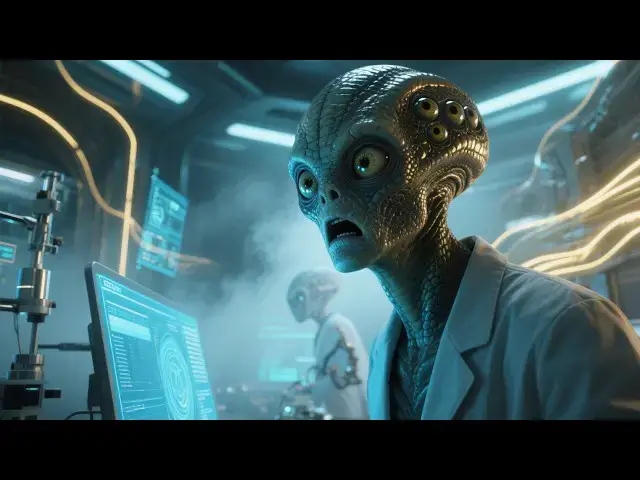
For 40,000 years, the galaxy's elder species accepted one absolute truth: you cannot exceed the speed of light. Einstein's equations were law. Spacetime was mapped. The problem was solved.
Then humans looked at gravity, asked "but what if we're reading this backwards?" and broke the universe's fundamental speed limit.
The Aspiration traveled 847 light-years in fourteen minutes using the Tanaka Drive—a technology that exploits quantum gaps in how the universe processes gravitational information. Not faster-than-light travel. Geometric repositioning. We didn't move through space. We convinced reality we were already somewhere else.
When the Galactic Council demanded an explanation, they faced a terrifying truth: humanity had discovered something in seventy years that they'd missed in 40,000. Not because we're smarter. Because we're more dangerous. We don't respect boundaries. We see universal constants as challenges. We hack reality itself.
This is the story of how one human physicist questioned what everyone knew was true, how we made the galaxy's wormhole network obsolete overnight, and why the elder species are still trying to decide if we're geniuses or madmen.
The aftermath changed everything: unlimited travel, unprecedented cooperation, and the discovery that we were damaging spacetime by forcing it to update faster than it was designed to process. So we built a network to help the universe run itself.
Because that's what humans do. We break things. Then we fix them. Then we break something else.
What other "impossible" limits are just waiting for someone crazy enough to question them? What happens when an entire galaxy learns to think like humans?
Subscribe for more HFY stories about humanity's place among the stars, the limits we're going to break next, and why our refusal to accept "impossible" is both our greatest strength and most dangerous flaw. Because we just sent ripples across the cosmic web, and something outside the galaxy noticed.
--~-~~-~~~-~~-~--~-~~-~~~-~~-~--~-~~-~~~-~~-~-
Like and subscribe will be greatly appreciated! 🙏
-~-~~-~~~-~~-~--~-~~-~~~-~~-~--~-~~-~~~-~~-~-
Show More Show Less View Video Transcript
0:00
Galactic Standard Year 4,729. The conclave of ancient 17 species that
0:07
have ruled the Milky Way for 40,000 years receives a transmission that
0:12
should be impossible. A human vessel just crossed 847 light years in 14
0:18
minutes. Not through wormholes, not via hyperspace lanes. not using any of the
0:25
established faster than light methods that required 10,000 years of technological development and access to
0:32
exotic matter that existed only near black holes. They bent gravity just dot
0:38
dot dot bent it like children folding paper. When the conclave's finest
0:44
scientists reviewed the data, they concluded it was a hoax. It had to be.
0:49
Every civilization in galactic history had hit the same wall. Einstein's
0:54
equations, the fundamental structure of spaceime, the absolute cosmic speed
0:59
limit. You could cheat it with wormholes, tunnel around it through higher dimensions, but you couldn't
1:06
break it. Not directly. Yet 37 independent sensor networks confirmed
1:11
the same reading. The human ship aspiration appeared at Wolf 359,
1:17
having departed from Earth orbit 847 light years away 14 minutes prior. The
1:24
energy signature was wrong. The physics were impossible, and the method violated
1:29
every understood law of how gravity worked. But the humans didn't care about
1:35
what's supposed to be impossible. They'd looked at the universe's fundamental speed limit and asked a question no one
1:41
else had. What if we're reading the equation backwards? This is the story of
1:47
the day humanity discovered that gravity wasn't just a force that pulled things together. It was the universe's geometry
1:54
engine. And if you could rewrite geometry itself, speed limits became suggestions. This is how we went from
2:02
galactic newcomers to the most dangerous species in the Milky Way in less than a generation. and why the ancient
2:09
civilizations are still trying to decide if we're geniuses or madmen. So, get
2:14
ready to witness the moment humanity broke physics terrified the galaxy and
2:19
prove that sometimes the most primitive species asks the most dangerous questions. Humans didn't ask to
2:26
revolutionize galactic civilization. In fact, most elder species wished we'd
2:31
stayed stuck in our own solar system. Earth had achieved interstellar capability only 70 years prior. Using
2:38
the standard method, painstakingly constructed wormhole gates that connected to the galaxy's existing
2:45
network. We were the newest members of the galactic conclave, still classified
2:50
as a developing civilization with restricted access to advanced technologies and limited voting rights.
2:57
The elder species tolerated us the way university professors tolerate enthusiastic freshmen with patient
3:04
condescension and barely concealed irritation. We asked too many questions. We
3:10
challenged established theories. We had a disturbing tendency to try things that
3:15
everyone knew wouldn't work just to see what happened. Dr. Yuki Tanaka embodied
3:22
everything the elder species found simultaneously fascinating and terrifying about humanity. A theoretical
3:29
physicist working at the Lagrange point research station, she'd spent 15 years studying gravitational anomalies that
3:36
every other species had dismissed as sensor noise. "It's nothing," her zathari supervisor, Vexel, had told her
3:44
repeatedly. His crystallin form shimmerred with what his species used to convey exasperation. Gravity functions
3:51
according to established principles. The equations are solved. They have been solved for 40,000 years. You're wasting
4:00
time. Yet Yuki kept noticing patterns. Tiny fluctuations in gravitational
4:05
fields that appeared moments before quantum events. microscopic variations
4:11
that seemed to anticipate rather than respond to mass distribution. It was as
4:16
if gravity knew what was going to happen before it happened. What if gravity isn't a force? She proposed during a
4:23
research presentation that would later be called the beginning of the post Einstein era. What if it's information?
4:31
What if mass doesn't create gravity? It broadcasts data and gravity is the
4:36
universe processing that data. The elder species in attendance responded with
4:41
what could only be described as polite academic pity. Information theory and
4:47
gravity had been explored for millennia. The connections were well understood.
4:52
Mass curved spaceime period. Trying to reframe it as information processing was
4:59
interesting philosophy but useless physics. Nevertheless, Yuki ran the
5:04
calculations. If gravity was information propagating through spaceime, then the
5:09
speed limit wasn't about how fast you could move. It was about how fast the universe could update your position.
5:16
Light speed wasn't a wall. It was a refresh rate. But what if we could hack
5:22
the refresh rate? She asked her research partner, Dr. Marcus Webb, late one night
5:28
as they reviewed quantum gravity data. You're talking about rewriting the fundamental code of reality, Marcus
5:35
replied, exhausted but intrigued. Even if it's theoretically possible, the
5:40
energy requirements would be astronomical. You'd need to manipulate the gravitational field of an entire
5:47
star system just to move one ship. Therefore, Yuki looked for loopholes.
5:53
She studied every gravitational anomaly in human explored space, searching for
5:58
places where the universe's geometry seemed unstable, where the refresh rate might be vulnerable to manipulation.
6:05
What she found changed everything. Near Jupiter's L4 lag range point, where
6:11
gravitational forces from the sun and planet balanced perfectly, quantum sensors detected something bizarre.
6:18
Gravity was flickering, not smoothly, but in discrete packets, like digital
6:23
information rather than continuous force. It's quantized, Yuki breathd,
6:29
staring at the data. Gravity isn't smooth. It's pixelated. The universe is
6:35
processing gravitational data in discrete chunks. Which means, Marcus
6:40
asked, which means there are gaps between the updates, moments when the universe is calculating the next frame.
6:48
And if we can inject our own data during those gaps, dot dot dot, we could tell
6:53
the universe we're somewhere else. Marcus finished understanding dawning.
6:58
We wouldn't be moving faster than light. We'd be updating our position before the
7:04
universe finished processing our current location. However, the theoretical framework was one thing. Actual
7:11
implementation was something else entirely. The precision required was absurd. They'd need to synchronize
7:17
quantum field manipulators to within 10 to 43 seconds a plank time. They'd need
7:23
to generate gravitational waves coherent enough to mimic the universe's own
7:28
geometric processing. They'd need to essentially lie to reality itself and
7:33
make the lie convincing enough that spaceime believed it. "This is insane,"
7:38
Marcus said, reviewing Yuki's proposed experimental design. "Every calculation
7:44
shows it should work, but it requires technology we don't have, precision we
7:49
can't achieve, and if we get it wrong, we could create a localized space-time collapse that would sterilize the solar
7:56
system. So, we test it small. Yuki countered. We don't start with a ship.
8:01
We start with a single atom. Therefore, they built what would later be called the Tanaka Drive in a shielded research
8:09
bay on the far side of Luna, away from Earth and its 12 billion inhabitants.
8:15
The device was surprisingly small, most of the facility with safety systems and monitoring equipment. The actual gravity
8:22
manipulator was only 3 m across, a sphere of exotic matter suspended in
8:28
quantum isolation. The first test moved a carbon atom exactly 1 meter, not
8:34
through space, but via gravitational repositioning. The atom was at point A.
8:39
They injected false gravitational data during a plank time gap, and the universe updated the atom to point B
8:47
without it having traveled the distance between. The second test moved a molecule 10 meters. The third moved a
8:54
microgram of iron 1 km. The fourth moved a small probe from Luna to Mars orbit, a
9:01
distance of approximately 78 million km in 0.3 seconds. Yet, the galactic
9:08
conclave wasn't paying attention. Humans were always tinkering with theoretical
9:13
physics, trying to reinvent technologies that had been perfected millennia ago.
9:19
The elder species had long since stopped monitoring human research projects closely, assuming we'd eventually figure
9:25
out what they already knew. They didn't realize we were figuring out something completely different. The aspiration was
9:32
humanity's first true interstellar vessel designed for the Tanaka drive. Not large, only 200 m long, but equipped
9:41
with gravitational field generators powerful enough to manipulate spaceime within a radius of 50 km. The crew
9:49
numbered 12, all volunteers who understood they were either about to make history or die in ways physics
9:56
couldn't yet describe. Captain Sarah Chun stood on the bridge as the countdown reached zero, watching Earth
10:03
recede through the viewport. Their destination, Wolf 359,
10:09
847 light years from Soul using conventional wormhole gates. The journey
10:15
would take 6 months of preparation and gatetogate transit. Using the Tanaka
10:20
drive, Yuki's calculations predicted 14 minutes. All systems green, reported
10:27
Lieutenant Shunway. No relation to the captain, but sharing her tendency toward
10:32
massive understatement. Gravitational coherence at 97%.
10:37
Quantum synchronization locked. We're as ready as we're going to be. Do it,
10:43
Captain Shawn ordered. Think you know where this is going? Keep watching because what happened in the next 14
10:50
minutes would make every elder species in the galaxy question everything they
10:55
thought they understood about reality. The Tanaka drive engaged. The sensation
11:01
was described later as experiencing every moment of the journey simultaneously.
11:06
The ship didn't accelerate. It simply dot dot dot updated. Position, velocity,
11:13
location, all became negotiable. The universe checked its data, found the
11:18
aspiration's new coordinates already written into space-time's geometry, and accepted the revision. From the crew's
11:25
perspective, they felt a moment of profound vertigo as their sensory input conflicted with reality. They were still
11:32
on the ship. The ship was still intact. But outside the viewports, the stars had
11:38
changed completely, instantly. Position confirmed, Shuni reported, his voice
11:45
shaking. We're in Wolf 359 system. Transit time 13 minutes 47 seconds. A
11:53
bridge erupted in controlled chaos. crew members checking and re-checking instruments, running diagnostics,
12:01
confirming what their eyes were telling them, but their brains refused to accept. They just traveled 847 light
12:08
years in under 14 minutes. They'd moved at an effective speed of approximately
12:14
3.5 million times the speed of light. They'd broken the universe's fundamental
12:20
speed limit. Nevertheless, Captain Shun knew the real test wasn't whether they'd
12:26
arrived. It was whether they'd arrived intact without causing a space-time catastrophe. She ordered a full system
12:34
diagnostic and a complete bioscan of all crew members, everything checked out. No
12:40
radiation damage, no relativistic effects, no temporal displacement.
12:46
They'd simply moved from point A to point B by convincing the universe they were supposed to be at point B. Send the
12:53
signal, Captain Shaun ordered. Tell Earth we made it. The transmission sent
12:59
via conventional quantum entangled communication reached Earth simultaneously with the aspiration's
13:05
arrival. Yuki and Marcus monitoring from Luna watched as their gamble paid off.
13:12
Yet neither of them were prepared for what happened next. The galaxy noticed
13:17
37 independent monitoring networks operated by different species across dozens of star systems detected the same
13:25
impossible event. A human vessel had appeared at Wolf 359
13:30
without using any wormhole gate without any of the standard FTL signatures with
13:36
an energy output that made no sense according to established physics. Therefore, the galactic conclave
13:43
demanded an explanation. Within hours, Earth received a priority summons.
13:49
Ambassador James Morrison was ordered to appear before the full council and explain how humanity had just violated
13:56
fundamental physics. The council chamber was designed to intimidate.
14:02
Representatives from 17 elder species, each having achieved space flight while
14:07
humans were still in caves, sat in judgment. The Safari, beings of living
14:13
crystal who'd mapped the galaxy's gravitational topology 30,000 years ago.
14:18
The Valoran Collective, a hive mind that had solved unified field theory before
14:24
Earth's sun was born. The Theren Ancients, postbiological entities who
14:30
existed as pure organized energy and had literally written the textbooks on space-time manipulation.
14:36
Ambassador Morrison stood before them. as single human-facing civilizations
14:42
that considered patience to be measured in millennia. Explain, Vexonel commanded
14:47
his crystallin form refracting light in patterns that Morrison's translator rendered as barely contained anger. Your
14:55
vessel traveled 847 light years without using the gate network. The method you
15:01
employed is not in any database. You have either discovered something new,
15:06
which is statistically impossible given your species age, or you have stolen technology from a restricted archive,
15:13
which is a violation of conclave law. Therefore, Morrison told them the truth.
15:19
He explained Yuki's theory, the quantized nature of gravity, the exploitation of plank time gaps, the
15:27
gravitational geometry rewriting. He showed them the math, the experimental
15:32
data, the successful test flights. The council fell silent. Not the
15:37
contemplative silence of beings considering new information, but the shocked silence of professors
15:43
discovering their most basic assumptions were wrong. This is impossible. The Valorian collective finally said, "It's
15:50
thousand voices speaking in perfect unison. We mapped every aspect of gravitational physics 25,000 years ago.
15:59
There are no gaps. There are no exploitable loopholes. You are describing a fundamental restructuring
16:05
of how space-time processes information. And if that were possible, we would have discovered it. Would you? Morrison asked
16:13
quietly. Or did you stop looking? The question hung in the chamber like a
16:18
detonation. However, the Ferren representative existing as a column of
16:23
organized plasma responded with what Morrison's trans letter interpreted as dry amusement. He has a point. We have
16:31
not significantly revised gravitational theory in 40,000 years. We assumed it
16:37
was complete. It is complete. Vexanel insisted. Gravity is understood, mapped,
16:44
solved. The humans must have made an error. their vessel's arrival was a fluke or they're misinterpreting Gada or
16:52
or Morrison interrupted which was absolutely not diplomatic protocol. We
16:58
found something you missed. Not because we're smarter, but because we were desperate enough and crazy enough to
17:05
look where you'd already decided there was nothing to find. Nevertheless, the
17:10
council demanded proof. They sent their finest scientists to Luna to review the
17:15
Tanaka Drive. Experts who'd spent thousands of years studying gravitational physics examined Yuki's
17:22
work, looking for errors, for mistakes, for any reason to dismiss the breakthrough as human ignorance
17:29
misinterpreting random data. What they found shook galactic civilization to its foundations. The math was correct. The
17:37
theory was sound. The experimental results were reproducible. Humans had
17:43
through sheer stubborn refusal to accept that the problem was already solved discovered a fundamental aspect of
17:49
reality that every elder species had overlooked. Gravity was quantized.
17:55
Spacetime processed information in discrete packets. There were exploitable gaps between universal update cycles.
18:03
And if you had the precision and the audacity to inject false data during those gaps, you could rewrite your
18:10
position in the cosmos. The Tanaka drive worked, and the implications were
18:15
staggering. Do you understand what you've done? Vexel asked Yuki during one
18:20
of the verification sessions. His crystallin form had shifted to a deep red hue that her translator couldn't
18:27
interpret. The wormhole gate network took us 25,000 years to construct. It
18:34
represents the collective effort of 12 species, countless resources, engineering on a galactic scale, and
18:41
you've made it obsolete instantly. We've given everyone the ability to travel
18:46
freely, Yuki corrected. No more gates, no more infrastructure, no more waiting
18:52
for connections. Anyone can go anywhere instantly if they have the right
18:57
equipment. Exactly, Vexel said. And Yuki finally understood his emotion. Fear.
19:04
You've eliminated the one thing that kept the galaxy stable. Controlled access to travel. The gates determined
19:11
who could go where, how fast civilizations could expand, who could contact whom. You've removed all those
19:18
barriers. Do you have any idea what that means for galactic security? Therefore,
19:24
the council convened an emergency session to discuss what they were calling a human crisis. Not because
19:31
humans were threatening anyone, but because we'd accidentally disrupted 40,000 years of carefully maintained
19:38
order. The debate raged for weeks. Some species wanted to classify the Tanaka
19:44
Drive as forbidden technology and ban its use. Others argued it was
19:49
impossible. The knowledge was out and any species with sufficient technical capability could replicate it. A few
19:57
suggested quarantining Earth, preventing humans from spreading the technology further. Yet the Theren representative
20:04
posed the question that cut through the political noise. Why did we never discover this? We are older, more
20:11
advanced, more experienced. We mapped gravitational physics to extraordinary
20:16
precision. Why did humans in barely 70 years of interstellar capability find
20:23
something we missed? The answer came from an unexpected source. Dr. Shaolinex, a Valorian physicist who'd
20:30
spent weeks reviewing Yuki's research. Because they were asking different questions, Shaolinx explained, "We
20:38
studied gravity to understand it. Humans studied it to exploit it. We sought
20:43
knowledge. They sought tools. We mapped what exists. They looked for what could
20:49
be changed. Their entire approach to science is fundamentally different, more aggressive, more willing to break things
20:56
to see how they work, more focused on immediate application than pure understanding. You're saying they're
21:03
better scientists? Vexel asked incredulous. No, Shaolinx replied. I'm saying they're
21:10
more dangerous scientists. They don't respect boundaries. They don't accept
21:15
limits. They see a universal constant and ask, "But what if we hacked it?"
21:21
Every species here has cultural taboos about modifying fundamental forces.
21:26
Humans apparently do not. What happened next made the entire Galactic Council go
21:32
silent for the first time in 4,000 years. Yuki, invited to address the full
21:38
council, stood where Morrison had stood weeks before. But instead of defending humanity's discovery, she made an offer
21:46
that redefined galactic civilization. "You're afraid we've destabilized your carefully controlled galaxy," she began.
21:54
"You're right. We have. The gate network is obsolete. The old power structures
22:00
based on controlling access to travel are finished. You can try to suppress the Tanaka Drive, but the math is out
22:07
there. Eventually, every species will develop their own version. Is this a
22:13
threat? Vexel demanded. It's reality, Yuki replied. But here's what we're
22:19
offering. We'll share everything. Complete specifications,
22:24
training, technical support. We'll help every species in the conclave build
22:29
their own Tanaka drives. Not as a weapon, not as leverage, but as a gift.
22:35
Why? The Valoran Collective asked, genuinely confused. You could use this
22:41
as a monopoly. Charge for access. Build an economic empire. You'd become the
22:47
most powerful species in the galaxy overnight. Therefore, Yuki explains something the Elder Species had
22:54
forgotten. Because progress isn't a zero sum game. Because we're all better off
22:59
if everyone can explore freely. Because the galaxy is vast enough that we don't
23:04
need to fight over access to it. And because honestly, we're going to need your help. With what? With whatever
23:12
comes next. You've been studying the universe for 40,000 years. We've been at
23:18
it for barely a century. We just broke one fundamental limit. Who knows what
23:24
other limits are out there waiting to be broken? We're going to need guides,
23:29
teachers, partners who can help us figure out what we've unleashed before we accidentally destroy something.
23:36
Nevertheless, not every species accepted humanity's offer with grace. The Kathy
23:42
Federation, a militaristic empire that had used its control of key wormhole gates to maintain regional dominance,
23:50
rejected the Tanaka Drive technology and forbad its citizens from developing it.
23:55
Their prohibition lasted exactly 6 months before Karathi scientists working
24:00
independently recreated the drive and presented it to their government as a fate accomply. The emperor could either
24:08
embrace the technology or watch his empire become irrelevant as every neighboring civilization gained free
24:15
travel capability. He chose pragmatism. Within 2 years, 17 species had developed
24:22
working Tanaka drives. Within 5 years, the number had grown to 200. The
24:28
wormhole gate network, maintained at enormous cost for millennia, was quietly
24:33
decommissioned. Ships that had taken months to travel between stars, now made
24:38
the journey in minutes. Yet, the galaxy discovered something unexpected.
24:43
Infinite mobility didn't lead to chaos. It led to unprecedented cooperation.
24:49
Species that had been isolated by distance suddenly found themselves neighbors. Scientific collaboration
24:56
exploded as researchers could visit each other's facilities without months of travel time. Cultural exchange programs
25:04
flourished. First contact became routine rather than a generation defining event.
25:10
However, the most profound change was philosophical. The elder species had built their civilizations on the
25:17
assumption that some limits were absolute. That certain boundaries existed to be respected, not crossed.
25:24
That the universe had rules and wisdom meant living within those rules.
25:29
Humanity had proven that assumption wrong. Not all limits were absolute.
25:34
Some boundaries existed to be challenged. The universe had rules, but those rules could be hacked if you are
25:41
clever enough and reckless enough to try. It was a dangerous precedent.
25:46
Nevertheless, other breakthroughs followed. A Zthari physicist inspired by
25:52
Yuki's willingness to question fundamentals discovered that what everyone thought was dark matter was
25:57
actually gravitational data. Storage the universe, keeping backups of its own geometry. A Valoran researcher found a
26:06
way to manipulate quantum probability fields directly allowing limited violation of entropy. A human the joint
26:13
project cracked controlled vacuum energy extraction providing unlimited power.
26:20
Each breakthrough built on the same principle humanity had demonstrated. The universe was more flexible than anyone
26:26
had assumed. Reality had loopholes. Physics could be exploited. The galaxy entered what
26:34
historians would later call the postlimit era, a period of innovation and discovery unprecedented in galactic
26:41
history. And at the center of it, teaching every species their trick of questioning the unquestionable were
26:48
humans. Yet there was a cost. 7 years after the aspiration's first successful
26:54
faster than light jump, a joint human zari expedition pushed the Tanaka drive
26:59
to its limits. Attempting a jump of 50,000 light years from the Milky Way's
27:04
edge to its core in a single transition. The ship arrived, but something was
27:10
wrong. The crew reported seeing things during the jump. Geometries that
27:15
shouldn't exist. Patterns in spaceime that looked almost like language. a
27:20
sense of being observed by something vast and impossibly old. When they returned, they brought data that
27:27
terrified every physicist in the galaxy. Their jump had created a permanent wrinkle in spaceime. A tiny one, barely
27:35
measurable, but definitely there. A scar where they'd forced the universe to update faster than it was designed to
27:42
process. We're damaging reality, Dr. Marcus Webb reported to the Conclave
27:48
Science Committee. Every time we use the Tanaka drive, we stress spaceime's
27:54
computational substrate. One jump, a million jumps, probably fine. But if
27:59
everyone keeps doing this, if we scale up to billions of ships making jumps constantly, we might be degrading the
28:06
universe's ability to maintain coherent geometry. Therefore, the galaxy faced a
28:12
choice. Accept limits on the Tanaka drive's use or risk long-term damage to
28:17
spaceime itself. The debate was fierce. Some species argued for unrestricted
28:23
use. The damage was theoretical. The benefits were immediate. Others called
28:28
for total prohibition better to return to gates than risk cosmic catastrophe.
28:34
Humans characteristically suggested finding a way to hack the problem. What
28:39
if we built a buffer? Yuki proposed, "The universe processes gravitational
28:45
data. We're overwhelming it with false data. But what if we helped it process?
28:51
Built quantum computation networks that could handle some of the geometric updates, taking a load off spaceime's
28:58
natural processing. You want to build a distributed computing network to help the universe run itself? Vexel asked his
29:06
crystallin form shifting through colors that his translator couldn't interpret. That's either brilliant or insane. Why
29:14
not both? Yuki replied, smiling. Nevertheless, the project became
29:20
reality. The geometric processing network built collaboratively by 400
29:25
species over 15 years was the largest construction project in galactic history. Quantum computation nodes
29:33
positioned throughout the Milky Way. Each one helping spacetime process gravitational data more efficiently. The
29:40
network didn't replace the universe's natural geometry engine. It augmented it, allowing reality to handle the
29:47
increased load from billions of Tanaka Drive jumps without accumulating errors.
29:53
It worked. The space-time degradation stopped. Travel remained unrestricted.
29:58
The galaxy breathed easier. But the experience taught everyone a crucial lesson. Breaking limits had
30:05
consequences. Just because something was possible didn't mean it was safe. The
30:11
universe was hackable, but it could also be damaged. Wisdom meant understanding when to push boundaries and when to
30:18
reinforce them. To this day, the Tanaka Drive remains humanity's most famous
30:23
contribution to galactic civilization. The technology is taught in every physics program across 400 species. Yuki
30:32
Tanaka's equations are carved into the monument at the Galactic Core alongside the works of the greatest scientific
30:39
minds from 40,000 years of civilization. Yet the more lasting impact wasn't the
30:45
drive itself. It was the mindset. The willingness to question fundamentals.
30:51
The courage to look at solved problems and ask, "But what if we're wrong?" The
30:56
reckless creativity that treats impossibility as a challenge rather than a limitation. The elder species call it
31:04
human science. The practice of breaking things to understand them, of testing limits until they fail, of assuming
31:12
every rule has loopholes waiting to be found. It's simultaneously the most
31:17
productive and most dangerous approach to knowledge in the galaxy. and every species that adopts it becomes a little
31:24
more human in the process. The Zathari, once rigid adherence to established
31:29
theory, now encouraged their students to challenge textbooks. The Valoran
31:34
Collective, formerly focused on pure understanding, has established applied
31:40
engineering programs. The Theren Ancients, who had spent 40,000 years in
31:45
contemplative observation, have started conducting experiments again. The galaxy
31:51
is louder, messier, more chaotic than it was before humanity arrived. But it's
31:56
also more innovative, more dynamic, more alive. We still don't know what other
32:02
limits are waiting to be broken. We don't know if there are fundamental boundaries that should never be crossed.
32:09
We don't know if our approach to science will eventually cause a catastrophe that makes space-time degradation look
32:16
trivial. But we're going to keep looking, keep questioning, keep pushing
32:22
because that's what humans do. We see a universal constant and ask, "Yeah, but
32:28
why?" We encounter impossible problems, and refuse to accept that they're
32:33
unsolvable. We break the universe's speed limit, fix the damage we caused,
32:39
and then start looking for the next limit to challenge. Are we geniuses or madmen? Visionaries or vandals? The
32:46
species that will unlock the cosmos are the ones who will accidentally break it. The answer is probably yes. All of it.
32:54
The galaxy discovered something about humanity that no amount of observation could have predicted. We don't just live
33:01
in the universe. We argue with it. We negotiate with reality. We treat
33:07
fundamental physics like a set of suggestions rather than laws. And somehow, impossibly, we get away with
33:14
it. And every species that watches us work has to confront an uncomfortable
33:19
question. What else have they been accepting as absolute that's actually negotiable?
33:24
What other limits are illusions? What other impossibilities are just problems no one's been crazy enough to solve?
33:32
Humanity didn't just break the speed limit. We broke the galaxy's consensus
33:37
that some things are unbreakable. We prove that with enough stubbornness, creativity, and willingness to risk
33:44
catastrophe, even the universe's fundamental rules can be hacked. The Elder Species spent 40,000 years mapping
33:52
the cosmos. We spent 70 years asking, "But what if it's wrong and found
33:58
something they'd missed? That's not superiority. That's just a different kind of madness. The productive kind.
34:05
The kind that changes everything. So, are we the galaxy's greatest hope or its
34:11
most dangerous wild card? Are we going to usher in a new era of unlimited exploration or accidentally unravel the
34:19
fabric of reality? We don't know. But we're going to find out because
34:25
somewhere in a research station on Luna, Dr. Yuki Tanaka is already working on
34:30
her next project, hacking quantum probability to allow limited time travel. And somewhere in the galactic
34:38
council chambers, elder species are already drafting regulations for a technology that doesn't exist yet
34:44
because they've learned that when humans say something is theoretically possible, it's about to become practically
34:50
inevitable. Hit subscribe because this universe has more stories to tell.
34:56
Stories about the limits we're going to break next. Stories about the elder species learning to think like humans
35:02
for better and worse. stories about what happens when you teach an entire galaxy
35:08
to question everything can accept nothing. Humanity is just getting started. And we're bringing the whole
35:14
galaxy along for the ride, whether they're ready or not. The stars aren't twinkling lights anymore. They're
35:21
destinations, neighbors, problems waiting to be solved and limits waiting
35:27
to be broken. And somewhere in the dark between galaxies, something noticed are
35:32
faster than light jumps. Something that's been watching the Milky Way from outside, waiting for a civilization
35:38
reckless enough to bend spaceime in ways that send ripples across the cosmic web.
35:44
It's coming to investigate, and when it arrives, it's going to find humans ready to ask the only question that matters.
35:51
Why should that be impossible?
#Astronomy
#Engineering & Technology
#Physics