0:00
This is the Granadier port in the south of Tenerife and that is the MV Hondias, the cruise ship that's been right at the heart of this deadly hantavirus outbreak
0:11
It's killed three people and we know of at least five other cases
0:16
As you can see around me, there is media here from all over the world
0:20
There's more than 20 different nationalities still on board the ship, and now there's a major evacuation operation underway to get those people home
0:30
The complexity of this operation is that we have 23 nationalities, and the Netherlands being the flag state of the ship brings some responsibilities also to other nations
0:42
to help them to get their people home. How is the kind of coordination and the conversation between the Netherlands and the UK
0:50
Well, the good thing is that the UK is sending also a plane to Spain
0:57
I think it's already here. So the British citizens will be repatriated as soon as possible
1:04
And the coordination between the Netherlands and the United Kingdom on the other issue
1:09
is taking place from The Hague and London. Let me show you around the port just to show you what's happening here
1:15
So the cruise ship is not actually docked. It's anchored in the middle of the water
1:20
And what they're planning to do is to send small boats to carry no more than five people at a time to the port here
1:27
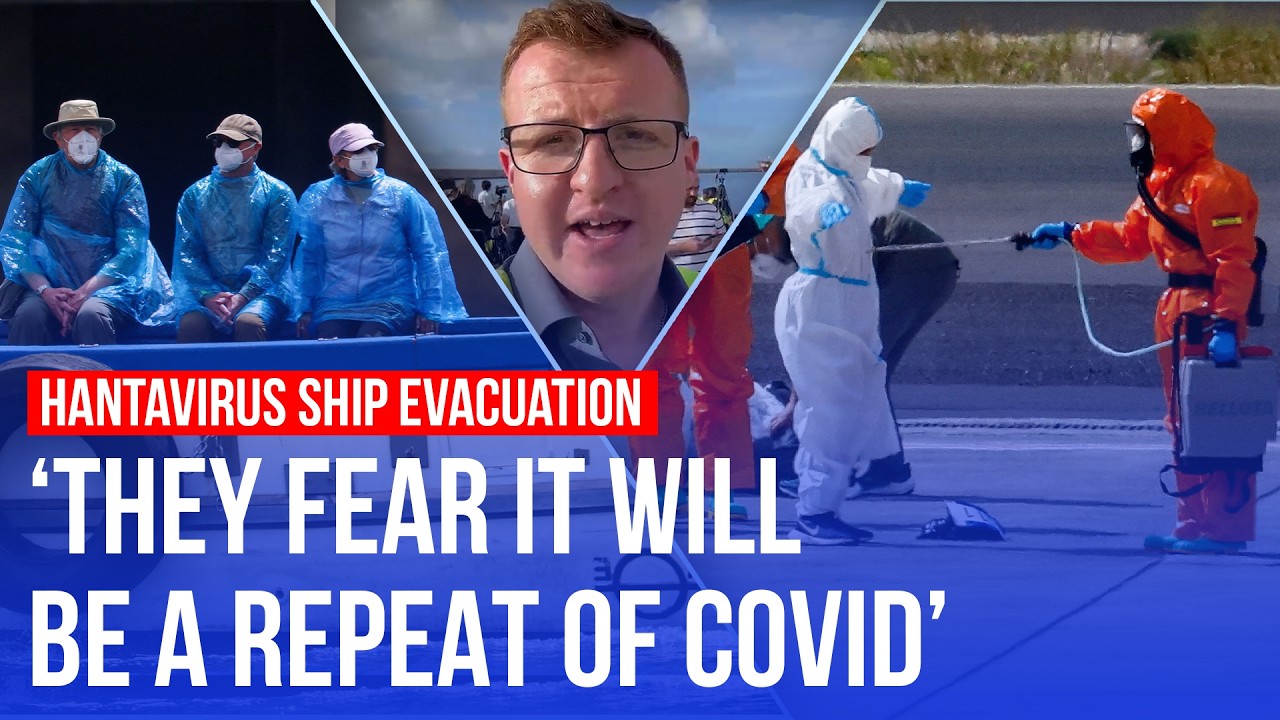
where they then be ferried to the airport So there been a lot of concern from locals here in Tenerife about the fact that the NV Hondias is coming here first They worried that this is going to be a repeat of Covid
1:39
you know, a ship arriving, bringing a virus with it and then spreading that through the population
1:45
In fact, the head of the World Health Organization has taken quite an unusual step in writing to the
1:51
population of Tenerife to try and reassure them to say that this is not another Covid
1:57
and he has said that they know that because this virus has only spread so far, they think, to eight people
2:05
It's been five and a half weeks that that ship has been at sea, but of course they still need to be careful
2:10
And so the people who are brought off the ship are going to be sent home to their home countries to isolate
2:16
in some cases, for up to six weeks. The EU, after the Spanish authorities have asked for help, have pre-positioned us here at Tenerife
2:29
So we are able to transport sick patients in our ambulance airplane and we use incubators for these transports
2:39
So we are able to take any very sick and also intensive care patients in our airplane and transport them back to their countries
2:47
I was told that the patients are going to be quarantined also after returning home
2:55
So I think the risk of spread of the virus in their local communities will be quite low
3:02
We seen some of the buses leaving already taking passengers Can you describe the PPE the protective equipment they wearing on those buses Hunter virus need droplet protections That means if you wear a face mask and you have good hand
3:23
hygiene and keep your distance to the person, then you are not at risk of getting the virus
3:32
It really is a hive of activity around Grenadier Port. This has been described as an unprecedented operation
3:40
You know, so many countries involved. A lot of anxiety, of course, among the public as well
3:46
Why are we sending people all across the world rather than allowing them to quarantine on the ship
3:53
The World Health Organization, though, says there's a moral obligation to get those people home, to treat them where they need to be treated
3:59
and to support them through what's going to be a difficult, long isolation period
4:06
They have insisted that the risk to the public remains absolutely low
4:11
And once again, I've said this is not another COVID. Right now, we as WHO, we classify everybody on board as what we call a high-risk contact
4:21
That might sound scary, but it's how we will operationalize the movement of the passengers and the crew safely home
4:28
We're talking about their risk. We're talking about their risk, yes. So the risk to the general public is low
4:34
The risk to the people in the Canary Islands is low. So we do need to continue to contextualize this because of all the attention right now people may think that the risk is growing It not But what we do recommend is the active monitoring and follow of all of the passengers and crew who disembark for a 42 period
4:52
That doesn't mean 42 days from now or from tomorrow. It actually means 42 days from the last point of exposure
4:58
So that has already started. So what is going to happen with the British passengers and crew
5:03
22 of them when they arrive back in the UK? Well, we are told that the flight should happen today, Sunday
5:10
So those 22 people should arrive back in the UK and then they're going to be taken to Arrow Park Hospital on Merseyside
5:18
That's the same hospital that has people who arrived back in the country from Wuhan at the start of the COVID pandemic
5:25
When they're there, they're going to isolate for 72 hours while clinicians assess them
5:30
and decide whether or not they can continue with their self-isolation at home
5:34
or if they'll need to go elsewhere. So down here you can see people in hazmat suits
5:41
There's quite a lot of those people around here. You know, a lot of precautions being taken around this virus
5:47
to make sure that it doesn't spread to any more people. There's also two big red buses
5:53
This is where the passengers and crew are going to be put straight onto
5:57
and then driven round to Tenerife South Airport. Now that's about a 10-minute drive from here
6:02
And actually officials have said they want to make sure that those charter planes are ready to depart before people even leave the ship
6:11
So it should be a very quick process off the ship, onto the bus, round to the airport and then onto the plane