Up next in 10



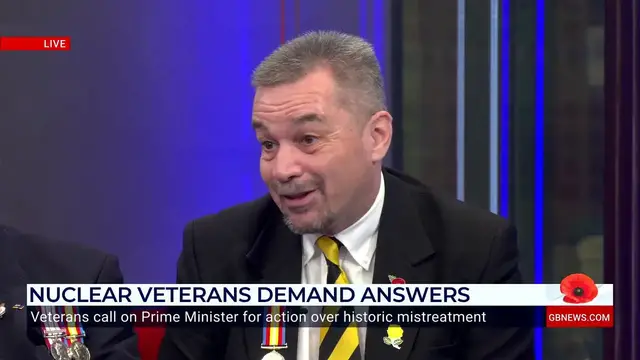
A nuclear test veteran has called on Sir Keir Starmer to apologise for delaying a key meeting to discuss compensation, declaring they are "still suffering" today.Speaking to GB News, nuclear test veteran Terry Hughes said he was "very disappointed" in the Prime Minister for failing to meet with them, despite promising a meeting "by the end of the year" before winning 2024's General Election.FULL STORY HERE.
Show More Show Less View Video Transcript
0:00
Now, in the run-up to the election, Labour promised justice for victims of one of Britain's longest-running scandals
0:06
But months on, those affected say that nothing's been done. Keir Starmer promised he would meet us
0:12
Will he meet him? Of course I will. By the end of the year, soon as we can, I'll happily meet them again
0:17
Keir Starmer, live on BBC Breakfast, said that he would meet with the nuclear test veterans
0:22
So we invited him to a private screening of a new documentary in London on the 4th of November
0:28
It was so he would have a private area to meet with the nuclear test veterans and watch this incredible documentary
0:35
But he's not coming. So the Prime Minister did not attend that private screening of Our Planet, The People, My Blood, ahead of its release next year
0:44
Now, campaigners are saying he must keep his word and deliver the action they promised
0:49
because he says he's going to meet the vets for the first time by the end of this year, and we're already in November
0:54
Well, we're joined now by the founder at Lab Rats International, Alan Owen
0:59
nuclear veteran Terry Hughes, and the cinematographer Daniel Everett-Lock. Welcome to the studio
1:05
So, last night you showed this film, Private Screening, in London. Tell us a bit more about the film, Alan, and why it was made
1:14
So, the film is a fantastic documentary. Daniel has been following me for the last three years
1:20
Gosh. It's been three years of production. Wow. He's been all over the world, to Australia, to America as well
1:27
to show the global impact of nuclear testing. It's a very private story
1:32
It's a very personal story for me and the family. It explains all about what's happened to me as the subject to lots of the film
1:40
to show that it affects hundreds and hundreds and millions of people
1:45
and families like, obviously, the nuclear test veterans. It's happening today. We're still suffering today
1:52
And that's the whole point of the documentary, is it shows that 2025, we still haven't addressed the issues
1:59
And Terry, a lot of the veterans have had, those that are still with us, I mean
2:04
because these tests were taking place in the 50s and 60s have had ongoing health problems Some have lost their lives Some of them it impacted future generations because the health issues they had
2:16
have been passed on to their unborn children. That's quite great. First of all, can I say thank you to GB News
2:22
for supporting the veterans. You've done a great job with that. We appreciate it. Yes, I mean, I was only 19 at the time
2:27
when the biggest H-bomb was ever exposed on Christmas Island. And a lot of us have suffered in late life
2:33
It's like a hidden bullet just suddenly coming out as we get older. And my own son is very badly affected
2:38
which is very disappointing for me, because he can't have any children amongst other things he's got
2:43
And I'm still suffering from various skin cancers and other things that have happened, so it's a bit of a blow to us
2:49
But regarding the film, I thought it was an excellent film. It covered everything as far as WIC and the veterans
2:55
And fortunately, I didn't have to use my handkerchief last night. I expected it, because I'm quite emotional about these sort of things
3:02
Daniel? Neil, so what inspired you to make the film and what impact do you hope that it will have
3:08
Yeah, well, the inspiration really is actually a short doc that I saw about nine years ago
3:13
that was covering the atomic veterans. And they talked about the experience of experiencing the bomb
3:22
And this one thing that kind of got me was there was this one guy talking about being able to see
3:27
the x-ray of his hands through his closed eyes, covering his eyes because of how bright the flash from this weapon is
3:36
And that kind of visual just stuck with me as, like, something that was just absolutely kind of insane
3:42
And I remember speaking to family and friends about this and no-one knew about it
3:47
And it was kind of like, I don't really understand how this hasn't been covered more in the media and in documentaries
3:51
So it kind of became a thing that I wanted to make a documentary about that at some point, and then many years later
3:56
I want to kind of experience enough. And, Alan, there's a terrible cynicism in my heart and soul, I'm afraid
4:01
that successive governments, not just saying this one, have wanted this to slip under the radar
4:05
because as these men get older, they're dying off. So compensation, the clamour for compensation will go away
4:14
Absolutely The delay deny until they die is the statement that these guys live with Because we invited Keir Starmer to the event
4:25
He unfortunately denied and said, no, I'm sorry, I'm too busy to come and see it
4:29
He didn't send a representative of his government. He's got dozens and dozens of ministers. We asked John Healy, who unfortunately was away. He was away in Norway
4:38
But we had a couple of MPs who have supported us for a long time
4:42
Emma Lule and Rebecca Long-Bailey came. Oh, good. And they've been supporters of us for a long time
4:47
Everyone who's been on this programme and talked to us about it. And unfortunately there was nobody from the Cabinet
4:53
Absolutely nobody would attend. And that's the attitude that we are up against
4:59
And I actually met Keir on Monday at a remembrance event at Number 10 Downing Street and said, we need this meeting
5:06
And he's like, yes, it's in process, the meeting is in process. But that's it, that's as far as it goes
5:11
Terry, how does it make you feel? You've been through this. You've had a lifetime of health problems
5:15
You've told us how it's impacted. You're not going to get grandchildren because of what's happened to your son
5:19
The success of governments have just pushed you away. I think it's very disappointing
5:24
You put your trust in these people and they promise all sorts of things, but it never actually happens
5:28
The least they could do is apologise. Apologise to the metros, apologise to the descendants
5:33
for all the atrocities that have been happening to them over the years. I'm one of the lucky ones. I'm still here
5:38
For how long, I'm not sure, but I'm still here. Whereas other friends I've had have gone
5:43
And that's it. They passed, even before they got their medal, which is very, very disappointing. And you lost your father
5:47
Yes, in 1994, so he was only 52. And I lost my brother in 1996. He was only 31 as well
5:54
So we've had a family of problems and issues. And our story is just one of thousands and thousands of stories
6:01
that you will hear of today. And that's why the documentary is so important, because it tells that story
6:05
And, Daniel, you're a young man in all of this. Have you been shocked by what you've seen and come across
6:10
Yeah, it's been insane. I mean, we initially started this as a thing just about the veterans
6:15
And then Meeting Island, it became this kind of more global view of all these communities affected by nuclear weapons testing
6:21
And just the amount of injustice on a global scale is insane And of course nuclear testing back in the news Putin talking about particular weapons Trump joining in and saying the Americans need to start
6:36
retesting nuclear weapons again. I mean, that must be a huge concern
6:39
Crazy, crazy. I don't understand it. And these people who are making these decisions
6:44
need to watch this documentary, because after watching this documentary, you would not make that decision to resume the testing
6:51
And where will we see the documentary? So we've got a release schedule coming out on our social media
6:56
very early January. A cinema or on our TV screen or...? Release schedule coming out
7:03
Now, are these gentlemen both stars of it? Very much so. Yep, very much so
7:07
Alan, very prominently, obviously, of course. We bugged him for the last three years
7:12
invaded his house about 20-odd times, yeah. And do you think there's ever going to be any compensation
7:16
for the lab rats? I'm hopeful with John Healy. This is the Defence Secretary
7:21
The Defence Secretary, he's been looking at the missing medical records. We're due a review by the end of the year
7:27
How many are there left? Well, we anticipate, from the veteran side
7:32
between 1,000 and 1,500 worldwide left for the British nuclear test veterans
7:37
Out of 20,000? Out of how many? 22,000. 22,000. Extraordinary, isn't it
7:41
And the ones that are left are suffering, though. Yeah. They have skin cancers and other issues and stuff
7:49
They're not a healthy ATL. And the average age now is 86
7:53
Gosh. Well, Alan Owen... I'm 87 this year. Can I just say, you look pretty down
7:59
You really do. You look fabulous. I had a DNA done in America recently
8:03
and several mutations have appeared through radiation. Yeah. Gosh. Just to remind us of the name of the documentary
8:10
Our Planet, The People, My Blood. Very good. Well, Alan, Terry, Daniel, thank you so much for coming in
8:15
and we will watch the release with interest next year. And when you get the date, we're going to tell everybody
8:21
Come back and tell us when it all comes on. The MOD said it's a commission comprehensive work to examine the questions over medical records
8:27
Sir Keir Stunberg's promised to meet veterans of Britain's Cold War nuclear weapons testing programme, he says
8:33
Hopefully by the end of the year. Stick to your word for a change, Prime Minister
8:37
I've got in the polls, wouldn't it
#Government
#news