Up next in 10



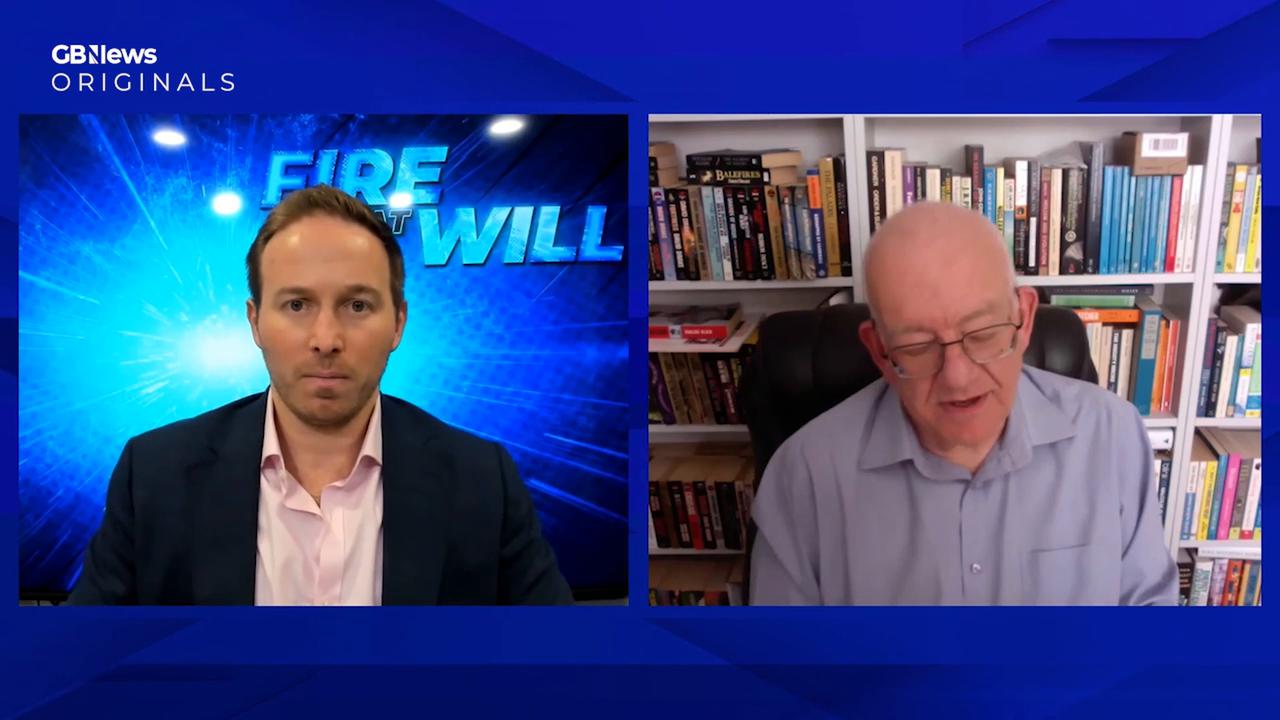
GB News contributor Will Kingston and political commentator Stephen Davies sat down to dissect the growing rivalry between Reform UK and Restore Britain.Mr Davies argued British politics has undergone a major shift away from traditional economic divisions and towards debates around identity, migration and culture.
Show More Show Less View Video Transcript
0:00
Hello and welcome to Fire at Will, the new show from GB News. Each week we will take
0:11
aim at the sacred cows of the modern age, all in pursuit of, well, not my truth, not
0:18
your truth, certainly not their truth, but the truth. I'm delighted today to be joined
0:24
by Head of Education at the Institute of Economic Affairs and the author of the wonderful new book
0:31
The Great Realignment, how timely it is, Stephen Davies. Stephen, welcome to the show
0:36
Thank you very much for having me on. It's a delight to have you on
0:40
And as I said, your book, which is about the rise of the new right
0:45
in British politics, could not be more prescient. We are currently looking at a by-election in Makerfield
0:53
in which the new right is well and truly on display. We have gone from effectively a two to two and a half party system
1:05
in the United Kingdom to a five to six party system. Of course, this is in some ways aligned with what is happening
1:14
across the Anglosphere. You're seeing the rise of One Nation in Australia
1:19
seeing the rise of populist or nativist right-wing parties across Europe. So the UK experience, whilst it has some unique features, is not necessarily
1:29
unique in and of itself. I guess the first question to set the scene is, how did we get
1:35
here? How did we move from that two and a half party system to the fragmented politics that we
1:41
see today? Well, I think in one way, it's quite a complicated story, but ultimately, it's quite
1:48
simple. What happened was this. Throughout most of the 20th century, the dominant issue in politics
1:55
the issue that everything revolved around, was a division between, if you like, socialism
2:00
and capitalism. Whether or not you wanted a large role for government in the economy
2:06
and if so, how large it should be, or how small should it be. But that argument, if you like
2:11
faded away after 1990, because one side, radical socialism, had been decisively defeated
2:17
with the fall of the Berlin Wall. And what you emerged into then was an era
2:22
about 20 years from 1992, just before the financial crisis, of technocratic politics in which it seemed as though
2:30
the life, the ideological conflict, had been sucked out of politics. And during that time, a lot of people increasingly
2:37
became concerned about a different issue, which was that of national identity
2:42
And the degree to which national identity and the independence, the sovereignty of national states
2:48
was being undermined by a whole number of developments, prominently but not exclusively, large-scale migration
2:57
And the political class in one country after another, not least Britain, refused to, if you like
3:04
engage with those concerns. They not only didn't talk about it, they abused the people who raised these concerns
3:14
as being illegitimate, beyond the pale, which is partly what the label of populist implies
3:19
And eventually the concern about this issue simply became too strong to be contained
3:24
And because the existing political class and structures had not dealt with it or handled it
3:31
it found expression, even with the barriers of first press the post
3:35
in new political formations like the Reform Party. Yes, and we will get to the fragmentation
3:42
that that has created on the right. But in many ways, the figure that most embodies
3:48
the type of technocratic managerialism that you refer to is Tony Blair
3:54
And many of the themes that we'll discuss today really started, or at least found their voice
4:02
most fully during the Blair years. Explain to me how, basically, Tony Blair went about creating
4:09
that sort of technocratic managerialism from which now the new right is almost a response to
4:15
Well, he did it in several ways. It's fair to say that this technocratic managerialism
4:21
is often described as neoliberalism. That's the label that's often attached to it
4:25
originally by the left, increasingly by the right as well. And it's people like Blair or Bill Clinton or Gerhard Schroeder
4:32
who are really responsible for that. So what Blair did was, firstly, he ditched socialism
4:37
I mean, we forget the first thing he did when becoming Labour leader was to write the old Clause 4 out of the Labour Party constitution
4:45
the statement that the goal of the Labour Party was to have communal ownership of the means of production
4:51
in order to serve the interests of the workers by hand or by brain
4:55
He got rid of that. And instead, he reduced the Labour Party's political project
4:59
being not one of systemic transformation, but of social amelioration, if you will
5:05
But the other thing he then did, he and his government, was to put through a series of acts of Parliament
5:11
notably the Equality Act and also the Human Rights Act, which created, although this wasn't apparent at the time
5:19
something completely new in the way of the form of governance, because what it did was it took a lot of ultimate decision-making power
5:27
away from Parliament and the elected legislature and put it in the hands of the judiciary
5:33
and also of quangos, non-state organisations. Now, this process wasn't just confined to Britain
5:40
You can't say this is all Tony Blair's evil genius or benign genius, if you like
5:46
because similar patterns have happened in countries all over the world. It has a kind of global cause
5:51
He was just the politician who embodied it or brought it into being in this world
5:57
But that's what he did. And so he created a kind of state
6:00
in which it's become increasingly apparent that the public can vote for or demand certain things
6:06
and not necessarily just things of a right-wing nature, by the way, but they don't happen because there are just too many institutional barriers
6:14
which work to frustrate what you might call the popular will. Now, that's not necessarily a bad thing, actually
6:20
but when it reaches the level it has now, it becomes deeply problematic for political stability
6:28
And, of course, Blair re-emerged in public discourse in recent weeks with that essay on the ills both of the Labour Party
6:35
and of the country. To what extent did you read that injection from Blair
6:40
as basically a perhaps last-ditch attempt to protect the model that he willed into being
6:48
Well, I think it was a bit more than that, actually, to be fair to him. I think he rode back on a lot of the policies
6:54
that were being followed during his own premiership and the years that followed
6:59
So I think that what he was saying essentially was that, yes, we do need to maintain the kind of position
7:07
the kind of state that I created, because it's a good thing. But he did also say that, however
7:13
there's going to have to be some major changes and course corrections if we're to do that
7:18
And I think that's partly what all the stuff about AI was about, because although he quite clearly and genuinely believes
7:24
that AI is transformative and that if you don jump on the AI train you going to miss out on a whole bunch of transformative effects that it will have I think that he also believes that it the only
7:35
way really to save the state that he created, to make it actually effective as opposed to simply
7:42
a force for stasis. In other words, you have to radically reform public administration, he's saying
7:47
through adopting AI in all levels of governance and administration. So I think he's a much more
7:54
significant and formidable figure than most of the people who followed him. And part of that is
7:59
that he's very clear sighted, I think, about where we are. So yes, he does want to keep that show
8:04
going, but he wants also to change and update it, if you will, which is something that the current
8:11
hapless prime minister seems to be incapable of doing. But this is where I have a problem
8:17
So you will have noticed that he had a nine point plan at the back end of that essay for the future
8:23
of this country, there was a very conspicuous policy area that was absent, and that was legal
8:29
migration. And legal migration more so than any other area is what has driven that nativist or
8:36
populist instinct on the right, which is across the country now, more than anything else. So to
8:41
ignore that is perhaps, I would argue, disingenuous. But it's particularly disingenuous
8:46
if you're going to push an AI agenda, which most people believe will eliminate and is
8:52
already eliminating a lot of entry-level jobs, administrative jobs, basic jobs, which at the
8:58
moment are carried out by the many, many legal migrants that enter this country. So I don't
9:05
understand how you can at one hand say, we need to embrace AI and the efficiencies that it will
9:11
bring, and at the same time say, we need to continue a policy of mass migration
9:17
which will flood a jobs market, which is inevitably getting smaller and smaller as a
9:21
of that technology. Okay, several things to say to that. First of all, he doesn't necessarily
9:27
actually say, oh, we need to continue with the policy of mass migration. Now, what he
9:32
as you say, he ignores what is really the big issue at the moment, the thing that has been
9:37
mobilizing an ever large number of voters to vote against the established political order
9:43
What he could do, but doesn't do, is to actually address those voters and have a debate or an
9:49
argument with them. I mean, you could make the case, well, you're upset about mass migration
9:54
Here's why you should not be upset, why it's a good thing, why, you know, maybe it's inevitable
9:59
You could make that argument. He doesn't do that. But also, I think that there is a subtext to this
10:03
So let's say you do have, as I think there will be, a mass effect upon large areas of employment
10:10
from AI. I think it's going to wipe out an enormous number of process, routine process-driven
10:17
white-collar jobs. Well, what are you going to do with all those displaced workers? Well
10:23
one thing might be, well, you no longer need large-scale immigration to look after issues like
10:28
social care, caring for the elderly, a whole bunch of other stuff. If you suddenly have several
10:34
million displaced workers in the UK, you can really push back on the migration because you're
10:40
no longer going to need to import lots and lots of workers to do those, not at the current moment
10:46
not very well paid service jobs. Now, this is still politically explosive
10:51
which is why I don't think he really confronts it, because it does mean a lot of people losing not only income
10:56
but also status. And that's always going to be politically explosive. So I think, as you say, that is rather disingenuous on this part
11:06
And can I add to that? The argument that you will often hear is, well, English men and women simply don't want to do those types of jobs
11:13
picking the fruit or wiping the bums, or, you know, all of those sorts of jobs, which at the moment we say, well, they're beneath English men or women
11:22
So let's get cheap foreign labor to deal with them. My argument would be let's see whether or not people will take those jobs if the alternative is to go hungry
11:31
as opposed to an overly generous welfare system, which incentivizes people to sit on the couch as opposed to taking those jobs
11:40
So welfare reform has to be a big part of this story, doesn't it? It does, absolutely
11:45
I mean, at the moment, because of very high national minimum wage and because of the way the welfare system works, there is effectively a flaw on income
11:54
And what that means is there are a lot of jobs which are really only as current things currently stand economically viable if they pay a wage which is right at that minimum floor level or even perhaps below it
12:09
And not only that, those jobs have low status. and a lot of people who might barely consider them
12:16
you know, even with the welfare system because of low pay, will probably be very reluctant to do it
12:21
because of the low status. So yes, it has to be a major element in it. If you're going to, you know
12:27
address the fact that we do have such huge, constant and steadily increasing needs
12:32
in areas like the care sector, you have to either pay a lot more and be prepared to accept the huge rising costs
12:39
that that entails, or you have to reform the welfare system. To be fair to Blair, he does say that you need to reform the welfare system
12:46
That is part of his nine-point plan, as you say. He is aware, I think, of the fact that the welfare system at the moment
12:52
is in seriously bad trouble and completely out of control. Although, again, the real problem there, the thing that's really breaking the bank
13:02
is the pension liabilities that we have, which is another issue entirely
13:05
Yeah. I personally just can't get past Ari may not be quite the right word, but the reality that of those nine points that he mentioned, all of them are so much harder to get across the line now because of the constitutional vandalism that you mentioned
13:21
because reform has been made so much difficult, because whenever a politician goes to try and push something
13:27
through Whitehall, they will come up against that quango or they'll come up against that judicial review
13:31
or they'll come up against the forces which now are inbuilt within the system to stop change from happening
13:40
Yeah, absolutely. I mean, this is deeply ironic, and it's very noticeable
13:44
that he didn't mention that legacy of his government. And I would add, by the way, that this is constantly being presented
13:49
as the right being blocked. But actually, if the radical left ever got into power in this country or if a left wing government tried to do all sorts of things, they would find that they were blocked
13:59
So, for example, if any left of centre government tried a massive programme of state house building, they would find that the planning system, the way it operates now, the judicial reviews that we have with anything would stop them doing that
14:11
So it's any kind of government action, basically, will not be allowed. We've resulted in a state of affairs where the state spends almost 50% of total output, but can actually do almost nothing, which is a terrible position to be in
14:27
Hmm. Okay. So we live in a post-1990, I guess, still in the shadow of that technocratic managerial consensus, which Blair then turbocharged and the conservatives continued on with. Let's turn to the response to that now, and that is the response on the right, which you have written about wonderfully well
14:47
we have seen now the rise of reform under Farage more recently the rise of Restore which is the even further the more aggressively right or conservative conservative or nativist option perhaps on the right Just perhaps set the scene for me How do you view each of the three parties on the right now
15:09
And how do you see that mix playing out going forward? Well, this is the core of the argument in my book, which you kindly alluded to
15:23
What has happened in the last 15 years or so is that we've had a realignment of politics
15:27
away from economics to issues of identity and culture, basically. Now, what that means is this, the nature of the right, what the term right refers to
15:38
the content of that term, if you will, has changed. If you go back to the 1990s, if you said somebody was on the right
15:46
what you meant was primarily that they favoured free markets as opposed to state economic controls
15:52
interventionism. Some of those people were also socially conservative, but there were others who
15:57
were also socially liberal, consistent libertarians and so on. But what they had in common was the
16:03
thing that united the right was a commitment to be against socialism and in favour of free markets
16:09
and sceptical about things like the welfare state. Nowadays, the right refers to a quite different
16:15
kind of group of people. Some of them are the same, but a lot of them are not. It now means people who
16:20
are hostile to large-scale migration and demographical cultural transformation, who do not
16:26
like the surrender of sovereignty to supranational bodies and government regulations and agreements
16:31
Now, some of those people are still in favour of free markets, but a lot of the people who are in
16:37
favour of free markets are actually opposed to this new right. They reject the opposition to the EU
16:44
for example, or they reject the hostility to migration, at least in the form which it takes
16:49
And then on the other hand, a lot of the people who vote for the new right or who are part of it are actually very left of center on economics. They think that the major utilities should be owned by the state. They think that there should be strong controls on international capital flows and that they're skeptical or hostile towards international finance, big tech companies and the like
17:10
Now, what that means is that you've got three parties now on the right. And in a way, we are a bit behind the curve here
17:16
If you look at continental Europe, the normal pattern is for a party to appear that is nativist, anti-migration, which is also free market
17:26
But over time, it moves to the left on economics. This is what's happened in France, for example
17:32
Now, what you've got in Britain is, first of all, Restore UK, which is much more radically nativist than the other two parties you mentioned
17:42
but which is also the most radically free market of the three. Rupert Lowe is a kind of unreconstructed power light, basically
17:50
I think that's a fair description of his views. He wants to combine radical free market, small state reform
17:57
with really, really rigid nationalism. On the other hand, reform UK is a not quite as radical as on the national identity front as Restore, mainly because Nigel Farad, Richard Tice, Zia Yusuf, the rest of the leadership, they're basically civic nationalists
18:15
They just think that we've let in too many people from too many diverse cultures or cultures which are sufficiently different from the predominant culture of the UK that it's disruptive
18:25
But there are still ultimately civic nationalists, not ethnic nationalists. Just before you go on, because I think we throw around the terms civic nationalist and ethno-nationalist a lot
18:37
And I actually think a lot of people don't really know what that means. Can I just explain that? The difference is quite simple
18:42
And for an ethnic nationalist, the thing that determines your national identity is your biological descent, the ethnicity that you have, essentially
18:52
You may let the odd person into the inside group of the nation who doesn't have that descent, but essentially that's what defines it
19:00
It's a blood and soil definition of what national identity is. It's either defined by descent and or living, you and your ancestors having been in the same part of the world for a long time
19:10
Whereas a civic nationalist identity says that identity is defined by obedience to a shared system of laws and loyalty and identification with a set of shared national traditions, which is not necessarily tied to ethnicity
19:25
So you can be from a different ethnicity, but you can still be a member of the national group if you have that kind of loyalty to an identification with the kind of historic national identity and laws and principles
19:37
So that's what the difference is, basically. To clarify the parameters of ethnic nationalism, let's use me as an example
19:47
I'm an immigrant to England. I moved here from Australia. My descent is Anglo-Saxon
19:57
There's some Scottish in there. I don't know exactly, but it is broadly Anglo-Saxon in nature
20:04
Where do I fit? well in a strict ethnic nationalism sense you that blood and soul said that you would not be
20:11
british because you're not uh part of you know a community that's been living here for
20:17
ethnicity has been living in this particular part of the world for a long time you're obviously
20:20
close connected because your ancestors went to australia from this part of the world however if
20:26
you have a certain kind of ethnic identity one that defines the national identity in racial terms
20:32
then you would be closer to being British than, let's say, somebody like Rishi Sunna, for example
20:39
That would be the way a really kind of racial form of ethnic identity would be defined
20:44
But usually it's not like that. It's usually in most forms of ethnic identity
20:49
If you come from another part of the world and you don't have a familial connection that, you know, is relatively recent
20:55
then you're not a member of the nation, even if you belong to the same racial group or, you know
21:00
ultimate from far back when ethnic line of descent. So that's what the difference is
21:06
So I interrupt you. Going back to you. So, yeah. Reform are not as strongly ethno-nationalist as restorers
21:14
but they're very confused about the economics. Now, the Conservative Party, finally to wrap up
21:20
they are, if you like, in a very awkward position because they're riding the fence because about half of their voters
21:27
at least half of their voters, are actually on the non-nationalist side
21:32
They favour a moderate form of cosmopolitanism, which is the alternative to nationalism
21:38
and this new alignment. So, in fact, actually, you know, for example
21:41
according to a very recent poll, more than half of Conservative voters now, people who say they would vote Conservative
21:47
are pro-Remain, pro-no, think it was a mistake to leave the EU
21:52
But on the other hand, they're also trying to appeal to and fend off reform
21:56
So they're in a very awkward position of having, if you like, a foot in the centre and a foot in the right
22:01
and that's a very uncomfortable position. The Labour Party is in the same position on the left, by the way
22:05
They have to kind of fight off the Greens on one side while trying to appeal to a kind of more left liberal centre
22:12
So that's how the three parties line up on the right. Well, let's explore that wedge position that the Conservatives now find themselves in
22:19
because I have noticed that, and for me, that is strategically, it is impossible for them to be able to reconcile that position long term which is why I personally think that the Conservatives strategically don have a lane anymore which would be
22:35
terminal. Now, I've heard you argue that you don't necessarily think that's the case. And I want to
22:40
test that because if you do want to do the, you know, kind of generally free-ish markets
22:46
you know, neoliberal thing, but with, you know, a kind and caring face and, you know, some anti-Trump
22:53
sentiment you can do the lib dems now you can do reform if you want the more nationalistic element
23:00
if you want hardcore kind of old school you know uh nativist old school in some respects right-wing
23:07
conservatism you can do um uh you can do restore i don't see how the conservatives have a lane in
23:16
that very congested marketplace on the right now i don't know how they can survive well they i think
23:23
they can survive as a party but i i personally think and this is this it sounds almost self
23:28
contradictory given history i think they will not survive as a party of the right because i think the
23:33
right is going forward is going to be defined and is now defined by national identity claims and
23:39
things of that sort as you say it's not clear where there's room for them on that plus they're
23:45
in a very invidious position if they tack more towards reform uh they will lose lots of voters
23:51
and seats to the Liberal Democrats. If, on the other hand, they try to avoid that
23:56
they will, you know, shed voters to reform, although they may well have shed all the voters to reform
24:04
that they are going to nearly, because it's worth noting that they're getting a smaller share
24:09
of the vote now by the polls than they did at the last general election
24:13
What I think their future would be, would be as the right side of an emergent Liberal centre
24:18
because I think you can see emerging at the moment in Britain and in other countries
24:23
as in France, for example, a kind of cosmopolitan centre, which itself has a kind of left side and a right side
24:31
And I think in Britain, the most likely future for the Conservative Party going forward
24:36
in a multi-party system would be as the right-wing side, if you like
24:40
the more generally free market side of a cosmopolitan centre block. That's where I think their future will lie
24:49
The big problem for them, which may well undo them and leads them actually disappearing
24:53
is that their membership is overwhelmingly oriented towards the, you know, right reform leaning side of the political spectrum
25:02
So they may not be able to do this. But, you know, for Kemi Badenow, the one thing that might save her and the Tory party's leadership
25:09
is that their membership doesn't quite have the kind of power or influence on the party
25:15
that it does say in other groups. It is worth saying, by the way, that the Lib Dems are missing an open goal here
25:21
I mean, one of the striking features of current British polling is how poorly the Liberal Democrats are doing
25:27
given the enormous opportunity they have, I think, to rally the whole of that Liberal Centre bloc
25:33
which is about 30% of voters, around them. And they're just not doing that
25:38
And it's an interesting question, why? Yeah, probably because Ed Davies out, you know
25:43
in the middle of a lake. Yeah, sliding down sites. Jumping on a pogo stick somewhere or something like that
25:50
We are now getting a very practical example of this contest on the right in electoral terms via the Makerfield by-election
26:00
And it's a relief to be able to discuss this in a non-OFCOM regulated environment
26:07
I can't do this on the Linear TV channel, so let's take advantage of the opportunity to do it here
26:14
What are your reflections on what we've seen in what I would say is quite a toxic and nasty competition between restore and reform online and increasingly offline
26:25
And the Conservatives, I guess, in this particular by-election, just bobbing along to the side of that
26:30
What can we learn about the new right from what we are seeing in this by-election contest
26:36
Well, several things. Point one, you just alluded to the Conservatives bobbing along
26:40
I suspect they're going to lose their deposit, I would bet. strongly. There are large parts of the country where the Conservatives are now in irrelevance
26:50
basically, where the fight is going to be between, on the one hand, the left, but that could be either
26:56
Greens or Labour, and on the other hand, reform or maybe even restore in some places. So that's
27:02
the first point to make. There are large parts of the country where the choice simply aren't in the
27:06
running. That said, there are large parts of the country where the Labour Party isn't in the running
27:10
where it's conservatives or Lib Dems or Reform or the Greens, perhaps
27:15
Second thing to say is that, yes, you've got a pretty vicious fight going on there
27:19
both online and on the streets between Reform and Restore. But this is actually what you would expect to find
27:25
The most vicious fights, the real animosity tends to gum between people who are on the same broad side
27:32
because they're competing for the same pool of voters. And so whether you're left or right
27:38
the real like you know no holds barred stick the knife in kind of fights tend to happen on the same
27:45
side of politics because it's a fight over which force comes out as dominant on that side of
27:51
politics and so what is going on there in this by-election elsewhere between restore and reform
27:56
is a huge argument about who is going to define the real nature the kind of core policy standpoints
28:04
of this new nationalist right. And that, rather than the sort of fear of splitting the vote, actually
28:12
is what's really leading to the viciousness. It doesn't help, of course, that in this particular by-election
28:17
it may well mean that Andy Burnham wins the seat more comfortably
28:21
than he otherwise would do. I do think he's the favourite anyway, or not to win by a big margin, though
28:27
whereas he may actually win a lot more comfortably than would otherwise be the case, given this split
28:32
I recall in a conversation you had with Rafe Hadel-Manku recently, maybe recently, I'm guessing around three weeks ago, three or four weeks ago
28:41
Yeah, that's about right. You said that you didn't believe at that time that Restore should enter the by-election because they would be electorally embarrassed
28:49
It wouldn't be in their interest to do so. Yeah. Have you been surprised at what appears to be a pretty solid foothold that they've been able to get amongst the public at Makerfield
29:00
I am actually. and that's quite revealing. I mean, the question is, will they save their deposit
29:06
And at the moment, it looks as though they will and probably quite comfortably. I mean, the estimate seems to be, and who knows
29:12
because polling by-electives is very difficult, but it seems to be they're going to get about 7% of the vote
29:16
something like that. Now, that would be quite an important breakthrough for them
29:20
and it would surprise me, yes. I would have predicted them to get about 3% to 4% myself
29:25
I think, though, it has to be said that that kind of constituency
29:29
is perhaps the one in which they would be most successful. It's the one where their argument has the greatest appeal, I think
29:37
The other kind of constituency where they would do well is a certain kind of coastal town, like Rupert Lowe's own seat
29:43
but also like Decay of Seaside. Yeah, so those are the two kind of..
29:47
I wouldn't expect Restore to do at all well in a rural seat, for example
29:52
much less a suburban one. I think they have a particular appeal to ex-industrial Britain
29:58
and in particular, Great belt of former mining seeds across South Lancashire, South Yorkshire, Central Yorkshire
30:05
which have been simply laid waste by the ending of the mining industry and of which have never recovered
30:11
And I think that for various reasons, that's particularly fertile ground for them
30:15
But even so, that said, yes, I am quite surprised. You just framed the battle between reform and restore in policy terms
30:26
in terms of competing visions for the right side of politics and for the country
30:31
How much of this, though, can just be boiled down to the competing personalities of Farage and Rupert Lowe
30:38
Oh, a lot. I mean, the thing to realize about politics is that there's always
30:43
a kind of combination of two things, different visions, if you will
30:48
of ideas about policy, ultimate ultralight philosophy, and the personalities that are seen as somehow embodying
30:55
or articulating those different competing visions. And it's not always easy to see which is cause and which is effect
31:02
So in the 1920s, to go back a long way, the Liberal Party and Liberalism split between two different ideas
31:09
about what Liberalism was, which came to be seen as embodied by the personalities of Aspeth and Lloyd George
31:16
Now, in many ways, that was just a pure contingent accident. So I think that's what's happening here
31:21
If it was not Farage and Rupert Lowe, it would be to other people, but their own particular personal qualities and personal
31:28
history, animosity, I think it's fair to say, has given it this extra spice and has maybe
31:34
crystallized a division that I think would otherwise have happened sooner or later anyway
31:40
Yeah, I'd go beyond animosity to loathing, perhaps, is his more accurate words
31:47
Okay, so that makes sense. um where do you think uh no i want to go to to the response of reform to restore so i think they've
31:58
handled the emergence of restore very badly uh they've fallen into the trap that many left-wing
32:04
activists fall into of just calling the other side stupid or irrelevant or bigots or or whatever
32:12
you know you heard farage say these guys won't crack one percent they're an online phenomena
32:16
You have a lot of people in the online realm just calling them a bunch of online incels, for example
32:24
Interestingly, I heard a change in tone from Zia Youssef, who I think is one of the more politically astute members of reform, which is ironic given that he is not currently a sitting politician, where he basically said of Restore supporters
32:37
I completely understand that these are people who want to turbocharge change in the country
32:43
and they are frustrated that change isn't happening quickly enough and they may be frustrated with
32:48
reform in that they see that there's not going to be change coming as quickly as they would like
32:52
and he said look if you want to see that change I've been trying to argue for that change my whole
32:56
life Farage has as well we are the more practical vehicle by which you can make that change happen
33:02
So that was an interesting shift in tone. How have you assessed how reform have managed this threat on the right, which they probably weren't expecting a year ago
33:12
Yeah. Well, as you say, badly. I mean, I think the reason why they initially handled it badly or ineffectively, I think, is because they thought they had a kind of proprietary right to voters of a certain persuasion
33:27
And to find a competitor who is actually making a big impact, if you like, is extremely irritating from that point of view
33:35
Now, the kind of response you described from Zia Yusuf is the kind of way that the mainstream of the Labour Party
33:42
has typically responded to challenges from its left, people who, you know, in the distant past
33:47
it was people who were playing around in the Communist Party, Great Britain, or other left-wing sects of that kind
33:53
And that's to say, well, you know, we have the same ultimate goal, or, you know, maybe we won't go as far as you
33:59
but we understand your ideals, but we're the ones you want to vote for if you want to get anything done
34:03
And that's probably what I think will happen going forward, because on the left, that's historically been what the Labour Party has always done with challenges on its left
34:12
It's always adopted that argument. You know, the argument is basically, sure, I understand your ideals, but a vote for party X is a wasted vote
34:20
That means you you still basically claiming the propriety right, but you're doing so on the grounds that you're the more effective vehicle for what is ultimately a set of shared ideals
34:29
and I expect to see a lot more of that going forward. I suspect also that quite simply initially
34:35
they thought that the reform leadership thought they were dealing with quite literally
34:40
a kind of fringe online cult so that they could safely abuse and insult
34:44
and now they're maybe rethinking that position of everything, whoops, there may be more of these people
34:50
with these views than we expected and I think going forward, Eusuf's view
34:54
is going to be the more common one. That said, as I said earlier, the most vicious fights in politics are always internecine fights between people who are actually
35:04
ideologically pretty much on the same side. You know, the narcissism of small differences
35:09
as it's called. So I think that there's also going to be lots of like pretty venomous counter
35:15
briefings and leaks to the press and all kinds of other subterfuges, just as you see constantly on
35:22
you know, on the left in the Labour Party and elsewhere. And if you want really vicious
35:26
like factual fighting, then Corbynistas versus Starmarites is like, you know, off the charts
35:32
really. So I think we'll also see a lot of that going on forward. I want to move to a story which has exploded in the last 48 hours. It is one of the most
35:43
troubling sad infuriating stories in modern British history And I want to talk about it not merely for the sake of talking about it because I think it is also a way to look at
35:57
the great realignment and the philosophical positions of the parties we've been talking
36:01
about. This is, of course, the death of Henry Nowak and the disgusting response from the police
36:09
who attended to that scene. In response, you've had Nigel Farage come out
36:15
and openly say something which again, two years ago, three years ago, would have been seen to be nuclear
36:21
by saying, well, this is obviously a case of racist DEI or positive discriminatory policies at the police establishment
36:33
He made the again comment which five years ago would have had you booted out of town
36:38
or white lives matter too uh you've had restore saying death penalty for for the murderer uh
36:47
deportation for the family you've had kemi badneck on morning tv come out and say i don't want to hear
36:53
about black lives matter or white lives matter trying to i think take the culture wars out of
36:59
it to an extent and then you've had kia starmer come out today and flat out deny that two-tier
37:04
policing is a thing, which for me personally, I find an extraordinary comment for anyone
37:10
if you've seen that footage, for anyone to deny. How have you reflected on
37:14
these tragic events and what it says about modern politics? Well, I think you give a pretty neat summary there of the way different people have responded to it
37:24
Personally, my own personal position is very close to the one that Comey Badenock spelt out
37:29
I think that what you need in any kind of country, not necessarily a multicultural one in any kind of country, is a law which is neutral in the sense it treats all people equally and in the same way and does not engage in discrimination of any kind
37:46
And I think that has been radically undermined by the kind of enforced DEI training and other emphases upon responding to racism on the part that's been imposed since really the George case, or even before then, if you go back to the McPherson report
38:03
And it's worth saying, by the way, that one of the tragic aspects of this is that we've imported into this country a kind of set of issues and responses to those issues, which are maybe relevant in the United States, given that country's history, but which are not relevant on this side of the Atlantic
38:19
And it reflects the kind of America brainness of our political and media class
38:25
Now, on that very point, I'll never forget in the Black Lives Matter protests that took place in the United Kingdom, a default refrain from protesters as they screamed at police officers was don't shoot, don't shoot
38:41
When the police officers that were yelling at didn't have guns, as most police officers don't in this country
38:46
It was such a good example of that American brain. Yeah, precisely. Absolutely ridiculous
38:51
I mean, you know, the way police, the form policing takes is completely different
38:55
So I broadly think that one response, which is the one I support, is the one that Kami Baden-Ock made, which is the need to reassert the principles of liberal universalism. I can understand Nigel Farage's point as a critical one. In other words, that this is caused by the kind of, in part, by the kind of aggressive anti-racial politics
39:16
but then to assert the kind of white lives matter claim I think is to make this actually
39:20
a matter of clashing communal rights now that's a very dangerous route to go down you do not really
39:26
want to do that if you think that there are clashing communal rights and two-tier policing
39:31
right now the thing to do is not to say well no you need to assert the value of this group and
39:37
that group because that still leads to the question of well whose rights trump it it should be
39:42
universal individualist human rights that matter. The idea of I'm personally opposed to the death
39:47
penalty, and I think that, well, OK, you can say that you want to have the death penalty, but I do
39:52
think that is the question you need to ask is how would that have helped in this case? Now, the other
39:57
final point to make, which is that what this also reveals is something that people don't seem to be
40:02
talking about or so much, which is the utter incompetence of the police. If you see the video
40:09
which I have done, that one of the things that strikes you about the terrible way that that young man died, Henry Novak
40:15
is the complete uselessness for the police who simply can't understand what is going on in front of them
40:24
And I think that's another part of the whole story here. The not just the influence of DEI training and things of that sort on police and their response to this event
40:33
But also the fact that, quite simply, there's an elementary, a lack of elementary common sense and policing skills, you could say. So there's also the question of the complete ineffectuality of state institutions
40:46
But I think that, yes, this is hopefully going to spark off a pretty serious debate about how we want law to be enforced, what the nature of the law is
40:55
And what I hope it leads to is a reassertion of the principle of, as I say, liberal universalism, as opposed to seeing the law and viewing the law and public policy through the prism of communal identity and communal interest
41:08
That's a really, really dangerous route to go down. A couple of thoughts on what you've just said
41:14
Number one, I didn't interpret it as uselessness as such. I interpreted it as willful blindness
41:20
When they took at face value the words of the now convicted murderer over the victim
41:27
again that is enough evidence for even the most useless police officer to start taking action The only conclusion I could draw from that is that it wasn so much uselessness although I understand how you can use that word It is a willful blindness
41:42
which is ideological in nature. Yes, I think there is an element. There's
41:47
undoubtedly an element of that. The point, as you say, when you have clear evidence in front of you
41:53
we're talking about, what, a three-minute moment before they did what they should have done in the
41:57
first place rather than stuff that far from being helpful was actually harmful um it's the willful
42:02
blindness is what governs the initial response and in this case because of the severity of the
42:08
injuries which i suspect he would not recover from anyway that initial response was particularly
42:13
damaging and enormous made his death much worse in terms of being an experience it would otherwise
42:18
have been but then also i think the whole um response more generally in terms of uh not
42:25
bothering to check the two now you can say well this is this is a result of the training they've
42:30
had certainly it is but there's a wider context here which is the fact that the police generally
42:35
are in investigating all kinds of crimes simply not up to the job we can all see this all the
42:40
time in things like the enormous likely high levels of shot lifting and so on or the inability
42:46
of the police to investigate lots of minor kinds of crime and there and this isn't always explainable
42:51
in terms of things like DEI training. So there's two things which unfortunately reinforce each other going on here
42:58
I want to go to your second point, which is, well, we need to focus on the principles of liberal universalism
43:04
in response to the type of, I would say, illiberal progressive identity politics
43:10
that no doubt has led to this tragedy. Now, many people would argue, and I think this is inherent
43:17
in what, say, Farage is saying is noble sentiments, but we're too far gone for that
43:25
If you take this sort of slightly more passive liberalist approach, that's in some respects how these sorts of positive discrimination policies
43:37
are allowed to be propagated. You need a more muscular response to that
43:42
But you basically say, look, the liberal worldview has failed, And as a result of that, you need to be more, you need to be, dare I say, illiberal in your response to liberalism to get to a more just outcome
43:56
I completely reject that. For my own cards on the table here, I am very much of the liberal mindset and I'm very much of that liberal universalist view
44:07
So I think that really at the moment, and I think this kind of episode is going to crystallize this division
44:15
You have three different views here. You have, on the one hand, the left-wing form of identity politics, which you describe, rightly say, deeply illiberal and very damaging in its effects, not just this particular case
44:26
In the middle, you've got the argument for liberal universalism. On the other hand, you have the argument which is, well, no, what we need to do is to reassert a kind of collective identity, which can, if you like, allow liberalism within that identity
44:41
but which has to be asserted over the competing claim of universalism of one kind or another
44:48
Now, why do I say that? I mean, I do not believe that liberal universalism has failed
44:55
What I think has happened is that it has been undermined over the last 20 to 30 years
45:01
by the assertion of things like group rights, group claims. The point about universalism is that it treats human beings as individuals
45:09
not as members of groups with ascribed rights and claims and privileges
45:14
And what has happened is that those liberal principles have been undermined by, for various reasons
45:21
claims that have come from both the managerial side of politics we spoke about at the top
45:26
and from the radical left about the assertion of group identities. Now, I do not think that, therefore, you want to throw the baby out with the bathwater
45:35
and assert against those group claims, the group claims of the majority
45:43
I think that's, like I said, a very, very dangerous way to go
45:47
The kind of route that that puts you on is the route towards quite serious civil conflict of one kind or another
45:55
And not necessarily conflict between the majority and the minority, conflict within the majority, for example
46:00
It leads to, I think, an undermining of the principles of the rule of law as being laws which are applied dispassionately and in a way that does not treat people differently depending on who or what they are, which is what we have from both of the other sides at the moment
46:19
So I think that what we need to do going forward is to have a three-corner debate, really. I think that's where we are, actually. And it becomes quite important that we assert that middle ground
46:29
Now, you may argue that as an empirical matter, things are too far gone now, which is the kind of thing you implied at the start there. Personally, I think that's not true. I'm optimistic enough to think that we are not that far gone, but we're in a kind of Lebanon-like situation, which is what that would imply
46:49
You just mentioned the prospect of civil war. You would be aware of Professor David Betts, who has become prominent in, I guess, podcast circles and to a degree in the wider discourse for raising the prospect of civil war in Europe, continental Europe and the United Kingdom
47:07
his argument basically is that if you take a historical view all of the preconditions for
47:12
civil war in the united kingdom and in many european countries are currently being met
47:17
and just because we uh we haven seen this in some time and in some respects we think of ourselves as more enlightened than you know Cromwell day We can rule out And in fact we can potentially expect some sort of civil conflict
47:33
Where do you stand on that? First of all, I disagree with David Betts, but you should take his argument seriously. He's a
47:41
distinguished scholar and, you know, he's got a lot of arguments in his favour. It's important to
47:45
understand what he means by civil war. He doesn't mean, and he's very clear about this, actually
47:50
something like the English Civil War of the 17th century with two clear sides fighting over territory
47:56
He means something more like what happened in the Lebanon, you know, back at the end of the 1980s and subsequently
48:02
where you have an intercommunal breakdown. So it's a kind of period of prolonged, rather random actually
48:09
disorder in which the state loses control and you have lots of intercommunal violence
48:15
Now, I think that, yes, such a thing is possible, but I don't think we are as far down the road to that as he does
48:23
He thinks it's quite imminent, and he thinks that we're pretty close to it
48:27
I think that that's not the case, certainly not in the UK, partly because of the residual strength of institutions
48:34
also because, unlike, say, Lebanon or certain other countries, such as France, for example, there isn't enough widespread firearms ownership
48:42
I mean, in a way, it's one of the alleviating factors, which means that violence here, or even when it does come, would not be that severe
48:51
is because we don't have lots and lots of people who have access to guns, which is, you know, I'd say a relief
48:59
But also I think that it's partly because the sheer realities on the ground in terms of demography
49:07
and group identification are not at the kind of level that they have reached in the kind of cases he's alluding to
49:14
such as the Lebanon or Colombia in the 1950s, early 1960s. So I think that, yes, there is a risk of what he describes
49:23
And I think if we continue down our present route, then what he predicts probably would come to pass
49:29
But I think we're a long way further from the situation, and he thinks it is
49:34
He thinks it's going to happen in the next 10 years or so. Now, that's not to say I don't think we will have political unrest
49:41
I think we quite likely will, actually. But I think it's going to have other causes than the ones he alludes to
49:47
I think the thing we spoke about earlier, the impact of AI on employment, is more likely to actually cause unrest than the sort of intercommunal tensions that David Betts is talking about
49:56
My final question, Steve. We've talked about this strange new world that we find ourselves in, politically fragmented, multi-party, increasingly divided along identity lines as opposed to more classically economic lines that we saw for much, if not most, of the 20th century
50:16
Some people think that there will be a reversion to the mean, that the nature of the electoral system in this country means that you will
50:23
naturally have a sorting out period that we're in now, and then you fall back to a two to two and a half party system
50:30
And, you know, it goes back to something we would consider to be politics as normal
50:35
Where do we go from here? Where do you see this going? What does the great, where does the great realignments end
50:41
Well, that partly depends on whether or not we form the electoral system. It's very clear that there are, I think, there are two definite new size to our politics, radical left and nationalist right. And we can see an emergent third part, what I've called this kind of liberal centre, if you will, cosmopolitan liberal centre
51:03
Now, the question, I think, I do think that we will end up with a two and a half party system
51:09
but it will be very different parties divided on very different lines and with probably different electoral bases to the ones we had in the old economics based alignment
51:20
And it's also not at all clear that does happen which of the parties currently existing in the five, six party setup we currently have that will come out as being the dominant forces on those two sides
51:32
I suspect that in this country and in other countries like France, it's going to be the radical left that will be the half party
51:40
And it is going to be the liberal centre and the nationalist right that will be the two major parties, the two major forces in politics
51:48
But that's up for grabs. I mean, that is a contingent outcome of how politics works out
51:53
However, we could reform the electoral system, or it could be that the fragmentation of parties proves to be sufficiently long lasting that we end up with five or six parties. I think that is not a negligible probability. I would give it about a 30 to 40% chance
52:09
But in that case, you will have three very clear subsets, if you will, that those parties will be in and very little movement of voters or, for that matter, party collaboration across those borders
52:25
And that would be that would actually be a recipe for quite severe political instability
52:30
interestingly. But I would broadly say the most likely outcome is that we do move back
52:37
because of our electoral system, apart from anything else, to about a two and a half party
52:40
system. But the apparent similarity will conceal the fact that these will be very, very different
52:46
kinds of parties with different voters and defined in a different way to the ones that
52:51
we're familiar with, and probably with different names. Extraordinary times indeed And to segue
52:58
If you want to understand these extraordinary times The Great Realignment, Why the New Right is Here to Stay
53:03
Is the best manual In order to do so Steve, it's a wonderful book, congratulations on writing it
53:09
And thank you for your insight today Thank you very much, and yes, go and read the book
#news