0:00
And The Guardian is reporting today that at least one minister is on resignation watch
0:05
So, well, she'll be speaking later on and we'll hear what she's got to say
0:10
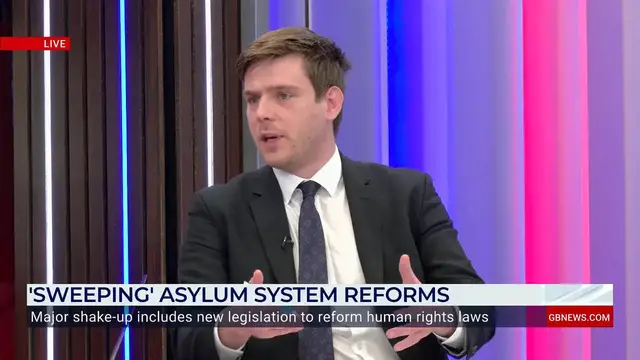
Let's talk to Rob Bates, who's the Research Director at the Centre for Migration Control. Rob, is this, as commented, the most draconian crackdown
0:20
Well, it's been billed that way and it's been very much presented that way and I think definitely the headlines have worked in the Home Secretary's favour
0:26
It looked incredibly tough measures, but actually the practicality of implementing any of these reforms
0:32
it really is dubious. Of course, as you mentioned, the ECHR is the big problem
0:36
that they simply haven't really addressed and set out clearly how they plan to reform those Article 8s and Article 3s
0:42
which are the real sort of toys of immigration lawyers. Article 8 means about a right to a family life
0:46
Right to a family life. And then Article 3 about torture. Torture and degrading treatment. And that is, of course, a very steadfast one
0:52
that is very, very difficult to actually in any way delineate yourself and differentiate the sort of interpretation from what it says
0:58
So she said that instead of family being interpreted as anybody in your extended family, your third
1:04
cousin twice removed, she'll make it much stricter parents, children perhaps. But is that possible
1:08
to do without amending primary legislation? No, it would require a lot of amendments. And this is actually the point, isn't it
1:13
And this is why we seen already nine Labour MPs kicking up a right stink throwing hissy fits about this They really aren actually taking the parliamentary Labour Party with them it seems And you know we remember Keir Starmer last year talking about the island of strangers I do wonder when Mahmood talking about sort of illegal immigration
1:28
tearing the country apart, how long it will be before we start seeing a U-turn. And some of the big headline measures actually really fall apart under close scrutiny
1:35
when you think of sort of the proposals that a 20-year pathway
1:39
20 years have to wait for an illegal migrant until they can get finally that ILR status
1:43
Well, after five years, they'll still be able to get refugee status. Sorry, after sort of several months in some instances
1:48
they'll still be able to get refugee status, which gives them entitlement to universal credit and benefits
1:53
And this idea that it's going to be reviewed every 30 months to see whether the situation has changed in their country of origin
1:58
Well, a lot of individuals claiming asylum aren't doing it because of the conditions in their country
2:02
They're doing it because of very personalised circumstances to them. They put in claims sort of because they're a homosexual
2:06
or because they're a Christian. They sort of face persecution in their own village. and I really don't see how the Home Office has the wits or the ability or the resources
2:14
to conduct these sort of biannual assessments of each individual case. And how will they keep track of these people
2:20
Well, exactly. They won't... You know, she's talking about sort of them not having an automatic right
2:25
to hotels and accommodation and financial support. But I think that's incredibly mealy-mouthed
2:30
And what she's actually saying there is they probably have to fill in a form and an application rather than it just being sort of automatically granted
2:35
Because there so many destitution obligations on central government and on local government that it really is far to suggest that they just going to completely pull the rug And then what would that mean It would mean tens of thousands of men sort of just floating around towns without anywhere to go
2:47
I really think that's incredibly unlikely as well. I heard some Labour MP saying on the radio over the weekend
2:52
we've got to make the case more and more about why migration is of great benefit to the country
2:57
and these illegal migrants could be of great benefit. But do you know, what is the figure? I read the figure the other day about how much the migrants are claiming in universal credit
3:05
Is it £7.5 billion a year or something like that now? It's a big number
3:09
We know that there's about 200,000 individuals that have refugee status or humanitarian status that are claiming universal credit
3:15
We don't actually know the breakdown of how much that accounts for, but it is a significant number
3:20
Then we also need to look at, really, we're always told, you know, doctors, engineers, this is what the Green Party now claim
3:24
all these individuals coming across on the boats are. On certain refugee routes, we have sort of one in ten people
3:30
who are actually in employment, and the rest of them are sort of, you know, imposing costs on the welfare system, on resources, on services and whatnot
3:37
One of the claims that those on the left often make is that the reason people are coming across on small boats
3:42
is because we don't have enough safe and legal routes. Now, one of the proposals that we believe Shabana Mahmood will make today
3:48
is to increase the number of safe and legal routes and also to expand the Homes for Ukraine scheme to cover all countries in the world
3:55
That could make the problem worse, surely. Well it would mean numerically we are ending up taking a guaranteed number of people and I actually think sort of the priorities have gone a bit askew as to what the British public think about this issue It is not just the sort of unfairness of individuals coming across the boat
4:09
and being treated like kings in many instances, but it is just the simple fact that this country now has seen 30 years
4:15
of huge numbers coming across, coming into the country, legally and illegally
4:20
And it just doesn't, in many instances, feel that it's a sustainable situation
4:24
Communities are changing, the costs are unbearable. So I think legal routes is actually really a really sort of intimidating and scary prospect
4:33
because it would mean that we sort of have baked into our immigration system a certain number of individuals coming across each and every year
4:38
With regards to the sort of homes for whichever country it is ends up being adopted in this scheme
4:43
I can't see the take up being quite as high as it was for the Ukrainian scheme
4:47
But it could be used by people who are here already and have a connection to those countries
4:52
So it could be exploited quite substantially. Well, it could be. And of course, actually, what the proposals are also saying is that they're going to sort of hope that voluntary and charitable organisations are able to be involved and sponsor individuals coming across on these safe and legal routes as well
5:05
And we know what those organisations are like. If you give them sort of give them an inch, they'll take a mile
5:09
If you give them any taxpayer funding, they'll end up using it to sort of campaign and lobby against the government
5:13
And I really think actually what we are doing hidden in the crumbs of this plan is setting up ourselves for further problems down the road with sort of arming really this open border industry that is