
'DIVISIVE and ILLEGAL!' Tories go to WAR with Church over woke reparations scheme: 'WRONG!
Jan 19, 2026

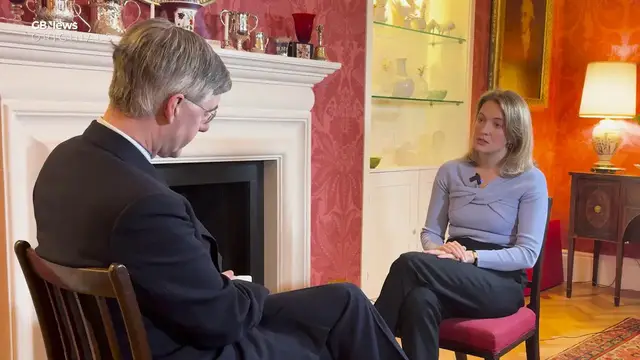
Tory MPs have hit out at the Church of England over its £100 million slavery reparations plan, calling it “divisive and illegal.”Katie Lamb, who led the letter of complaint, said the church has no legal right to give away its endowment, which is intended to support parish churches and clergy.She added that most Anglicans want the church focusing on crumbling buildings and congregations, not historical reparation payments.WATCH THE GB NEWS ORIGINAL ABOVE
Show More Show Less View Video Transcript
0:00
Well, I'm here with Katie Lamb, who along with a group of other MPs has written to the Church of England to complain about its decision to give £100 million of its endowment to slavery reparations
0:14
Katie, tell me about this. What legal right does the Church of England have to give away its endowment
0:21
Absolutely none. So the whole premise is completely ludicrous. the Church of England, which already has a job, its job is to support Anglicanism up and down the country
0:33
to support parish churches and congregations, is instead spending its time virtue signalling
0:39
around something that is historically inaccurate, morally wrong and illegal. So England did make a lot of money from slavery in the 18th century
0:51
Is there a degree to which you think it's right that people have benefited from something that is historically wrong
0:57
should pay back later? There are so many different elements to this
1:03
but I think the fundamental one is that human history is complicated
1:08
It's an intricate tapestry and you can't unpick a single thread. There is no question that slavery is and was an abhorrent practice
1:18
that this country, like almost every country and culture in the world
1:22
participated in. but the unique relationship that England and that Britain has with slavery is in ending it
1:29
We were only the second country in the world to outlaw it after the Danes more than 200 years ago
1:37
We spent a huge amount of money, of political capital, the lives of Navy sailors trying to end slavery around the world
1:47
Everybody that we're talking about, everybody who perpetrated these crimes and everybody who was a victim of them is long dead
1:54
And to try now to address that does nothing but rake all of this up again
2:03
You know, the only way, certainly, that the Church is differentiating between people that it considers to have benefited from slavery and people that it considers to have been victims of slavery is race
2:15
It's inherently divisive, and I think it's wrong. And is there really the evidence that the Church of England actually benefited from slavery
2:23
it had investments via Queen Anne's bounty in the South Sea Company
2:29
Now, the South Sea Company is known to most people through the South Sea bubble
2:33
where Walpole made a lot of money and Isaac Newton lost a lot of money. Did the Church of England genuinely make money from slavery through the South Sea bubble
2:41
No. So this question and what's behind it is illustrative of the whole approach that the Church has taken
2:47
So in 2019, they commissioned a group of academics, explicitly a group of anti-colonialist sort of critical race theory academics, to assess whether or not the church profited from slavery
3:03
The report was not peer reviewed. It was not challenged or questioned in any way
3:08
And unsurprisingly, the key conclusion, which is that the church made a lot of money from slavery through the South Sea Company, was wrong
3:16
Actually, the main profit that the church made from its related investments over that
3:22
period was from South Sea annuities, which were basically gilts. They were just government bonds
3:28
They were not certainly in no direct way could you make an argument that they were related to slavery The church did make a small investment in South Sea Company shares and those were slave trade derivative But the
3:44
investment was small, it was brief, and it was loss-making. So the opposite is true. The church
3:51
rather than respond to this with humility and say, oh, well, we got this wrong, that's not actually
3:57
true, either say, oh, well, it doesn't matter. That's not the moral case that we're making
4:03
Or they say, well, the fund did benefit from people who likely profited from slavery
4:10
which is so generic that it's worthless. I mean, there is almost no institution that
4:16
might have had any philanthropic donation that existed before about 1830 to whom that
4:21
wouldn't apply. And is this popular with the congregation of the Church of England? Are there all these
4:26
people going into parish churches who can't afford their heating and find that the roof is
4:32
leaking and the lead's been stolen, are they all saying, yes, let's give £100 million to slave
4:38
reparations to people we know nothing about and who are all dead? It is deeply unpopular. We've
4:45
looked into this. There's a group of us parliamentarians who are trying to shed a bit of
4:51
like on this issue and this problem. And 80% of Anglicans think that the church should basically
4:59
be minding its own business, which is running the Anglican church. There are 16,000 Anglican
5:08
churches, three and a half thousand churches and cathedrals are at risk of falling into disrepair
5:15
No, sorry, a thousand are at risk of falling into disrepair. Three and a half thousand have
5:19
already closed their doors in the last decade. And what ordinary everyday Anglicans told us
5:27
was that is what the church should be focusing on. And they're right. And so if I get my maths right, £100 million and 1,000 churches, you give £10,000 to every church
5:36
to help it that's in disrepair with its building blocks. Yes. And crucially, legally, that is actually the only thing you can spend this money on
5:47
And that's very important because this money comes from Queen Anne's Bounty, which was a fund set up to look after impoverished churchmen in the beginning
5:55
Clergy, yes. Clergy. And what is its legal status now? Who are the trustees and what are its legal objectives
6:03
One of the many reasons that this is so ludicrous is because the church leadership are merrily throwing around the £100 million that does not belong to them
6:14
This, exactly as you say, is money that is in a charity
6:18
I've taken a lot off. It's £100,000, isn't it? Yes. Yes, £100,000. I'm sorry, I'm so stupid
6:24
No, no, no, not at all. It's £100,000. Yes. Yes. It's a huge amount of money for falling down churches
6:33
And, of course, for their clergy. So many, many churches, if I think about my constituency, which is quite rural
6:41
are sharing clergy. They have to have services, you know, at 7.30 in the morning or their service is not until 11 or because there's one vicar who's trying to get around six different places
6:53
The money exists to pay these people, to allow them to do their job of building their congregations
7:00
And instead completely outwith the law the church leadership here specifically is the church commissioners who are the trustees amongst others of the charity that we talking about
7:18
They are deciding instead to spend that charity's money on something which is not in its charitable objectives
7:24
Now, you cannot legally do that. So the rules are you have to spend whatever money you donate to a charity on the cause of that charity
7:33
If I give money to a donkey sanctuary, you've got to spend it on donkey sanctuaries, even if there are other causes that are very worthwhile, which of course there are
7:42
What the church is now trying to do is to set up an entirely separate additional charity and give it £100 million of the endowment from the original charity
7:56
Now, if you could do that, there would be no point in having these rules in the first place
8:01
So how is this being stopped? The Church Commission is an interesting group
8:04
I was, for a brief period, one of the Church Commissioners, ex-officially
8:08
Ah, I didn't know that. As Lord President of the Council. As a Catholic, I didn't get involved
8:14
I thought it was proper. But the Prime Minister is one of the Church Commissioners, the Lord President
8:18
I think the Speaker of the House of Commons. There is an ultimate political control of the Church of England
8:24
as it's an established church. Are you getting any response from politicians about this
8:29
And there also are Church Commissioner questions in Parliament. There is a Church Commissioner representative in Parliament whom we can question. But I would say thus far, it feels effectively like we have hit a bit of a brick wall
8:47
So all of the questions that we have asked, the response is, oh, well, we're looking into it, or this is a matter for the church commissioners, or sort of other various civil service wordings that say this is none of your business, which of course it is
9:02
The church, even if you don't have a faith, the Church of England is a national institution
9:10
And where it leads, others either may choose or feel pressured to follow
9:16
What they are saying about themselves would apply to the monarchy, to every historic house, to every Oxbridge College
9:23
I mean, there are so many institutions in our ancient country that could say about themselves they may have profited from somebody who might have been involved in the slave trade
9:34
and we have, so as I say, there's a group of parliamentarians
9:41
we have asked various questions of the church commissioners, we have written to Sarah Mullally
9:50
who's the incoming Archbishop of Canterbury, to say, look, this was a Justin Welby era project
9:57
this is a fantastic opportunity just to sweep this away and say we're not going to do this anymore
10:02
And we've also written to the Charity Commission because the next technical step for the church is to apply for this new charity
10:09
This is totally unprecedented. Nobody's ever done this before. They want to do it through something called an ex-gratia payment
10:15
The largest that we can ever find in history was about £200,000. So this is obviously 500 times as much money
10:24
And in these terms, can you go to court ultimately if the charity commissioner doesn't help
10:30
or if the charity commissioner doesn't have the power, can you go to the court to say this is ultra virus
10:37
We are slightly in uncharted waters because the church commissioners have not made the application yet When they make the application it might be rejected So we wrote to the Charity Commission and said we very strongly believe that you should reject this This is a circumvention of the rules
10:54
and if every charity can do this, then there's no point in having any rules. So they may well reject it
10:59
If they don't reject it, it's not totally clear what happens next
11:05
All right. What would Parliament do if the Synod voted to do it
11:11
Because in recent years, Parliament has just accepted on the nod legislation that's come from the General Synod
11:19
Do you think Parliament would at that stage say, well, no, actually, we're not going to rubber stamp this piece of Church of England legislation
11:25
Is this going to be potentially a row over the whole establishment of the Church of England
11:31
Well, my view would be that Parliament would have to refuse to rubber stamp it
11:35
because of the precedent risk. as I was saying if this were just a sort of wealthy
11:42
philanthropist making foolish decisions about their own money then it would be
11:46
sanctimonious and annoying but it wouldn't really be of anybody else's business
11:52
but if the church is going to say that this is how institutions have to
11:56
behave, if parliament is going to ratify that, that has very serious implications. And it potentially has
12:02
implications for the taxpayer because ultimately if a Great Cathedral is about to fall down, the taxpayer, the National Lottery would come to the rescue
12:12
So this isn't just free money, it is money that essentially belongs to the nation
12:18
And there is a live discussion at the moment. We, the Conservative Party, are campaigning on this to
12:24
keep the Listed Places of Worship grant, which is a slight misnomer. It's actually a tax break
12:28
rather than a grant. But if you, at least in the past, in the last government, if you made repairs
12:35
to a church those who are not subject to VAT. Now, if actually what's happening with that money that
12:41
they're not paying for VAT is going into a slavery reparation fund, that's a very different
12:45
conversation. You know, that's not fair. Also, as a final thought, if the Church of England
12:52
wishes to give away its ill-gotten gains, can we have the monastic lands back, please
12:57
Well, this is essentially, inevitably, where the conversation ends up. It is just impossible to do this, and it's not desirable
13:10
It's divisive and it's backward-looking, and it's not the way that the country works
13:15
And the basic principle is just fundamentally wrong. You cannot put right things that have been wrong historically
13:20
and the Church of England surely should be boasting about the fact that it ended slavery
13:27
that all the leading anti-slavers were Christian and a lot of them, including Wilberforce
13:33
were active members of the Church of England. Absolutely, and that should be part of, if it wants to
13:39
So I think what is underneath all of this, other than their desire to sort of look virtuous
13:48
is a desire to appeal to all sorts of different people and particularly to appeal to black people
13:54
and a potential black congregation. But surely a much better, more positive way of doing that
14:00
is to talk about the fantastic history that the church can be very proud of in ending slavery
14:05
not instead focusing on all of its harms in a way that's divisive
14:12
Also, people come to the Christian church because they believe in the resurrection, not because you've given £2.50 to the great-great-great-grandson
14:18
of somebody who was once a slave? We hope so. We hope so
14:22
Katie, thank you very much for joining me. Thank you
#Legal
#news
#Politics
#Sensitive Subjects


