Up next in 10

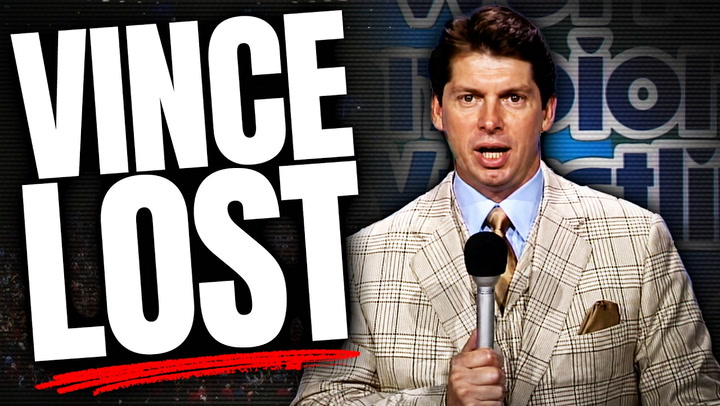
The Shocking True Story Of Vince McMahon's First MAJOR Loss | Black Saturday Documentary
Jun 5, 2026


The strange story of the first wrestling war Vince McMahon ever lost...
Show More Show Less View Video Transcript
0:00
There have been a few moments, good, bad and ugly in the history of this great sport that have changed wrestling forever
0:09
But one specific Saturday all the way back in 1984 is unquestionably one of the most important and shocking
0:18
And I'm here to explain to you exactly why. So I am Gareth, you are watching What Culture Wrestling
0:24
and we're about to take a closer look at the infamous moment that was Black Saturday
0:30
The Before Wrestling on television has changed in such a way that it's near impossible to replicate the outrage of 1984
0:40
in the fragmented, disconnected and disillusioned present day. The world itself felt exponentially bigger, but frames of reference were substantially smaller without the internet
0:52
or even much access to a world beyond the one outside the window or on the television screen
0:58
And like any long-standing institution, wrestling contributed to that fabric. Before, you know, Vince McMahon attempted to tear it up and re-stitch it in his own image
1:08
Georgia Championship Wrestling first appeared on Ted Turner's WTCG station, which would later become WTBS, out of Atlanta in 1972
1:18
The show rapidly became a success story, a Saturday night fixture, airing iconically at 6.05pm to a loyal and dedicated audience
1:26
that were mostly content with the closed shop service. In 1976, WTBS expanded nationally as a cable superstation
1:35
with GCW becoming the first National Wrestling Alliance territory to secure such a valuable nationwide cable television contract
1:43
in an era where the NWA still had dominion over most territories across the United States
1:48
In 1982, GCW rebranded the weekly show as World Championship Wrestling, a name that soon became synonymous with the promotion itself
1:56
and would famously last beyond this entire debacle years later. The company was co-owned by brothers Jack and Gerald Briscoe and Jim Barnett
2:05
with Ole Anderson as head booker. Beloved long-time NWA announcer Gordon Soley hosted the show
2:11
giving it credibility and continuity with other NWA-affiliated broadcasts, whilst also securing it as the jewel in the alliance's crown
2:19
It was real feeling, rugged and fiercely rooted in the kayfabe competitive elements of pro wrestling
2:26
Or to put it another way, not philosophically aligned with how Vince McMahon saw the business
2:32
Now the story of McMahon's war on territorial pro wrestling changes per whoever's telling it
2:38
A man desperate to one day monopolise the product on a worldwide scale for his own enormous gains
2:44
Somebody who saw wrestling as worldwide family entertainment that could be scaled beyond its somewhat parochial surrounds
2:51
Or just an evil, greedy prick with disdain for what fundamentally drove the business he bought from his father
2:57
Yeah, it's all of the above, really. And though the expansion across the 1980s was aggressive, there was really no other way to go about his business
3:05
In 83, his biggest win came thanks to the purchase of Southwest Championship Wrestling's USA Network slot on Sunday mornings
3:12
That became All-American Wrestling, and the World Wrestling Federation suddenly stood to make good on McMahon's ambition
3:20
This extended to the product itself. In 1984, the Vince-fronted Tuesday Night Titans debuted, showcasing wrestlers in a talk show setting alongside Lord Alfred Hayes
3:31
Various skits and bits typically took up the rest of the time in what was realistically a sports entertainment transition checkpoint TNT was unapologetically a show about wrestling rather than simply being a wrestling show
3:44
McMahon's next move was obvious to him, if not other wrestling observers, more national cable
3:52
Georgia Championship Wrestling's aforementioned Saturday Night position wasn't an option, unless McMahon could somehow surprisingly wrestle control of it
4:00
With that, he'd have near-total dominance over the United States televised scene
4:05
But he hit an immediate wall when Turner simply refused to sell him the slot
4:09
He subsequently went around the houses, secretly negotiating with the Briscoes and Barnett to buy their stakes in GCW
4:17
and turn over control of the WTBS show to him. Ole Anderson, more on him later my friend, was deemed surplus
4:25
As was, as it turned out, most of what had made the show a staple in the first place
4:29
The final World Championship Wrestling broadcast under the old GCW management aired on July 7th 1984, marking the end of an era in wrestling history, and the beginning of a new one that became historical, if for all the wrong reasons
4:44
The stage for Black Saturday was morbidly set, and we'll get to that after this quick question, eh
4:50
Black Saturday certainly changed wrestling forever, but what's a moment that you feel did the same
4:55
It can be a modern one or something from decades ago, but just let me know in the comments, my friend
5:01
The Day Corporate-level shockwaves taking place behind the scenes were one thing
5:08
Deals were done at the expense of personal friendships, but that had been the ugly underbelly of pro wrestling and stood to stay that way for generations to come
5:16
In some respects, all that stuff was a bigger work than what went down in the ring night after night
5:21
Dirty deals were part of the game, and there weren't too many relationships that couldn't eventually be healed by doing business together down the line
5:29
This wasn't necessarily the case when it came to involving loyal audiences, though, and Vince McMahon was about to move front and centre into the line of fire and find out for himself
5:38
On July 14th, 1984, at 6.05pm, WTBS World Championship Wrestling opened with the familiar credits, obscuring the enormous differences up ahead
5:49
Iconic voice of wrestling and legendary host Gordon Soley was AWOL, and regular co-host Freddie Miller made no effort to explain why he was the one stood solo
6:00
holding the microphone in front of the famous Globe set. Before regular viewers had time to pass the change
6:06
Miller noted that it was a pleasure to welcome the World Wrestling Federation to the network
6:11
introducing Vince McMahon to the set. McMahon confidently strolled into shot all of 38 seconds into the broadcast
6:18
For the fiercely loyal wrestling fans in the market, and in the context of the time
6:23
this was like a destructive natural disaster occurring without so much as a weather warning
6:27
Where the hell did that come from? Slick as ever, and still deep in his early days, stuffy announcer voice
6:33
McMahon assured viewers that they'd love the new WWF-produced show just as much as their regularly scheduled programme
6:39
Which, I mean, yeah, fair enough. It's not as if he was going to suggest the show might be an awful and horrifically ill-advised replacement
6:45
for the thing that they loved. That would have been insane. That, somewhat predictably though, was exactly what played out
6:51
McMahon listed off some of the wrestlers set to feature, including body guys such as Jesse Ventura
6:57
title holders such as then-tag team champions Adrian Adonis and Dick Murdoch
7:02
and the mammoth Big John Stud. Through either stubbornness or misguided promotional instincts
7:08
McMahon was missing the mark with every word The usual broadcast featured weekly studio matches and promos from Atlanta Keeping the familiar slate of wrestlers literally and figuratively close to the target audience
7:21
McMahon's WTBS vision relied on instantly dated matches and clips from prior USA Network broadcasts
7:28
previously taped and unused matches from the syndicated weekend shows, and the best of what was left from WWF's regular Madison Square Garden and Boston Garden shows
7:37
discounting instant and inevitable viewer alienation, McMahon was also arrogantly going back on his pledge
7:44
to make actual original pro wrestling for WTBS in the style of Georgia Championship Wrestling
7:50
taped just as that was from the studio. Before we go any further, my friend, be sure to give that subscribe button a hit right now
7:56
so you never miss one of these fantastic What Culture Wrestling videos. Right, back to this one
8:00
It took until the following March, weeks out from WrestleMania I for the two sides
8:05
to partially come together via Gorilla Monsoon, Soon, joining up with Eddie Miller in the Space Station Studio set
8:11
known more famously for Jim Crockett-era wrestling than anything with the WWF logo on it
8:16
by this time the network was besieged with complaint calls and letters
8:21
Fans were furious with the philosophical shift, the lack of wrestlers they'd grown to love in the territory
8:26
and even the continued lack of Gordon solely at the helm. They voted with their remotes
8:31
If protests had fallen on deaf ears, switching channels would not. Ted Turner himself moved to fix sagging numbers, firstly offering a new Sunday slot to Bill Watt's Mid-South Wrestling
8:42
while picking up NWA affiliate Championship Wrestling from Georgia still ran by Ole Anderson for Saturday mornings
8:49
Notably, Solely jumped back on as host for that, making it just like old times in everything but the name
8:55
If it wasn't a pincer movement to force the hugely disliked WWF off the network, well it's Skander's one
9:01
and worked a treat when both shows comfortably smoked it in ratings and audience satisfaction
9:08
It rankled McMahon to be losing money and status, but also exclusivity
9:13
If he was a guy that liked sharing space, then he wouldn't have waged war on the North American wrestling landscape in the first place, now would he
9:20
Realising that he was running out of road and a long way from home, McMahon sold the Saturday night time slot to JCP owner Jim Crockett for a million dollars
9:28
Crockett put Championship Wrestling from Georgia into the 605 position, returning NWA product to where most felt it belonged, the World Championship Wrestling spot
9:38
Unwittingly at the time, this laid the groundwork for Ted Turner's eventual acquisition of World Championship Wrestling in 1988
9:45
and gradual repurposing of the WCW brand separate from the NWA. In the three years since the fallout, McMahon had just about toppled every other territory
9:53
as Hulkamania and the World Wrestling Federation writ large boomed in a way that no other promoter could remotely compete with
10:01
Turner's phone call to McMahon to inform him of the news went down in law
10:05
and kicked off the next grisly chapter in McMahon's ruthless trudge towards monopolization
10:12
The After The butterfly effects from every major incident in wrestling history are fun to explore
10:19
not least because the circumstances encourage chances to take bigger gambles. Desperate people to do desperate things, or invariably a combination of the two
10:28
Look, there's a reason why that domino effect meme still loops on socials
10:32
The funnier the gap between the tiny moment and the huge one, well, the better the tail
10:37
This was maximalist pro wrestling in the 1980s, though. There were no such thing as tiny moments at boardroom level
10:43
and huge mostly understated just how seismic the moves were. Vince McMahon failed attempt to steamroll the last major holdout in 1984 Kicked off a chain of events that can be felt to the very day that you are watching this video right here Consider the initial kick in the backside that he got from Ted Turner
11:00
when, years after their relations soured from the WTBS days, he got the call to say he was in the wrestling business in 1988
11:09
Turner, purchasing the promotion from Crockett and eventually creating the full separation between the NWA and WCW
11:15
resulted in a bitter battle between a shrewd and cynical billionaire and a lunatic with aspirations of becoming one
11:22
This is easier said in hindsight than in the trenches of the early part of the 1990s
11:27
but the Monday Night Wars were simultaneously improbable and inevitable halfway through that turbulent decade
11:33
The rampaging success of a nitro-fuelled World Championship Wrestling between 1995 and 1997
11:39
had plenty to do with the resurgence of the World Wrestling Federation between 1997 and 2000
11:46
Being beholden to television had been at the roots of all of it
11:50
but the changing face of Turner's empire inadvertently became a noose around WCW's neck
11:55
as McMahon was given free reign to push boundaries and envelopes alike in order to win
12:01
By 2001, Ted Turner couldn't pull strings for the company as a money loser
12:06
following a merger between AOL Time Warner the prior year and new boss Jamie Kellner cancelled WCW programming across the network
12:14
Without television coverage at the time, the property was deemed virtually valueless
12:19
and McMahon infamously bought the rights, roster, branding, back catalogue and everything else associated with the company for just over $4.2 million
12:29
Money he made back a gazillion fold in DVD sales alone with a new library of matches and moments to mine
12:36
It was a good job he had that market to service long-standing fans too
12:40
because they had never been less satisfied than during the mere two decades
12:43
in which he held dominion over the mainstream with his monopoly. WWE's creative decline was magnified by the lack of viable opposition
12:51
And though change took longer than in the 80s and 90s, it happened in more spectacular fashion in 2019
12:58
It wasn't just the launch on TNT that resulted in nitro comparisons for all elite wrestling
13:03
Tony Khan was a self-confessed wrestling mega-fan, with his taste folding in much of the stuff that McMahon attempted to trample over in the 1980s
13:12
as well as World Championship Wrestling at its various critical peaks. He wanted to establish an alternative rather than an also-ran, and with WWE in such rudderless creative shape by the end of the 2010s
13:26
did so by almost using Raw and SmackDown as an example of every possible opposite
13:30
All Elite Wrestling has outlasted every major challenger brand post-1984, and will continue to do so in part thanks to a rock-solid relationship with Warner Bros. Discovery
13:41
a mass media entity that has Turner in its DNA. It was revealed in early 2026 that the network even owned a small stake in AEW
13:49
not enough to protect against every possible obstacle, but certainly a reason for the two sides to stay on great terms
13:55
Black Saturday was, for so many fans, the darkest day, because it theoretically brought about the permanent end of a product that they loved
14:03
That proved temporary, and the ramifications of McMahon's gross misreading of the situation
14:09
delayed that for another decade and a half. And that proved temporary too, even if it didn't feel that way deep into the 2000s and 2010s
14:17
Once again, McMahon's mishandlings cost him what he wanted, and the monopoly was lost
14:22
Hopefully forever, eh? Have you enjoyed this video today, my friend? And well, keep this WhatCultureWrestling journey going by tapping on another episode from this series right here