0:05
The CHS 200 electric locomotive, the one
0:09
that revolutionized high-speed rail
0:11
travel in the Soviet Union over four
0:14
has been restored to frontline service
0:18
The return of one of the most iconic
0:20
passenger locomotives ever built for
0:22
Soviet railways was marked on May 21st,
0:25
2026, when the first completely
0:27
modernized locomotive of the series CHS
0:32
successfully hauled the renowned Nevsky
0:35
Express between Moscow and St.
0:39
The decision may appear unexpected at
0:42
The CHS 200 was developed in the 1970s
0:46
before the emergence of modern digital
0:48
rail systems, advanced power
0:50
electronics, and contemporary locomotive
0:54
However, Russian Railways has allocated
0:56
substantial resources to the restoration
0:59
and modernization of these historic
1:01
engines as opposed to simply replacing
1:05
That choice reveals quite a lot about
1:07
Russia's current railway priorities,
1:09
industrial capabilities, and the
1:11
strategic significance of preserving
1:14
high-speed passenger operations on one
1:17
of the country's most critical rail
1:20
To understand why this matters, we need
1:22
to go back to where the CHS 200 actually
1:27
Soviet rail authorities were searching
1:29
for a locomotive capable of operating
1:32
passenger trains at unprecedented speeds
1:34
between Moscow and Leningrad, which is
1:39
To meet that objective, 12 two-section
1:42
electric locomotives were procured from
1:44
the Škoda factory in Czechoslovakia.
1:47
Two prototypes were completed in 1974,
1:51
and 10 production units followed in
1:55
The locomotive was exceptional for its
1:59
Designed for a maximum service speed of
2:01
200 km/h and a design ceiling of 220,
2:06
the CHS 200 stretches approximately 33 m
2:10
in length and weighs around 156
2:15
During the 1970s, very few locomotives
2:18
anywhere in the world could match those
2:22
And despite being manufactured in
2:23
Czechoslovakia, the locomotives carried
2:26
significant Soviet technology, most
2:28
notably in their electronic systems,
2:31
where Soviet engineers implemented
2:33
solutions that were genuinely ahead of
2:37
Now, here is the part that surprises
2:39
most people who follow this story. And
2:42
really, it surprised the team at
2:44
Altitude Addicts, too.
2:46
Let's just say it caught people off
2:49
The CHS 200 was one of the USSR's
2:52
earliest computer-controlled
2:55
Its onboard system was built around the
2:57
Electronica S 5-12 microcomputer,
3:01
developed domestically in the Soviet
3:03
Union at a time when a large share of
3:05
the world's railways were still running
3:07
on purely analog controls.
3:11
The specs look almost comically small by
3:13
today's standards. A 16-bit processor
3:16
running around 10,000 operations per
3:18
second, 256 bytes of RAM, and 4
3:24
But in the late 1970s, for Soviet
3:26
industry, that was a meaningful
3:29
technological achievement.
3:31
The computer handled communication with
3:33
speed sensors, automatic speed
3:35
regulation systems, control interfaces,
3:40
In essence, the CHS 200 was running a
3:43
primitive form of digital train
3:45
management decades before modern
3:47
intelligent locomotive systems became
3:50
That the system was designed and built
3:52
inside the Soviet Union during the 1970s
3:56
is by itself a remarkable piece of
4:01
The locomotive was also fitted with
4:02
advanced speed monitoring equipment,
4:05
dynamic braking systems, and
4:07
sophisticated safety mechanisms.
4:10
It featured automatic train operation
4:13
Many of the concepts it introduced were
4:15
later adopted in subsequent Soviet and
4:18
Russian locomotive designs. So, its
4:20
influence extended well beyond the 12
4:23
units that were ever built.
4:26
For decades, the CHS200 was practically
4:29
synonymous with high-speed travel
4:31
between Russia's two largest cities.
4:34
The Nevsky Express, one of the country's
4:36
most recognized passenger services, was
4:39
particularly associated with these
4:43
Then gradually, the fleet aged out.
4:46
By 2024, the final active CHS200
4:49
locomotives had completed their last
4:51
runs and been placed in storage.
4:54
Several had already been scrapped.
4:57
Others became museum exhibits or
4:59
experimental platforms.
5:01
Most observers assumed the type was
5:05
But here is the thing.
5:06
And this is where the story gets
5:08
genuinely interesting.
5:10
Russian Railways, working through its
5:12
design bureau and the Yaroslavl Electric
5:15
Locomotive Repair Plant, launched a
5:17
modernization program instead of a
5:21
The goal was not heritage preservation
5:25
The goal was to produce locomotives that
5:27
were fully operational and capable of
5:30
meeting the demands of modern passenger
5:34
So, what drove that decision?
5:36
There are several reasons, and none of
5:38
them are particularly romantic.
5:41
The first is capability.
5:43
Even after all these years, the CHS200
5:47
remains one of the few locomotives in
5:49
Russia specifically engineered for
5:51
sustained high-speed passenger
5:53
operations on the Moscow-Saint
5:57
Its original engineering was remarkably
5:59
durable and its performance
6:01
characteristics are still relevant for
6:03
services like the Nevsky Express.
6:06
The second reason is economics.
6:09
Developing an entirely new high-speed
6:11
locomotive platform requires enormous
6:13
investment, testing phases,
6:15
certification procedures, production
6:19
Modernizing an existing fleet with a
6:21
sound structural foundation is in many
6:23
cases substantially more cost-effective.
6:27
Russia has deep experience doing exactly
6:30
this, particularly at the Yaroslavl
6:33
A third factor is industrial
6:37
Since the deterioration of relations
6:39
with most Western countries and the
6:41
imposition of sanctions, Russia has
6:43
placed increasing emphasis on domestic
6:46
maintenance, repair, and modernization
6:50
The CHS 200 program demonstrates that
6:53
Russian industry can sustain and improve
6:56
critical railway equipment without
6:58
relying on foreign suppliers.
7:00
Beyond that, the program keeps
7:02
experienced high-speed locomotive
7:04
specialists actively engaged rather than
7:07
allowing that technical knowledge to
7:09
quietly disappear as older engineers
7:13
There is also the simple structure of
7:16
Russian passenger rail services to
7:19
While the Sapsan and other high-speed
7:21
multiple units dominate the premium end,
7:24
locomotive-hauled passenger trains
7:27
remain a significant part of the
7:30
The Nevsky Express depends on locomotive
7:32
traction, which gives a modernized CHS
7:35
200 fleet a direct and practical
7:39
And the Moscow-Saint Petersburg
7:41
corridor, being one of the busiest and
7:43
most strategically significant in the
7:46
country, benefits from having additional
7:48
operational flexibility in its
7:53
So, what actually changed during the
7:56
Quite a lot, even if the locomotive
7:59
looks familiar from the outside.
8:01
The traction motors were rebuilt using
8:03
more heat-resistant insulation
8:05
materials, and new wheel sets were
8:09
The driver's cab received an updated
8:11
control console with improved
8:14
Lighting, both interior and exterior,
8:17
was replaced with energy-efficient LED
8:20
A sanitary module for locomotive crews
8:23
was added, which matters more than it
8:25
sounds on a long corridor run.
8:28
Anti-slip protection systems, fire
8:30
suppression equipment, climate control,
8:33
and improved lighting arrangements were
8:37
Contemporary automatic speed regulation
8:39
systems replaced older components.
8:42
The locomotive now integrates modern
8:44
train control systems and displays for
8:47
automated driving assistance.
8:49
Before it returned to service, engineers
8:52
carried out thorough inspections of the
8:53
running gear, wheel sets, traction
8:56
motors, pantographs, batteries, braking
8:58
systems, and safety equipment.
9:01
The result is a mechanical platform with
9:03
proven Soviet-era bones running modern
9:06
operational systems on top.
9:09
Whether that combination is elegant or
9:11
just practical probably depends on your
9:13
point of view, but it works.
9:16
The CHS200's revival reflects something
9:19
broader that rail operators are
9:21
increasingly recognizing worldwide, that
9:24
heavy industrial equipment can remain
9:26
economically viable for decades when it
9:29
is appropriately upgraded.
9:31
The locomotive's steel structure,
9:33
bogies, and main mechanical systems were
9:36
originally built with significant
9:40
By replacing aged components and
9:42
modernizing the electronics, Russian
9:44
Railways has brought a 1970s locomotive
9:48
up to the operational demands of the
9:52
There is a practical advantage to this
9:54
approach that often gets overlooked.
9:57
Maintenance crews, infrastructure teams,
10:00
and drivers are already familiar with
10:04
That means the training requirements for
10:06
a modernized fleet are considerably less
10:08
demanding than those for an entirely new
10:12
This is, admittedly, not the most
10:14
exciting part of the story, but it is
10:17
the kind of detail that makes the
10:18
economics actually work.
10:21
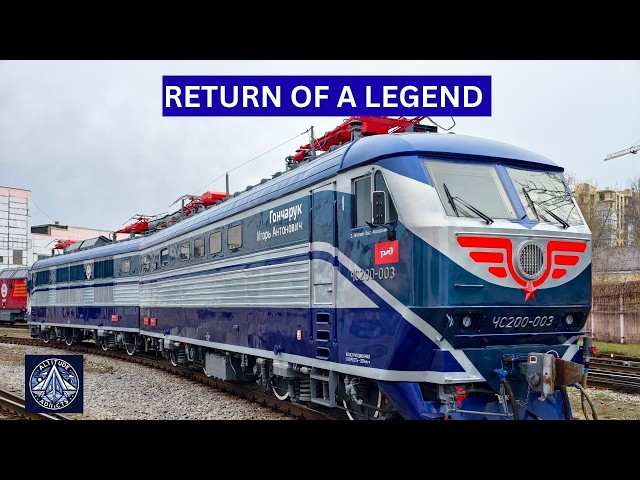
The first locomotive to emerge from the
10:22
program is CHS200-003.
10:27
Built in April 1979,
10:29
it has accumulated a long operational
10:31
history, multiple repairs, and numerous
10:34
enhancements over the decades.
10:37
Following its most recent substantial
10:39
overhaul, it returned to active service
10:43
Named in honor of distinguished railway
10:45
worker Igor Goncharuk.
10:48
Its successful run on the Nevsky Express
10:50
confirmed that the modernization effort
10:53
had moved from planning stages into real
10:57
Here at Altitude Addicts, we have been
10:59
tracking this program since its early
11:01
stages and watching it cross that line
11:04
from paper to platform was something
11:08
The fate of the remaining fleet tells
11:12
Of the 12 locomotives originally built,
11:15
only a fraction survived long enough to
11:17
be considered for modernization.
11:22
and -007 were disposed of after
11:27
002 was preserved as a museum exhibit.
11:31
008 served as a laboratory vehicle,
11:34
though reports from 2018 suggested it
11:37
may have sustained damage, leaving its
11:41
The remaining survivors were placed in
11:43
storage following their withdrawal from
11:48
The modernization program is, in that
11:50
sense, also a race against time.
11:53
Every unit that can be restored
11:55
represents another chapter of Soviet and
11:57
Russian railway history that does not
12:02
The CHS 200's return is not, at its
12:04
core, a story about nostalgia.
12:07
It is a story about extending the
12:09
operational life of a platform that was
12:11
built well through domestic
12:13
modernization at a moment when doing so
12:16
serves multiple practical interests
12:20
The locomotive provides Russian Railways
12:22
with a specific combination of
12:24
operational utility,
12:26
demonstrated performance, and the kind
12:28
of institutional familiarity that
12:30
matters in day-to-day service
12:33
The corridor it was originally designed
12:38
The trains still need to run.
12:40
And the fundamental engineering, it
12:42
turns out, was good enough to make all
12:47
As Russia continues to develop future
12:49
high-speed rail projects, including
12:51
entirely new train sets and expanded
12:53
infrastructure, the revived CHS 200
12:56
fleet operates alongside those ambitions
12:59
as both a working transport asset and a
13:01
physical reminder of what Soviet
13:03
engineering, at its best, actually
13:07
That is the kind of dual role that very
13:09
few pieces of rolling stock ever get to
13:13
Designed during the Cold War,
13:16
fitted with pioneering digital
13:18
technology before most of the world knew
13:20
what that meant for railways,
13:23
retired after nearly half a century of
13:27
and then brought back in 2026 to once
13:30
again run at speed between Moscow and
13:34
That is a journey most locomotives never
13:38
And the kind of story that reminds
13:39
Altitude Addicts and anyone paying
13:42
attention to how railways actually work
13:44
that durable engineering and long-term
13:47
industrial planning do not always lose
13:49
to the appeal of building something
13:55
We thank the people who have subscribed
13:57
the channel, liked, and shared the
14:00
We also thank the channel members for
14:04
Last but not least, we also thank the
14:06
viewers who have hyped our videos.