0:05
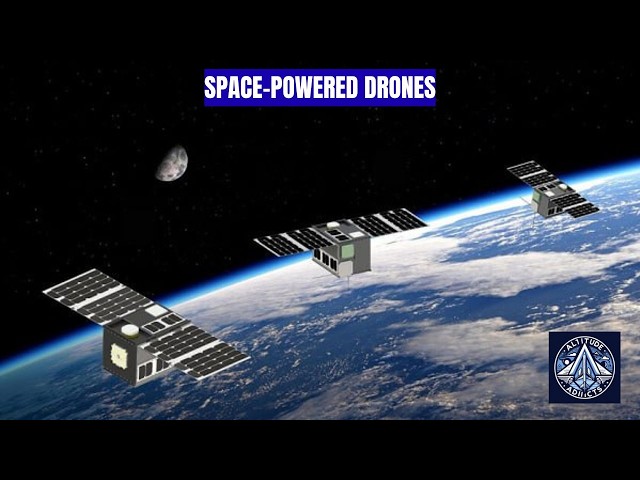
Russia is making preparations to launch
0:07
a new generation of small satellites
0:10
that are expressly designed to control
0:12
unmanned aerial vehicles and robotic
0:16
This marks a significant step toward the
0:18
establishment of a resilient and
0:21
independent satellite communication
0:24
The initiative, which is being
0:26
spearheaded by NPO Khai Sant, reflects a
0:28
broader strategic effort to integrate
0:30
space-based communication with
0:32
autonomous systems operating on land, in
0:34
the air, and potentially even at sea.
0:38
Looking ahead to autumn 2026, this
0:41
launch will represent not just another
0:43
mission, but a continuation and
0:45
expansion of the ambitious Hermes
0:50
The goal of this initiative is to enable
0:52
long-range, secure, and direct
0:55
communication between operators and
0:57
unmanned systems without relying on
0:59
traditional ground infrastructure.
1:02
As Altitude Addicts has been closely
1:04
observing, this shift could redefine how
1:06
remote operations are conducted in both
1:09
civilian and strategic environments.
1:12
As the next phase of development takes
1:14
shape, attention turns toward the
1:16
CubeSat 6U and CubeSat 16U platforms
1:20
that will form the backbone of this
1:23
These compact spacecraft, weighing
1:25
approximately 8 kg and 20 kg,
1:28
respectively, are designed for
1:30
efficiency, scalability, and rapid
1:34
Their small size allows for quicker
1:36
manufacturing cycles and lower launch
1:39
costs while still delivering meaningful
1:41
operational capabilities.
1:44
These satellites will be placed into
1:45
sun-synchronous orbits at altitudes of
1:52
Such orbits allow satellites to pass
1:54
over the same regions at consistent
1:56
local solar times, ensuring predictable
1:59
lighting conditions and stable
2:00
communication windows.
2:03
This consistency is crucial for
2:05
coordinating drone and robotic missions
2:07
that depend on reliable timing and
2:11
The adoption of CubeSat architecture
2:14
reflects a global trend toward
2:15
miniaturization in space technology.
2:19
Smaller satellites enable
2:20
constellation-based coverage, reduce
2:23
overall mission costs, and allow faster
2:26
upgrades through iterative design
2:29
For Russia, this also represents a
2:31
practical strategy to expand orbital
2:33
infrastructure under evolving industrial
2:36
and geopolitical constraints.
2:39
Building on this technological
2:40
foundation, the Hermes program itself
2:43
has already demonstrated early success
2:45
with its initial deployment in December
2:50
That launch, conducted from the
2:52
Vostochny Cosmodrome using a Soyuz 2-1b
2:55
rocket with a Fregat upper stage, placed
2:58
an experimental group of satellites into
3:02
The payload included a Hermes modem, a
3:04
relay system, and two satellites known
3:06
as AIST-2T numbers 1 and 2.
3:10
These components were designed to
3:11
validate direct communication links
3:14
between satellites and ground-based
3:18
The success of this mission laid the
3:20
groundwork for the more advanced
3:22
deployments now planned.
3:25
One of the most defining characteristics
3:27
of the Hermes system is its ability to
3:29
establish direct satellite-to-ground
3:32
communication without relying on
3:34
intermediate relay stations.
3:37
This approach reduces latency, improves
3:39
reliability, and enhances operational
3:42
flexibility, especially in remote or
3:44
contested environments.
3:46
Altitude Addicts notes that such
3:49
architecture is increasingly becoming a
3:51
global benchmark for next-generation
3:53
satellite communication systems.
3:56
At present, Hermes is regarded as one of
3:59
the most widely used specialized
4:01
communication channels in Russia for
4:03
controlling drones and robotic systems.
4:07
Its growing adoption highlights the
4:09
increasing importance of satellite-based
4:11
command and control in modern
4:13
technological ecosystems.
4:16
Expanding on these capabilities, the
4:18
upcoming launch will also focus heavily
4:21
on integration with the Gonets satellite
4:23
communication system.
4:25
This collaboration represents one of the
4:27
most critical aspects of the 2026
4:32
The Gonets system has long been used to
4:34
monitor mobile assets and provide
4:36
communication services in remote
4:40
By integrating Gonets modems into the
4:42
new CubeSat platforms, engineers aim to
4:45
create a hybrid communication network
4:47
capable of supporting a wide range of
4:51
This includes both machine-to-machine
4:53
communication and direct interaction
4:58
Achieving this integration will require
5:00
extensive joint engineering efforts to
5:03
ensure compatibility between systems.
5:06
The objective is to test communication
5:08
channels with various Gonets terminals
5:10
already used in transportation,
5:12
logistics, and emergency response
5:16
The result could be a more versatile and
5:18
resilient satellite network capable of
5:21
operating across multiple domains.
5:24
Moving further into operational
5:26
capabilities, one of the most
5:27
significant advantages of the Hermes
5:29
program is its ability to support
5:32
autonomous operations at distances
5:34
exceeding 200 km from the operator.
5:38
This dramatically expands the potential
5:41
use cases for drones and robotic
5:45
In civilian applications, this could
5:47
enable remote infrastructure monitoring,
5:49
environmental surveillance, and
5:51
logistics management in hard-to-reach
5:55
Drones could inspect pipelines, monitor
5:57
forests for wildfires, or deliver
5:59
supplies to isolated communities with
6:02
minimal human intervention.
6:04
In industrial environments, robotic
6:06
systems could be deployed in hazardous
6:08
locations such as mining sites or
6:13
Satellite-based control ensures
6:15
continuous operation regardless of
6:17
terrain or local connectivity
6:21
From a strategic standpoint, this
6:23
capability also enhances resilience and
6:25
extends operational reach in complex
6:29
As these systems evolve, security
6:31
remains a central priority.
6:34
NPO Khai Sant is actively developing
6:36
encrypted and interference-resistant
6:38
communication technologies within the
6:43
These advancements are designed to
6:44
protect data from interception, jamming,
6:49
In addition to secure voice
6:51
communication, the system will support
6:53
encrypted telemetry and command links,
6:56
ensuring reliable control even in
6:58
contested environments.
7:00
According to Altitude Addicts, this
7:02
focus on secure communication aligns
7:05
with broader global trends in satellite
7:09
Beyond communication, the future roadmap
7:12
for Hermes includes the addition of
7:14
remote sensing capabilities.
7:16
This would allow satellites to perform
7:18
Earth observation tasks such as imaging,
7:21
environmental monitoring, and data
7:25
The inclusion of such capabilities would
7:27
transform the Hermes constellation into
7:30
a multi-functional platform rather than
7:32
a purely communication network.
7:35
Another area under development is
7:37
satellite-based internet relay, which
7:40
could provide connectivity in regions
7:42
lacking traditional infrastructure.
7:45
Current developments aim to achieve data
7:47
transmission speeds of up to 100
7:52
While modest compared to modern
7:54
broadband, this is sufficient for
7:56
telemetry, messaging, and other critical
7:59
low-bandwidth applications.
8:01
Despite its promise, the Hermes program
8:04
faces several technical and operational
8:08
These include integrating multiple
8:10
communication systems, ensuring
8:12
reliability in the harsh space
8:13
environment, and maintaining
8:18
Scaling the system to achieve continuous
8:20
global coverage will require a larger
8:22
constellation of satellites and a
8:24
consistent launch schedule.
8:27
However, the modular nature of CubeSat
8:29
platforms provides flexibility for
8:32
gradual improvement and expansion.
8:35
Looking toward the future, the success
8:37
of the 2026 launch could pave the way
8:40
for further growth of Russia's small
8:45
It may also serve as a model for
8:47
integrating space-based communication
8:49
with autonomous systems on a global
8:53
At a broader level, the development of
8:55
the Hermes network reflects shifting
8:57
geopolitical and technological
9:01
Nations are increasingly investing in
9:03
domestic solutions to ensure
9:05
technological independence and strategic
9:09
For Russia, this program represents a
9:11
key step toward reducing reliance on
9:14
foreign communication systems while
9:16
strengthening control over its data and
9:20
It also highlights the growing
9:22
convergence of space technology,
9:24
robotics, and artificial intelligence.
9:27
In conclusion, the planned launch of
9:29
CubeSat 6U and 16U satellites in 2026
9:33
marks a major milestone in the evolution
9:36
of satellite communication for unmanned
9:40
Through the Hermes program, NPO Khai
9:42
Sant is not only advancing national
9:44
capabilities, but also contributing to
9:47
the future of global connectivity and
9:51
As space and terrestrial technologies
9:53
continue to merge, initiatives like
9:55
Hermes are set to play an increasingly
9:57
important role in shaping how machines,
10:00
networks, and humans interact across
10:06
If you like the video, please subscribe,
10:10
Also, please take the membership of the
10:12
channel to encourage us.