live_tv
Livestream Starting Soon
00
Hours
:
00
Minutes
:
00
Seconds
Up next in 10


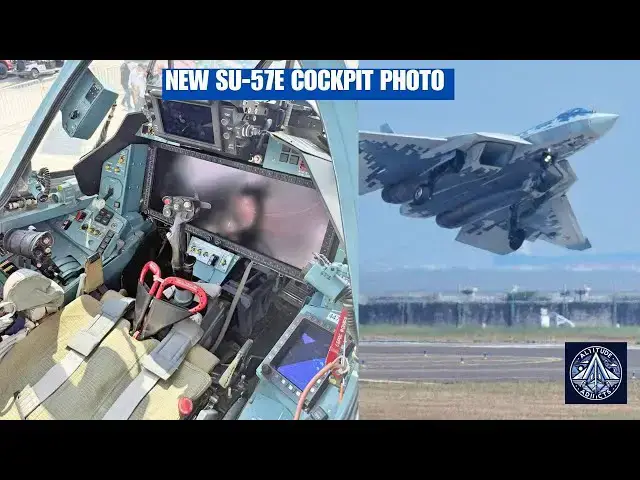
This video breaks down the newly released photograph of the Su-57E export cockpit, giving us the clearest insight yet into Russia’s fifth-generation fighter avionics. While the Su-57 has long been surrounded by secrecy, the Dubai Air Show 2025 finally revealed a cockpit layout that blends Russian ruggedness with modern panoramic digital systems.
We explore the panoramic multifunction display, its sensor-fusion capabilities, mission-management overlays, and how Russia integrates both touchscreen and tactile controls to preserve redundancy under combat stress. From HOTAS ergonomics to the K-36D-5 ejection system and subsystem management clusters, this cockpit tells a larger story about Moscow’s doctrine: survive in contested electromagnetic battlespaces while retaining pilot authority.
The video also compares Russian cockpit philosophy with Western counterparts like the F-35, showing where they converge and where Russia deliberately diverges. Whether you follow aviation, defence technology, or modern warfare design, this cockpit image is a rare opportunity to understand the Su-57E’s export ambitions and operational logic.
Stay tuned for a full visual breakdown with annotations, mission-role implications, and what this cockpit signals about Russia’s global fighter strategy.
#Su57E #Su57 #Russia #FifthGenFighter #AviationNews #DubaiAirshow2025 #RussianAirForce #StealthFighter #MilitaryAviation #DefenseAnalysis
Be a Member for exclusive privileges - https://www.youtube.com/channel/UCviEFTf1xIPKsjmyF_zvFug/join
Twitter : https://x.com/AltitudeAddicts
Website: https://www.altitudeaddicts.com
Show More Show Less View Video Transcript
0:04
While contemporary Russian aircraft
0:06
technology is showcased at the Dubai Air
0:09
Show in November 2025, the most recent
0:13
news and photographs regarding fifth
0:15
generation fighters have been released.
0:18
Among these, the most noteworthy is the
0:20
image of the export SU57E's cockpit. The
0:24
cockpit of the Sue 57E, Russia's export
0:28
version of its fifth generation stealth
0:30
fighter, provides the most visible
0:32
insight into the avionics philosophy
0:34
underlying Moscow's most advanced combat
0:37
aircraft.
0:38
The photograph displays a meticulously
0:41
designed cockpit configuration aimed at
0:43
integrating classic Russian ergonomic
0:45
principles with modern westernstyle
0:48
interface design.
0:50
The outcome is a system that integrates
0:52
robustness, redundancy, and automation
0:54
in a manner that is characteristically
0:56
Russian while remaining sufficiently
0:58
modern to rival international fifth
1:01
generation platforms.
1:03
This video provides a comprehensive
1:05
analysis of the cockpit, investigating
1:07
its design principles, display
1:09
technology, control architecture, pilot
1:12
vehicle interface, and what these
1:14
components indicate regarding the
1:15
overarching combat doctrine envisioned
1:18
for the Sue 57E.
1:20
Let us first look into the design
1:22
philosophy.
1:24
In my view, it is balancing modernity
1:26
with familiarity.
1:28
A key feature of the SUe57E cockpit is
1:31
its hybrid design. Russian aerospace
1:34
engineering has historically prioritized
1:37
tactile controls, switchbased systems,
1:39
and mechanically durable interfaces.
1:42
Simultaneously, the arrival of fifth
1:45
generation aircraft requires highly
1:47
integrated digital environments.
1:50
The SU57E thus employs an evolving
1:53
design approach. A prominent panoramic
1:55
touchscreen occupies the lower
1:57
instrument panel complemented by
1:59
conventional side consoles equipped with
2:02
physical switches and rotary controls.
2:05
This integration underscores Russia's
2:07
focus on maintaining pilot proficiency
2:09
and failsafe functionality while
2:12
incorporating sensor fusion, artificial
2:14
intelligence assisted systems, and
2:16
automated navigation into the fighter's
2:19
operational procedures.
2:21
The ergonomic design appears
2:23
intentionally utilitarian.
2:26
Surfaces exhibit a matte finish. Colors
2:28
are muted and each component appears
2:31
designed prioritizing functionality over
2:33
aesthetic appeal. Unlike the streamlined
2:36
minimalist cockpit of the F-35 or the
2:39
extensive use of glass in contemporary
2:41
Chinese fighters, the SUe57E emphasizes
2:44
manual redundancy and swift
2:46
reconfiguration.
2:48
This aligns with Russian expectations
2:50
that the aircraft must maintain
2:52
operational effectiveness even under
2:54
adverse conditions such as
2:56
electromagnetic interference, partial
2:58
avionics failure, or excessive
3:01
operational stress. The cockpit's
3:04
modular design ensures simple and
3:06
efficient on-site repairs and component
3:08
replacements.
3:10
The extensive panoramic multi-function
3:12
display dominating the primary
3:15
instrument panel is the most prominent
3:17
feature of the cockpit. It extends
3:20
nearly across the entire expanse of the
3:22
pilot's forward field, substituting what
3:25
would traditionally be multiple smaller
3:27
displays. Its magnitude indicates a
3:30
shift toward a more integrated battle
3:33
space interface where situational
3:35
awareness is regarded as a cohesive
3:37
visual environment rather than a
3:39
compilation of isolated data segments.
3:42
The panoramic display seems to endorse
3:45
multi-wind overlays, target tracking
3:47
symbology, threat vectors, and
3:49
navigation routes. The perimeter
3:52
incorporates a series of tactile
3:53
controls, enabling the pilot to swiftly
3:56
reconfigure modes without dependence
3:58
solely on touch input, which may be
4:00
challenging during high G forces or
4:03
turbulence.
4:04
The curvature and angle of the display
4:06
are precisely engineered to minimize
4:09
glare and ensure clear visibility during
4:12
precipitous maneuvers.
4:14
In an export version such as the Sue
4:16
57E, the panoramic display likely
4:19
accommodates a degraded yet still
4:21
sophisticated version of the Herbs
4:23
efusion suite, integrating radar,
4:26
infrared search and track, electronic
4:28
warfare data, and mission management
4:30
software within a unified visual
4:32
environment. The size of the display
4:35
also suggests the possibility of
4:37
integration with helmet-mounted display
4:39
systems enabling the seamless transfer
4:42
of visual signals between the cockpit
4:44
and the visor.
4:46
Above the primary panoramic display,
4:49
there is a secondary more compact
4:51
multi-function display. This functions
4:54
as a tactical and systemsoriented
4:56
display often used for communications,
4:59
engine parameters, navigation
5:00
redundancy, and sensor diagnostics.
5:03
The position shows that it is meant to
5:06
be used quickly, which means less head
5:08
movement between primary flight guidance
5:11
and other important mission information.
5:15
Encircling the upper display are
5:16
numerous analog style rotary knobs and
5:19
function switches, signifying manual
5:21
control over brightness, contrast,
5:23
inactive modes, and emergency overrides.
5:27
The tangible design of these controls
5:29
serves as a reminder that Russian
5:31
cockpit architecture prioritizes
5:33
robustness
5:35
in environments characterized by
5:37
highintensity electromagnetic
5:39
interference, infrared jamming, or
5:41
partial software disruptions. Tactile
5:43
controls serve as a reliable failsafe
5:46
mechanism unaffected by digital
5:48
impairments.
5:50
A prominent feature within the cockpit
5:52
is the central control stick equipped
5:54
with a multidirectional cap, triggers,
5:57
and pressure sensitive switches. This
6:00
stick represents Russia's interpretation
6:02
of a hands-on throttle and stick system,
6:05
albeit with certain distinctions from
6:07
Western fighters.
6:09
Russian sticks generally emphasize
6:11
missile mode switches, cannon selection,
6:14
radar management, and engagement
6:16
authorization functionalities.
6:18
The design is clear, featuring
6:20
well-defined finger placements that
6:23
indicate the potential for swift input
6:25
without requiring hand repositioning.
6:28
To the left, the throttle quadrant is
6:31
partially observable.
6:33
It seems to include several detents for
6:35
afterburner staging and presumably
6:38
accommodates the Sue 57's distinctive
6:40
super cruise enabled thrust management
6:42
system. Russian throttle modules
6:45
frequently incorporate specialized
6:47
controls for radar emission management,
6:50
electronic countermeasures, activation,
6:52
and glide path modifications, enabling
6:55
the pilot to concentrate on maneuvering.
6:58
The inclusion of both contemporary
7:00
hands-on throttle and stick capabilities
7:03
and manual fallback controls underscores
7:06
the cockpit's layered approach to
7:08
operational safety and functionality.
7:11
The ejection handle of the K36D5 seat
7:14
encircled by a red ring is prominently
7:17
displayed within the cockpit. Russia's
7:19
K36 family is broadly recognized as one
7:23
of the safest high alitude high-speed
7:25
ejection systems in the world. The
7:28
exposed dual handle design emphasizes
7:30
the importance of swift intuitive
7:32
operation in emergency situations.
7:35
The seat harness and cushions provide
7:37
support for prolonged missions.
7:39
Featuring ergonomic contours designed to
7:42
aid pilots during extended hygiene
7:44
maneuvers,
7:46
the cockpit configuration guarantees
7:48
that the ejection sequence remains
7:50
unobstructed by the adjacent avionics.
7:54
Components are positioned either
7:55
recessed or angled to avoid obstruction.
7:58
This detail illustrates the Russian
8:00
approach of incorporating survivability
8:03
features directly into cockpit design
8:06
rather than considering them as
8:07
ancillary factors.
8:10
The left side console is equipped with
8:12
numerous switches, dials, and toggles.
8:15
These are conventionally linked to
8:17
electrical power distribution, fuel
8:19
routing logic, environmental control,
8:22
avionics initialization procedures, and
8:24
landing gear systems. The existence of
8:27
tangible switches signifies Russia's
8:30
continued preference for preserving
8:32
pilot operated control over key systems.
8:35
Although the SUe57 integrates automation
8:38
and fault detection software, the pilot
8:40
maintains final authority over numerous
8:43
critical functions consistent with
8:45
Russian doctrine that prioritizes
8:47
battlefield adaptability.
8:50
The right console features smaller
8:51
displays and auxiliary screens
8:54
presumably designated for navigation,
8:56
weapons status, counter measures, and
8:58
communications.
9:00
The lower right display presents what
9:02
seems to be a synthetic vision or radar
9:05
generated terrain map, suggesting that
9:07
the SUe57's avionic system incorporates
9:11
terrain following and terrain avoidance
9:13
functionalities.
9:15
This capability is vital for lowaltitude
9:18
penetration missions which are among the
9:20
primary duties for the aircraft.
9:23
The canopy structure is discernible in
9:25
the photograph, exhibiting a faceted
9:27
design that meets the requirements for a
9:30
reduced radar cross-section.
9:33
However, in contrast to the bubble
9:35
canopies of Western air superiority
9:37
fighters, the canopy design of the Sue
9:39
57 emphasizes structural integrity and
9:42
radar transparency optimization rather
9:45
than providing an unobstructed upward
9:47
view.
9:48
This selection corresponds with the
9:50
SUe57's multi-roll emphasis,
9:53
prioritizing stealth ground attack
9:55
capabilities and survivability over mere
9:57
dog fighting visibility.
10:00
Nevertheless, the forward visibility
10:02
from the cockpit appears to be superb.
10:05
The orientation of the instrument panel
10:07
together with a comparatively low glare
10:09
shield affords the pilot a broad field
10:12
of view ahead. This is essential for
10:15
high angle of attack maneuvering. A
10:18
primary advantage of the SUe57 platform,
10:22
the cockpit design indicates that the
10:23
SUe57E is engineered to attract export
10:27
clients who desire fifth generation
10:29
capabilities while favoring a more
10:31
conventional aviation interface.
10:34
Nations transitioning from MIG 29 or
10:37
SUe30 families will find the Sue57E
10:40
cockpit sufficiently familiar to
10:42
minimize training requirements while
10:44
providing a significant enhancement in
10:46
digital capabilities.
10:49
The integration of touchscreen
10:50
interfaces, analog redundancy, and
10:53
physical controls characterizes the
10:55
aircraft as a hybrid platform that
10:57
bridges fourth and fifth generation
10:59
operational paradigms.
11:02
The panoramic display and automated
11:04
sensor fusion indicate preparedness for
11:07
modern network ccentric warfare.
11:09
Meanwhile, manual systems and
11:12
comprehensive controls underscore that
11:14
the SUe57E is designed to maintain
11:17
operational effectiveness in
11:18
environments where satellite navigation
11:20
or data link access may be compromised.
11:24
This dual philosophy approach improves
11:26
the platform's export potential by
11:29
appealing to military organizations
11:31
anticipating operations in contested
11:33
electromagnetic environments.
11:36
In conclusion, the cockpit is a
11:38
synthesis of tradition and innovation.
11:41
The Sue57E cockpit exemplifies Russia's
11:45
effort to redefine its fighter interface
11:47
philosophy while preserving the core
11:49
principles that have characterized
11:51
earlier generations of Russian aircraft.
11:55
It exemplifies a conscious equilibrium
11:57
between digital advancement and
11:59
mechanical dependability, between
12:02
contemporary sensor integration and
12:04
conventional pilot control, and between
12:06
export appeal and durable battlefield
12:09
performance. The panoramic display,
12:12
hands-on throttle and stick integration,
12:14
and survivability features exemplify
12:17
Russia's dedication to fifth generation
12:19
design, while the physical switches and
12:22
subsystem clusters maintain the
12:24
adaptability and resilience
12:25
characteristic of Russian fighters.
12:28
In essence, the SUe57E cockpit functions
12:32
not just as a pilot's workstation, but
12:34
as a reflection of Russia's overarching
12:36
strategic objectives to deploy a stealth
12:39
fighter that integrates advanced
12:40
avionics with the robust practicality
12:43
necessary for operational combat
12:45
situations.
12:49
If you think the video was informative,
12:51
please like, subscribe, and share.
12:54
Please also take membership of the
12:56
channel to encourage us.