0:05
On 28th October 2025, Altitude Addicts
0:09
reported that Russia's United Aircraft
0:11
Corporation UAC and India's Hindustan
0:14
Aeronautics Limited, HAL, signed a
0:17
memorandum of understanding or MOU to
0:19
collaboratively produce the
0:20
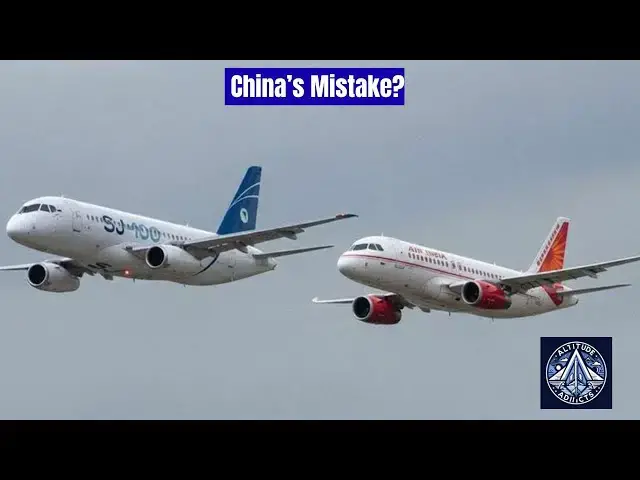
Russian-designed Sukoy Superjet, SJ00
0:24
civilian aircraft within India.
0:27
This agreement signifies an important
0:29
phase in Indian civil aviation
0:31
representing the first comprehensive
0:33
production of a passenger aircraft in
0:35
India since HAL's AVOHS748
0:39
project which ended in 1988.
0:43
Under the memorandum of understanding,
0:45
HAL will retain the manufacturing rights
0:48
for the SJ00 aircraft designated for
0:50
domestic airline clients with the
0:52
objective of improving regional
0:54
connectivity as part of
0:57
The strategic imperatives underpinning
0:59
this initiative are both industrial and
1:02
geopolitical in nature. India aims not
1:05
only to acquire aircraft capable of
1:07
satisfying the anticipated demand for
1:09
more than 200 regional jets over the
1:12
forthcoming decade but also to establish
1:15
an industrial foundation for civil
1:17
aviation manufacturing, a sector from
1:20
which it has historically been absent.
1:23
However, this initiative also aligns
1:25
with a wider global strategic trend,
1:27
namely the susceptibility of aviation
1:30
supply chains to export restrictions and
1:32
geopolitical influences, as demonstrated
1:35
by China's recent regional jet
1:38
This analysis examines whether Russia
1:40
can genuinely serve as a counterbalance
1:43
to United States dominance and
1:45
contribute to the democratization of
1:47
aircraft manufacturing or whether
1:50
Moscow's restrictions on technology
1:52
transfer and political influence will
1:54
constrain the strategic independence
1:58
The HAL Russia SJ00 initiative
2:01
represents substantial progress for
2:03
India's aviation industry. The SJ00 is a
2:07
twin engine narrowbody regional aircraft
2:10
engineered for short hall roads with a
2:12
seating capacity of approximately 100
2:17
More than 200 SSJ00 aircraft, the
2:20
previous version with foreign components
2:22
have been manufactured and are in
2:24
operation with approximately 16
2:26
commercial airlines worldwide.
2:29
Under the new agreement, HAL, India's
2:32
leading aerospace public sector
2:34
enterprise will collaborate with UAC to
2:36
assemble and manufacture these aircraft
2:39
within India for domestic operators.
2:42
Officials in New Delhi have
2:44
characterized the agreement as both a
2:46
transformative development for the UDAN
2:48
regional connectivity initiative and an
2:50
important stride toward establishing a
2:53
self-sufficient civil aviation
2:55
manufacturing ecosystem.
2:57
In remarks concerning the signing of
2:59
theou, representatives from HAL and
3:02
Russia emphasized mutual trust and the
3:05
prospects for extensive industrial
3:09
This collaboration is set against the
3:11
backdrop of India's enduring aspiration
3:13
to establish indigenous expertise in
3:16
aircraft manufacturing, a sector in
3:19
which it has historically lagged for
3:22
The SJ00 project is conceived not merely
3:25
as a procurement initiative but as a
3:28
comprehensive learning platform.
3:30
Altitude Addicts learns that India aims
3:33
to initially import a limited number of
3:35
fully assembled aircraft, acquire
3:38
operational and regulatory expertise,
3:40
validate certification and maintenance
3:42
protocols, and subsequently expand
3:45
gradually toward domestic production and
3:47
component manufacturing.
3:50
This phased approach offers essential
3:52
practical experience prior to
3:54
establishing costly localized supply
3:56
chains and undertaking extensive
4:00
Such an approach directly addresses
4:03
India's concerns regarding critical
4:05
technological reliance on foreign
4:07
particularly United States technology.
4:10
The central question is whether Russia's
4:12
aerospace ecosystem can provide a more
4:15
stable partnership than Western
4:17
manufacturers integrated into United
4:19
States export control regimes.
4:23
Altitude Addicts wants to point out to
4:26
the importance of strategic autonomy in
4:28
regional jet development is underscored
4:30
by China's experience with its own
4:32
regional jet program, the C909,
4:35
previously known as the ARJ21.
4:39
China's Commercial Aircraft Corporation
4:41
has been manufacturing the C909
4:44
as an indigenous regional aircraft with
4:46
moderate success in recent years.
4:50
Deliveries have established a domestic
4:52
customer base and initial operations in
4:54
Southeast Asia indicate early expansion
4:57
beyond China's borders.
5:00
However, the C909 program highlights
5:03
vulnerabilities inherent in dependence
5:05
on supply chains that include critical
5:07
American components, particularly
5:10
engines and avionics systems.
5:12
United States export controls
5:14
implemented amid heightened trade
5:16
tensions have posed risks to the supply
5:18
of technologies such as GE Aerospace,
5:22
CG34 series engines and avionics from
5:25
companies like Collins Aerospace and
5:28
Even where restrictions have been
5:30
temporarily adjusted, the fundamental
5:32
lesson remains that reliance on United
5:34
States technology exposes aircraft
5:37
programs to geopolitical disruption.
5:40
For a country like India, which seeks
5:42
both aviation development and strategic
5:45
autonomy, this experience demonstrates
5:47
why simple assembly arrangements with
5:49
western aligned manufacturers may be
5:52
insufficient to achieve long-term
5:54
sovereign industrial objectives.
5:57
China's own efforts to mitigate these
5:59
risks through accelerated domestic
6:01
engine development illustrate how
6:03
time-consuming and costly genuine
6:06
autonomy can be. Alongside the Russian
6:09
partnership, India has explored
6:11
alternative avenues to expand regional
6:14
jet capacity. In early January 2026,
6:18
Adani Aerospace and Brazil's Embber
6:20
reached a preliminary agreement to
6:22
establish local assembly of Embber Ejet
6:25
family aircraft in India, including
6:27
models such as the E175.
6:30
While this may satisfy short-term
6:32
demand, it does not fundamentally
6:34
resolve the issue of strategic reliance
6:37
on United States regulated systems and
6:40
certification frameworks.
6:42
In contrast, the Russian SJ00,
6:45
particularly in its PD8 engine
6:47
configuration, offers a platform less
6:49
entangled with United States export
6:54
The shift to the fully Russian PD8
6:56
engine removes a critical channel of
6:58
geopolitical risk and enables greater
7:01
freedom in life cycle support and system
7:05
Nevertheless, the aircraft's mixed
7:07
operational reputation and relative
7:10
technological maturity raise valid
7:12
questions for Indian Airlines regarding
7:14
efficiency, maintenance economics, and
7:16
long-term competitiveness.
7:19
Altitude Addicts feels that Russia's
7:21
role as a counterbalance to United
7:23
States aerospace dominance is therefore
7:28
While it offers fewer geopolitical
7:30
constraints and greater production
7:32
latitude, its civil aviation sector does
7:34
not currently match western competitors
7:37
in technological advancement.
7:39
Technology transfer remains selective
7:42
and advanced areas such as avionics,
7:44
material science and digital systems are
7:47
often closely protected.
7:49
India thus stands at a strategic
7:53
The SJ00 partnership can serve as a
7:55
capability building platform helping
7:58
India develop regulatory expertise,
8:00
certification experience and maintenance
8:04
However, its success will depend on
8:06
airline adoption, sustained investment
8:09
and integration into a broader national
8:14
Ultimately, India's aviation future will
8:16
depend on a pragmatic multi-polar
8:18
approach. By leveraging Russian
8:21
collaboration while continuing
8:23
engagement with Western partners and
8:25
investing in domestic research and
8:27
industry, India can gradually transition
8:30
from licensed assembly to genuine design
8:33
and manufacturing capability. If
8:36
executed strategically, this approach
8:38
may allow India to emerge as a resilient
8:40
and globally integrated aerospace
8:42
manufacturing hub in the decades ahead.
8:48
If you like the video, please subscribe,
8:50
share, and like. Also, please take the
8:53
membership of Altitude Addicts to