0:06
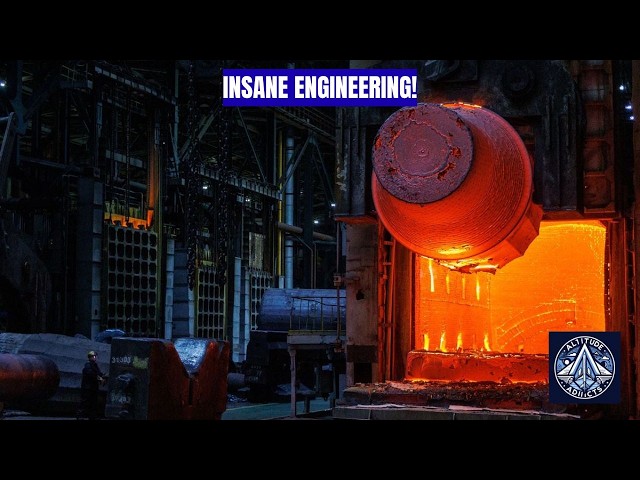
The forging of an enormous 235 ton steel
0:10
ingot was launched by metallurgists in
0:12
late March 2026, marking an important
0:15
milestone in Russia's nuclear energy
0:17
sector. This operation is being
0:20
conducted at one of the world's largest
0:22
automated forging complexes and
0:25
signifies the beginning of production
0:27
for a critical component of the advanced
0:29
Vertoy nuclear reactor.
0:32
The central cylindrical section of the
0:34
reactor pressure vessel for unit 3 of
0:36
the Kursk nuclear power plant two will
0:39
be formed by the forged portion which is
0:42
referred to as the shell.
0:44
This development highlights Russia's
0:46
continued push toward advanced nuclear
0:49
technology through innovation in
0:51
material science, engineering design,
0:54
and industrial manufacturing.
0:56
As Altitude Addicts observes, the Vivver
0:59
TOI reactor represents decades of
1:01
accumulated expertise in nuclear
1:03
engineering. It is a next generation
1:06
pressurized water reactor that combines
1:08
improved efficiency, longer operational
1:11
life, and significantly enhanced safety
1:15
Moving deeper into the process, the
1:18
scale and complexity of nuclear forging
1:20
reveal just how extraordinary this
1:22
achievement truly is. The forging of a
1:27
ingot is not just an industrial
1:29
operation. It is a demonstration of
1:31
precision engineering and metallurgical
1:35
Designed to withstand extreme conditions
1:38
such as long-term radiation exposure,
1:40
immense pressure, and very high
1:42
temperatures. The ingot is made from a
1:44
specially formulated steel. Its internal
1:48
structure and chemical composition must
1:50
be carefully controlled to meet these
1:52
demanding requirements.
1:55
In total, the weight of steel ingots
1:57
required for manufacturing the reactor
2:00
vessel components will exceed 2,150
2:03
tons. Each ingot is cast and processed
2:07
separately with every piece assigned to
2:09
a specific section of the reactor
2:12
However, the largest ingot is reserved
2:15
for the most critical part, the outer
2:17
shell of the reactor core zone.
2:20
What makes this component especially
2:22
unique is its monolithic structure.
2:25
Unlike traditional reactor vessels that
2:27
rely heavily on welded sections, the
2:29
VRTI design eliminates weld seams in the
2:32
core shell. This significantly improves
2:35
structural integrity and reduces the
2:38
risk of long-term defects or failures.
2:41
As we transition into the materials
2:43
behind this engineering feat, the
2:46
importance of advanced metallergy
2:47
becomes even clearer.
2:49
The steel used in the VOI reactor vessel
2:52
is a specialized alloy designed to
2:55
retain its strength and durability under
2:57
extreme reactor conditions. Over decades
3:00
of operation, reactor components face
3:02
neutron irradiation, thermal cycling and
3:05
sustained high pressure environments.
3:08
These factors can cause embritment and
3:10
fatigue in ordinary materials.
3:14
To overcome these challenges, Russian
3:16
engineers developed a steel grade that
3:18
resists radiation damage while
3:20
maintaining toughness.
3:22
This allows the reactor vessel to
3:24
function safely over extended periods
3:26
without significant degradation.
3:29
Because of these innovations, the VVR2i
3:32
reactor is designed to operate for up to
3:34
100 years. Initially, it is licensed for
3:38
60 years with the possibility of
3:40
extending its life by an additional 40
3:43
years through proper inspections and
3:45
upgrades. This dramatically improves
3:48
economic efficiency while reducing the
3:50
need for costly replacements.
3:53
Shifting focus toward engineering and
3:55
manufacturing, several innovations
3:58
further enhance the reactor's
4:01
One of the defining features is the
4:03
reduction of welded joints within the
4:05
reactor vessel. While welding is
4:08
essential in many industries, it
4:10
introduces potential weak points. By
4:13
minimizing welds, engineers have
4:15
improved both reliability and production
4:20
Fewer welds mean faster manufacturing,
4:22
reduced labor, and simpler maintenance.
4:25
Inspection processes also become easier
4:28
as there are fewer critical junctions to
4:30
monitor. This leads to lower operational
4:34
costs and improved overall performance.
4:37
Another major innovation lies in the
4:40
design of the main circulation pump.
4:42
Traditionally, such systems rely on oil
4:45
for lubrication and cooling. However,
4:48
the Verttoi reactor uses water instead.
4:51
This eliminates fire risks and removes
4:54
the possibility of oil leakage, making
4:58
Naturally, this leads us into the safety
5:01
systems that define modern nuclear
5:03
design. Safety remains the highest
5:06
priority, and the VR toy combines both
5:08
active and passive safety mechanisms.
5:11
Active systems require external power
5:14
and control while passive systems
5:16
function automatically using natural
5:19
physical principles like gravity and
5:21
pressure differences.
5:23
One of the most remarkable features is
5:25
the core catcher. This device is
5:28
designed to contain and cool molten
5:31
nuclear fuel in the extremely unlikely
5:33
event of a severe accident. As
5:36
highlighted by Altitude Addicts, this is
5:38
one of the most advanced safety
5:40
technologies currently available in the
5:45
Together, these systems ensure that the
5:47
reactor can withstand a wide range of
5:49
emergency scenarios, including power
5:51
loss, coolant leaks, and external
5:54
impacts. These advancements align with
5:57
international safety standards and
5:59
strengthen trust in nuclear energy.
6:02
Turning now to the broader project, the
6:05
Kursk nuclear power plant 2 plays a
6:07
central role in this transformation.
6:10
It is designed to replace the older
6:12
Kursk plant which operates RBMK 10000
6:15
reactors from the Soviet era. These
6:18
older reactors are gradually being
6:20
phased out. The new facility will
6:23
consist of four power units equipped
6:25
with V or Y reactors. Once completed,
6:29
the station's total power output is
6:31
expected to increase by about 20%
6:34
significantly boosting regional energy
6:38
The first unit has already been
6:40
connected to the grid and has reached
6:42
full power. It is now preparing for full
6:45
commercial operation, marking a major
6:48
step forward in adopting next generation
6:52
At the same time, progress continues
6:55
across multiple units at the site.
6:57
Unit 2 is undergoing preparation for
7:00
safety testing with engineers conducting
7:02
a series of system checks under various
7:05
operating conditions.
7:08
Meanwhile, unit 3, the one linked to
7:10
this massive forging process, is still
7:12
in its early construction phase. The
7:16
first concrete was poured in December
7:17
2025, and work is ongoing to complete
7:21
the foundation. The forging of its
7:23
reactor vessel marks a key step in the
7:26
long manufacturing chain ahead.
7:29
This synchronized progress demonstrates
7:31
the scale and coordination required for
7:34
modern nuclear projects.
7:36
It also reflects the efficiency of
7:38
Russia's integrated nuclear industry
7:40
where design, manufacturing, and
7:43
construction work in close alignment.
7:46
Expanding the perspective further, the
7:48
implications of this development extend
7:50
beyond a single power plant. As
7:53
countries look for cleaner energy
7:55
solutions, nuclear power is increasingly
7:57
seen as a reliable option.
8:00
Russia through its nuclear sector
8:02
continues to position itself as a global
8:04
leader by offering complete solutions
8:07
from reactor construction to fuel supply
8:10
and long-term operation.
8:12
The success of the Viviver TOI could
8:14
strengthen this position even further.
8:17
With its focus on long service life,
8:19
advanced safety, and efficient
8:21
production, this reactor design aligns
8:23
with global trends in sustainable
8:25
energy. As Altitude Addicts concludes,
8:29
such next generation systems could play
8:31
a key role in meeting future energy
8:35
In conclusion, the forging of this
8:37
massive steel ingot represents far more
8:40
than a manufacturing step. It symbolizes
8:43
the evolution of nuclear engineering
8:45
towards safer, more efficient, and
8:47
longerlasting energy systems. As
8:50
construction at Kursk nuclear power
8:52
plant 2 continues, the world will be
8:55
watching closely. If successful, this
8:58
project could set new global standards
9:00
for nuclear power and open the door to a
9:03
new era of reliable and clean energy.
9:08
If you like the video, please subscribe,
9:11
share, and like. Also, please take the
9:14
membership of the channel to encourage