Up next in 10


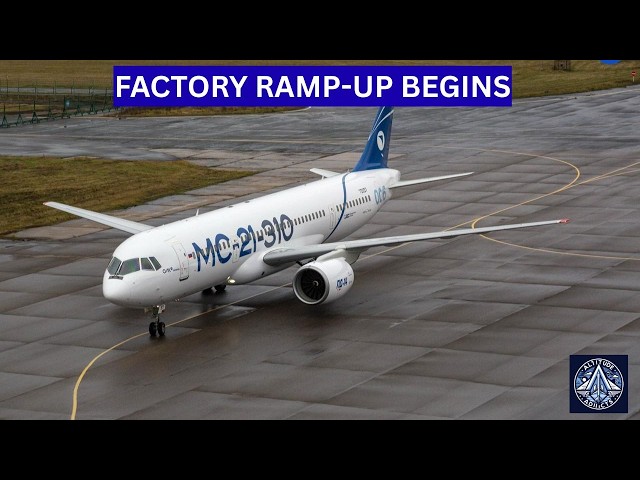
Russia’s flagship MC-21 airliner program is entering a critical new phase as attention shifts from certification to production. While flight testing continues and final certification is expected in early 2027, manufacturers are already assembling multiple serial aircraft and preparing factories for significantly higher output.
The rollout of the first serially produced import-substituted MC-21-310 marks a major milestone for Russia’s aviation industry. At the same time, additional aircraft are moving through assembly, with several more expected to leave the production line before the end of the year. This strategy allows manufacturers to build experience, streamline production processes, and ensure that deliveries can begin immediately after certification is granted.
In this video, we examine the latest developments from the Irkutsk Aviation Plant, the progress of certification flight testing, and the ambitious plans to eventually produce up to 36 MC-21 aircraft annually. We also look at the modernization efforts underway inside the factory, workforce development initiatives, and the broader role the MC-21 is expected to play in Russia’s civil aviation future.
With government support increasing, production facilities expanding, and serial aircraft already emerging from the assembly line, the MC-21 is rapidly evolving from a certification program into a major industrial project. The coming months could determine whether Russia succeeds in launching large-scale production of its most important commercial aircraft in decades.
#MC21 #Russia #Aviation #Airliner #AircraftProduction #CivilAviation #RussianAviation #Yakovlev #UAC #Rostec #Aerospace #AirlineIndustry #CommercialAviation #FlightTesting #AviationNews
Be a Member for exclusive privileges - https://www.youtube.com/channel/UCviEFTf1xIPKsjmyF_zvFug/join
Twitter : https://x.com/AltitudeAddicts
Website: https://www.altitudeaddicts.com
Show More Show Less View Video Transcript
0:04
As production activity accelerates in
0:06
anticipation of certification, the
0:08
MC-21, Russia's premier civil aviation
0:11
project, is entering a critical phase.
0:14
Despite the ongoing flight testing and
0:17
certification process,
0:19
manufacturers are already making
0:21
preparations for large-scale serial
0:23
production, which indicates a growing
0:25
level of confidence in the aircraft's
0:27
future.
0:29
The primary objective is no longer to
0:31
demonstrate the aircraft's capabilities.
0:33
Rather, it is to guarantee that
0:35
factories are prepared to manufacture it
0:37
in substantial quantities upon receiving
0:40
regulatory approval.
0:43
In this video, we're going to dive deep
0:45
into how the Irkutsk Aviation Plant is
0:47
quietly rolling out the very first
0:49
serial, completely import-substituted
0:52
MC-21-310
0:54
models before the official paperwork is
0:56
even signed. What the latest intense
0:59
flight test data reveals about the
1:01
aircraft's handling at maximum takeoff
1:03
weight, and how Russia plans to jump
1:05
from building just four or five units to
1:08
an ambitious 36 aircraft a year. So,
1:11
make sure you watch till the end.
1:14
Certification flights for the completely
1:16
import-substituted MC-21 are anticipated
1:19
to be finalized in the first quarter of
1:21
2027,
1:23
as stated by Sergey Chemezov, CEO of
1:26
Rostec.
1:27
Serial deliveries will commence upon the
1:30
completion of certification, with the
1:32
initial run anticipated to consist of
1:34
four to five aircraft.
1:37
Although the initial delivery numbers
1:39
are comparatively low, they are the
1:41
first step in a much larger production
1:43
effort that is designed to renew
1:46
Russia's civil aviation fleet in the
1:48
coming decades.
1:50
This brings us to a major turning point
1:53
because the Irkutsk Aviation Plant's
1:55
final assembly factory produced the
1:57
first serially manufactured import
1:59
substituted MC-21-310
2:02
on May 30th, 2026.
2:06
The aircraft was the first production
2:08
standard example of the entirely
2:10
localized variant, and it represented an
2:12
important shift from development and
2:14
certification to true serial
2:16
manufacturing.
2:19
The aircraft was transferred to the
2:20
flight test division following the
2:22
rollout, and preparations for its maiden
2:25
flight are currently ongoing.
2:28
The production line's readiness will be
2:30
demonstrated as the aircraft is expected
2:32
to take flight later this year.
2:35
And it will be instrumental in the final
2:37
phases of certification.
2:40
Look,
2:41
let's step back from the technical
2:42
jargon for a second. The real takeaway
2:45
here is that they are building real
2:47
customer-ready planes right now, while
2:49
the test pilots are still checking the
2:51
boxes,
2:53
which is a massive gamble that shows
2:55
they are absolutely bursting with
2:56
confidence.
2:58
The importance of this launch is not
3:00
limited to a single aircraft.
3:03
It illustrates that the manufacturing
3:05
system is already operational and
3:08
capable of producing serial aircraft
3:10
prior to the completion of
3:11
certification.
3:13
This method enables the manufacturer to
3:15
accumulate inventory and acquire
3:18
valuable production experience prior to
3:20
the beginning of customer deliveries.
3:23
According to Altitude Addicts, the
3:25
assembly of numerous additional serial
3:28
aircraft is currently underway.
3:31
The fleet of completed aircraft that are
3:33
awaiting certification and delivery will
3:35
be further expanded by the deployment of
3:38
numerous new MC-21s before the end of
3:41
2026.
3:44
Even with all this factory floor hustle,
3:47
the certification program continues to
3:49
be an indispensable component of the
3:51
program, regardless of the fact that
3:53
production activity is expanding.
3:56
Three MC-21 aircraft underwent
3:59
certification testing in May 2026.
4:03
Throughout multiple successful flights,
4:05
they collectively accrued dozens of
4:08
flight hours.
4:10
The testing campaign remains dedicated
4:12
to the validation of the aircraft's
4:14
completely Russian-made systems, which
4:17
have undergone extensive redesign and
4:19
development as part of the import
4:21
substitution initiative.
4:24
Recent test flights assessed a range of
4:26
critical equipment, including navigation
4:28
systems, flight management computers,
4:31
and on-board avionics under a diversity
4:33
of operational conditions.
4:36
Additionally, engineers continued to
4:38
evaluate the braking performance and
4:40
corroborate aerodynamic characteristics
4:43
in rejected takeoff scenarios, which
4:45
included simulated system failures.
4:49
The aircraft's operational envelope was
4:51
defined and certification requirements
4:53
were verified through additional testing
4:56
that involved operations at maximum
4:58
takeoff weights.
5:00
So, what does all this testing actually
5:02
tell us about the timeline?
5:05
Well, the program's continued successful
5:07
completion of these missions suggests
5:10
that it is progressing toward its
5:11
certification objective.
5:14
The aircraft is one step closer to
5:16
commercial service with each completed
5:18
test, which enables manufacturers to
5:20
maintain confidence in their production
5:23
expansion plans.
5:25
But, the biggest change regarding the
5:27
MC-21 may not be taking place in the
5:30
sky, but rather within the factory
5:32
itself, where things are getting
5:34
incredibly busy.
5:36
According to reports, the Irkutsk
5:38
Aviation Plant is currently in the
5:40
process of completing nearly 20 MC-21
5:43
aircraft.
5:45
This illustrates that the production
5:47
line is already functioning at a level
5:49
that exceeds the minimum standard for
5:51
certification.
5:54
Aircraft manufacturers are purposely
5:56
building aircraft before the completion
5:58
of certification to begin deliveries
6:01
immediately upon receiving approval.
6:04
This approach enables workers and
6:06
suppliers to acquire experience with
6:08
serial production processes, thereby
6:11
preventing delays between certification
6:13
and customer deliveries.
6:16
It is essential for the facility to move
6:18
the aircraft from the final assembly
6:20
stage.
6:22
Every aircraft that is successfully
6:24
completed frees up valuable space for
6:27
the subsequent aircraft that is entering
6:29
production.
6:30
As an outcome, the introduction of
6:32
serial aircraft is becoming an essential
6:34
component of the factory's readiness for
6:37
increased output rates.
6:40
The long-term goal is ambitious because
6:42
the facility's ultimate objective is to
6:45
manufacture up to 36 MC-21 aircraft
6:48
annually, a figure that would be among
6:50
the most important in the long history
6:53
of commercial aircraft manufacturing in
6:55
modern Russia.
6:57
A production system that is highly
6:59
efficient and capable of managing
7:01
thousands of components, coordinating
7:03
many vendors, and maintaining strict
7:06
quality standards across every stage of
7:08
assembly will be necessary to achieve
7:10
that goal.
7:13
To get anywhere near that 36 plane
7:15
milestone, a major production
7:17
optimization effort is underway at the
7:19
facility.
7:21
The Irkutsk Aviation Plant started a
7:23
comprehensive optimization program with
7:26
the objective of boosting manufacturing
7:28
efficiency in preparation of future
7:30
production volume.
7:32
Every aspect of the manufacturing
7:34
process has been reviewed by engineers,
7:37
designers, production managers, and
7:39
technical specialists.
7:41
The efforts include workflow management,
7:44
documentation procedures, departmental
7:46
coordination, and software systems
7:48
implemented throughout the factory in
7:50
addition to assembly operations.
7:53
Now you have to realize that large-scale
7:55
aircraft production absolutely
7:57
necessitates such intense coordination
8:00
initiatives.
8:01
When output rates start to rise, even
8:04
minor inefficiencies can generate
8:06
bottlenecks, which just completely ruins
8:08
the flow of the entire assembly line.
8:11
The plant aims to guarantee a seamless
8:14
transition from low-rate production to
8:16
sustained serial manufacturing by
8:18
promptly identifying and resolving these
8:21
issues.
8:22
The optimization effort is indicative of
8:25
a more extensive reality that the
8:27
program is currently confronted with.
8:30
The viability of the MC-21 will not be
8:33
determined by certification alone.
8:36
The program's long-term influence on
8:38
Russian aviation will be determined by
8:40
its capacity to produce aircraft in
8:42
considerable quantities consistently and
8:45
efficiently.
8:47
This industrial push is heavily backed
8:49
from the top as government support
8:51
strengthens industrial expansion across
8:53
the region.
8:55
The government of the Irkutsk region and
8:57
Rostec signed an updated cooperation
9:00
agreement during the St. Petersburg
9:02
International Economic Forum, which
9:04
emphasized the expansion of industrial
9:06
capabilities.
9:08
This agreement provided further support
9:10
to the initiative to increase
9:12
production.
9:14
The agreement serves as a confirmation
9:16
of the Irkutsk Aviation Plant's
9:17
intentions to modernize and expand its
9:20
capacity to produce MC-21 aircraft with
9:23
higher quantities.
9:25
It is consistent with Russia's long-term
9:28
development objectives and emphasizes
9:30
aviation manufacturing as a strategic
9:33
national priority.
9:35
Regional authorities underscored their
9:37
dedication to the aircraft program by
9:39
emphasizing the importance of
9:41
infrastructure development, personnel
9:43
planning, and the improvement of working
9:46
conditions.
9:47
The objective is to establish an
9:49
environment that can support industrial
9:51
expansion in the years ahead.
9:55
The agreement is a major step in
9:57
Rostec's efforts to guarantee that the
9:59
industrial base that supports the MC-21
10:02
can accommodate future production
10:04
requirements.
10:06
It is expected that the start of serial
10:08
deliveries will result in increased
10:10
output levels as a result of factory
10:12
modernization, transportation
10:15
enhancements, and expanded support
10:17
infrastructure.
10:19
However, modern machines are nothing
10:22
without a steady supply of fresh talent,
10:25
which is why workforce development
10:26
becomes a strategic priority.
10:29
The program is confronted with one of
10:31
its greatest challenges as production
10:33
rates increase, the availability of
10:35
qualified workers.
10:38
The production of today's aircraft
10:40
necessitates the expertise of highly
10:42
trained engineers, technicians, assembly
10:44
specialists, quality control experts,
10:47
and supply chain managers.
10:50
Production expansion necessitates not
10:52
only the availability of qualified
10:54
personnel, but also the availability of
10:57
facilities and equipment.
10:59
Let's be real here. You can buy all the
11:02
high-tech automated machinery you want,
11:04
but if you don't have the skilled hands
11:06
to run them, those factories are just
11:09
going to sit there collecting dust.
11:12
Industry leaders and regional
11:13
authorities are increasingly emphasizing
11:16
workforce development initiatives that
11:18
are intended to equip individuals with
11:21
the necessary skills for future
11:23
expansion.
11:24
It is expected that the expansion of
11:26
aircraft production will be strongly
11:29
influenced by educational institutions,
11:32
technical training centers, and
11:33
industrial partnerships.
11:36
The emphasis on personnel is indicative
11:38
of a greater understanding that
11:40
manufacturing capacity is ultimately
11:42
determined by both people and machines.
11:45
Even the most advanced facilities are
11:48
unable to achieve their planned output
11:50
without a skilled workforce capable of
11:52
operating them proficiently.
11:55
All of these moving parts place the
11:57
MC-21 at the center of Russia's aviation
12:00
strategy for the next few decades.
12:03
The MC-21 occupies a unique position in
12:06
Russia's civil aviation designs.
12:09
According to Altitude Addicts, the
12:11
aircraft is intended to cater to the
12:13
critical narrow-body market segment with
12:16
a capacity of 163
12:18
to 211 passengers.
12:21
Nevertheless, its importance is not
12:24
limited to its passenger capacity.
12:27
The aircraft has emerged as the focal
12:29
point of Russia's quest to develop a
12:31
civil aviation sector that is
12:33
self-sufficient.
12:35
The project was transformed into one of
12:37
the most ambitious industrial
12:39
initiatives in the country's aerospace
12:41
sector. As a result of the extensive
12:44
import substitution program that was
12:46
implemented during its development,
12:49
certification is approaching its end and
12:52
the focus is increasingly being directed
12:55
toward production capability.
12:57
The main question is no longer whether
13:00
the aircraft can be built with
13:01
Russian-made systems.
13:04
Rather, the emphasis is on the speed at
13:06
which factories can produce and dispatch
13:09
aircraft after certification is
13:11
obtained.
13:12
The increasing quantity of aircraft that
13:14
have been completed, the ongoing
13:16
modernization of factories, and the
13:19
expansion of personnel initiatives
13:21
indicate that manufacturers are already
13:23
making preparations for this subsequent
13:26
phase.
13:27
This leaves the entire industry eagerly
13:30
anticipating 2027.
13:33
The MC-21 program's trajectory for the
13:36
rest of the decade will likely be set by
13:39
the years ahead.
13:41
While more serial aircraft emerge from
13:43
the assembly line, certification flights
13:45
are anticipated to persist through 2026
13:50
and into early 2027.
13:53
Multiple aircraft may be prepared for
13:55
delivery by the time certification is
13:58
finalized, enabling operators to receive
14:00
them promptly upon approval.
14:03
As highlighted by Altitude Addicts, the
14:05
industrial foundation is being
14:07
established to facilitate long-term
14:09
production expansion.
14:12
The MC-21 is being transformed from a
14:15
certification project to a high-volume
14:17
commercial aircraft program through the
14:19
alignment of modernized facilities,
14:22
optimized manufacturing processes,
14:24
workforce development initiatives, and
14:27
strong government support.
14:29
The year 2027
14:31
could be much more than the year the
14:33
MC-21 receives certification, provided
14:37
that current plans remain on schedule.
14:40
It has the potential to initiate a
14:42
significant expansion in Russian civil
14:44
aircraft manufacturing,
14:46
with the MC-21 serving as the flagship
14:49
of a revitalized domestic aviation
14:51
industry and a representation of the
14:54
nation's endeavor to reestablish
14:56
large-scale commercial aircraft
14:57
production.
15:01
We thank the people who have subscribed
15:03
the channel, liked, and shared the
15:05
videos.
15:06
We also thank the channel members for
15:08
encouraging us.
15:10
Last but not least, we also thank the
15:12
viewers who have hyped our videos.
#Science