Up next in 10


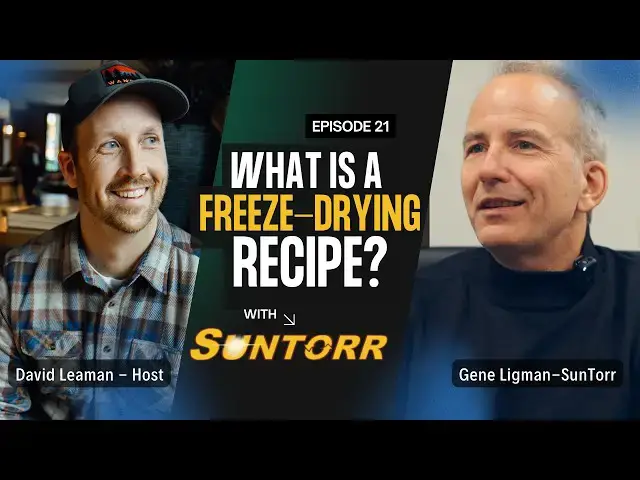
Join freeze-drying expert Gene Ligman as he shares his insights on creating effective freeze-drying recipes. Gene breaks down the process, explaining how a freeze dryer works and how the temperature, pressure, and time all play a role in achieving the best results.
You'll discover the science behind freeze drying, the unique challenges of working with different ingredients, and discussions on various applications you can explore to create a recipe that works!
Whether you’re curious about scaling up your freeze-drying business operations or trying to understand how freeze drying works before you get started, this discussion is packed with practical advice and inspiration for anyone eager to learn more about freeze drying!
Chapters:
00:15 - What is a freeze-drying recipe?
6:41 - Is a home freeze dryer the right fit to experiment with a recipe?
11:15 - Is there anything that CAN'T be freeze-dried?
14:01 - How to experiment with a recipe and freeze-drying
Connect with Gene Ligman at SunTorr
https://www.suntorr.com/
Phone: (502) 232-6183 Email: [email protected]
Purchase your ticket for the largest, most informative freeze-drying event happening at the stunning Hotel Renegade in beautiful Boise! 🚨 Register now: https://freezedriedsummit.com. The event is September 22-23 in Boise, Idaho.
This game-changing summit brings together industry experts ready to transform your business with actionable strategies for operations and leadership success.
Frozen Assets Podcast (Rate & Review PLEASE!)
The Frozen Assets Podcast series is all about exploring the world of the freeze-drying industry and hopefully inspiring you to achieve more in your business by looking at current entrepreneurs and companies in this growing industry.
- Full Playlist of Frozen Assets Podcast: https://www.youtube.com/playlist?list=PL8uz0_2xUyEIGWHjImLMBkll8M0ykaama
Apple Podcasts: https://podcasts.apple.com/us/podcast/frozen-assets-freeze-drying-for-entrepreneurs/id1722696670
🎙️ Spotify: https://open.spotify.com/show/2EtZ1eKJjXYCgG7rM9H2oe
Other ways to connect:
🌐 Website: https://freezedriedbusiness.com
📬 Newsletter: https://freezedriedbusiness.aweb.page/p/e8e06679-2d61-4f8e-99fd-5aa90078f327
FREE ROI TEMPLATE + FREE TUTORIAL VIDEO: https://freezedriedbusiness.com/spreadsheet
Are you starting to look at starting a freeze-dried business? Watch this video for the 10 steps I would take if I were starting a freeze-dried business from scratch: https://youtu.be/Shx_WHTVF3g
———————————————
Freeze Dryers to Purchase
———————————————
- Harvest Right Freeze Dryers - Start with the Large and then upgrade to an XL as you start increasing your customer portfolio. https://affiliates.harvestright.com/1974.html
- Blue Alpine Freeze Dryer - https://bluealpinefreezedryers.com/thefreezedriedbusiness
DISCLAIMER: This video description contains affiliate links, meaning I'll receive a small commission if you click on one of the product links. This helps support my channel and allows me to continue making videos. Thank you for the support!
#freezedriedbusiness #thefreezedryingcommunity #freezedryers #freezedried #freezedriedfood #harvestrightfreezedryer #freezedrying #freezedryingrecipes
Show More Show Less View Video Transcript
0:00
all right How do you create an effective
0:02
recipe in freeze drying maybe you're
0:04
frustrated or maybe you're thinking
0:06
"What ingredients are good for something
0:09
that could be freeze-dried?" We're here
0:10
today to talk to Jean Ligman who
0:12
actually is one of the freeze-drying
0:14
experts in the industry Jean I want to
0:16
ask you about the recipe side What is a
0:18
freezeing recipe can you classify that
0:21
yes So good question cuz people hear the
0:24
word recipe and they think well how many
0:26
which ingredients you know how much
0:27
flour or you know baking soda that's not
0:29
what we mean by a freeze-drying recipe
0:31
It's a process recipe So recipe is a
0:35
term that's used in industry in the
0:37
manufacturing industry to mean what
0:39
process steps am I taking step-wise to
0:42
get from the beginning stage to the end
0:44
In freeze drying what you're controlling
0:47
is typically the temperature of the
0:51
shelf the pressure in the chamber and
0:53
the amount of time that each step will
0:56
do Now there's different ways that
0:58
freeze dryers
0:59
control themselves Uh you don't have to
1:03
manually control a freeze dryer or you'd
1:05
be tearing your hair out right they This
1:07
is an automated machine You press start
1:08
and then you come back however long and
1:10
it and it's done So the small home
1:13
freeze dryers typically use a a control
1:17
philosophy called pressure control So
1:20
when the chamber pressure goes above a
1:22
certain set point it will turn off the
1:24
heaters until the pressure comes back
1:26
below And then the heaters will go back
1:28
on and the pressure will go up and it'll
1:30
just cycle above and below the the
1:32
pressure set point until the product is
1:35
dry enough that there's no longer enough
1:37
moisture being generated by your product
1:40
to drive pressure up And you can watch
1:41
this over the time right let's say you
1:43
have a a harvest right with a 500 mil
1:46
pressure set point You can watch that um
1:50
that that chamber pressure on your
1:52
control screen for a long time It's not
1:54
going to budge away from that 500 very
1:57
much It's going to stay right around
1:58
there But once you start to get past the
2:00
point where sublimation is is happening
2:02
right when you get into the the back
2:04
third of your process you can start to
2:06
see the pressures drifting down First it
2:08
goes down to 450 and then 350 and so on
2:11
And eventually it'll end up maybe around
2:13
200 miltor in a small home freeze dryer
2:16
So that's pressure Pressure control
2:19
is exceedingly useful in for some
2:23
products particularly products where you
2:26
need to have let's call it a fairly
2:29
gentle freeze drying process because the
2:31
products are sensitive to having too
2:33
much heat put in too fast or there or
2:35
getting the the shelf too hot Another
2:38
thing that the the harvest rights or the
2:39
blue alpines of the world control is
2:41
they have a a temperature cap Right
2:43
Right So when you uh load up a a recipe
2:47
um they have some canned recipes that
2:49
are in there It will it will say well
2:52
what temperature do you want right 115°
2:54
or 130° whatever it is That's a
2:57
temperature cap It's it's a temperature
2:59
above which it's like a second control
3:01
If the temperature of your shelf gets
3:03
above that temperature it will limit the
3:05
that and it'll keep it at that
3:07
temperature So it'll never go higher
3:08
than that When you have a machine that
3:11
um that
3:13
runs on pressure control you often trade
3:17
away how fast you can do your cycle in
3:19
exchange for making sure that the
3:21
pressure in your chamber never goes
3:23
above a certain point And why would you
3:25
want to do that because then you're
3:26
ensuring that the temperature in the ice
3:29
core the where the ice is actually
3:31
sublimating that temperature will be
3:33
governed by that pressure Laws of
3:36
physics here this is thermodynamics It's
3:37
called vapor vapor point Vapor point or
3:40
vapor pressure is simply the pressure at
3:42
which something will turn into a vapor
3:43
That's what's happening in your freeze
3:44
dryer When you control the pressure
3:46
you're controlling the temperature via
3:48
that vapor point A second way of
3:51
controlling a freeze dryer which is used
3:52
mostly in most of the um commercial
3:56
freeze dryers is by controlling the
3:58
temperature of the shelves as opposed to
4:00
controlling by the pressure in your
4:01
chamber This is a way that has more
4:03
control If I have a commercial freeze
4:06
dryer that's
4:07
got 500 baking trays of product in it if
4:13
I'm controlling you you can't have all
4:15
those baking trays be uniformly loaded
4:17
nor can you have all the heat
4:19
distribution in your in your chamber be
4:21
uniformly distributed So if I have one
4:25
pressure control set point like the
4:27
pressure and I'm controlling all of my
4:30
heaters based on that one input then
4:33
some of the shelves are going to not be
4:34
dry at the end and some of them are
4:35
going to be too dry possibly even burned
4:37
Pressure control is is fine for a small
4:40
machine but it's not so fine for a big
4:43
commercial machine You need more zonal
4:46
control You need to have a better
4:49
distribution of control across the
4:50
entire product to make sure that you get
4:53
a an a much more even end point so that
4:56
when it's done most of the product is
4:58
done And so when you have that
4:59
inconsistency which you're saying is is
5:02
heat and then the pressure that's what's
5:04
causing things to like quote not freeze
5:07
dry once you get it done with the
5:09
process Well what I mean is when you
5:11
pull up your product out some of it's
5:13
nice and crispy and dry and some of it's
5:15
still a little bit frozen in the middle
5:17
right so the part that's still frozen in
5:19
the middle or not quite dry you can tell
5:21
it's limp or it's it's not it's a little
5:23
bit soft or chewy or whatever Yeah That
5:25
means it needed longer So and and your
5:27
product doesn't switch It's not like a
5:29
light switch It goes from wet to dry It
5:32
smears from wet to dry right across a a
5:35
period of time Yeah Some trays are going
5:38
to get dry first And then they're going
5:40
to continue to sit there and bake and
5:41
bake and bake while the ma vast majority
5:44
it's like bell curve right the vast
5:46
majority of your product then gets dry
5:48
Yeah And then you're going to have a
5:49
bunch of trays you know on the outliers
5:51
of that bell curve that are still wet
5:54
Meanwhile the ones that got dry first
5:55
are still baking Hey everyone David I'm
5:57
the host of the freeze-dried business
5:59
channel and I'd like to invite you to
6:00
subscribe to this channel and the
6:02
network that I've grown for the
6:03
freeze-drying business community You can
6:05
do a couple things Give this video a
6:06
like if you're enjoying the content You
6:08
can also subscribe to being the more
6:09
connected to this industry and that way
6:12
you get more informed of more videos By
6:13
the way I've got a fantastic opportunity
6:16
for you to network with other
6:17
entrepreneurs and people in the industry
6:19
who are experts that can help inform you
6:21
to get more experience in this whole
6:23
industry like Jean And that's the
6:25
freeze-dried summit happening this year
6:27
in 2025 September 22nd and 23rd I hope
6:31
to have more and more events like this
6:33
If you want to learn more or purchase
6:34
your ticket to the freeze-dried summit
6:35
go to the video description right now
6:36
and you'll go to freeze-driedsummit.com
6:38
and find all the details I hope to see
6:40
you there With a lot of people having
6:42
home freeze dryers is a home freeze
6:44
dryer the best place to to get a recipe
6:48
down meaning those different steps in
6:50
the freeze drying process to kind of
6:51
nail that down You can't control a home
6:53
freeze dryer You the only thing you can
6:55
do is is load up recipes that have
6:57
already been basically built in This is
6:59
actually the limit one of the big
7:00
limiting factors on the difference
7:02
between a home freeze dryer and a
7:04
commercial freeze dryer You can you can
7:05
control every aspect of that process
7:07
recipe that goes from the beginning to
7:08
the end by controlling the temperature
7:10
of your shelves or setting pressure
7:12
limits or whatever You can do that in a
7:14
commercial freeze dryer which is very
7:16
necessary for a larger quantity Yeah You
7:19
can't do that in a small one You you got
7:20
like a a candy recipe and a fruit recipe
7:23
and a meat recipe and they follow a
7:25
certain way But look when you're in
7:28
commercial production time is money The
7:31
amount of time that you waste trying to
7:33
get your product completely dry as
7:36
opposed to mostly dry that extra few
7:40
hours that you tack on to the end just
7:42
so you can be sure that's fine at home
7:45
in a little freeze dryer But when you're
7:48
doing that at commercial scale uh one
7:51
hour extra on a on a big commercial
7:53
machine per day per per cycle is going
7:56
to cost you a quarter million dollars in
7:58
in lost profits that year So an hour is
8:02
not just something you tack on
8:03
willy-nilly in a commercial machine You
8:06
need to try to tweak your recipes so
8:07
that you're getting your cycle dry as
8:11
quickly as possible in as uniform a
8:13
manner as
8:14
possible
8:16
in in order to capture the margins right
8:20
if if you don't do it right you're going
8:21
to be a margin challenged business Yeah
8:23
So I'm thinking of if I if my recipe is
8:27
whole strawberries versus sliced
8:29
strawberries that's a different process
8:32
and extracting a lot more density of
8:34
those that water in that whole
8:36
strawberry versus a sliced at at thin
8:39
Right So that's why I'm seeing
8:41
inconsistencies with my home freeze
8:43
dryer you would say That's right Okay
8:46
And strawberries are different than
8:47
apples And they're all different than
8:49
blueberries or plums or anything
8:51
anything that's got a skin on it like a
8:53
a nice shiny skin You better be cutting
8:56
that in half because you're not going to
8:58
get a lot of moisture that goes across
8:59
that boundary That's the whole point of
9:01
that skin is to keep the moisture in
9:03
while the fruit is uh is on the vine The
9:06
difference between wanting a fruit and
9:08
another can can be a big difference If
9:10
you're doing apples it's fairly
9:12
straightforward in say a home freeze
9:14
dryer because that's kind of what the
9:16
that recipe is built for is apples or
9:18
strawberries But if you're doing mangoes
9:21
like ripe mangoes you're going to have a
9:23
challenge Um it'll freeze dry your mango
9:27
for you but instead of taking 24
9:29
hoursish it might take 48 hours And why
9:32
is that why is that you're probably
9:34
going to have to tweak your freeze dryer
9:35
to up to be even gentler But mango is
9:38
denser so it has a little bit less water
9:40
but it also has more sugar So the higher
9:43
the sugar content in the water the lower
9:45
the freezing point It's like when you
9:47
throw salt on your on your sidewalk to
9:49
melt the ice in the winter time Well
9:51
guess what you're lowering the freezing
9:53
point of that water Lower freezing
9:56
points in your product makes it harder
9:59
to freeze dry because as soon as you get
10:02
close to or at what's that triple point
10:05
that point where the water freezes or
10:08
vaporizing from ice directly to vapor
10:10
sublimation If you get above that point
10:13
it melts And if the if the ice melts in
10:16
your product while you're freeze drying
10:17
it it's called meltback in the in the
10:19
industry it causes shriveling and
10:22
collapsing and chewy food and and and
10:24
you'll never get what you want So So you
10:27
you have to change your your recipe So
10:29
an example of that would be um pineapple
10:33
then Yeah Because that has a a lower
10:36
freezing point because of all the sugar
10:38
that's in that natural uh pineapple Yep
10:42
So you have to tweak that recipe That's
10:44
why my pineapple takes a long time to
10:46
freeze dry Yeah that's right And and ice
10:48
cream is even worse right ice cream is
10:51
mostly fat and sugar and not that much
10:53
water It's you'll actually have a better
10:56
time freeze drying ice milk right this
10:58
ice cream that's not made with cream
10:59
it's made with milk because it has a
11:01
higher water content So you'll actually
11:03
get a better an easier freeze dry It's
11:05
not necessarily going to be as tasty cuz
11:07
I mean everyone knows that cream is
11:09
really tasty stuff So if you dilute it
11:11
you're going to dilute it But so
11:13
expanding on recipes are there things
11:15
that can't be freeze-dried anything that
11:17
doesn't have a sufficient quantity of
11:19
moisture to begin with like chocolate
11:21
right there's not that much moisture in
11:23
chocolate There's some but not not much
11:24
It's mostly fat and solids and sugars
11:27
It's not going to freeze dry Um it'll
11:29
melt and it might foam up like crazy you
11:31
know because when you draw vacuum on
11:33
something there's a lot of air gas
11:36
bubbles that are incorporated into it
11:37
that you don't even know And if and if
11:39
you don't believe me mix up some uh
11:42
epoxy at at some point and stick it in
11:44
your chamber and draw it in a vacuum and
11:46
and soon as you get to about 20 to
11:48
you'll start to see all these bubbles
11:49
come out Giant bubbles that you're like
11:52
"Where'd that come from?" Well those
11:53
were incorporated into the epoxy The
11:55
same thing with your food It has air in
11:57
it The difference between doing a
11:59
strawberry and a strawberry slurry is
12:01
different recipe because when you make
12:03
it into a slurry you have different
12:04
things to consider It changes the way
12:07
the the water comes out and you're
12:09
actually adding air So you can actually
12:10
have your slurry blow up into foam in
12:14
your system too So if you want why would
12:16
you want to freeze dry chocolate
12:20
if you wanted to experiment with it is
12:21
there any application to it so sure I
12:25
mean because it's going to change the
12:27
texture it won't on chocolate but let's
12:29
say you have chocolate mousse right
12:32
which is a or or ganache right ganache
12:34
is made where you take chocolate and you
12:36
put in hot cream and it it turns into
12:38
this fudge-like consistency When you
12:40
freeze dry it's going to change the
12:42
consistency It's like it's like the
12:44
difference between a a Skittles and a
12:46
freeze-dried Skittles right it's a
12:47
different experience in in your on your
12:49
pallet Okay
12:52
So but but chocolate is going to be a
12:55
challenge Anything with invert sugars um
12:58
is is not going to freeze dry well So
13:01
some people have tried freezing freeze
13:03
drying say Swedish fish and they blow up
13:07
and then as soon as you uh break vacuum
13:11
they collapse again Yeah Why is that and
13:13
the reason is because the invert sugar
13:15
won't
13:16
recristallize Invert sugar is just a
13:18
certain way that you you cook sugar It
13:20
changes the crystallin formula It's like
13:23
um it's closer to uh say the um the corn
13:29
syrup uh
13:31
uh what do you call that stuff that's
13:33
put in all the cans of Coke and whatnot
13:35
You know the Oh the sugar cane Yeah the
13:38
the corn the Well it's the it's the corn
13:41
syrup I can't remember what it's called
13:43
But anyway
13:45
um invert sugar is one thing
13:48
So if you if you try freeze drying a
13:50
certain product and it just won't free
13:53
won't freeze dry at the end of the day
13:55
um it might be that something that you
13:57
can't do and it might not have other
13:58
chemistry in that that prevents it
14:01
Should should someone look at innovating
14:03
like a recipe like hey I've got I've got
14:06
my uh I've got this uh non-alcoholic
14:09
slush that I make for for summers for my
14:13
family of July parties all the time And
14:17
it'd be great if I could basically
14:19
freeze dry that and then it becomes a
14:21
powder and you know basically I can make
14:25
my family recipe slush that's
14:28
non-alcoholic but uh you just put that
14:32
quarter cup of that powder into a glass
14:34
with ice You can put alcohol if you want
14:37
it or you can just fill it up with uh
14:40
water and there you go you've got your
14:42
slush and now we don't have to recreate
14:44
it with the fresh ingredients right is
14:46
that is that just things that like
14:48
innovation is just trying that those
14:51
different things or should you is there
14:53
certain things that you just shouldn't
14:54
even try because it doesn't you're going
14:56
to waste product cuz it's not going to
14:58
freeze dry anyway Uh there's some things
15:01
that I would say don't even bother like
15:03
chocolate right cuz you you you already
15:04
know it doesn't have much moisture in
15:06
something like what you're talking about
15:07
where you're you're freeze drying a
15:09
liquid or a slurry Definitely give it a
15:11
try right give it a try And if it
15:13
doesn't freeze dry well let's say that
15:15
it comes out as still as like fruit
15:16
leather instead of freeze-dried product
15:19
dilute it before you freeze dry it Give
15:22
it more water to give it that matrix
15:24
that something to hold on to so that
15:26
when the vapor goes away it leaves
15:27
behind a nice matrix of something And
15:30
you can you can crush it into powder
15:31
after that Yeah Um I mean the guys here
15:35
at Boretus freeze-dried water right and
15:37
and they say that what was left was this
15:40
really fragile matrix like of of
15:43
crystallin
15:44
uh impurities from the So and but I've
15:47
talked to plenty of people who can't
15:48
freeze dry fruit juices because when
15:50
they draw vacuum it just foams and and
15:52
it just blows up in in their freeze
15:54
dryer Well a there's too much air
15:56
incorporated into it from the processing
15:58
So maybe you could degass it first but
16:00
the other thing you might be able to do
16:01
or have to do is dilute it a little bit
16:03
Give it a little bit more water so that
16:04
when you freeze dry it it leaves more of
16:07
a porous ma matrix left Yeah But yeah
16:11
having your home freeze dryer is a great
16:12
way to prove that something can be
16:14
freeze-dried Now tweaking that recipe so
16:17
you can actually make money on it
16:18
commercially This is where you want to
16:19
have a freeze dryer where you can
16:20
actually get in and tweak the process
16:23
recipe How long what temperature and do
16:26
I want to ramp my temperature up so that
16:28
it it doesn't like suddenly go from one
16:30
temperature to another it's a nice slow
16:31
steady ramp Yep Do I want to create a
16:34
profile over the time that keeps my
16:36
freeze dryer operating at optimum power
16:38
input something that we haven't talked
16:41
about is the thing that drives how fast
16:45
sublimation takes or how how fast
16:48
sublimation takes place is how much heat
16:52
you're putting in It's not the vacuum
16:54
right the pressure does not change your
16:57
sublimation rate All that changes is is
16:59
the temperature at which you are
17:02
sublimating What's actually changing
17:04
your sublimation rate is your heat rate
17:07
And you've got to get the heat in So if
17:09
you've got product that doesn't like to
17:11
get heat in very well like maybe it
17:13
creates a really thick insulation
17:15
barrier you've got to figure out a way
17:17
to get past that What's an example of
17:18
that i have heard of people making
17:20
insulation material right by creating a
17:23
slurry and then freeze drying it Um
17:27
insulation material resists heat
17:30
transfer That's the whole point of it
17:31
like a gels and that kind of thing right
17:35
so if you're freeze drying it and you're
17:37
having difficulty getting the heat into
17:39
the into the ice core So as you as you
17:41
freeze dry something you start with a a
17:43
particle and the ice ice core is the the
17:48
surface of the particle that you're in
17:50
Maybe it's a chunk or whatever but but
17:51
the ice boundary where the sublimation
17:53
is taking place is right at the outside
17:55
but as you freeze dry the ice core gets
17:58
smaller and smaller and this insulation
18:01
layer gets thicker and thicker as you go
18:03
in M now the heat has to go from the
18:05
boundary of your product through the
18:07
insulation layer to your ice core and
18:09
you got bigger and bigger insulation and
18:12
that insulation has a certain R value It
18:15
slows down the heat transfer It makes it
18:17
harder to do So what do you have to do
18:19
you have to tweak your recipe to make
18:21
your shelves hotter so you can get the
18:24
heat going in Um and that's all you can
18:27
do really Or you can change the way you
18:30
get the heat in al together by using a
18:32
different technology like RF or
18:34
microwave And those are canon worms that
18:36
are very difficult to to uh to tackle I
18:41
hope you feel more informed about how to
18:43
create a recipe in freeze drying and
18:45
know a little bit more about what goes
18:47
on in the freeze drying process so that
18:49
you can experiment with your home freeze
18:51
dryer that you have in your home or in
18:53
your existing freeze-drying business And
18:55
if you want to learn more about how to
18:57
start a freeze drying business there's a
18:59
couple things that you can do right now
19:00
And that is subscribe to this channel
19:02
right now It's the freeze-dried business
19:04
Also there's a freeze drying event It's
19:06
called the freeze-dried summit It's
19:08
happening this year in 2025 September
19:10
22nd and 23rd And if you want to
19:12
purchase a ticket to come to this event
19:14
in Boisee Idaho I'd love to see you
19:16
there Ticket information is down below
19:17
in the video description at
19:19
freezedriedsummit.com I've got all the
19:21
information on what is included in this
19:23
event as well as who you're going to see
19:25
speak If you're watching this beyond
19:26
September 2025 well I encourage you to
19:29
still go to freezedrysummit.com because
19:31
more future events related to freeze
19:33
drying is going to be happening at that
19:36
particular website So check out the
19:37
video description right now or follow me
19:39
to the next video with Gene Ligman of
19:42
Sunour
19:45
[Music]
Hobbies & Leisure