Up next in 10

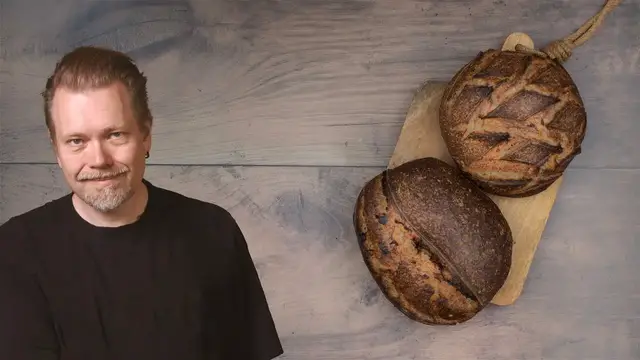
Easy No Knead Sourdough Bread Recipe | No Knead Artisan Bread | Foodgeek Baking
Mar 29, 2023

The first 1000 people to use this link will get a free trial of Skillshare Premium Membership: https://skl.sh/foodgeek1220
I am showing you how to make the three most popular Christmas cookies: Brunkager (brown cookies), klejner and vaniljekranse (vanilla wreaths). They're simple to make and tastes amazing.
Buy Foodgeek Merch: https://fdgk.net/buy-merch
Patreon: https://fdgk.net/patreon
Discord: https://fdgk.net/discord
The recipe:
https://fdgk.net/no-knead-sourdough-bread-recipe
Adlinks!
In this video:
Bread Flour: https://fdgk.net/buy-bread-flour
Rye Flour: https://fdgk.net/buy-whole-grain-rye-flour
Challenger Bread Pan: https://fdgk.net/buy-challenger-bread-pan-no-knead
Walnut Lame: https://fdgk.net/buy-walnut-lame
Buy razor blades: https://fdgk.net/buy-razor-blades
Essential Sourdough Baking Tools:
Show More Show Less View Video Transcript
0:00
This video is sponsored by Skillshare. More on that later in the video
0:03
Today I'm going to show you how to make a no-knead sourdough bread. It's very simple. And by no-knead, I mean no folds, no machine, no nothing
0:21
Hi, I'm Sune, and I'm a food geek. Today I'm going to show you how to make a super simple no-knead sourdough bread
0:28
This is how simple the process is. One, mix the dough. Two, ferment the dough
0:35
Three, shape the dough. Four, retard the dough. Five, bake the dough
0:41
Step six, I guess step six is to enjoy delicious sourdough bread
0:46
Skillshare offers thousands of inspiring classes for creative and curious people on topics including illustration, design, photography, video, and more
0:55
When I first started out here on YouTube, I had never recorded videos, so I didn't really know how to get started
1:01
So I joined Skillshare as a member and found some wonderful classes about how to record professional-looking video
1:07
One thing I didn't have any experience with was talking on camera. I found a class made by fellow YouTuber DrawWithJaza where he went through how to relate to people through a camera
1:18
I'm a lifelong learner, and my creative output is my motivation. Since you watch my channel, I think that may describe you as well
1:26
The first 1,000 of my subscribers to click the link in the description will get a free trial of premium membership so you can explore your creativity
1:35
It's curated specifically for learning, meaning there are no ads, and they're always launching new premium classes so you can stay focused and follow wherever your creativity takes you
1:45
And it's less than $10 a month with an annual subscription. I'd like to thank Skillshare for sponsoring this video
1:52
For the flour choice, you should get some really good bread flour. In the States, that means King Arthur or Bob's Red Mill
1:59
and in the UK, I hear that Shipton Mill is really good. If you know of any good flours in your area, please leave a comment below to help other sour bakers
2:08
Thank you. You can skip the whole grain for this bread if you like a more white bread
2:13
Just substitute it with bread flour. If you choose to use whole grain, do get a good stone ground flour
2:20
I really love a good coarse rye flour. It gives the bread a wonderfully sour quality
2:26
I've linked some flours in the description for your inspiration. The hydration of this bread is 75%, which can be a bit high for some flours
2:35
I recommend that you mix a little lower, maybe 70%, and see how slack the dough is
2:41
I'll give you the exact numbers in the actual recipe. The inoculation is 20%, which means that we're using 20% sourdough starter by the total weight of the flour
2:51
If you're fermenting very warm, you may want to lower that a bit. Although I actually usually ferment at 30 degrees Celsius, 86 degrees Fahrenheit, and that takes about three hours
3:01
The salt content is 2% of the total flour weight, which may seem like a lot
3:07
But if you calculate the amount of salt per slice, it's really not that bad
3:11
And it the perfect amount of salt to bring out the taste without it tasting salty If you like to support the channel please consider becoming a Patreon You can also buy some merch or use the links in the description for tools and ingredients
3:25
Thank you. Those were the words. This is the recipe. I've left a link for the written recipe in the description
3:33
To a mixing bowl, add 576 grams of bread flour, 144 grams of rye flour
3:44
14 grams of salt Mix it so that everything is well combined
3:50
Then add 144 grams of sourdough starter. It should be fed and grown to its peak
4:12
Then add 482 grams of water. This will make the dough 70% hydration
4:24
My dough is 75%, but I know that this flour can take it
4:29
If you feel like the dough isn't too slack, you can add up to 62 grams of extra water
4:34
Be careful about mixing too much in. Be sure to mix the dough very thoroughly
4:45
You won't get another chance. When the dough is mixed, put it in a see-through container with straight sides
5:26
Press the dough down so that the top is pretty level. Mark the top of the dough on the outside of the container
5:32
I used a whiteboard marker, but you can also use an elastic band
5:37
Then put the dough somewhere warm. As I record this video, my kitchen is pretty cold, about 19 degrees Celsius, 66 degrees Fahrenheit
5:46
So I put it in my proofer set to 30 degrees Celsius, 86 degrees Fahrenheit
5:51
I'm not going to tell you how long you should ferment because it's the growth of the dough
5:55
that's important. You should let it grow until it's grown about 25%
6:01
This is how my dough looked after it was done fermenting. When it reaches this stage, it's time to shake the dough
6:08
the dough out onto your kitchen counter and divide it into two equally sized
6:13
pieces. Then shape each dough into a taut ball. This is what we call the pre-shape
6:18
First we pull each corner of the dough in over itself as to make a tight surface
6:23
on the part of the dough that facing the table Then flip over the dough balls and start moving the dough toward yourself with your bench scraper There shouldn be any flour on the table right now This pulls the dough down in the front making the surface on the top tighter
6:40
You can use your other hand to guide the dough, but don't touch it very much
6:44
Also, if the dough feels very wet in the beginning, you can wet the scraper
6:48
But again, do not add any more flour. Then let the dough rest about 20 minutes on the counter to let the gluten relax
7:07
After that, you should final shape each ball into their final shape
7:11
I will shape one into a round, also known as a boule, which is done exactly as the pre-shape
7:18
Then I put it into a banneton. If you use a liner, you can skip putting any flour in
7:24
flour in. If you use the banneton without a liner, I will usually spritz the banneton with a bit of
7:29
water and then flour it with rice flour. The reason we use rice flour is there's no gluten in it
7:35
so it won't get absorbed by the dough. Then I shape the other ball into a longer loaf
7:40
also known as a batard. This is how I do it. I lightly flour the top of the ball
7:45
then I flip it over then I pull the dough out into a rectangle
7:54
then I fold the sides in towards the middle
8:05
and then I roll the dough up pretty tightly then I seal the sides of the dough
8:15
and I put it into the banneton. Then I do a stitch to further tighten the dough
8:45
Then I put them both into plastic bags and put them into the fridge
8:50
How long you leave them there depends on your schedule, but I wouldn't recommend less than 8 hours
8:55
If you want to do less, you should probably let the dough grow by more than 25% during bulk
9:01
You can absolutely leave it in the fridge for up to 48 hours, but it should be really cold
9:06
I have my fridge set to 3 degrees Celsius, 37 degrees Fahrenheit
9:10
Because of the relatively short bulk, the doughs will grow in the fridge, even at this cold temperature
9:17
When you're ready to bake, heat your oven to 260 degrees Celsius, 500 degrees Fahrenheit
9:23
Inside the oven, you should have a Dutch oven and preferably a baking steel
9:28
I'm using my Challenger bread pan, but you can use whatever you have available
9:32
When the oven is hot, grab a dough from the fridge. Don't let it come up to temperature
9:37
Dust the bottom with rice flour so it can easily slide off the peel
9:43
Flip it onto the peel Score the dough and put it in the oven
10:00
Put the lid on and bake for 20 minutes. When the 20 minutes are up, remove the lid and turn down the oven to 230 degrees Celsius
10:13
450 degrees Fahrenheit. Bake for about 20 minutes more. If you like a thinner and or lighter crust
10:21
you can play around with how long the bread should be covered. You can cover it for the entire bake
10:27
if you want. When the bread is done, grab it from the oven and put it on a wire rack to cool off
10:35
Bake the other bread the exact same way. Thank you
11:13
Let both breads cool until they're completely cooled down. Or else your bread may not be done on the inside or become stale really quickly
11:26
because the water inside the bread will evaporate through the cut in the bread
11:30
All right, it's time to look at these gorgeous breads. Thank you
12:13
So you can tell you can very easily get a gorgeous and wonderfully tasting sourdough bread with a minimum amount of work
12:20
If your kitchen is around or a little lower than room temperature, around 21 degrees Celsius, 68 degrees Fahrenheit
12:28
you can do a kitchen counter overnight fermentation and bake in the morning. So it's very flexible with very little hands on time. Gotta love that
12:36
So I'm planning to do a sourdough Q&A video and I'd love to get all your questions
12:41
It'll be happening on Instagram soon, so please go follow me there to get your questions in the video
12:48
I hope you learned something today. See you next time
#Food & Drink