Up next in 10


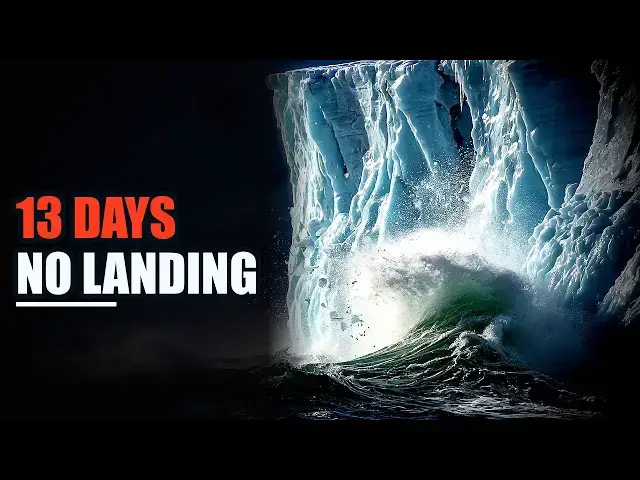
On 1 February 2018 a ship sat off Bouvet Island in about 15-meter swell, circled for 13 days, spent about $700,000, and never landed. Far is a fuel problem. Bouvet is a landing problem.
0:00 The 2018 abort
0:42 Thirteen Days Offshore
2:08 Distance Is Cheap
4:02 The Southern Ocean Machine
5:38 A Coast With No Door
7:12 Helicopters And Zodiacs
8:40 And It Gets Worse
10:08 February 2023
11:28 The Other Contenders
12:48 What Does Not Happen
This is an explainer on public-record expeditions, distances, and Southern Ocean landing physics. Estimates use “about.” Not travel advice. Do not attempt these coasts.
#BouvetIsland #RemoteIslands #SouthernOcean #TristanDaCunha #HeardIsland #Expedition #Geography #LifeIsEasy
Life is Easy
Visuals are original AI-generated stills. Audio may be synthetic. Not medical, legal, or financial advice.
Show More Show Less View Video Transcript
0:00
On the 1st of February 2018, a steel
0:03
hull slammed into a 15 meter swell off
0:06
an island you could see with binoculars
0:08
and still never stand on. The island was
0:11
Bouvet. The crew had been circling for
0:13
13 days. They turned the bow north and
0:16
went home. They had spent about
0:18
$700,000. Nobody got off the boat. You
0:21
came here thinking the hardest island is
0:23
the farthest one. Far is a fuel problem.
0:26
Bouvet is a landing problem.
0:29
13 days offshore.
0:31
You are on the deck and the island is a
0:33
white triangle on a black sea. It looks
0:36
close. It is about 2 km of water that
0:39
will not sit still. Every time the ship
0:41
rolls, the island slides up the window
0:44
and then drops out of it. Your inner ear
0:46
is already lying to you. The air sits
0:49
around 2° C. Spray freezes on the rail
0:52
in a crust you can knock off with a
0:54
glove. There is no harbor on that coast.
0:56
There is no beach that stays a beach.
0:59
There is a wall of ice and a few patches
1:01
of black volcanic rock that appear and
1:04
vanish when the swell changes its mind.
1:07
In late January and on the 1st of
1:09
February 2018, a radio expedition on a
1:12
chartered ship closed to visual range
1:14
and spent 13 days looking at that wall.
1:17
The landing window never opened. They
1:19
aborted and burned the long fuel run
1:22
back toward Africa. That is what reach
1:24
means in this video. Seeing Bouvet from
1:27
a deck is a photograph. Putting a boot
1:29
on it is the entire problem. And the
1:31
ocean gets a vote every hour. Distance
1:34
is cheap. Pull the map back until the
1:37
South Atlantic looks like a plate.
1:39
Bouvet sits at about 54° south, 3° east.
1:44
Antarctica is about 1,700 km due south.
1:47
Cape Town is about 2,600 km to the
1:50
northeast. The nearest other scrap of
1:53
land is on the order of 1,600 km away.
1:56
The island itself is about 49 km. About
2:00
93% of that is glacier. The high point
2:04
is Olaf Toppen about 780 m of ice
2:07
sitting on a volcano. Jean Baptiste
2:11
Bouvet de Loier saw it on the 1st of
2:13
January 1739 in fog so thick he could
2:17
not tell rock from cloud. And then the
2:19
planet hit it again for about 69 years.
2:22
He never landed. A confirmed landing did
2:24
not happen until a Norwegian crew from
2:27
the ship Norvijia stepped ashore in
2:29
December 1927. That is 188 years between
2:33
a sighting and a bootprint you can
2:35
trust. Now put Tristan Duna on the same
2:37
table because that is the name people
2:40
throw first. Tristan is the most remote
2:42
inhabited island on Earth. Cape Town is
2:45
about 2,800 km away. The supply ship
2:48
takes six or seven days if the sea
2:50
allows the schedule. About 240 people
2:53
live in a single village, Edinburgh, of
2:56
the seven seas. They fish crawfish. They
2:58
have a post office. They exist because a
3:01
landing got solved often enough to keep
3:03
a town alive through a 1961 eruption, an
3:07
evacuation, and a return in 1963.
3:10
Inhabited is a clue. If humans kept a
3:13
village, the ocean left a door. Bouvet
3:16
never left the door. Herd Island,
3:19
Australian territory, sits about 4,100
3:22
kilometers from the mainland with a
3:24
volcano, Big Ben, about 2,145
3:28
m high and a coastline that eats landing
3:31
craft. McDonald Island about 44 km west
3:35
of Herd has a handful of recorded
3:38
landings in a lifetime. Those are the
3:40
real contestants. Tristan wins farthest
3:43
town. Bouvet wins. You still cannot get
3:46
off the ship. The Southern Ocean
3:48
machine. Now you feel why the map was
3:50
lying. You are in the furious 50s. There
3:53
is no continent belt here to break the
3:55
wind. The fetch is the entire southern
3:57
ocean. A belt of water that runs around
4:00
Antarctica without a stop sign. The
4:03
westerlys drive that belt like a
4:04
flywheel. Wave height is a factory
4:06
output. A 15 meter swell is a fivetory
4:10
wall moving at the speed of a city bus.
4:12
The period between crests is often 12 to
4:15
16 seconds, which means your stomach
4:18
never finishes the last drop before the
4:20
next one lifts the keel and throws the
4:22
island out of the wheelhouse window
4:23
again. Water temperature sits around 1
4:26
to 4° C. You fall in and you have
4:29
minutes of useful muscle. Catabatic air
4:32
slides off Bouvet's ice cap and hits the
4:35
deck as a punch you did not put in the
4:37
weather file. Even after you put storms
4:39
in the weather file, cloud sits on the
4:42
summit most days of the year in the
4:44
telling of crews who have tried. You
4:46
cannot wait one afternoon for it to
4:48
clear. You wait for a window that may
4:50
last 6 hours inside a 3-week charter.
4:53
Fuel burns while you wait. Fresh food
4:56
dies while you wait. The insurance
4:59
writer is already pricing the call to
5:01
Norway. This is not a backdrop. This is
5:03
a machine that runs whether you bought a
5:05
ticket or not. And it runs hardest in
5:08
the exact latitudes where the hardest
5:10
islands sit. A coast with no door. Walk
5:14
the shoreline in your head because you
5:16
cannot walk it in boots. Most of Bouvet
5:19
is an ice cliff. In places that cliff is
5:22
30 to 60 m of blue ice dropping straight
5:24
into surge that explodes on contact and
5:27
comes down as slush and stone. There is
5:30
no key. There is no ladder. There is no
5:33
gravel spit you can circle in an almanac
5:35
and trust in March. In the 1950s, a
5:38
landslide on the northwest side dumped
5:41
rock into the sea and left a black
5:43
platform called Nurosa. That platform is
5:46
the closest thing this island has to a
5:49
welcome mat. And it is still a killing
5:51
floor when the swell wraps. In 2004, a
5:54
slab of ice on the order of 70 m thick
5:57
collapsed and redrew the coast again.
6:00
The door moves. Norway holds the island
6:02
as a nature reserve. You need a permit.
6:05
A permit does not flatten water. A
6:07
rubber boat in a 2-meter chop is a wet
6:09
ride. A rubber boat in a 6 m shore break
6:13
against ice is a coin toss with
6:15
hypothermia on one face and a torn tube
6:18
on the other. The mother ship cannot
6:20
come in close. Depth uncharted rock. And
6:23
the way a vertical face reflects a wave
6:26
will slam steel into a cliff that does
6:28
not dent. So the last 400 meters are the
6:31
entire expedition. Everything before
6:33
that was commuting helicopters and
6:35
zodiacs. You get two tools and both of
6:37
them hate this coast. A Zodiac needs a
6:40
Lee. Bouvet does not sell lees. You
6:42
lower the boat on a line. You time a
6:44
set. You gun a 4 meter inflatable at a
6:47
black slope that is wet, steep, and
6:49
moving under foam. Four people, a radio,
6:52
a tent, a generator. If the tube hits a
6:55
lava step the wrong way, you are in
6:57
water that stops muscle before you
6:59
finish a sentence. If you make the rock,
7:02
you still have to get the gear above the
7:04
surge line before the next set climbs
7:06
the skoria. A helicopter needs a deck
7:09
that is not rolling 20° and a wind that
7:12
is not shearing off an ice dome at 100
7:14
km an hour. Rotor icing is a physical
7:17
layer of water turning to glass on the
7:19
blade. Range is short. There is no
7:22
rescue aircraft based over the horizon.
7:25
The nearest useful runway is on another
7:28
calendar as far as your fuel gauge is
7:30
concerned. Some teams have tried ship
7:32
plus helicopter which doubles the bill
7:34
and still leaves the weather with a
7:36
veto. charter an iceclass vessel out of
7:39
Cape Town or the South American side and
7:42
you are spending tens of thousands of
7:43
dollars per day before you count the
7:46
aircraft, the satellite airtime, the
7:48
insurance rider, and the week you sit at
7:50
the pier waiting for a low pressure
7:52
system to crawl off the track. Distance
7:55
was bunker fuel. This is the invoice
7:58
that kills the trip. And it gets worse.
8:00
And it gets worse because landing is not
8:03
staying. You get 10 people onto Nai and
8:06
the island starts erasing the camp. Wind
8:09
shreds mountain tents because this is a
8:11
mountain that is also a cape in an open
8:13
ocean storm. Salt fog eats radios,
8:17
generators, and the zippers on the only
8:19
dry bag you have left. Melt water off
8:22
the glacier is not a tap. It is a cold
8:25
trickle through volcanic gravel, if it
8:27
is anything. The beach is loose skoria,
8:30
old snow, and penguin guano. And every
8:33
hour the surge climbs a little higher
8:35
than the hour before. You cannot hike to
8:38
a better camp on the other side. Creasse
8:41
fields and ice falls sit on about 93% of
8:44
the surface. There are no roads. There
8:46
is no hut you can count on when the file
8:48
says hut. A shack showed up in
8:50
photographs in the late 1970s. A small
8:53
wooden thing that launched a lot of
8:55
stories. And then the weather took the
8:57
evidence. You are a guest of a volcano
8:59
under a glacier in a storm belt. And
9:01
sleep is a 40minute doze between gusts
9:04
that flatten the nylon. The ship that is
9:07
your only way off cannot tie to a coast
9:10
with no ballard. It holds station in
9:12
open water burning fuel waiting for the
9:14
first hour the zodiac will not flip. If
9:17
that hour does not come, you starve on a
9:20
rock or you launch into a break that
9:22
kills you. Maps never draw the day. Maps
9:26
draw a dot. February 2023. Here is the
9:29
named case with a date you can check. In
9:32
February 2023, the 3yj amateur radio
9:35
expedition actually landed on Bouvet.
9:38
Five years earlier in 2018, the 310Z
9:42
attempt had gone home with photographs
9:44
and a hole in the budget after those 13
9:47
days offshore. This time, the team timed
9:50
the southern hemisphere summer, ran
9:52
Zodiacs onto the westside rock, and
9:54
stood on the island. Call it about a
9:57
dozen people on a black beach stringing
9:59
antennas into wind that did not care
10:02
about their schedule. They had come to
10:04
stay long enough to log a mountain of
10:06
contacts with the rest of the planet.
10:09
The island did not sell them the
10:11
schedule. Storms wrecked gear. The swell
10:14
shut the door between beach and ship.
10:16
They got on the air. They logged on the
10:19
order of 19,000 contacts. They left
10:22
early because remaining would have
10:23
turned a radio story into a rescue
10:25
headline. The number people quote is the
10:28
contact tally. The number that matters
10:30
is hours of usable landing beach. A few
10:33
days of boot on rock after years of
10:35
planning and on the order of three
10:37
quarters of a million dollars in the
10:39
hat. That counts as a success on Bouvet.
10:41
It is also the proof. The hardest island
10:44
is not unreachable in the cartoon sense.
10:46
It is reachable just often enough to
10:48
punish anyone who puts it on a calendar
10:50
and assumes the ocean will initial the
10:52
page. The other contenders
10:56
Tristan still wins the dinner table
10:59
argument because you can in theory buy a
11:01
birth. You wait months. You sit on a
11:04
ship for a week. You can still get
11:06
turned around by a swell in the
11:08
roadstead and steam back to Cape Town
11:10
with the island sitting in the log as
11:12
approached, not landed. Pit Karen has no
11:14
runway. You ride a supply vessel from
11:17
Mongerva in French Polynesia for about
11:19
32 hours. Then you transfer into a
11:22
longboat that has to hit Bounty Bay
11:24
through a gap in the rock while the
11:25
Pacific shoves the stern. Herd Island
11:28
will freeze you and climb you and hide
11:30
the summit and cloud. And the Australian
11:33
Antarctic program does not run a ferry
11:35
you can book. McDonald Island is worse.
11:38
Steep, volcanic landings you can count
11:41
without taking off your mittens. Rockall
11:43
is a tooth of granite in the North
11:45
Atlantic about 20 meters across and
11:48
about 17 meters high. You can put a
11:50
helicopter skid on it in a good hour and
11:53
you still might not stand up. North
11:55
Sentinel in the Andamon chain is a
11:58
different species of hard. In November
12:00
2018, a man named John Allen Chow
12:04
reached the beach and did not come back.
12:06
India keeps about a 5 kilometer
12:08
exclusion around it. That is a legal
12:11
wall standing on a human wall. You could
12:13
physically get there from Port Blair in
12:15
a day. You are not allowed to. And the
12:18
people who live there have made the cost
12:20
of trying very clear. So the title of
12:22
this video is a fight between physics
12:25
and permission. Bouvet wins on physics.
12:28
Sentinel wins on you will not be
12:31
received. If the question is hull then
12:33
boot, then our two still alive. Bouvet
12:36
is the island that keeps eating
12:38
expeditions and sending the survivors
12:40
home with a story about the last 400
12:43
meters. What does not happen? What does
12:46
not happen tomorrow? A runway does not
12:49
appear on a 49 square kilometer ice cap.
12:51
A cruise season does not open. Your
12:54
phone does not sell you a weekend
12:55
package. Norway does not pave Nairoa.
12:59
The furious 50s do not take a sbatical
13:02
because a documentary got funded.
13:04
Tristan's ship still leaves Cape Town a
13:06
handful of times a year and still takes
13:08
a week and that remains the easy remote
13:10
island because a village is there to
13:12
take the rope. Scientists will keep
13:15
flying into stations with gravel strips
13:17
and calling those places isolated and
13:19
they are isolated and they still have a
13:21
strip. Bouvet will keep sitting in the
13:23
same grid square it sat in when a French
13:26
captain lost it in fog in 1739. A few
13:29
teams will keep raising money. A few of
13:32
those teams will close to two
13:33
kilometers.
News