Up next in 10


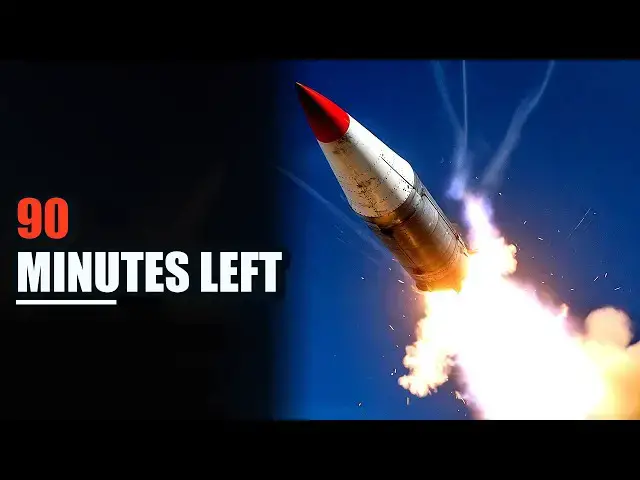
What if North Korea launched a nuclear bomb? This video walks the first physical seconds, the missile, the blast physics, fallout, and what does not happen tomorrow.
Timestamps:
0:00 The First Second
1:25 The Launch Window
3:10 Radar Sees It
4:40 The Flight Path
6:20 The Physics Problem
8:00 And It Gets Worse
9:40 Fallout Weather
11:10 What Does Not Happen
12:40 The Last Number
This is a public-record what-if, not a prediction. Estimates are marked as about.
#NorthKorea #Nuclear #WhatIf #Science #Missile #Fallout #Geopolitics #Infographics
Visuals are original AI-generated stills. Narration is synthetic. Not medical, legal, or financial advice.
Show More Show Less View Video Transcript
0:00
On September 3rd, 2017, North Korea
0:03
detonated a nuclear device under a
0:05
mountain at Punggye-ri. The seismic
0:07
reading came in at about 6.3. That is
0:11
not a movie. That is a real blast. And
0:14
if that same physics ever left the
0:15
mountain and went airborne, you would
0:17
not get a warning speech. You would get
0:19
a clock the first second. You are not in
0:22
a briefing room. You are standing on a
0:24
street in Seoul about 35 miles from the
0:27
demilitarized zone. And the thing that
0:30
just happened is not a mushroom cloud.
0:32
It is a launch. A transporter erector
0:34
launcher, a TEL, has raised a missile.
0:38
Fire and steam dump out of the base. In
0:40
the first second, the rocket is still
0:43
slow. Gravity is winning. Then the
0:45
engines catch and the vehicle starts
0:47
climbing at tens of meters per second.
0:49
By second 10, it is a white column. By
0:52
second 30, it is a problem for every
0:55
radar dish from Japan to Alaska.
0:58
North Korea's estimated stockpile is
1:00
about 50 warheads. Yield estimates for
1:03
the 2017 test cite around 100 to 250
1:07
kilotons. For scale, the bomb over
1:10
Hiroshima was about 15 kilotons. You do
1:13
not need to remember the chemistry. You
1:15
need to remember that one successful
1:17
flight turns a test site into a city
1:19
problem.
1:21
The launch window.
1:22
A nuclear launch is a logistics problem
1:25
before it is a physics problem. Fuel,
1:28
crew, weather.
1:30
A liquid fueled missile can sit on a pad
1:32
and wait, but it is a sitting target. A
1:35
solid fueled missile, the kind North
1:37
Korea has been pushing into the Hwasong
1:39
family, can leave a hidden garage with
1:42
less warning.
1:43
Public estimates put intercontinental
1:45
range on later Hwasong designs past
1:48
10,000 km, which is enough on paper to
1:52
reach the continental United States.
1:54
Shorter range systems, Scud class and
1:57
Nodong class, are built for South Korea
2:00
and Japan.
2:01
The DMZ is about 250 km long. Seoul is
2:05
packed with about 10 million people in
2:06
the city proper and more than 25 million
2:09
in the metro. The first military choice
2:12
is not which ocean to cross. It is
2:14
whether the first shot is theater range,
2:16
meant to freeze a peninsula, or a longer
2:19
shot meant to change the map of the
2:20
Pacific. Either way, the launch itself
2:23
is a line of heat, a plume, and a
2:25
trajectory that computers start drawing
2:28
before the missile has left the
2:30
atmosphere.
2:31
Radar sees it.
2:33
South Korea's early warning does not
2:36
wait for a press conference. Ground
2:38
radars, Aegis destroyers, and US
2:40
space-based infrared satellites look for
2:43
the hot plume of a booster.
2:46
Detection is not magic. It is
2:48
temperature against cold sky.
2:51
Infrared picks up the exhaust. Tracking
2:53
radars start a track file. In about 1 to
2:56
2 minutes, if the track is clean,
2:59
command centers have a heading, a speed,
3:01
and a predicted impact ellipse. That
3:04
ellipse is not a street address. It is a
3:06
smear of probability tens of kilometers
3:09
wide at first, tightening as more pings
3:11
come in. Japan's J-Alert can hit phones
3:14
in minutes. South Korea's civil defense
3:16
sirens are built for this exact minute.
3:19
The United States Pacific Command is
3:21
already in the loop because US Forces
3:23
Korea sits on the same peninsula, about
3:25
28,500 troops on a normal year.
3:29
The science here is time of flight. A
3:31
short-range ballistic missile can be
3:33
over a target in under 10 minutes. A
3:35
medium-range shot toward Japan can be 15
3:38
to 20. An intercontinental shot toward
3:41
the US West Coast is about 30 to 40
3:43
minutes if the booster works and the
3:46
warhead separates. That clock is the
3:48
whole war. Everything else is people
3:50
trying to outrun it.
3:52
The flight path.
3:54
Put yourself in the missile's frame for
3:56
a minute. Boost phase, engines burn, the
3:59
stack sheds mass, the vehicle pitches
4:01
toward its azimuth.
4:03
Midcourse. If it is a longer range shot,
4:06
the warhead is a cold object on a high
4:08
arc above the atmosphere moving at
4:11
several kilometers per second. Terminal.
4:14
Gravity pulls it down, atmosphere bites,
4:17
and if there is a reentry vehicle, heat
4:19
is a wall of plasma. Interceptors hate
4:22
boost phase because it is short and over
4:24
enemy territory. They like midcourse
4:27
because there is more time, but decoys
4:29
and debris make the sky look like a junk
4:31
drawer.
4:32
Terminal intercept is a last swing of
4:35
the bat close to the target with seconds
4:37
left. South Korea fields Patriot
4:40
batteries and indigenous systems. The
4:42
United States and Japan operate Aegis
4:45
ships with SM-3 interceptors for higher
4:48
altitude shots.
4:50
Hit-to-kill is not a net. It is a bullet
4:52
hitting a bullet. Public test records
4:55
show interceptors can work. They also
4:58
miss. A single launch is one track. A
5:01
salvo is a math problem.
5:03
If five missiles leave in a window of a
5:05
few minutes, the defense has to pick
5:07
which tracks to spend a $2 million
5:09
interceptor on.
5:11
That is the logistics turning into
5:13
physics, and the physics does not care
5:15
who paid for the battery. The physics
5:17
problem. Assume the warhead arrives, not
5:20
a miss, not a dud.
5:23
Airburst or groundburst is the fork that
5:26
decides what the next hour looks like.
5:28
An airburst hundreds of meters up pushes
5:31
a blast wave across a wider disc of
5:33
city. A groundburst digs a crater,
5:36
throws dirt into the fireball, and makes
5:39
dirt radioactive. For a yield in the
5:41
neighborhood of 100 kilotons, the
5:44
fireball is on the order of a few
5:46
hundred meters across in the first
5:48
seconds. The prompt flash is faster than
5:50
thought. Anyone looking at the burst
5:52
from tens of kilometers can take retinal
5:55
burn. The blast wave follows.
5:58
Overpressure of about 5 lb per square
6:00
inch knocks down typical residential
6:02
structures.
6:04
Thermal radiation starts fires where the
6:06
line of sight is open.
6:08
Ionizing radiation is a near-field
6:10
killer, then a longer story in dust.
6:13
You would hear the blast after you saw
6:14
the light because light wins. The
6:16
mushroom is not the weapon. The weapon
6:19
is the overpressure, the heat, and the
6:21
fallout that comes next.
6:24
Hospitals in a dense capital do not have
6:26
spare trauma bays for a 100-kiloton
6:29
morning.
6:30
Electrical grids, water plants, and cell
6:32
towers fail in rings. The science is
6:35
inverse square and atmosphere. Distance
6:38
saves you. Glass and fire do not. And it
6:41
gets worse.
6:42
And it gets worse because the first
6:44
detonation is not only a city wound, it
6:47
is a signal.
6:48
Command authorities in Seoul, Tokyo, and
6:51
Washington have minutes, not days, to
6:53
decide whether this was one missile or
6:56
the opening of a barrage.
6:58
North Korea's artillery along the DMZ is
7:00
a separate machine. Estimates of tubes
7:03
and rocket launchers facing Seoul sit in
7:05
the thousands. Conventional shells can
7:08
already reach the northern districts. A
7:10
nuclear airburst does not pause those
7:12
guns. It may accelerate them.
7:15
Fallout does not respect the ceasefire
7:17
line drawn in 1953.
7:19
Wind on the peninsula is often from the
7:21
west or northwest, which means a ground
7:24
burst near the border can drag a plume
7:27
over South Korean cities or, depending
7:29
on the day, back onto North Korean
7:31
farmland.
7:33
Radioactive iodine 131 is a thyroid
7:35
problem in the first week if milk and
7:38
leafy greens sit in the path.
7:40
Cesium 137 hangs around for decades in
7:43
soil. This is the part that actually
7:45
matters after the fireball, not the
7:47
cartoon cloud, the plume map, the
7:49
thyroid blocking tablets, the question
7:52
of whether a second missile is already
7:54
in boost. Escalation is a human choice
7:57
riding on incomplete tracks. Physics
8:00
gave you one crater. Policy can give you
8:02
three. Fallout weather, mini case, March
8:05
9th, 2022. North Korea fired a claimed
8:10
intercontinental ballistic missile,
8:12
later reported as a Hwasong-17 on a
8:14
lofted trajectory that splashed in the
8:17
sea. No warhead, no city, a test. The
8:20
useful fact is the flight, not the
8:22
slogan. A lofted shot goes high and
8:25
comes down closer, which is how you
8:27
trial an ICBM without throwing it at
8:29
another country's exclusive economic
8:31
zone the long way.
8:32
That date is a reminder that the
8:34
mechanics are practiced in public over
8:36
water with tracking ships watching. Now
8:39
change one variable, a live fission or
8:42
fusion package, a lower trajectory, a
8:44
city under the ellipse. Fallout is
8:47
weather with isotopes. A 15-mph wind can
8:50
move the hottest particles tens of miles
8:52
in the first hours.
8:53
Rain scrubs the plume onto the ground,
8:56
which is worse for the people under the
8:57
shower and better for people farther
8:59
downwind. You cannot outdrive a 300-mph
9:02
blast wind in the first seconds because
9:04
that wind is local to the burst. You can
9:07
in theory drive out of a fallout stream
9:10
if you have a heading, a full tank, and
9:12
roads that still exist. Most people will
9:15
not. They will be in basements, subway
9:17
stations, and office cores, which is the
9:20
right first move for hours, not a
9:22
vacation plan. Concrete and distance cut
9:26
dose. Standing in the street taking
9:28
video does the opposite. What does not
9:31
happen?
9:32
What does not happen tomorrow morning is
9:34
the end of the planet. One North Korean
9:36
warhead, even a big one by their test
9:38
history, is not a global extinction
9:40
event. The ozone layer does not vanish
9:43
by lunch. The oceans do not boil. New
9:45
York does not automatically become a
9:47
crater because Seoul did. A single
9:49
airburst over a peninsula city is a
9:52
regional catastrophe with global
9:54
markets, global flights, and global
9:57
politics attached. Stock exchanges would
9:59
gap. Insurance models would break.
10:02
Flights over the Pacific would reroute.
10:05
That is real. It is not the same as
10:07
every silo on Earth emptying.
10:10
Mutually assured destruction as a
10:12
doctrine was built around arsenals in
10:14
the thousands, not a first use by a
10:17
state with about 50 devices and a small
10:20
set of working long-range missiles.
10:22
Secondary strikes are a choice.
10:25
Accidents are a risk. Neither is a law
10:27
of physics. Food in your cupboard does
10:30
not become radioactive because a warhead
10:32
detonated 6,000 mi away. Your tap water
10:35
does not glow. Your phone still needs a
10:38
charger. The world gets poorer, angrier,
10:41
and more afraid. It does not all catch
10:44
fire in one night. And treating it like
10:46
a movie ending is how you miss the
10:48
actual work. Hospitals, iodine, wind,
10:52
and weather the second launch happens.
10:55
The last number.
10:56
The number to keep is not 50 warheads.
10:59
It is minutes. About 10 minutes for a
11:01
short shot. About half an hour for a
11:04
long one. In that window, radar paints a
11:07
track. Interceptors either meet a
11:09
warhead or they do not. And a city
11:11
either takes a pulse of light or it
11:14
watches a splash in the sea.
11:16
September 3rd, 2017 already proved the
11:19
device can yield. March 9th, 2022
11:22
already proved the missile can fly. The
11:25
missing piece in this thought experiment
11:27
is the political hand on the key, and
11:29
that hand is not a physics constant. If
11:32
you want a harder science takeaway, it
11:34
is this. Yield, range, and wind decide
11:37
the damage. Command and interceptors
11:39
decide whether the yield ever meets a
11:42
street. The blast is a sphere of energy,
11:45
the rest is people.
11:46
If this video left you staring at a map,
11:49
drop one number in the comments. How
11:51
many minutes do you think a city
11:53
actually has once the plume is on radar?
11:56
The part that outlasts the fireball is
11:58
not the crater. It is whether anyone
12:00
still tells the truth when the sirens
12:02
stop. A blast can erase a skyline. It
12:06
cannot erase the fact that every life in
12:08
that city was already known, already
12:10
numbered.
#News