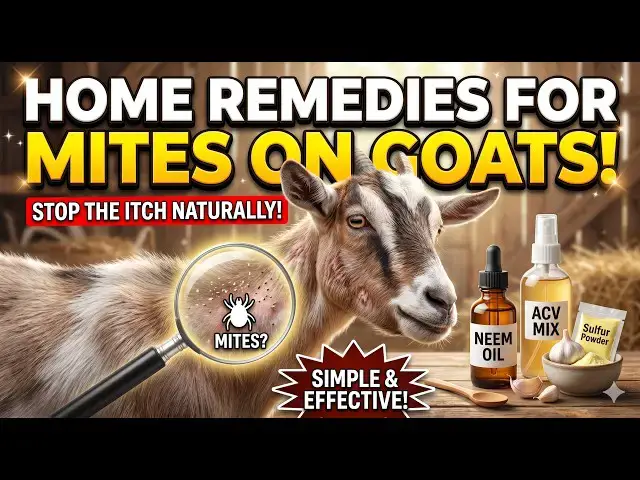
0:00
A healthy goat's coat is smooth and
0:02
lustrous, but at a microscopic level,
0:05
that same landscape can become a
0:07
nightmare. Mites and lice burrowing into
0:10
the hair follicles cause the intense
0:12
itching and hair loss that define a
0:15
The standard conventional response
0:17
treats these parasites as simple
0:19
external invaders, pests to be
0:22
neutralized with a one-time application
0:24
of synthetic chemicals.
0:25
In the holistic tradition, an
0:27
infestation is a biological red flag. It
0:30
indicates a collapse of the host's
0:32
internal defenses, signaling that the
0:34
animal has become a viable target for
0:37
Building a defense against these pests
0:39
is an organized science. It involves
0:41
layering plants, trace minerals, and
0:44
kitchen staples to fortify the animal's
0:46
biology from the inside out. Lasting
0:49
eradication comes from cultivating a
0:51
host environment that is entirely
0:52
inhospitable to parasites. Defense
0:55
begins with the animal's internal
0:57
ecosystem. Trace minerals like zinc and
1:00
copper act as the first barrier,
1:02
strengthening the basic immune response.
1:04
Zinc is critical for keratin production.
1:07
When levels are optimal, the skin
1:09
maintains a dense, healthy barrier that
1:11
prevents the flakiness mites need to
1:13
establish a foothold. Systemic tonics
1:16
further reinforce this physical barrier.
1:18
The bread pill technique, mixing raw
1:20
garlic and honey into a small dough
1:22
ball, delivers potent antimicrobial
1:24
compounds directly into the animal
1:26
system. Adding raw apple cider vinegar
1:28
to the drinking water provides a steady
1:30
supply of enzymes and phosphorus,
1:32
supporting overall coat health. As the
1:35
animal processes these tonics, its body
1:37
chemistry shifts. The active compounds
1:39
reach the skin and hair oils, making the
1:41
host repellent to biting parasites.
1:44
Starting internally creates a biological
1:46
moat around the animal's cellular
1:47
structure, protecting it before any
1:49
topical treatment is even necessary.
1:51
When an infestation is active, the focus
1:53
shifts to the skin. This is the moment
1:56
to deploy botanical heavy artillery,
1:59
essential oils. Oregano oil is a
2:01
phenolic powerhouse. Carvacrol
2:04
physically dissolves the outer lipid
2:06
layer of a mite's cell membrane, killing
2:08
adult parasites on contact. While
2:11
oregano handles adults, oils like
2:13
lemongrass target the colony's future by
2:16
coating dormant eggs and blocking them
2:18
from hatching. These botanical extracts
2:20
are highly concentrated and volatile.
2:23
Applying them directly to an animal's
2:25
skin will cause severe chemical burns.
2:27
Safe application requires an emulsifier,
2:30
like a mild dish soap. This suspends the
2:33
oils in water, ensuring a uniform spray
2:35
that avoids skin irritation. Blending
2:38
these extracts into a carrier, like
2:39
coconut oil, provides a second mechanism
2:42
of attack. The viscous oil floods the
2:44
landscape and suffocates surviving
2:46
mites. A properly prepared botanical
2:49
blend serves as both a targeted chemical
2:51
disruptor and a mechanical trap.
2:54
Parasites will often drop off the host
2:56
and hide in the barn environment,
2:58
waiting for the next opportunity to
3:00
To clear these areas, we use earth
3:02
minerals like elemental sulfur. It acts
3:05
as a direct parasiticide, while
3:07
softening the skin to shed dead tissue.
3:10
Applying a sulfur and coconut oil salve
3:12
to the animal's legs over several weeks
3:14
systematically breaks the hatching cycle
3:18
For the floors and bedding, we use
3:20
diatomaceous earth. These razor-sharp
3:22
fossilized diatoms physically shred the
3:25
waxy outer layer of any mites in the
3:26
straw, leading to death by dehydration.
3:29
A final sweep of the walls and feeders
3:31
with a vinegar-based disinfectant spray
3:33
ensures that no microscopic threats
3:35
remain in the stall. Aggressive
3:37
environmental treatment guarantees that
3:39
surviving parasites have no safe harbor
3:41
to rebuild their population.
3:43
Natural parasite management is a
3:45
lifestyle of consistent care, rather
3:47
than a one-time fix. The result of this
3:50
integrated labor is a vibrant, resilient
3:54
These animals boast the lustrous coats
3:56
and high vitality that only come from a
3:59
balanced internal environment.
4:01
Precision measurement and the use of
4:03
specific botanicals represent a highly
4:06
sophisticated, biologically sound
4:08
approach to animal husbandry.
4:11
You can begin building a holistic
4:13
apothecary right now using common pantry
4:16
items like fresh garlic and apple cider
4:19
Biological resilience is built by
4:21
aligning an animal's daily management