Up next in 10

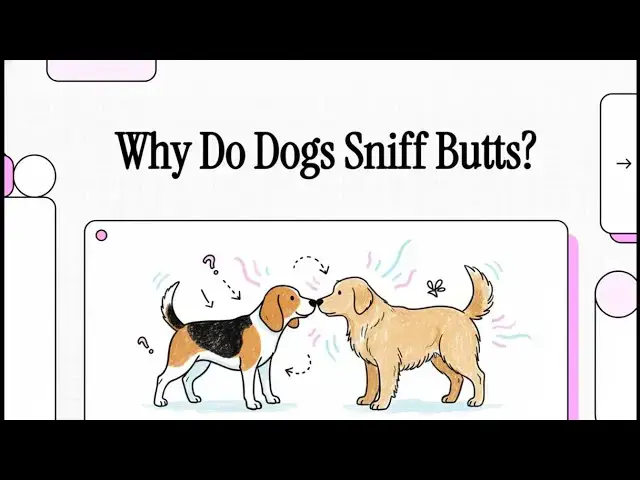
Why Do Dogs Sniff Butts? The Dog's Handshake
Nov 27, 2025
Dogs have a peculiar habit that often raises eyebrows and elicits curiosity, just like sniffing each other’s rear ends.
This behavior, though seemingly bizarre to us humans, is an essential part of dog communication.
So, let’s find out together why dogs sniff each other’s butts.
🔎 Read the full article at Doggozila Magazine on the link below: 👇 🔗 👀
📺 🔗 https://doggozila.com/why-do-dogs-sniff-butts/
👆 📺 👀
#petlove #dogsniff #pets #dogscent #dognose #dogidayı #dogid #doggielife #k9training
Show More Show Less View Video Transcript
0:00
All right, let's talk about something
0:02
every dog owner has seen. You know the
0:04
moment? That slightly awkward yet
0:05
totally routine greeting where two dogs
0:07
meet and yep, they go straight for a
0:10
sniff of each other's rear end. Today,
0:12
we're going to break down what's really
0:13
going on with this very curious canine
0:15
handshake. I mean, we've all been there,
0:18
right? You're at the dog park, your dog
0:20
meets a new friend, and before you know
0:22
it, they're deep in this very personal
0:24
investigation. To us humans, it can seem
0:27
pretty weird, maybe even a little
0:28
embarrassing. But for them, it's just
0:31
how you say hello. But here's the thing.
0:34
What looks like a bizarre ritual to us
0:36
is actually a super important form of
0:38
communication. That little sniff isn't
0:40
just a casual, "Hey, how's it going?"
0:42
It's a full-on conversation packed with
0:44
all the information a dog needs to
0:46
understand who they're talking to. To
0:48
really get to the why of it all, you
0:50
first have to appreciate how dogs
0:51
experience the world. It all comes down
0:54
to their nose, which honestly is less of
0:56
a sense and more like a full-blown
0:58
superpower.
0:59
Think about it this way. Our world is
1:01
mostly visual. We see things. A dog's
1:04
world, on the other hand, is built on
1:06
smells. They are experiencing this
1:08
incredibly complex tapestry of sense all
1:11
the time. They're basically smelling in
1:13
high definition, picking up on a whole
1:15
universe that we are completely
1:16
oblivious to. And their sense of smell
1:19
isn't just a party trick. A huge part of
1:21
a dog's brain is dedicated just to
1:23
processing sense. It's about 40 times
1:25
larger than the same area in our brain.
1:28
So for them, their nose is their number
1:30
one tool for gathering intel on
1:31
everything and everyone around them. So
1:34
what kind of top secret information are
1:36
they actually getting from this
1:38
greeting? Well, it's way more than a
1:40
simple hello. They're essentially
1:42
reading what you could call a scent
1:44
identity card. And that phrase scent
1:47
identity card is perfect. It's like a
1:49
chemical business card. You see, dogs
1:51
have special glands back there that
1:53
produce a totally unique chemical
1:55
signature. And that signature tells a
1:57
whole story about them. And with just
1:59
one sniff, they download a massive
2:02
amount of data. It's a complete profile.
2:04
They can tell the other dog's gender, a
2:06
pretty good idea of their age, their
2:08
health, their mood, like if they're
2:10
anxious or calm, and even their
2:11
reproductive status. It's an incredibly
2:14
efficient way to get to know someone.
2:16
So, in the dog world, this isn't rude in
2:18
the slightest. In fact, it's the polite,
2:20
standard way to do an introduction. It's
2:22
a non-confrontational way to gather all
2:24
that need to know information before
2:26
they decide how to interact. And get
2:29
this, it's not just a dog thing. This
2:31
kind of scent-based communication is all
2:33
over the animal kingdom. Cats do it,
2:36
hyenas do it, lots of animals use scent
2:38
to communicate, which just shows how
2:40
important it is for social bonding and
2:42
survival. But okay, as dog owners, we
2:46
know this behavior isn't always great.
2:48
Sometimes it gets a little excessive or
2:50
maybe it's aimed at a person. And that's
2:52
when a perfectly natural behavior can
2:54
start to become a bit of a problem. So,
2:56
how do you know when to be concerned?
2:58
Where's the line between a normal doggy?
3:00
How do you do and something that's maybe
3:02
socially awkward or even a sign that
3:04
something else is going on? Well, there
3:06
are a few reasons why this behavior
3:08
might go into overdrive. It could be
3:10
from poor socialization, meaning the dog
3:12
just never really learned proper canine
3:14
etiquette. But it could also be a
3:16
territorial thing, a way of seeking
3:17
attention, or even a sign of a medical
3:19
issue, like problems with their anal
3:21
glands. The good news is you can
3:23
definitely manage this. It's all about
3:25
being proactive. It starts with early
3:28
socialization, using positive
3:30
reinforcement when they offer a polite
3:31
greeting, and learning how to spot the
3:33
signs and redirect their attention
3:35
before the sniffing goes too far.
3:37
Ultimately, understanding this behavior
3:39
does more than just help us manage it.
3:41
It actually helps us bridge that
3:42
communication gap with our pets, and
3:44
that makes us better, more tuned in
3:46
owners. I mean, this quote really hits
3:49
the nail on the head. When we take the
3:51
time to learn their language, even the
3:53
parts that seem a little odd to us, we
3:55
strengthen that bond. We're showing them
3:57
respect for how they see the world, and
3:59
that's huge. So, the next time you're at
4:01
the park and you see this happening,
4:03
don't just write it off as a weird dog
4:05
habit. See it for what it truly is, a
4:07
rich, complex conversation. You're not
4:10
just watching two dogs sniffing. You're
4:12
watching them get to know each other.
4:13
And now you have a pretty good idea of
4:15
what they're talking about.
Pets & Animals
Pets & Animals
Dogs
Dogs