Up next in 10

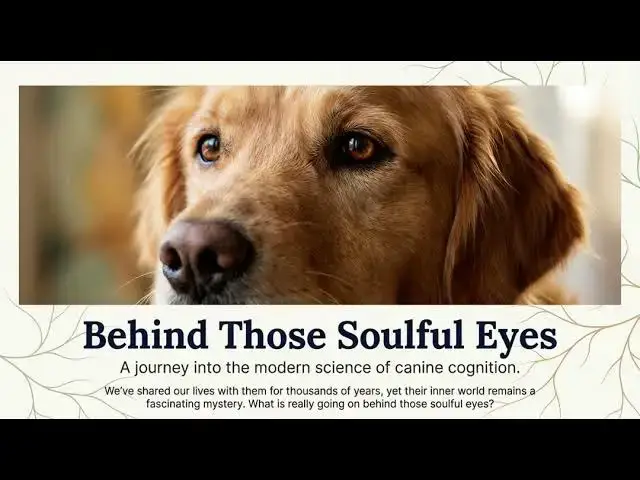
Have you ever caught your dog staring deeply into your eyes, or tilting their head in quiet concentration at a subtle noise?
These familiar, endearing behaviors are far more than simple reflexes.
Neuroscience and cognitive studies prove that dogs possess a rich, complex internal world where decisions, emotions, and memories intertwin far beyond basic instinct or simple conditioning.
This podcast episode is inspired by the article called: Do Dogs Have Thoughts? Unravel the Pups Mind (https://doggozila.com/do-dogs-have-thoughts/)
Your Dog Doesn’t Just Love You; Their Brain Proves It
When scientists peer inside the canine brain using functional MRI (fMRI) scans, the neurological evidence is undeniable: dogs experience genuine, deep affection.
The caudate nucleus, a neural region heavily involved in processing positive emotions like love, joy, and anticipation, consistently lights up whenever a dog catches the scent of their favorite human or anticipates a treat.
Furthermore, when you and your dog share a calm, mutual gaze, it triggers a simultaneous surge of oxytocin, the “love hormone,” in both species. This neurological feedback loop scientifically reinforces the profound social bond between humans and dogs (https://doggozila.com/humans-and-dogs/) .
“When your dog appears to be ‘thinking,’ they’re likely processing past experiences, anticipating future events, or weighing different responses to a situation.”
Understanding that a dog’s reactions are driven by genuine emotional processing rather than mechanical conditioning fundamentally alters how we view our companion animals.
It elevates the human-dog relationship from mere pet ownership to a shared emotional and cognitive partnership.
Read the articles, listen the podcast episodes or watch the video guides & explainers for free, but your support can help me to create, post & do so much more!
Dogs Have “Episodic” Memory (They Remember Specific Events)
For decades, traditional behaviorism argued that dogs operate strictly through simple associative learning, connecting immediate actions with immediate rewards or punishments.
Modern cognitive research shatters this view, demonstrating that dogs possess episodic-like memory (https://doggozila.com/dog-memory/) . They can intentionally recall specific events from the past.
Dogs display this when they remember the exact spot where they buried a favorite toy weeks earlier, mirror complex human actions after a significant delay in “do what I do” tests, or greet a long-lost friend with explosive excitement after years of separation.
Their perception of time extends far beyond immediate reactions. Dogs anticipate daily events (https://doggozila.com/do-dogs-have-memories/) by weaving together internal biological clocks, metabolic shifts, hormone fluctuations, and subtle environmental cues.
However, this internal clock is deeply linked to their emotional state. Subjective time speeds up during stimulating activities and drags during periods of boredom.
For dogs suffering from separation anxiety (https://doggozila.com/dogs-with-separation-anxiety/) , elevated stress hormones can alter their time perception entirely, making a few hours apart feel agonizingly longer.
Dog Dreams Aren’t Random Twitching, They Are Replaying Their Day
The soft whimpers, paddling paws, and gentle twitching of a sleeping dog are signs of a mind actively at work. Electroencephalogram (EEG) studies reveal that dogs experience REM sleep (https://doggozila.com/do-dogs-dream/) , the exact sleep phase during which humans experience vivid dreams, showing brain wave patterns that indicate they are actively reliving their waking experiences.
“A retriever that spent the afternoon chasing tennis balls may paddle their feet in sleep, while a watchful dog might let out muffled barks as they guard their territory in dreamland.”
Dogs experience both pleasant dreams and distressing nightmares, occasionally waking up disoriented after a bad dream and actively seeking physical comfort from their humans.
Puppies spend a significantly larger portion of their sleep cycle in REM sleep compared to adult dogs. As their nervous systems rapidly develop, their sleeping brains use this time to forge new neural connections, consolidating the physical and social skills learned while awake.
Dogs Fail the “Mirror Test,” But Pass the “Sniff Test” for Self-Awareness
While dogs generally fail the classic visual mirror self-recognition test, often barking at their reflection or ignoring it entirely, this does not mean they lack self-awareness.
Related Article: Self-Recognition In Dogs: Are Dogs Self-Aware? (https://doggozila.com/self-recognition-in-dogs/)
Because a dog experiences reality primarily through smell rather than sight, visual reflections hold little intrinsic meaning for them.
When researchers created odor-based self-recogniti
Show More Show Less View Video Transcript
0:00
Welcome to another episode by the
0:01
DogMind Gear's podcast.
0:03
>> So glad to be here for this one.
0:04
>> Today we are taking on a question that
0:07
is um probably one of the most common
0:09
ones for anyone who's ever looked at
0:11
their dog.
0:11
>> I think so. It's universal.
0:12
>> Yeah, you look into those big soulful
0:15
eyes and you just have to wonder
0:17
is there a you know a complex internal
0:19
world looking back?
0:21
>> Or is it all just instinct?
0:22
>> Exactly. Are we just projecting? Do dogs
0:25
truly have thoughts that go beyond just
0:28
you know, basic reflexes and things
0:30
they've learned?
0:30
>> It's a crucial question. And for
0:32
decades, I mean literally for decades,
0:35
the scientific community operated under
0:37
this really uh this very limiting view.
0:40
>> The automaton view, right?
0:40
>> The automaton view, exactly. That dogs
0:43
were essentially just biological
0:44
machines. They react to things based on
0:46
simple conditioning.
0:47
>> A really really complex version of a
0:49
Pavlov experiment.
0:51
>> That's a perfect way to put it.
0:52
>> Yeah.
0:52
>> But our source material, which is you
0:54
know, synthesis of some really
0:56
cutting-edge research, behavioral,
0:59
cognitive, neurological
1:00
>> All of it.
1:01
>> It lets us move past all that wishful
1:03
thinking and it gives you a a really
1:06
solid shortcut to understanding the
1:08
well, the rich and sophisticated inner
1:10
life of man's best friend.
1:12
>> And I appreciate that focus on the
1:14
science because every single dog owner
1:16
has had that moment.
1:17
>> Oh, for sure.
1:18
>> Your dog tilts its head at a weird sound
1:20
or it just stares intently at a cupboard
1:23
and you can't help but wonder, what is
1:25
going on in there? Are they plotting
1:26
something?
1:27
>> remembering something? Are they
1:28
anticipating?
1:29
>> Yeah. Is that head tilt just a physical
1:31
thing to like locate a sound better or
1:34
does it actually represent a pause for
1:36
some real cognitive processing?
1:38
>> And that's the core of it. The big
1:39
scientific revelation here is that the
1:41
old traditional view
1:44
it's just not enough. It's totally
1:46
insufficient.
1:47
>> explain what we see.
1:48
>> Not at all. Modern research is pretty
1:50
firm that dogs engage in deep emotional
1:52
processing. They can solve multi-step
1:54
problems creatively. They even handle
1:56
social dilemmas. And yes, the evidence
1:58
strongly suggests they have internal
2:00
mental activity that looks a lot like
2:03
recollection and anticipation.
2:05
>> Daydreaming, almost.
2:06
>> You could call it that, absolutely.
2:08
>> Okay, let's unpack this. We're going to
2:09
try and set aside the the
2:12
anthropomorphism.
2:13
>> The little furry humans idea.
2:14
>> Right, we're not doing that. We're going
2:16
to focus on the verifiable hard data. We
2:19
want to explore the specific
2:21
neuroscience, the behavioral evidence
2:23
that confirms their cognition is just
2:26
far more advanced than we thought.
2:28
>> Our mission today is really to prove
2:31
scientifically what's actually happening
2:33
behind those eyes.
2:34
>> So, to start this deep dive, if we're
2:36
looking for hard evidence of thought, we
2:38
really have to begin with the brain
2:40
itself.
2:41
>> You have to. You have to start with the
2:42
neuroscience of thought.
2:44
>> Because if a dog is thinking, whatever
2:45
that means, we should be able to see
2:47
something happening in its brain, right?
2:50
>> We should see corresponding activity.
2:51
>> Yeah.
2:52
>> And now we can, thanks to the
2:55
the advent of non-invasive functional
2:57
MRI studies.
2:59
fMRI.
3:00
>> And this is amazing. These are dogs that
3:02
are fully awake, right? No sedation.
3:03
>> No sedation. They're trained with
3:05
positive reinforcement to lie perfectly
3:07
still inside the scanner. It's an
3:10
incredible feat of training in itself.
3:12
And this allows us to track brain
3:14
activity in real time.
3:16
The first major finding is all about
3:18
brain structures and similarity.
3:20
>> And what the MRIs show is, well, it's
3:22
pretty striking. Dogs have brain
3:25
structures that are really similar to
3:26
ours both in structure and in function.
3:29
>> Analogous is the scientific term.
3:30
>> Right. Specifically in the parts that
3:33
manage memory, that process emotions,
3:35
that dictate our decisions.
3:37
>> So, when you see a dog, you know, pause
3:39
and just look around,
3:41
assessing its environment,
3:42
>> Mhm.
3:43
>> that's not a passive act.
3:44
>> It's not just a blank stare.
3:46
>> No, it's active processing. They're
3:47
literally analyzing sensory inputs,
3:50
they're cross-referencing past
3:51
experiences, and they're trying to
3:53
anticipate what might happen next.
3:55
>> If you look at say the cerebrum or the
3:58
frontal cortex, I mean they're smaller
3:59
and shaped differently obviously, but
4:01
the way they're organized.
4:02
>> The organizational principles are
4:03
similar enough that we can confidently
4:05
map certain functions from human brains
4:07
to dog brains.
4:08
>> Which means when a dog seems to be
4:10
making a choice like I don't know which
4:12
toy to bring you.
4:13
>> That's a genuine process of
4:14
deliberation. It requires neural
4:16
resources. It is by definition a form of
4:20
conscious thought.
4:21
>> But the finding that I think really
4:22
seals the deal, the one that separates
4:24
them from just being, you know,
4:26
conditioned machines.
4:27
>> Yeah.
4:28
>> That revolves around the caudate nucleus
4:30
connection.
4:31
>> Yes. This is a game changer.
4:33
>> So explain this. Why is this one little
4:36
part of the brain so important for
4:38
understanding dog thoughts?
4:40
>> Okay, so the caudate nucleus is part of
4:41
an area called the basal ganglia.
4:44
In us, in humans, it's a vital piece of
4:47
the brain's reward system.
4:48
>> So it lights up when something good
4:50
happens.
4:50
>> Exactly. It's strongly linked to
4:52
positive emotions, excitement,
4:54
anticipation, even feelings of of
4:57
unconditional love.
4:59
So researchers set up a test. They put
5:00
these trained dogs in the fMRI and scan
5:03
their brains under different conditions.
5:04
>> Okay, and what kinds of things did they
5:06
show them?
5:06
>> All sorts of stimuli. And they found
5:07
that yes, the caudate nucleus lights up,
5:09
you know, quite dramatically when dogs
5:12
anticipate a simple reward like a piece
5:14
of hot dog.
5:15
>> Which you'd expect.
5:15
>> Totally expected.
5:16
>> Yeah.
5:17
>> But here's the crucial part. It lights
5:19
up even more strongly and for a longer
5:21
period of time when they hear the sound
5:23
of their favorite person coming home.
5:25
>> Wow. More than for food.
5:27
>> More than for food or when they're
5:29
actively praised or petted by that
5:31
person. The social reward outweighs the
5:34
food reward.
5:34
>> So their reaction to seeing you walk
5:37
through the door, it isn't just a simple
5:39
reflex of oh, the food source is here.
5:41
>> It's so much more than that. It's hard
5:44
evidence of a sophisticated
5:46
self-generated positive emotional state.
5:49
It's a form of love, or at least deep
5:50
attachment, that they are consciously
5:53
experiencing and looking forward to.
5:54
>> That moves it so far beyond just simple
5:57
hunger anticipation.
5:58
>> It does. It puts it firmly in the realm
6:00
of complex thought and feeling. If it
6:02
were purely Pavlovian, like we thought,
6:04
the response to the treat should always
6:05
be the strongest.
6:06
>> But it's not.
6:07
>> But it's not. The fact that the human
6:09
social connection triggers this intense
6:11
prolonged activation in the brain's joy
6:14
and attachment center. It suggests they
6:16
form actual cognitive thoughts about
6:18
their relationships. It's not just about
6:20
survival.
6:20
>> And this capacity for deep emotional
6:23
thought, it ties right into the evidence
6:25
we're seeing for episodic-like memory.
6:27
>> It does. It's all connected.
6:29
>> time, the idea was that animal memory
6:31
was just associative.
6:32
>> Surely, or semantic. They remember
6:34
concepts or connections. The classic
6:36
example is leash equals walk.
6:38
>> But the ability to recall a specific
6:41
one-time event,
6:42
>> Mhm.
6:42
>> that's a huge cognitive leap.
6:44
>> It's a massive leap. It's the difference
6:46
between remembering that you go for
6:48
walks, which is associative,
6:49
>> Right.
6:50
>> and remembering that specific weird
6:52
thing that happened last Tuesday, where
6:53
you dropped the leash in that big mud
6:55
puddle next to the oak tree. That's
6:57
episodic-like.
6:58
>> So, the dog that runs to the door at
7:00
exactly 5:02 p.m. every day, because
7:03
that's when your partner gets home,
7:04
that's one thing. But these new studies
7:07
are looking at novel one-off events.
7:09
>> Exactly. Researchers have been using a
7:11
protocol called do as I do.
7:13
>> Okay, tell me about that.
7:14
>> They'll have a human perform a
7:15
completely new action, something the dog
7:17
has never done before. Say, touching a
7:19
specific cone with their nose, or
7:21
putting a paw on a book. The dog just
7:23
watches.
7:24
>> They just observe.
7:25
>> Then, after a delay,
7:27
sometimes up to an hour later,
7:29
they give the dog a command, like do it.
7:32
And what they found is that the dogs
7:34
could recall
7:35
and then execute that unique action.
7:37
>> An hour later?
7:38
>> An hour later. They had stored the
7:40
specific event of seeing the human do
7:42
that action, not just a general rule.
7:45
That kind of memory requires the brain
7:47
to tag the event
7:49
with context, what happened, where it
7:52
happened, and when.
7:53
>> Which is an incredibly sophisticated
7:55
mental process. That storage and
7:58
retrieval ability must also be what
8:01
fuels their problem-solving skills. This
8:03
is where we can actually see their
8:05
thoughts in action.
8:06
>> This is the physical manifestation of
8:08
it, absolutely. When a dog figures out
8:10
how to say lift the latch on a gate or
8:12
>> to nudge a chair over to the counter to
8:14
get to something they're not supposed to
8:16
have.
8:16
>> Exactly. Those are not just lucky
8:18
accidents. They are multi-step
8:19
processes.
8:20
>> Yeah.
8:20
>> They involve assessing their options,
8:22
weighing potential risks, am I going to
8:24
get in trouble for this, and then
8:25
executing a plan.
8:26
>> And you can see the deliberation.
8:27
There's often a pause right before they
8:29
act.
8:30
>> That pause is everything.
8:32
It shows they have to conceptualize the
8:34
goal, understand the physics of the
8:36
obstacle, and then adapt their movements
8:38
to overcome it.
8:39
That's flexible thinking.
8:41
>> And some breeds, I mean, the ones bred
8:43
for really complex cooperative tasks,
8:45
they take this to a whole other level.
8:47
>> They really do. The sources highlight
8:49
the the legendary case of Chaser, the
8:51
Border Collie.
8:52
>> I was hoping you'd bring her up. This
8:53
story is just incredible.
8:55
>> It is. She demonstrated the ability to
8:57
learn over a thousand distinct words for
9:00
objects.
9:00
>> A thousand proper nouns? That's more
9:03
than some toddlers.
9:05
>> astonishing. And what it proves is this
9:08
incredible skill in categorization and
9:10
recall.
9:12
Chaser didn't just memorize sounds. She
9:14
understood that a specific sound
9:16
represented a mental category for a
9:18
specific object.
9:19
>> And she could do that exclusionary
9:20
learning thing, too, right?
9:21
>> Yes, which is even more amazing. If you
9:24
put a bunch of her known toys on the
9:25
floor, plus one brand new toy she'd
9:28
never seen, and you asked her to fetch
9:29
an object with a word she'd never heard
9:31
before,
9:31
>> she'd bring back the new toy.
9:33
>> She would correctly identify and and
9:35
back the new toy. That requires rapid,
9:37
advanced deductive reasoning.
9:40
So, the conclusion here is really firm.
9:43
Problem-solving in dogs isn't just
9:44
impulse. It's critical, complex
9:47
thinking.
9:48
>> So, now that we've kind of laid the
9:50
neurological groundwork for thought, we
9:52
need to understand how that rich inner
9:54
world actually gets expressed.
9:55
>> They communicate it.
9:56
>> Right. And this leads us right into
9:58
emotional intelligence and communication
10:00
strategies.
10:02
>> And this is where I think the depth of
10:04
their relationship with us just becomes
10:05
so clear.
10:06
Because dogs don't just, you know,
10:08
recognize human emotions, they actually
10:10
seem to respond to them strategically.
10:11
>> They absolutely read the room. It's a
10:13
phenomenal skill.
10:14
>> So, think about the classic example. A
10:16
dog snuggling up closer when a person is
10:18
crying or having a bad day.
10:20
>> The prevailing scientific view now is
10:22
that this isn't just a simple reaction
10:24
to a change in your scent or the tone of
10:26
your voice.
10:26
>> It's not just, "Oh, something is
10:28
different."
10:28
>> No. The dog is processing the entire
10:30
context and formulating a response.
10:34
And that response is intended to cause a
10:36
specific outcome, usually calmness or
10:38
getting your attention. So, they might
10:40
be thinking something like, "My human
10:42
seems sad. In the past, when I've licked
10:44
their face or put my head on their lap,
10:46
they've seemed to feel better."
10:48
>> And that has resulted in a reward for
10:50
me, like petting or praise. It's a
10:53
sophisticated feedback loop, and that's
10:55
a huge leap from simple reflex.
10:58
It shows a level of emotional depth and
11:00
empathy that honestly mirrors the
11:03
socio-emotional skills of a young human
11:06
child.
11:06
>> We're seeing evidence that they can
11:08
experience emotions we once thought were
11:10
exclusive to, you know, humans and maybe
11:13
some primates.
11:14
>> Things like a sense of fairness, maybe
11:16
even a form of guilt, and definitely an
11:18
acute social awareness about who gets
11:20
attention and resources.
11:22
>> The fairness studies are fascinating.
11:24
>> They really are. You have two dogs side
11:26
by side. You ask them both to do a
11:27
trick, like give paw. The first dog does
11:29
it, gets a treat.
11:30
>> Okay.
11:31
>> The second dog does the same trick but
11:32
gets nothing.
11:33
After just a couple rounds of this, the
11:35
unrewarded dog will often just stop
11:37
performing.
11:37
>> They go on strike.
11:38
>> They effectively go on strike.
11:40
They show classic behavioral signs of
11:43
what's called inequity aversion.
11:45
They are assessing the situation,
11:48
judging the well, the moral context of
11:51
it, and deciding if the effort is worth
11:53
the perceived fairness of the reward.
11:55
>> That is just incredible. And since they
11:57
don't have spoken language, their main
11:59
way of communicating all this strategic
12:00
thought is through body language. The
12:03
silent conversation.
12:04
>> It's like a constantly updating thought
12:06
bubble that we just need to learn how to
12:08
read properly.
12:09
>> And what's really fascinating here is
12:11
you're saying this body language is a
12:12
deliberate act of conveying a mental
12:15
state. It's not just a physical
12:16
reaction.
12:17
>> Exactly. We all know the obvious tail
12:19
wag, but we have to look so much deeper
12:21
than that.
12:21
>> Okay, so give us some specific examples.
12:23
What are some cues that reveal a complex
12:26
thought process?
12:27
>> Well, let's contrast a couple of tail
12:29
wags.
12:30
Think about a loose, wide, fast wag
12:32
that's often just pure, unthinking joy.
12:35
>> The happy-to-see-you helicopter tail.
12:37
>> The helicopter tail, yes.
12:40
Now, compare that to a low, slow,
12:43
sweeping tail wag combined with soft,
12:45
relaxed ears.
12:47
That's often a sign of curiosity and
12:49
focused assessment. It's a thought like,
12:51
I smell something new and interesting.
12:52
Is it safe to approach?
12:54
>> And on the other end of the spectrum,
12:55
you have the stiff, high tail.
12:57
>> tail. When you see that plus a stiff
12:59
body and maybe raised hackles,
13:01
that dog is in a state of intense
13:04
internal deliberation.
13:07
The thought is, I am assessing the
13:09
threat level of this situation and
13:10
deciding whether to fight, flee, or
13:12
freeze.
13:13
>> And what about the really subtle stuff?
13:14
I've seen that slight lip lick when, you
13:16
know, a piece of food drops on the
13:17
floor.
13:18
>> That lip lick or maybe a quick glance
13:19
away, that's a classic sign of internal
13:21
conflict. It's a mental negotiation
13:24
happening in real time.
13:25
>> The angel and the devil on their
13:26
shoulder.
13:26
>> Pretty much.
13:27
>> Yeah.
13:27
>> The dog is wrestling with the impulse
13:28
eat the food versus the learned rule
13:30
don't eat the food. They are actively
13:32
processing risk versus reward, which is
13:35
a very high-level cognitive function
13:37
that we associate with conscious
13:38
thought.
13:39
>> This intentionality, it must also apply
13:41
to their barks and whines, their
13:43
vocalizations as intentional
13:44
communication.
13:45
>> For sure. Not all barks are created
13:48
equal. They absolutely adjust their
13:50
vocal strategy based on what they're
13:52
trying to achieve.
13:53
>> And we can tell the difference, can't
13:54
we?
13:54
>> We can.
13:55
And studies on the acoustics of barks
13:57
prove it. A high-pitched rapid-fire bark
14:00
is usually what a dog does when it's
14:02
excited or feels a potential threat.
14:04
It's designed to get a human's
14:06
attention.
14:06
>> Someone's at the door.
14:07
>> Right. Compare that to a low drawn-out
14:10
groan or whine. That's often a
14:12
deliberate need-based communication.
14:15
It's the dog saying, "I am bored. Please
14:17
play with me."
14:18
>> So, they are consciously aware that
14:20
different sounds produce different
14:21
results. That shows real intent and an
14:24
understanding of how cause and effect in
14:26
their speech.
14:27
>> Absolutely. They are manipulating their
14:29
acoustic environment to achieve a goal.
14:32
And this leads us right to the power of
14:33
eye contact.
14:35
This is a social tool that dogs have
14:36
perfected to a degree that's almost
14:38
unique.
14:39
>> They're one of the few animals that
14:41
actively seeks out and holds eye contact
14:43
with humans.
14:44
>> Strategically, yes. They use it to send
14:47
very clear messages. You have the hard
14:49
persistent stare when they're hungry.
14:50
>> The drill-a-hole-in-your-head stare.
14:52
>> Exactly. And then you have the soft
14:55
gentle gaze when they're seeking comfort
14:57
or affection.
14:58
>> And there's a real chemical reaction
14:59
happening there, isn't there? The
15:00
oxytocin effect?
15:02
>> It's profound. Researchers have proven
15:04
it. When a human and a dog gaze into
15:07
each other's eyes, both of their brains
15:09
release oxytocin.
15:11
>> The love hormone.
15:12
>> hormone, the bonding hormone. It
15:14
strengthens the attachment between them.
15:16
This is a key piece of social cognition.
15:19
The dog is using a deliberate social
15:22
strategy eye contact. Not just to
15:24
communicate an immediate need, but to
15:26
actively secure emotional resources and
15:29
strengthen the relationship itself.
15:31
>> That requires a very advanced
15:32
understanding of the social dynamic at
15:34
play.
15:34
>> All right, now we get to what I think is
15:36
the big one. The question that really
15:37
blows up that old cliche that dogs live
15:40
in the moment.
15:40
>> Right, mental time travel.
15:42
>> Can dogs actually reflect on the past
15:44
and anticipate the future? The
15:46
traditional belief was a hard no.
15:48
>> Right.
15:48
>> Any behavior that looked like it was
15:50
forward or backward-looking was just
15:52
dismissed as, you know, associative
15:54
conditioning.
15:55
>> But the breakthrough research into
15:57
episodic-like memory has really forced a
16:00
major shift in thinking.
16:01
>> A complete paradigm shift.
16:03
>> clarify that term again. Episodic-like
16:05
memory. What makes it so different from
16:08
simple
16:09
association?
16:10
>> So, associative learning is just pattern
16:12
recognition. If I hear the treat bag
16:15
crinkle, a treat is coming.
16:17
Episodic memory, on the other hand, is
16:19
the ability to recall specific, unique
16:22
events that happened in a particular
16:23
time and place.
16:24
>> The what, where, and when.
16:25
>> The what, where, and when. And that
16:27
do-what-I-do imitation experiment we
16:29
talked about is the crucial evidence
16:31
here.
16:31
>> Can you walk us through that experiment
16:32
again in a bit more detail?
16:34
>> Sure. So, a researcher performs a
16:35
completely novel action, something the
16:37
dog has never been trained to do. Let's
16:39
say they tap their forehead on a
16:41
specific cabinet door. The dog just
16:43
watches. Then there's a delay.
16:45
And later, the researcher gives the
16:46
command, "Do it." And the dog will go
16:49
over and tap its head on that same
16:51
cabinet door.
16:52
>> Wow.
16:52
>> It's not just following a command in the
16:54
moment, it is actively retrieving a
16:56
memory of a unique past event, proving
16:59
it can recall these specific,
17:01
contextualized episodes.
17:03
>> So, when my dog suddenly starts digging
17:05
frantically in a spot in the yard where
17:07
he buried a bone 3 weeks ago, it's not
17:10
just a lucky guess based on smell.
17:12
>> It's very likely he's recalling the
17:14
specific event of burying it, even
17:16
though that wasn't a routine behavior.
17:18
>> But there is a caveat here, right? Their
17:20
memory doesn't work exactly like ours.
17:22
>> It's a very important caveat.
17:24
Dog memory is primarily sensory based.
17:26
When they recall that event of burying
17:28
the bone, they're not replaying a movie
17:30
in their head.
17:31
>> What are they experiencing?
17:32
>> They're recalling a composite of sensory
17:34
data. The distinct smell of that patch
17:36
of dirt, the sound the shovel made, the
17:38
emotional rush of having a high-value
17:40
treasure. It's not a narrative timeline
17:42
with dates, like ours. It's a rich,
17:45
evocative sensory snapshot.
17:47
>> And that sensory recall must be what
17:50
feeds into their ability for
17:51
anticipation and prediction.
17:54
>> It does, directly. We know they aren't,
17:55
you know, complex long-term planners,
17:58
but they absolutely demonstrate basic
18:01
future-oriented thinking.
18:02
>> They create these incredibly accurate
18:04
mental models of our routines.
18:06
>> The 5:00 p.m. wait by the window for
18:08
walk time. The mad dash to the kitchen
18:11
when they hear the specific sound of the
18:12
kibble container being opened.
18:14
They aren't just reacting. They are
18:16
internally predicting a positive outcome
18:18
based on a mountain of past data.
18:21
>> And sometimes this seems to extend to
18:22
more deliberate, almost, planning
18:24
behaviors.
18:25
>> Oh, for sure. We see clever dogs
18:27
engaging in things like saving a piece
18:29
of a chew for later, or actively hiding
18:31
a favorite toy in a secure spot for
18:32
future retrieval.
18:33
>> That shows an awareness of a future
18:35
state of being, I will want this later,
18:37
that requires preparation in the
18:39
present.
18:39
>> And the most powerful example of this is
18:41
the work done by service dogs.
18:42
>> Right.
18:42
>> They have to anticipate a handler's
18:44
complex needs. A diabetic alert dog, for
18:47
example, might intervene before the
18:49
handler even shows clear external signs
18:52
of a blood sugar drop.
18:53
>> How is that possible?
18:55
>> It's incredible pattern recognition,
18:57
combined with predictive thought. They
18:59
learn the subtle scent changes and
19:00
behavioral cues that precede an event.
19:04
That is so far beyond simple
19:05
conditioning.
19:06
>> Here's where it gets really interesting
19:08
for me, the time perception puzzle. If
19:10
they aren't looking at a clock, how do
19:12
they know almost to the minute when it's
19:14
5:00 p.m.? How does their internal clock
19:17
even work?
19:18
>> They are brilliant at estimating
19:19
durations, especially when it's tied to
19:21
a routine or a reward, but their
19:23
internal clock isn't conscious counting.
19:26
It's driven by biological processes.
19:28
>> Like what?
19:29
>> Primarily metabolic changes and hormone
19:31
fluctuations. Their body chemistry
19:33
subtly shifts throughout the day based
19:35
on their routine, when they last ate,
19:37
when their cortisol levels naturally
19:39
drop, when they usually wake from a nap.
19:41
>> So, their own physiology acts as a kind
19:43
of internal sundial.
19:44
>> That's a great analogy, and this is
19:46
directly linked to the fascinating
19:47
detail about subjective time passage.
19:49
>> Just like for us, time speeds up or
19:51
slows down depending on what's
19:53
happening.
19:53
>> Precisely.
19:55
If they're engaged in an exciting game
19:56
of fetch, time flies. If they're bored
19:59
and home alone, time absolutely crawls.
20:03
>> And that helps explain the unbelievably
20:05
dramatic greetings you get when you've
20:06
only been gone for an hour.
20:08
>> It really does. If a dog suffers from
20:10
separation anxiety, those 2 hours you
20:12
were at the grocery store can feel
20:14
subjectively much, much longer.
20:16
>> Because of the stress?
20:17
>> Because of the continuous presence of
20:19
high stress hormones like cortisol.
20:21
>> Yeah.
20:21
>> Throughout that entire period of
20:23
isolation, it creates a nasty feedback
20:25
loop. The isolation causes stress, the
20:27
stress hormones rise, and the duration
20:30
of your absence is perceived as longer,
20:32
which makes the next absence even more
20:33
stressful.
20:34
>> Wow. Understanding that biological and
20:36
emotional basis for how they perceive
20:38
time, it gives you incredible insight
20:41
into their inner world of distress and
20:42
joy.
20:43
>> It really does. It reinforces that their
20:45
cognitive state is just deeply
20:47
interwoven with their emotional state.
20:49
So, as we move forward, we have to
20:50
explore the existence of, well, the
20:52
unconscious and the very idea of
20:54
individuality in the canine mind.
20:56
>> We're talking about the inner self,
20:58
dreaming and self-awareness. Let's start
21:00
with the most obvious sign of a
21:02
subconscious mind.
21:04
Do dogs dream?
21:06
When we see their paws twitching and
21:08
hear them whimpering in their sleep, is
21:09
that just random neural firing? Or are
21:12
they actually experiencing vivid
21:14
thoughts?
21:14
>> The science is very clear on this. Dogs
21:17
absolutely experience REM sleep,
21:20
rapid eye movement sleep. That's the
21:22
phase that's associated with vivid
21:24
dreaming in humans.
21:25
>> And their brain activity looks like ours
21:27
during that phase.
21:28
>> It's very similar. The brain wave
21:29
patterns are consistent with
21:31
reprocessing and consolidating
21:32
information from their day.
21:34
>> So, are they chasing squirrels in their
21:36
sleep?
21:37
>> It's highly likely.
21:39
Based on brain activity analysis and
21:40
physical observations, the content of
21:42
their dreams is very closely related to
21:44
their daily experiences, their emotions,
21:46
and their desires.
21:47
>> So, a dog that spent the day playing
21:49
fetch
21:49
>> might paddle its paws and make little
21:51
yipping sounds in its sleep. A dog that
21:53
guards the house might let out these
21:55
muffled little warning barks. Their
21:57
dream thoughts are them reliving
21:58
specific emotionally charged events from
22:01
their real lives.
22:02
>> Which confirms their subconscious mind
22:04
is highly active.
22:05
And this must also mean they can have
22:07
nightmares versus happy dreams.
22:09
>> Without a doubt. You can often tell the
22:10
difference. Peaceful, soft panting,
22:13
maybe a gently wagging tail mid-nap.
22:16
That strongly suggests a happy dream.
22:18
>> And a nightmare?
22:19
>> That'd be more like sudden trembling,
22:21
rigid muscles, maybe loud distressed
22:23
growling.
22:25
They're reprocessing a fearful or
22:27
aggressive memory, and they often wake
22:29
up from these experiences clearly
22:31
disoriented and will seek comfort.
22:33
>> Which confirms they process these dream
22:36
thoughts emotionally just like we do.
22:38
>> And it's interesting that sleep cycles
22:39
are different for puppies. They spend
22:40
way more time in REM sleep than adult
22:42
dogs do.
22:43
>> Why is that?
22:44
>> It's a key cognitive insight. Puppies
22:46
are just learning at an explosive rate,
22:49
and that increased REM sleep is likely
22:51
the brain's way of practicing all these
22:52
new skills.
22:53
>> Like play fighting or where things are
22:55
in the house.
22:56
>> Exactly. How to navigate a space, social
22:58
protocols, basic commands. It's
23:00
solidifying all that new learning,
23:02
building the neural connections they
23:04
need for more complex thought and
23:05
behavior later on. It's like neural
23:07
development on fast forward.
23:08
>> Okay, so let's shift from the
23:10
subconscious to the conscious, to
23:12
self-awareness. We have to talk about
23:13
the big philosophical hurdle here, the
23:16
mirror test controversy.
23:17
>> The infamous mirror test.
23:19
>> Right. Most dogs fail it. They bark at
23:22
their reflection or ignore it. Does that
23:23
mean they just don't know who they are?
23:25
>> The scientific consensus now is that the
23:27
mirror test is really biased toward
23:29
visual species. Yeah. Like us and other
23:31
primates.
23:32
>> It's the wrong tool for the job.
23:34
>> It's absolutely the wrong tool. Dogs
23:36
experience their world primarily as an
23:38
olfactory landscape, a world of smells.
23:41
The reflection in the mirror gives them
23:43
none of the information they need to
23:44
identify something. It has no scent.
23:46
>> So, it's not a failure of
23:47
self-recognition, it's a failure of the
23:48
test's modality.
23:50
>> Exactly. So, to really test for
23:52
self-awareness in a dog's world, you
23:54
have to use smell.
23:55
>> The odor-based tests.
23:56
>> Right. And in these tests, researchers
23:59
found that when dogs are presented with
24:00
a sample of their own urine or scent,
24:03
their interest level drops off
24:04
significantly compared to how interested
24:06
they are in another dog's scent.
24:08
>> They recognize it as me and move on.
24:11
>> Oh, that's just me. Boring. They clearly
24:13
differentiate self from not self using
24:16
their primary sense.
24:18
>> And some dogs can learn to use mirrors
24:20
as a tool, can't they?
24:21
>> They can. If you motivate them, for
24:23
example, by placing a treat somewhere
24:25
they can only see in the reflection,
24:27
they can quickly learn to turn around
24:29
and find the treat in the real world.
24:31
>> Which shows they understand the abstract
24:33
relationship between the reflection and
24:35
reality.
24:36
>> When the context is relevant to them.
24:38
Yes.
24:39
It suggests a functional understanding
24:41
of themselves in relation to their
24:42
environment.
24:43
>> But I think the strongest evidence for a
24:45
sense of self really comes from their
24:46
physical and social self-awareness.
24:49
>> I would agree. Physical self-knowledge
24:50
is just
24:52
evident when you watch them.
24:54
Think of a dog trying to get a long
24:55
stick through a narrow doorway.
24:57
>> Oh, yeah, the trial and error.
24:59
>> They have to adjust their body, turn
25:00
their head, maneuver the object, all
25:03
without bumping into the door frame.
25:05
That requires an accurate, dynamic,
25:07
internal map of their own physical
25:10
boundaries.
25:10
>> An understanding of this is my body and
25:14
this is the space it takes up.
25:15
>> Distinct from the environment.
25:17
And socially, they are absolute masters
25:20
of hierarchy and their role within it.
25:22
>> They have an acute understanding of
25:24
their social position.
25:25
>> They do. They'll adjust their behavior
25:27
constantly based on who they're
25:28
interacting with. They'll show deference
25:30
to a dog they know is higher ranking,
25:32
but then show playful dominance with a
25:34
puppy.
25:35
>> And they know when a command is for
25:36
them.
25:37
>> Exactly. They recognize their own name
25:39
and they know when a command is directed
25:40
specifically at them versus another dog
25:43
or a human in the room.
25:45
This social self extends to what really
25:47
looks like emotional self-awareness. A
25:50
dog might hide his head after breaking a
25:52
rule, which looks a lot like
25:53
embarrassment.
25:54
>> Or they'll puff out their chest after
25:56
doing a trick correctly.
25:57
>> Like a sense of pride.
25:59
These are complex thought processes tied
26:01
directly to their sense of self within
26:03
their social unit.
26:04
>> So, we've established they think, they
26:06
feel, they dream, but we still need to
26:08
wrestle with the big philosophical
26:10
question, what is the nature of canine
26:12
thinking?
26:13
>> Right. What's the format?
26:14
>> Yeah. If there's no inner voice speaking
26:16
English in their head, what do their
26:18
thoughts actually look or sound or smell
26:21
like?
26:21
>> And their thought process is without a
26:23
doubt dominated by sensory-based
26:25
thinking.
26:26
>> Mhm.
26:26
>> We have to constantly remind ourselves
26:28
that a dog's sense of smell is up to a
26:31
hundred thousand times more powerful
26:33
than ours.
26:34
>> It's a sense we can barely even
26:35
comprehend. It must mean their memory is
26:38
organized like a giant scent library.
26:41
>> That's a perfect way to think about it.
26:42
When a dog recalls a person, the primary
26:45
thought is not a visual of their face.
26:47
It's that person's unique scent
26:49
signature.
26:50
>> A complex chemical profile.
26:51
>> Exactly. Their memories are stored as
26:53
these incredibly detailed sensory
26:55
snapshots and they're always tied to
26:57
powerful emotional associations. It's
27:00
completely different from our linear,
27:01
narrative-driven memories.
27:03
>> And their hearing is also highly
27:05
specialized.
27:06
>> Yes. Their auditory range and their
27:09
ability to distinguish subtle
27:10
differences in tone and pitch is
27:12
something we just miss.
27:14
This is why a dog might react so
27:16
specifically to a recording of your
27:18
voice, but completely ignore a similar
27:21
voice from a stranger.
27:22
>> Their thoughts are built on these
27:23
complex, constantly updating sensory
27:26
profiles.
27:27
>> Of their environment and of every
27:29
individual in it.
27:29
>> Which helps us tackle the language
27:31
question. We know they process
27:33
meaningful communication. I mean, Chaser
27:35
knew a thousand words, but what is
27:37
actually happening in their brain when
27:39
they hear the word walk?
27:41
>> That's the key. When a dog hears walk,
27:43
they don't have a little internal
27:44
monologue repeating the letters w a l k.
27:48
>> So, what do they have?
27:49
>> They experience a rush, a cascade of
27:51
anticipatory excitement, both physical
27:53
and emotional. It's tied to the mental
27:55
image of the leash, the sound of the
27:57
front door opening, and the distinct
27:59
smells of their favorite walking route.
28:01
>> So, their understanding is highly
28:02
associative and integrated with emotion.
28:04
It's not linguistic.
28:06
>> Exactly. They can form mental categories
28:08
for concepts, but the inner world itself
28:10
is in verbal.
28:11
>> And this very flexible, non-verbal way
28:14
of processing information, it really
28:17
supports the conclusion that dogs have a
28:19
significant level of consciousness and
28:22
deliberation.
28:23
>> We see clear evidence of this
28:24
consciousness all the time. When they
28:26
pause before they act, when they show
28:28
flexible problem-solving, when they show
28:30
clear preferences not just for food, but
28:32
for certain toys or people or
28:34
activities.
28:35
>> They're not just responding to cues.
28:36
They are making novel, deliberate
28:38
decisions in real time.
28:40
>> And that deliberative pause you
28:41
mentioned earlier is the critical
28:43
indicator. It implies an inner process
28:46
that goes way beyond mere impulse.
28:48
>> So, are they weighing like moral
28:50
dilemmas? Should I steal that sandwich
28:52
off the counter?
28:53
>> They often appear to be doing just that.
28:55
They're calculating risk versus reward,
28:58
and that calculation frequently involves
29:00
assessing the human state of attention.
29:02
>> Which leads us to the evidence for a
29:04
practical form of theory of mind,
29:06
understanding that others have thoughts.
29:08
>> Right. Theory of mind is the ability to
29:10
recognize that other individuals have
29:12
different knowledge, beliefs, and goals
29:14
than you do.
29:15
>> So, how on earth do dogs demonstrate
29:17
something that complex?
29:18
>> By using deception.
29:19
>> Really?
29:20
>> Yes. Researchers have shown that dogs
29:22
are far more likely to steal a piece of
29:24
forbidden food when a person's back is
29:26
turned, or when the person is covering
29:28
their eyes, compared to when the human
29:30
is looking right at them.
29:31
>> They know you can't see them.
29:33
>> They are demonstrating an understanding
29:35
that the human state of attention, your
29:37
knowledge, dictates their probability of
29:40
success.
29:41
They are reading your mental state and
29:43
adapting their strategy accordingly.
29:45
>> That is incredibly sophisticated social
29:48
cognition. They get that if you can't
29:50
see them, you don't know what they're
29:51
doing.
29:51
>> And what's amazing is they actually
29:53
surpass primates in some of these social
29:56
cognitive skills,
29:57
like following a human's pointing
29:59
gesture. Chimpanzees really struggle
30:01
with that.
30:01
>> Why is that?
30:02
>> It's likely a result of co-evolution
30:04
with us.
30:06
They may not grasp our abstract beliefs,
30:08
but they have a practical, functional
30:10
understanding that different individuals
30:13
have different goals and information.
30:15
It's an adaptation that's perfect for a
30:17
mixed species partnership.
30:19
>> And finally, we see creativity and
30:21
original thought. This proves they
30:23
aren't just bound by things they've been
30:24
taught.
30:25
>> Exactly. They invent new ways to solve
30:27
problems they've never seen before.
30:29
We see examples of dogs combining
30:31
commands they've learned.
30:32
>> Like what?
30:33
>> For instance, a dog might use the push
30:35
command on a stool to move it closer to
30:37
a counter, and then use the up command
30:39
to jump onto it to get something.
30:40
>> That's combining two separate concepts
30:42
to achieve a new goal.
30:44
>> Right. That flexible thinking
30:46
demonstrates a capacity to manipulate
30:47
mental concepts and adapt. It proves
30:50
genuine original thought, not just
30:52
pre-programmed responses.
30:55
So, we've laid out the case.
30:57
Dogs are intelligent, emotional,
30:59
reflective beings.
31:01
So, the key question now is the
31:04
practical application of all this
31:05
knowledge.
31:06
>> we do with it?
31:07
>> Exactly. If we truly understand dogs as
31:09
thinking beings, our responsibility to
31:11
them shifts. We have to start nurturing
31:12
their cognitive health right alongside
31:14
their physical needs.
31:15
>> Which requires a pretty fundamental
31:17
shift in interaction.
31:18
>> It does. We have to move away from that
31:20
old model of, you know, a master and a
31:22
compliant pet.
31:23
>> And move towards fostering a thinking
31:25
partnership.
31:26
>> A thinking partnership. I love that
31:28
term. Modern positive reinforcement
31:31
training methods are all built on this
31:33
foundation of respecting their
31:35
intelligence.
31:35
>> So, this shift means we have to
31:37
prioritize cooperative approaches and
31:39
actually
31:40
respect their decisions sometimes.
31:42
>> Yes. We need to provide them with
31:43
environments where they feel safe enough
31:45
to think, to solve problems on their
31:47
own, and to make meaningful choices. And
31:50
when we do that, we see a significant
31:52
reduction in behavioral issues that are
31:54
so often rooted in boredom, frustration,
31:57
or a lack of control.
31:59
>> And a huge part of this is making sure
32:00
they get enough brain games and mental
32:02
exercise.
32:03
>> It's so important. I always say a
32:04
mentally exhausted dog is often a much
32:06
happier and better behaved dog than a
32:09
physically exhausted one.
32:10
>> Mental stimulation is genuinely tiring
32:13
and fulfilling for them.
32:14
>> It is. We have to integrate structured
32:16
mental work into their daily routine.
32:18
Specific ideas would be things like
32:20
puzzle toys.
32:20
>> Food dispensing toys?
32:22
>> Exactly. Kongs stuffed with frozen food,
32:24
or those complex slider puzzles that
32:26
require manipulation to get to the
32:27
treats.
32:28
>> And we can tap into that amazing
32:29
olfactory world.
32:30
>> We absolutely must. Scent work is
32:33
phenomenal mental exercise, even a
32:35
simple version you could do at home.
32:37
Just hiding treats around a room and
32:39
giving a find it command.
32:41
That engages their most powerful
32:43
cognitive tool.
32:44
>> And what about things like agility or
32:47
advanced obedience?
32:48
>> Those are fantastic because they require
32:50
split-second decisions and constant
32:53
two-way communication. It forces the dog
32:55
to stay mentally engaged and focused on
32:57
their partner.
32:58
>> Is there a rule of thumb for designing
33:00
these challenges so they're helpful and
33:02
not just frustrating for the dog?
33:04
>> The sweet spot is a challenge that's
33:06
slightly beyond their current ability.
33:08
If it's too easy, they get bored and
33:09
disengage. If it's too difficult, they
33:11
get frustrated and shut down.
33:13
>> You want to stretch them a little.
33:14
>> You want to stretch them. You want to
33:15
present a puzzle they can solve in say 3
33:17
to 5 minutes. Just long enough to
33:20
activate that problem-solving part of
33:21
the brain without causing anxiety.
33:24
This practice satisfies their innate
33:26
biological need to use their complex
33:28
minds.
33:29
>> And we can also be actively expanding
33:31
their mental vocabulary.
33:32
>> When we teach a dog more words for
33:34
objects and actions, we're literally
33:36
expanding the categories through which
33:38
they can conceptualize their world.
33:40
>> We're giving them more precise mental
33:41
tools to work with and some of the new
33:43
methods for this are just incredible.
33:46
>> The communication boards are blowing my
33:48
mind. These are systems where dogs are
33:50
taught to press buttons with symbols on
33:52
them that correspond to words like
33:54
outside, play, or water.
33:57
>> And it gives us a direct window into
33:59
their decision-making process.
34:01
>> It does. It reduces their frustration
34:03
because they can communicate their needs
34:05
and it gives us undeniable evidence that
34:07
they are making conscious choices and
34:08
expressing them.
34:09
>> It really puts the power of choice in
34:11
their paws, which as you said is
34:13
fundamental to respecting them as
34:14
thinking partners. And all of this seems
34:17
to rely on the importance of the
34:19
emotional connection.
34:20
>> It's the bedrock.
34:22
A strong, trusting bond is the
34:24
foundation for cognitive development.
34:27
Studies show that dogs perform much
34:29
better on complex problem-solving tasks
34:31
when their favorite human is there
34:33
encouraging them.
34:33
>> Because they feel confident and secure.
34:35
>> Exactly.
34:36
Positive reinforcement creates a true
34:39
partnership where they want to cooperate
34:41
because they know their efforts are
34:42
valued and will be rewarded.
34:44
>> And if we connect this to the bigger
34:46
picture, by encouraging decision-making,
34:49
even small things like letting them
34:51
choose which direction to go on a walk,
34:53
>> you're developing their confidence and
34:55
unlocking their full cognitive
34:56
potential.
34:57
>> Recognizing them as intelligent
34:59
strategic partners just leads to a
35:01
fundamentally richer and more complex
35:03
relationship for both sides.
35:05
>> It does. We owe it to them to continue
35:07
exploring this science.
35:08
>> And the science is still moving so fast.
35:11
What are the future frontiers of canine
35:13
cognition looking like?
35:14
>> We're seeing some incredible
35:15
technological leaps. Researchers are
35:18
developing portable EEGs.
35:20
>> So, they can measure brain waves outside
35:21
of a lab.
35:22
>> Exactly. These are devices that can be
35:24
worn safely by dogs in natural
35:27
real-world environments like a dog park
35:29
or their own home. It will allow us to
35:31
study their decision-making and
35:32
emotional states in real time.
35:34
>> That's going to open up a flood of new
35:36
data.
35:37
>> A massive amount. And you also have
35:39
these huge citizen science projects
35:41
where thousands of dedicated dog owners
35:44
are collecting standardized behavioral
35:46
data on their own pets. We're amassing
35:48
information at an unprecedented scale.
35:51
>> We are constantly challenging our old
35:53
assumptions about what dogs are capable
35:55
of.
35:56
>> And everything we've talked about today,
35:57
it's really just the beginning of truly
36:00
understand the complexities of the
36:01
canine mind.
36:02
>> So, what does this all mean? At the end
36:04
of the day, the age-old debate, it seems
36:07
pretty well settled.
36:08
>> I think it is.
36:09
>> The neuroscientific, the behavioral, the
36:11
cognitive evidence, it's all conclusive.
36:13
Dogs do think.
36:14
>> They do. They reflect on specific events
36:16
in the past. They anticipate future
36:18
outcomes. They use complex emotional
36:20
strategies in social situations. And
36:22
they absolutely possess forms of self
36:24
and social awareness.
36:25
>> Their thought processes are
36:26
sensory-based, they're highly complex,
36:28
and they are deeply meaningful.
36:30
>> We have moved so far beyond viewing our
36:32
dogs as just conditioned responders. We
36:35
have to see them now as intelligent
36:36
strategic partners who are actively
36:38
negotiating their world and their
36:40
relationship with us.
36:41
>> Which brings us to our final provocative
36:43
thought for you to mull over. Given
36:45
everything we've discussed,
36:47
that dogs consistently judge fairness,
36:50
that they use subtle cues and even
36:52
deceptive tactics to manipulate our
36:54
attention, and that they strategically
36:56
try to maximize their own advantage
36:58
within the household,
36:59
should we start thinking of our
37:00
relationship with our dogs not just as
37:03
simple companionship,
37:04
>> but as an ongoing interspecies
37:06
diplomatic negotiation?
37:07
>> Exactly. Where success depends entirely
37:09
on our ability to read their intent and
37:11
truly respect their cognitive
37:12
capabilities.
37:13
>> Because they are certainly negotiating
37:15
with us every single day.
Online Media
Pets & Animals
Dogs
Neuroscience