Up next in 10

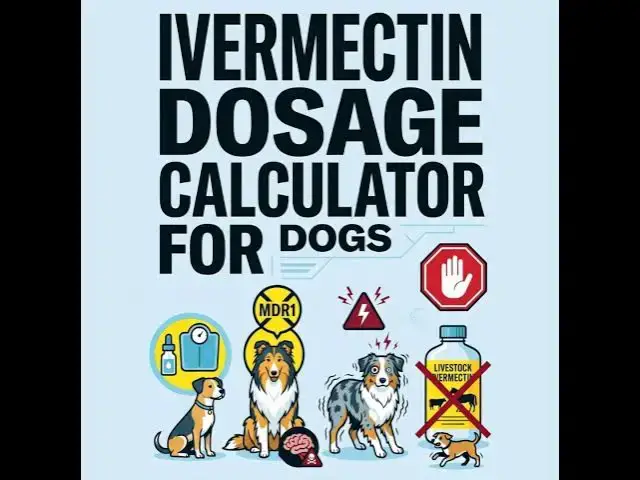
Ivermectin can save your dog from heartworm disease, or harm them if the dose goes wrong. Getting the right Ivermectin dosage for dogs (https://doggozila.com/ivermectin-dosage-for-dogs/) depends on weight, breed, and genetics.
This episode covers safe dosing, side effects, and the latest science. You’ll learn how to protect your pup without the guesswork.
For more information visit the original article on the link below:
https://doggozila.com/ivermectin-dosage-for-dogs/ (https://doggozila.com/?p=31094)
Show More Show Less View Video Transcript
0:00
Lately we all heard about the Ivermectin
0:02
drug. So we made a little research about
0:05
it and learn more about it and how this
0:07
medicine can help our dogs with proper
0:09
dosage. So welcome to another episode of
0:12
the Bark Brigade podcast by Dogo Villa
0:14
magazine with your loyal hosts Doggy
0:17
Delight and the Furry Fury.
0:18
>> Thank you. It is a it's great to be here
0:21
for this one because this topic is
0:23
incredibly intense.
0:25
>> Yeah, it really is. I mean we are
0:27
officially welcoming you the listener to
0:29
the table for this deep dive. And our
0:31
mission today is basically to break down
0:33
this
0:34
massive comprehensive guide from Dogo
0:36
Villa on calculating Ivermectin dosages
0:38
for dogs.
0:39
>> Right.
0:40
>> Because we need to separate the
0:41
life-saving facts from what is honestly
0:44
potentially fatal fiction. I mean the
0:46
stakes here are crazy.
0:48
>> They are absolute the stakes are
0:49
absolute. We are talking about a true
0:53
miracle drug. It saves millions of dogs
0:55
from heartworm every single year. But
0:58
you know simultaneously it's sending
1:00
thousands of dogs to emergency clinics.
1:02
>> Which is terrifying for an owner.
1:03
>> It is and the difference between a
1:05
miracle and an emergency comes down to
1:08
just three things. The dose the breed
1:11
and this tiny nearly invisible genetic
1:14
mutation.
1:15
>> Right. So for our road map today we are
1:17
going to meticulously walk through every
1:19
single section of our source material.
1:22
We're covering what the drug actually is
1:24
that terrifying genetic mutation you
1:25
just mentioned
1:27
the emergency side effects and uh the
1:30
really cutting edge 2025 and 2026
1:33
science.
1:33
>> Which is fascinating stuff by the way.
1:35
>> Oh, totally mind-blowing. But let's
1:37
start at the very beginning.
1:39
What is this drug and why do vets
1:42
prescribe it? Cuz it didn't just come
1:44
from a sterile lab, right?
1:45
>> No, not at all. It actually sounds like
1:48
a sci-fi movie. In the 1970s researchers
1:51
literally discovered it in a soil
1:53
bacterium.
1:53
>> Wait, in the dirt?
1:55
>> Yes, right out of the dirt. Basically,
1:57
soil bacteria produce these natural
1:59
compounds to fight off microscopic worms
2:01
in the earth.
2:02
>> So, it's like a biological warfare thing
2:04
happening underground.
2:05
>> Exactly. And scientists realized, "Hey,
2:08
we can use this exact same compound to
2:11
control parasites in animals." It
2:13
completely revolutionized veterinary
2:15
medicine.
2:15
>> Cuz before that, treating parasites was
2:18
pretty rough on the dog, right?
2:19
>> Oh, incredibly toxic. So, this
2:21
dirt-derived compound was a
2:23
game-changer, but to understand why vets
2:25
trust it, we have to talk about the
2:27
math. The heartworm dosage.
2:30
>> Yeah, let's get into the dosage because
2:32
the source guide gets very specific. The
2:34
standard heartworm prevention dose is
2:36
just 6 micrograms per kilogram of body
2:39
weight.
2:40
>> Right, which translates to about 2.72
2:43
micrograms per pound.
2:44
>> Okay, but micrograms are so tiny.
2:47
I mean, the source gave this amazing
2:48
analogy that really stuck with me. If
2:50
you have a 50-lb dog,
2:52
their monthly dose is roughly 136
2:55
micrograms. And a single grain of table
2:57
salt weighs about 60 micrograms.
3:01
>> It's astonishing when you picture it.
3:02
>> It really is. You're protecting a 50-lb
3:05
dog for an entire month from a deadly
3:06
disease with basically the weight of two
3:09
grains of salt.
3:11
>> Two grains of salt. That is the exact
3:13
scale of potency we are dealing with.
3:15
>> But that tiny amount is so crucial.
3:18
What happens if I, you know, just forget
3:21
to give it one month?
3:22
>> Well, that's where the biology gets
3:24
unforgiving. That microdose only targets
3:26
the heartworm larvae in a very specific,
3:28
vulnerable tissue stage, like right
3:31
after an infected mosquito bites your
3:32
dog.
3:33
>> Right.
3:33
>> If you miss a dose, those larvae mature.
3:36
They literally change their biological
3:38
structure, and they migrate to the dog's
3:40
heart and pulmonary arteries.
3:42
>> And at that point, the two grains of
3:44
salt won't do anything.
3:45
>> Nothing at all. It's completely useless
3:47
against adult worms.
3:48
>> Oh, wow. So, you're just leaving the
3:49
door wide open for an infection.
3:51
>> Exactly. And treating adult heartworms
3:53
requires months of brutal, dangerous
3:55
injections. It's terrible for the dog.
3:57
>> Okay, so that totally explains the rigid
4:00
monthly schedule. But, the source points
4:02
out that vets use this drug for a lot
4:04
more than just heartworms, right?
4:06
>> They do. They use it for demodectic
4:08
mange, sarcoptic mange, ear mites,
4:10
roundworms, hookworms, lice.
4:13
>> Wait, lice, too?
4:14
>> Yeah, lice, too. Now, these are what we
4:16
call extra-label uses. It just means the
4:18
FDA originally approved the label for
4:21
heartworm, but vets have decades of
4:23
clinical experience proving it kills
4:25
these other parasites, too.
4:26
>> Okay, so this is where I need to push
4:27
back a little, or at least ask a huge
4:29
question.
4:30
>> Go ahead.
4:31
>> If the safe heartworm dose is
4:32
essentially two grains of salt, but the
4:35
dose to cure something deep in the skin
4:36
like mange is massively higher,
4:40
how do vets confidently walk that
4:42
tightrope? How does the drug kill the
4:44
bug without killing the dog?
4:45
>> That is the core question. To answer it,
4:48
we have to look at how ivermectin works
4:49
inside the body. It specifically targets
4:52
these biological structures called
4:54
glutamate-gated chloride channels.
4:56
>> Okay, I was reading about those. Can we
4:58
try an analogy here?
4:59
>> I'd love to hear it.
5:00
>> Let's picture the parasite's nervous
5:02
system as a locked door.
5:04
And those chloride channels are the
5:05
keyhole.
5:07
The ivermectin acts like a biological
5:09
skeleton key.
5:10
>> Yes, I like where this is going.
5:11
>> It perfectly fits into the parasite's
5:13
keyhole,
5:14
jams the door wide open,
5:16
and basically shorts out their entire
5:18
nervous system. The parasite gets
5:19
paralyzed and dies.
5:21
>> Exactly right.
5:22
>> But then, a dog is a mammal,
5:25
and a mammal's nervous system lock is
5:27
just a fundamentally different shape.
5:28
>> Precisely.
5:30
>> So, the ivermectin key might float past
5:32
the dog's lock, but it barely scratches
5:33
the surface. It just doesn't fit. So,
5:35
the dog is totally fine.
5:36
>> That is a brilliant way to conceptualize
5:38
selective toxicity. The drug has a very
5:41
low affinity for mammalian nerve
5:43
receptors. It just passes through, does
5:45
its job on the bugs, and the dog
5:46
excretes it.
5:48
>> But, that's only if everything goes
5:49
perfectly according to plan, right?
5:51
Which brings us to the next section.
5:53
What every owner absolutely must know
5:55
about dosing.
5:56
>> Right. Because you can't just guess with
5:58
this stuff. Vets have to weigh dogs
6:00
incredibly carefully, and crucially,
6:02
they have to screen the dog for existing
6:04
adult heartworms before they ever hand
6:06
over that preventative pill.
6:08
>> Yeah, let's talk about that, because it
6:09
seems kind of backward to a lot of
6:11
people.
6:12
If my dog has heartworms, shouldn't I
6:14
give him a heartworm-killing pill
6:15
immediately?
6:16
>> It seems logical, but it's actually
6:18
incredibly dangerous.
6:20
If a dog has adult heartworms, their
6:22
bloodstream is swarming with millions of
6:24
microscopic baby worms called
6:26
microfilariae.
6:27
>> Millions?
6:28
>> Millions. So, if you give the
6:30
ivermectin, it works perfectly. It kills
6:33
all those millions of baby worms
6:34
practically at once.
6:36
>> Oh. I see where this is going.
6:38
>> Yeah. Your dog's immune system suddenly
6:41
has to deal with millions of dead,
6:43
decaying microscopic bodies clogging up
6:45
their bloodstream.
6:47
It triggers a massive, fatal allergic
6:49
reaction. The dog goes into shock.
6:52
>> That is awful.
6:54
You're basically triggering an emergency
6:55
by winning the battle too fast.
6:57
>> Exactly.
6:58
So, vets have to clear the adults first,
7:00
very slowly, before they can safely
7:02
introduce the preventative.
7:04
>> Okay, so let's look at the actual weight
7:05
brackets the source lays out, because
7:07
the math is crazy. For a dog under 25
7:10
lb, the monthly dose is 68 micrograms.
7:14
For 26 to 50 lb, it's 136.
7:17
And 51 to 100 lb is 272 micrograms.
7:21
>> Very tiny amounts.
7:22
>> Right. But then, we look at the daily
7:24
dose for demodectic mange, it's 300 to
7:27
600 micrograms per kilogram every single
7:31
day.
7:32
>> It's a staggering increase.
7:34
>> I mean, we are talking 50 to 100 times
7:37
higher than the heartworm dose.
7:39
Sometimes, vets are doing weekly sub-Q
7:41
injections at 0.4 mg per kilogram.
7:44
Why doesn't that massive amount of drug
7:47
just break down the dog's biological
7:49
door?
7:50
>> Well, this is where mammalian biology
7:52
really steps up. Mammals actually do
7:54
have receptors that ivermectin could
7:56
theoretically bind to if the
7:58
concentration gets high enough.
8:00
>> Wait, they do? I thought the key didn't
8:01
fit.
8:02
>> It doesn't fit easily, but if you flood
8:04
the system with enough drug, it can
8:06
force its way in. But, the reason dogs
8:08
don't just drop dead for mange
8:10
treatments is because of a physical
8:12
fortress protecting their brain.
8:14
>> The blood-brain barrier.
8:15
>> Yes, and specifically a protein pump
8:18
built by a gene called ABCB1.
8:21
Historically, we called it the MDR1
8:23
gene.
8:23
>> Okay, the MDR1 gene. The source spends a
8:26
lot of time on this.
8:28
>> It is arguably the most important
8:30
factor. This gene built a tiny pump, the
8:33
P-glycoprotein pump. Think of it as a
8:36
bouncer at the door of the brain.
8:38
>> A microscopic bouncer.
8:40
>> Exactly. Whenever ivermectin tries to
8:42
cross from the blood into the brain
8:43
tissue, this bouncer grabs it and
8:45
physically throws it back out into the
8:47
bloodstream.
8:48
>> So, as long as that bouncer's working,
8:50
the vet can give those massive mange
8:52
doses.
8:53
The bouncer keeps the brain safe while
8:55
the drug circulates in the blood and
8:56
kills the skin mites.
8:57
>> You've got it. That's how we safely
8:59
treat mange.
9:00
>> But,
9:02
this introduces the most terrifying
9:03
variable.
9:04
What if the bouncer's on strike?
9:06
Or worse, what if the dog has that MDR1
9:09
genetic mutation?
9:10
>> If a dog has two copies of that mutated
9:12
gene, the bouncer simply does not exist.
9:15
>> Wow. So, the door to the brain is just
9:17
wide open?
9:18
>> Completely unprotected.
9:20
The drug floods into the brain causing
9:21
massive neurotoxicity.
9:24
And the scary part is how common this
9:25
mutation is in certain breeds.
9:27
>> Yeah, let's list those breeds so anyone
9:29
listening can check. Collies are the big
9:31
one, right?
9:32
>> Yes, rough and smooth collies have about
9:34
a 50% carrier rate.
9:36
>> Half the breed?
9:37
>> It's insane.
9:38
>> That is insane.
9:39
>> Australian Shepherds are roughly 35%,
9:42
then you have Shetland Sheepdogs, Old
9:43
English Sheepdogs, long-haired Whippets,
9:46
McNabs, and Silken Windhounds.
9:48
>> So, for a Collie with two copies of this
9:50
mutation, even that tiny two grains of
9:53
salt heartworm dose,
9:54
>> it could be devastating.
9:55
>> It's essentially stripping away their
9:57
mammalian armor against the drug.
9:59
>> Completely. And it only takes about 90
10:01
to 100 micrograms per kilogram to
10:04
trigger severe side effects in a mutated
10:06
dog.
10:06
>> And the mange dose is 300 to 600.
10:09
>> Exactly. It would be a fatal overdose.
10:12
>> Okay. So, practically speaking, how do
10:14
we give this safely? The source mentions
10:16
making sure the dog actually swallows
10:17
the chew, which sounds basic, but dogs
10:20
are sneaky.
10:20
>> Oh, they will spit it out behind the
10:22
couch. You have to watch them.
10:23
And if they vomit within 2 hours of
10:25
taking it, you need to call the vet
10:26
because they probably didn't absorb it.
10:28
>> But the biggest warning the source
10:29
gives, and we need to spend significant
10:32
time on this,
10:33
is the absolute danger of livestock
10:35
products.
10:36
>> Oh, this is a massive issue, especially
10:39
in rural areas.
10:41
>> Because people see a giant tube of horse
10:43
paste or cattle pour-on at the feed
10:45
store, and it's super cheap compared to
10:47
the dog pills.
10:48
>> Right, and they think, "I'll just do the
10:49
math and give my dog a tiny drop."
10:52
>> But you can't just do that math at your
10:54
kitchen table, can you?
10:55
>> No, it is nearly impossible. Livestock
10:58
products are incredibly concentrated
11:00
because they have to work inside a 1,200
11:02
lb cow. A concentration meant for a
11:04
horse is basically lethal dog.
11:07
>> So, if an owner guesses wrong, or even
11:10
if a farm dog just finds a dropped pill
11:12
meant for a cow,
11:13
>> the shift from safety to a critical
11:15
emergency is terrifyingly fast.
11:18
>> Which perfectly transitions us to the
11:19
next section. What do these side effects
11:21
actually look like? Because we need to
11:23
know what to watch for.
11:24
>> Right. Now, assuming the dose is correct
11:26
and the genetics are fine, most dogs
11:28
have zero problems.
11:29
>> But But they do have mild side effects,
11:31
what are we seeing?
11:32
>> Mild effects are usually
11:33
gastrointestinal. A bit of stomach
11:35
upset, maybe one instance of vomiting,
11:37
or some loose stool.
11:39
They might seem lethargic, or you might
11:40
notice them drooling.
11:42
>> And if that happens, the advice is just
11:44
to give the med with a small meal next
11:45
time to reduce stomach irritation,
11:47
right? And just watch them closely.
11:49
>> Yes. Those mild signs usually fade
11:51
within 24 hours.
11:53
But because this drug targets nerve
11:55
channels, if things go wrong, they
11:57
escalate rapidly into severe
11:59
neurological side effects.
12:00
>> Okay, walk me through the severe signs,
12:02
the scary ones.
12:04
>> You'll see muscle tremors.
12:05
>> Okay.
12:06
>> The dog will start stumbling like they
12:07
have no coordination.
12:09
Their pupils will dilate massively and
12:11
won't respond to light.
12:13
>> Oh, man.
12:13
>> They might start head pressing,
12:15
literally pushing their head against a
12:16
wall.
12:17
Blank stares, disorientation, sudden
12:20
blindness, and eventually coma.
12:23
>> And the timeline on this is really
12:24
important, right? Because the studies
12:26
show
12:27
these signs appear 5 to 16.5
12:31
>> Yes, it's not instantaneous.
12:33
>> So, you could give the pill at
12:34
breakfast, go to work, come home, and by
12:36
dinnertime, your dog is totally blind
12:39
and stumbling around.
12:40
>> Exactly. It's a delayed absorption
12:43
process.
12:44
>> So, if I see these severe signs, this
12:46
isn't a wait-and-see situation. This is
12:48
a full-blown emergency.
12:50
>> Do not wait for a regular vet
12:51
appointment. You rush that dog to the ER
12:53
immediately. They need IV fluids and
12:56
activated charcoal right away to stop
12:57
any more drug from absorbing in the
12:59
stomach.
13:00
>> But the source mentioned this incredibly
13:01
cool medical breakthrough from 2025,
13:04
something called intravenous lipid
13:06
emulsion therapy, ILE.
13:08
>> Yes, ILE therapy is a literal lifesaver.
13:11
>> So, based on the 2025 case study of a
13:13
little shih tzu that accidentally ate a
13:16
massive 10-mg tablet.
13:18
>> A huge overdose.
13:19
>> Yeah, massive. And it recovered in just
13:21
24 hours.
13:22
So, I'm trying to visualize this.
13:24
Is this ILE therapy basically acting
13:27
like an intravenous fat sponge.
13:31
>> That is a perfect way to describe it.
13:33
>> Because Ivermectin is lipophilic, right?
13:36
It chemically loves fat.
13:38
>> Right. It's drawn to fat, which is why
13:39
it gets stuck in the fatty tissues of
13:40
the brain.
13:42
>> So the vet pumps this liquid fat
13:43
emulsion directly into the dog's
13:45
bloodstream.
13:46
It creates this circulating river of fat
13:49
that basically soaks the drug right out
13:51
of the dog's brain tissues.
13:53
>> Exactly. It acts as a lipid sink. It
13:55
pulls the toxin out of the nervous
13:57
system, traps it in the blood, and lets
13:59
the liver safely filter it out. It's a
14:01
true medical miracle.
14:03
>> Saving a dog with an IV fat sponge is
14:05
definitely a miracle. But obviously
14:07
keeping them out of the ER in the first
14:08
place is the goal.
14:10
Which means we need to understand breed
14:11
genetics and hidden chemical
14:13
interactions.
14:14
>> Yes. Prevention is everything.
14:17
>> We talked about the collies having a 50%
14:19
mutation rate and Aussies at 35% and
14:22
mixed breeds with herding DNA are
14:24
totally at risk, too.
14:25
>> Absolutely. You can't just judge by
14:27
looking at a dog.
14:29
>> But I found the 2024 science really
14:31
interesting. They studied Kangal and
14:33
Akbash dogs in Turkey and found they do
14:35
not carry the mutation at all.
14:37
>> Which is fascinating from a genetic
14:39
lineage standpoint. But for the average
14:42
owner, the takeaway is simple.
14:43
Get a genetic test.
14:45
>> Right. It's just a simple cheek swab.
14:47
>> Very simple.
14:49
>> So, genetics are one thing.
14:51
But then the source dives into dangerous
14:53
drug interactions. And
14:55
this part blew my mind. The interaction
14:58
with spinosad.
14:59
>> Ah, yes. This is a massive hidden
15:01
danger.
15:03
>> Spinosad is a super common flea
15:05
preventative, right? Like you buy it
15:07
over the counter, give it once a month.
15:09
>> Very common, very effective for fleas.
15:11
>> But
15:12
it has a major biochemical side effect.
15:14
Spinosad physically blocks that
15:16
P-glycoprotein pump we talked about
15:18
earlier.
15:19
>> Wait. So it basically knocks out the
15:21
bouncer.
15:22
>> It completely incapacitates the bouncer.
15:25
So, even if your dog has perfect
15:27
genetics, no MDR1 mutation, if you give
15:30
them spinosad, you are temporarily
15:33
turning off their brain's natural
15:34
defense against ivermectin.
15:36
>> Exactly.
15:37
>> For that brief window, their blood-brain
15:39
barrier is heavily compromised.
15:41
>> For that brief window, their blood-brain
15:43
barrier is heavily compromised.
15:45
>> And the data says when you combine these
15:47
two, the ivermectin levels in the dog's
15:49
brain spike 3.6 times higher,
15:52
causing toxicity even at totally normal
15:54
doses.
15:56
>> It's a severe chemical collision.
15:58
>> But wait,
15:59
if spinosad is a wildly common flea med,
16:03
and ivermectin is the go-to heartworm
16:05
med,
16:06
the odds of a pet owner casually
16:07
stacking these on a Saturday morning are
16:09
incredibly high.
16:10
>> They are very high.
16:11
>> I mean, you think you're being a good
16:13
owner giving all the preventatives at
16:14
once, and you accidentally poison your
16:17
dog.
16:18
This is exactly why over-the-counter
16:20
mixing without a vet's complete overview
16:22
is such a massive gamble.
16:24
>> You have to consult your vet before
16:25
combining any medications. Spinosad and
16:27
ivermectin are explicitly
16:29
contraindicated. You just cannot use
16:31
them together safely at certain doses.
16:33
>> Okay. So, for the listener, let's run
16:35
down the safe practices checklist.
16:37
One,
16:38
test for MDR1 via a cheek swab.
16:41
Two,
16:42
use only vet-approved dog products, no
16:45
livestock stuff.
16:45
>> Right.
16:46
>> Three,
16:47
weigh your dog accurately before any
16:49
dosage adjustments.
16:51
And four, keep a medication log of every
16:53
pill you give them.
16:54
>> A medication log is such a simple,
16:57
brilliant tool. It prevents so many
16:58
accidental interactions.
17:00
>> Definitely.
17:01
And if we get all those safety protocols
17:02
right, we can safely look at where the
17:04
true future of this drug is heading,
17:06
which frankly goes way beyond parasites.
17:09
>> The pace of discovery right now is
17:11
incredible. We are looking at
17:13
non-parasitic uses that could change
17:15
veterinary medicine.
17:16
>> Like the 2025 study on Ivermectin and
17:18
cancer treatment in dogs.
17:20
>> Yes, canine oncology is a huge new
17:22
frontier for this drug.
17:24
>> So, the study combined Ivermectin with
17:26
Metformin,
17:27
which is usually for diabetes, to treat
17:29
canine breast cancer. And the source
17:31
says it activates autophagy and inhibits
17:35
the PI3K/Akt/mTOR
17:39
pathway.
17:40
>> It's a mouthful.
17:40
>> huge mouthful. Can we break that down?
17:43
What is that pathway?
17:44
>> Think of that pathway as a cellular
17:46
engine that tells cells to grow and
17:48
multiply. In cancer, that engine is
17:51
stuck in overdrive. It won't turn off.
17:53
>> So, the tumor just keeps growing.
17:54
>> Right. But, this drug combination
17:56
essentially acts as an emergency brake
17:58
on that specific engine. It stops the
18:00
growth signals.
18:01
And simultaneously, it triggers
18:03
autophagy.
18:04
>> Autophagy?
18:05
>> Mhm.
18:05
>> Hm, that's like the cells' internal
18:07
recycling program, right? Where it eats
18:09
its own damaged parts.
18:11
>> Exactly. It forces the cancer cells to
18:13
literally break themselves down from the
18:15
inside out.
18:16
>> That is wild. And there's another study
18:18
from 2026. They used it alongside a
18:20
chemo drug called Vincristine for
18:22
transmissible venereal tumors.
18:24
>> Yes, TVT.
18:25
>> And combining the two actually reduced
18:27
the overall duration of the chemo
18:29
treatment.
18:29
>> Which is huge because chemotherapy is so
18:31
hard on a dog's body. If we can use
18:33
Ivermectin to make the chemo more
18:35
effective, so the dog needs fewer
18:37
sessions,
18:38
>> that's a massive win for their quality
18:40
of life.
18:41
But, I need to put a giant warning label
18:43
on this conversation right now.
18:45
>> Please do.
18:46
>> The sources vary firm on this. These are
18:48
tightly controlled preliminary clinical
18:50
trials. Nobody should ever ever attempt
18:52
to treat their dog's cancer at home with
18:54
Ivermectin.
18:54
>> Absolutely not.
18:55
>> You will likely cause a fatal
18:57
neurological overdose long before you
18:59
ever impact a tumor. Leave oncology to
19:01
the board-certified specialists.
19:03
>> Seriously.
19:04
>> Don't go buying horse paste for cancer.
19:07
Okay, let's pivot to some new findings
19:09
on something vets have treated for a
19:10
long time. Canine demodicosis or mange.
19:13
>> Right, because mange requires those
19:15
massive daily doses, there was always
19:17
concern about long-term safety.
19:18
>> Yeah. The 2026 pharmacokinetic study
19:21
looked exactly at that. Because if you
19:23
give a huge dose every day, you'd think
19:25
it would just stockpile in the dog's
19:26
body, right?
19:27
>> That was the fear.
19:28
That it would accumulate and eventually
19:30
cross the blood-brain barrier, but the
19:32
2026 study confirmed that long-term
19:34
daily dosing is actually quite safe for
19:37
genetically normal dogs.
19:38
>> The body just processes it efficiently.
19:40
>> Yes, it clears out before it can build
19:42
up to toxic levels, but stays high
19:44
enough in the skin to kill the mites.
19:46
>> And they found a way to make it even
19:47
more effective. A 2025 combo study used
19:50
oral ivermectin plus a topical treatment
19:52
called amitraz.
19:54
>> The results there were phenomenal.
19:56
>> They really were. Ivermectin alone cured
19:58
69% of dogs, but adding the amitraz
20:01
jumped the cure rate to 94%.
20:03
>> It's a perfect two-pronged attack.
20:05
>> Systemic from the inside, topical from
20:07
the outside.
20:08
But as with everything, pushing the
20:09
boundaries brings unintended
20:11
consequences. The future of this drug
20:13
isn't totally flawless.
20:15
The 2026 research found a new side
20:17
effect for long-term users.
20:19
>> The dry eye issue.
20:20
>> Yeah. Systemic ivermectin actually
20:22
reduces tear production in healthy dogs.
20:25
>> Which raises serious concerns for dogs
20:27
on those long-term mange protocols. Vets
20:29
now have to monitor their eyes very
20:31
closely to prevent corneal ulcers.
20:33
>> It's always a trade-off. Just like with
20:35
the new heartworm protocols, the 2025
20:37
study looked at the slow kill method.
20:40
>> Ah, the slow kill protocol.
20:41
>> So instead of the harsh arsenic
20:43
injections to kill adult heartworms
20:45
quickly, they use ivermectin combined
20:47
with an antibiotic called doxycycline to
20:49
kill them slowly over time.
20:51
>> The doxycycline targets a symbiotic
20:53
bacteria living inside the heartworm,
20:55
basically starving the worm slowly.
20:57
>> But the 2025 results were super mixed,
21:00
right?
21:01
>> Very mixed. Because while the worms were
21:03
dying slowly, they are still inside the
21:05
heart causing daily irreversible damage
21:08
to the lungs and vessels. Plus, you risk
21:11
the parasites developing drug
21:12
resistance.
21:13
>> So, it's not a magic bullet.
21:15
>> No.
21:16
It's generally a last resort for dogs
21:18
too sick to handle the fast-acting
21:19
injections.
21:21
>> It's fascinating how an old 1970s
21:23
anti-parasite drug is suddenly being
21:25
tested for breast cancer pathways,
21:28
but still struggles with its original
21:30
job sometimes.
21:32
It really makes you wonder how many
21:33
other old veterinary drugs are hiding
21:36
revolutionary secondary uses right in
21:38
plain sight.
21:39
>> I suspect we will find quite a few over
21:41
the next decade.
21:42
>> Okay, as we near the end, we need to do
21:44
a rapid-fire synthesis of the frequently
21:46
asked questions from the source.
21:48
Cuz owners always have the same core
21:50
worries.
21:51
>> Let's do it.
21:52
>> Monthly use? Yes, absolutely necessary
21:54
for heartworm.
21:56
Overdose?
21:57
>> Tremors, stumbling, blindness.
21:59
>> Get to the ER immediately.
22:00
>> Safe for collies and Aussies?
22:02
>> Only, and I mean only, if you do an MDR1
22:05
genetic test first and it comes back
22:07
clear.
22:08
>> Can it cure mange?
22:09
>> Yes, but it requires massive daily
22:11
doses, like 300 to 600 micrograms per
22:14
kilogram, and intense veterinary
22:16
monitoring.
22:17
>> How long does it stay in the dog's
22:19
system?
22:20
>> Usually clears out in 24 to 48 hours,
22:22
assuming the dog has a healthy liver.
22:24
>> Livestock ivermectin?
22:25
>> Never, absolutely never. The
22:27
concentrations are lethal to dogs.
22:30
>> And finally, is it safe for puppies?
22:32
>> Yes, many preventatives are safe
22:34
starting at 6 to 8 weeks, but you must
22:36
have a vet constantly updating the doses
22:37
the puppy grows.
22:39
>> Awesome.
22:40
>> And I just want to touch on that 24 to
22:41
48 hour clearance rate. That is
22:43
incredible.
22:44
>> It really is a fast metabolism.
22:46
>> It shows how efficiently a healthy
22:48
mammalian liver processes the drug. I
22:50
mean, that clearance speed is the only
22:51
reason those daily mange doses are even
22:53
possible to attempt without killing the
22:55
dog.
22:55
>> Exactly. If the liver didn't clear it
22:57
that fast, the drug would compound daily
23:00
and cross the blood-brain barrier within
23:01
a week.
23:02
>> Biology is just amazing.
23:04
Well, we've covered the origins, the
23:06
dosing math, the genetics, the
23:08
emergencies, and the future science. Do
23:10
you have a final thought to leave
23:11
everyone with?
23:12
>> I do.
23:14
Before we wrap up, think about this.
23:16
We've spent decades using this drug to
23:18
fight off invisible invaders in our
23:20
pets, relying on a biological quirk that
23:22
keeps mammals safe and parasites
23:24
paralyzed. But, as we look at the 2025
23:27
and 2026 research exploring ivermectin
23:30
for canine cancer, it makes you wonder
23:32
if an old soil bacterium can paralyze a
23:35
heartworm and simultaneously inhibit a
23:37
cancer pathway, what other ancient
23:40
biological secrets are just sitting in
23:42
the dirt waiting for us to find the
23:44
right lock?
23:45
>> Dogzilla Magazine from their labs has
23:48
produced a calculator for all of you
23:50
that want to be sure and calculate the
23:52
right dosage of this medicine for your
23:54
furry friend. And as always, it is free
23:57
to use.
23:58
Thank you for listening, dear
23:59
brigadeers. And if you have any
24:01
questions, visit the source article
24:03
where you can find the calculator as
24:04
well on Dogzilla Magazine at
24:07
dogzilla.com.
24:08
That was all for this episode, and until
24:10
the next time, bye to all listeners of
24:13
the Bark Brigade podcast.
Pets & Animals