Up next in 10

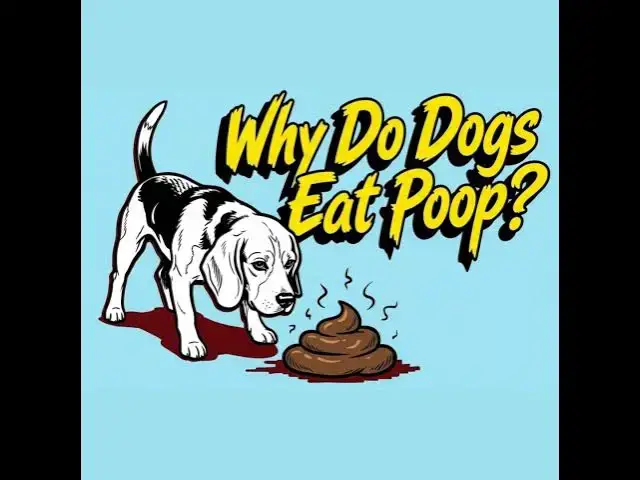
You see your dog sniffing around the yard, and then, ugh, they start eating their own poop. It is disgusting, confusing, and frankly embarrassing.
The truth is that this behavior is surprisingly common, and there are real, logical reasons behind it. In fact, studies show that around 23–49% of domestic dogs have eaten poop at some point.
So, before you get angry or worried, let's dive into the science and find out why do dogs eat poop (https://doggozila.com/why-do-dogs-eat-poop/) , and what you can actually do about it.
This episode breaks down seven science-backed reasons for dog coprophagia, from ancient wolf instincts to modern gut health.
You will learn exactly why dogs eat poop, how to spot the root cause, and what new research says about probiotics. By the end, you will have a clear action plan to stop the habit for good.
For much more information, visit the original source article by Doggozila Magazine that is called:
7 Urgent Reasons About Why Dogs Do Eat Poop That You Need To Know (https://doggozila.com/why-do-dogs-eat-poop/)
Show More Show Less View Video Transcript
0:00
Welcome to another episode of the Bark
0:01
Brigade podcast by Dog A Zillion
0:03
Magazine. So, picture this. You're
0:06
standing in your backyard, you've got
0:07
your morning coffee, uh feeling the warm
0:10
sun, taking a deep breath of fresh air.
0:13
>> Sounds lovely.
0:13
>> Right. It is until you glance over at
0:16
your beloved, sweet, incredibly
0:19
expensive domestic dog and well, they're
0:22
snacking on something absolutely
0:24
unthinkable.
0:25
>> Oh, yeah, the ultimate mood killer.
0:26
>> Exactly. If you have witnessed your dog
0:29
eating their own waste, just, you know,
0:30
take a deep breath. You're probably
0:32
looking around to make sure the
0:33
neighbors didn't see it, feeling this
0:35
profound wave of embarrassment and
0:37
frankly, disgust.
0:39
>> Oh, totally. You start wondering where
0:40
you went wrong as an owner.
0:41
>> Yes.
0:42
But the very first thing we need to do
0:44
today in this deep dive is completely
0:46
shatter that stigma. You are not alone.
0:49
>> No, not at all. Actually, um
0:52
the baseline data from the veterinary
0:54
sources we're analyzing today is going
0:56
to completely change how people view
0:57
this.
0:57
>> I mean, I hope so, because it feels like
0:58
a really taboo topic.
0:59
>> It is, but the statistical normalization
1:02
of this behavior is just staggering.
1:04
We're looking at research showing that
1:06
anywhere between 23% and 49% of domestic
1:09
dogs have uh have eaten feces at some
1:12
point in their lives.
1:13
>> Wait, 49%? That's practically half.
1:16
>> Yeah, think about that upper end. Nearly
1:17
half of all domestic dogs. What this
1:19
tells us fundamentally is that a dog
1:22
engaging in this, they're not, you know,
1:24
they're not broken.
1:25
>> Right. They aren't just bad or dirty
1:26
dogs.
1:27
>> Exactly. We are actually looking at a
1:30
deeply ingrained
1:32
biological,
1:34
uh evolutionary, and behavioral puzzle
1:36
that has just been completely
1:38
misunderstood by modern pet owners.
1:40
>> So, basically, nearly half the dogs at
1:42
any given dog park have probably dabbled
1:44
in this at least once.
1:46
>> Yeah, pretty much.
1:46
>> That completely changes the framing.
1:48
It's not some bizarre anomaly. It's a
1:49
standard feature of the canine operating
1:52
system. And well, that is the entire our
1:55
of our deep dive today. We are putting
1:57
aside the human disgust factor, putting
2:00
on our detective hats, and we're going
2:01
to look at the legitimate, fascinating
2:03
science. We're unpacking the seven
2:06
science-backed reasons behind this
2:08
behavior.
2:08
>> Ranging from ancient wild wolf ancestry
2:11
all the way to the absolute latest 2025
2:15
gut microbiome research.
2:17
>> Right. And most importantly, we are
2:18
going to equip you, the listener, with a
2:20
practical step-by-step plan to stop this
2:23
habit at home using things you probably
2:26
um already have in your kitchen right
2:28
now.
2:28
>> Because the key to stopping it is just
2:30
understanding the biological mechanisms
2:32
driving it. Once we break down the
2:34
methodology of these recent veterinary
2:35
studies, the interventions just make
2:38
perfect logical sense.
2:39
>> I want to start by winding the clock
2:41
way, way back because my immediate
2:43
thought when I see a dog do this is, "Uh
2:45
how could a behavior this completely
2:47
unhygienic possibly have survived
2:49
natural selection?"
2:50
>> It seems counterintuitive, right?
2:51
>> Totally. Evolution is supposed to be
2:53
this ruthless filter that weeds out
2:55
behaviors that get an animal sick.
2:57
Eating waste seems like a fast track to
2:59
an infection.
3:00
>> Well, what we view as unhygienic in our,
3:02
you know, sanitized human world was
3:04
actually a brilliant, mandatory survival
3:07
mechanism in the wild.
3:08
>> Oh, really? How so?
3:10
>> We have to look at the ancestral wolf
3:11
theory.
3:12
So,
3:13
picture a wild wolf den thousands of
3:16
years ago.
3:17
A mother wolf has a litter of highly
3:19
vulnerable, blind, deaf pups.
3:22
>> Okay, I'm picturing it. Lots of tiny
3:24
puppies.
3:25
>> Survival in that environment is entirely
3:26
dependent on avoiding detection by apex
3:29
predators.
3:30
And a den is just a stationary target.
3:32
>> Right. If you're a bear or a larger
3:33
predator, you're constantly scanning the
3:35
forest for an easy meal. A den full of
3:37
puppies is an absolute goldmine.
3:39
>> And the primary way a bear locates that
3:41
den isn't sight, it's scent. When those
3:44
pups generate waste, it creates this
3:46
massive, flashing neon scent trail that
3:48
broadcasts "Vulnerable prey located
3:50
here" to every predator within miles.
3:52
>> Wow. so she has to get rid of the
3:54
evidence.
3:54
>> Exactly. To protect the pack, mother
3:56
wolves would meticulously consume their
3:58
pups waste. It wasn't a choice, it was a
4:00
mandatory cleaning duty to eliminate
4:02
those scent trails. She kept the den
4:04
completely sterile and undetectable.
4:06
>> So this programming is just woven
4:08
incredibly deep into canine DNA.
4:10
>> It is. Modern domestic dogs, even the
4:13
ones sleeping on like orthopedic memory
4:15
foam beds in gated communities,
4:18
they've retained this software. When a
4:20
female dog does this, she is fulfilling
4:22
an ancient tactical cleaning duty to
4:25
keep her family alive.
4:26
>> Okay, that makes total sense for a
4:27
nursing mother.
4:29
But the sources highlight a time frame
4:31
for this behavior that completely blew
4:33
my mind. And it involves the broader dog
4:36
population.
4:37
>> Oh, you mean the 2025 UC Davis survey?
4:39
>> Yes. I'm looking at this massive study.
4:42
They analyzed over 3,000 dogs, which is
4:44
a fantastic sample size for a veterinary
4:47
behavioral study.
4:48
>> It's huge data.
4:48
>> And they found that 92% of the dogs that
4:51
engage in this behavior exclusively
4:53
target fresh feces. Feces that is less
4:55
than two days old.
4:56
>> Yep, the fresh poop phenomenon.
4:58
>> They almost completely ignore the old
5:00
dried out waste. My instinct is that
5:02
this is just a preference for texture,
5:04
but from an evolutionary standpoint,
5:05
there has to be a biological reason
5:07
they're so specific about that timeline,
5:09
right?
5:09
>> There absolutely is.
5:11
The preference for fresh waste directly
5:13
ties to the parasite prevention theory.
5:16
The timeline of two days is incredibly
5:18
precise and biologically significant.
5:20
>> So what happens after two days?
5:22
>> Well, in the life cycle of most
5:24
dangerous intestinal parasites, the eggs
5:26
passed in the stool require time in the
5:28
environment to develop into an
5:30
infectious stage. They do not hatch and
5:32
become a threat within that initial
5:34
48-hour window.
5:35
>> Wait, if I'm understanding this
5:37
correctly, a dog eating fresh waste is
5:39
actually trying to be hygienic.
5:41
>> From a wild canine perspective,
5:43
absolutely. A dog's nose is tens of
5:45
thousands of times more sensitive than
5:47
ours. They can detect the exact chemical
5:50
age of that waste.
5:51
>> That is wild.
5:52
>> So, by consuming it while it is fresh,
5:53
before those parasite eggs can incubate,
5:55
hatch, and contaminate the soil around
5:57
the den, the dog is actively removing a
5:59
severe health threat from their living
6:01
area.
6:02
>> That is a highly selective, purposeful
6:04
action.
6:04
>> Exactly. Their olfactory system knows
6:06
exactly what is safe to eliminate from
6:08
the environment and what is too old and
6:09
therefore, you know, teeming with active
6:11
parasites.
6:12
>> It completely reframes the whole thing.
6:15
The dog isn't being gross. The dog is
6:17
acting as an ancient tactical
6:19
survivalist maintaining the biological
6:21
security of the perimeter.
6:23
>> It's actually kind of impressive when
6:24
you think about it.
6:25
>> It really is, but that is the adult dog.
6:27
Anyone who has brought home a new puppy
6:29
knows they are a completely different
6:30
story. They get into absolutely
6:32
everything.
6:32
>> Oh, the puppy phase. Yeah.
6:34
>> How does this evolutionary instinct
6:36
translate to an 8-week-old puppy who has
6:40
never seen a predator in its life?
6:42
>> so, for new puppy owners, the dynamic
6:44
shifts from tactical survival to what we
6:47
call the puppy copycat phase.
6:49
>> The copycat phase.
6:50
>> Yeah, puppies are developmental sponges.
6:53
They learn how to interact with the
6:54
world by observing and mimicking their
6:56
mothers.
6:56
>> Right. Monkey see, monkey do.
6:58
>> Precisely.
7:00
If a mother dog is rigorously cleaning
7:01
the whelping box by consuming the waste,
7:04
driven by that ancestral den cleaning
7:06
instinct we just discussed,
7:07
>> Mhm.
7:08
>> the puppies are absorbing that visual
7:10
information.
7:10
>> So, they see mom doing it and they just
7:12
assume this is standard operating
7:14
procedure for a dog.
7:15
>> They essentially just blindly copy a
7:17
family tradition. They have zero
7:19
understanding of the evolutionary
7:21
context, no idea about bears or
7:23
parasites.
7:24
>> They just recognize that mom interacts
7:26
with waste this way, so they try it
7:28
themselves.
7:29
>> Yes.
7:30
But, the encouraging news for new owners
7:32
is that the vast majority of puppies
7:34
simply outgrow this phase by the time
7:37
they reach 9 to 12 months of age.
7:39
>> Oh, that's a relief.
7:40
>> Once they become independent and
7:42
mimicking maternal behaviors, the habit
7:44
drops away.
7:46
The danger is when the behavior isn't
7:48
managed during that window and it
7:50
becomes normalized into their daily
7:52
routine.
7:52
>> So, the big takeaway for the listener
7:54
who is currently panicked about their
7:55
new puppy snacking in the yard is to
7:58
just take a breath.
7:59
>> Take a huge breath.
8:00
>> It is a learned family tradition, a
8:02
copycat behavior, not a sign that your
8:04
puppy is deeply disturbed or permanently
8:06
broken. You just have to manage the
8:08
environment, which we will get to.
8:10
>> We definitely will.
8:11
>> But, that 48-hour window and the den
8:13
hygiene makes perfect sense for wild
8:15
wolves and nursing mothers. It brings up
8:17
a huge question for the domestic side,
8:19
though. If an adult dog isn't a mother,
8:22
isn't a puppy, and isn't trying to hide
8:24
from a bear, why are they suddenly doing
8:26
this right after eating a massive bowl
8:28
of commercial dog food? That points us
8:31
directly toward the food bowl.
8:33
>> It does. Nutrition is the most common
8:35
modern trigger for the urge. Evolution
8:37
provides the background software,
8:40
but a nutritional void activates the
8:41
behavior today.
8:43
>> A nutritional void? Like they're missing
8:44
something?
8:45
>> Exactly. The veterinary data points
8:47
heavily toward a lack of B complex
8:49
vitamins, specifically vitamin B12 as a
8:52
primary driver.
8:53
>> If a dog is missing B12, what does that
8:55
actually do to them internally that
8:57
pushes them toward this extreme
8:59
behavior?
9:00
>> Well, a severe deficiency causes a
9:01
condition known as pica, which is the
9:03
desperate consumption of non-food items.
9:06
>> Like eating dirt or rocks.
9:07
>> Dirt, rocks, and yes, waste. Vitamin B12
9:11
is crucial for nerve function, brain
9:12
health, and red blood cell formation.
9:15
When a dog's body is depleted of it, the
9:17
brain essentially sounds a biological
9:19
alarm.
9:19
>> Sending urgent signals that vital
9:21
nutrients are missing.
9:22
>> You got it.
9:24
We have to remember what feces actually
9:26
is mechanically. It is the byproduct of
9:29
digestion. It still contains undigested
9:32
proteins, fats, and crucially heavily
9:34
synthesized B vitamins produced by gut
9:37
bacteria.
9:37
>> Wow. So, to a dog whose internal alarms
9:40
are screaming for B12, that pile in the
9:42
yard doesn't register as waste at all.
9:44
>> Not even a little bit.
9:46
To their nose, it smells like a valid,
9:48
life-saving food source that contains
9:50
the exact biochemical compound their
9:52
body is desperate for.
9:53
>> That's crazy.
9:54
>> And this is why you cannot discipline a
9:56
dog out of a biological deficiency.
9:58
Simple blood tests performed by a
10:00
veterinarian are the only way to
10:02
definitively identify if these
10:04
underlying nutritional voids are the
10:06
root cause.
10:07
>> Because studies consistently show that
10:09
when veterinarians supplement with B
10:10
vitamins, the behavior reduces
10:12
dramatically, right?
10:13
>> Oh, yeah. In more than half of the
10:14
affected dogs.
10:15
>> A blood test has to be step one, but
10:17
sometimes the vitamins are actually in
10:19
the food, and the dog still acts like
10:20
they are starving.
10:21
>> Yes, that leads us to the medical
10:23
conditions the sources outlined like EPI
10:25
and IBD.
10:26
>> Walk me through what is physically
10:28
breaking down in the dog's body with
10:30
those diseases.
10:31
>> So, EPI is exocrine pancreatic
10:34
insufficiency, and IBD is inflammatory
10:36
bowel disease. Both are severe
10:39
malabsorption issues.
10:40
>> Meaning the gut isn't absorbing the good
10:42
stuff.
10:42
>> Exactly. Let's look at the cellular
10:44
level. A dog with EPI has a pancreas
10:47
that is failing to produce the digestive
10:49
enzymes necessary to break down
10:51
starches, fats, and proteins.
10:53
>> And IBD?
10:54
>> A dog with IBD has chronic inflammation
10:56
in the intestinal lining.
10:58
That inflammation acts as a physical
11:00
barrier, preventing digested nutrients
11:02
from passing into the bloodstream.
11:04
>> So, they're eating a full, rich meal,
11:06
but the goodness of that food is just
11:08
sliding right through them without ever
11:10
entering their system.
11:11
>> It's a devastating reality for these
11:13
dogs because their brain receives
11:14
constant, relentless starvation signals.
11:17
Even if they just consumed three cups of
11:19
premium food, their cells are literally
11:21
starving.
11:22
>> Oh, man, that's awful.
11:23
>> It is.
11:24
Consuming feces becomes a desperate,
11:26
frantic attempt to recapture the missing
11:28
calories and nutrients that slipped
11:30
through the digestive tract the first
11:32
>> So, it's a legitimate medical crisis.
11:34
>> It is.
11:35
Treating it requires highly specialized
11:37
prescription enzymes or prescription
11:39
diets from a vet.
11:42
It is a vital reason why owners must
11:43
never ignore this habit, especially if
11:46
the dog is losing weight despite having
11:48
a ravenous appetite.
11:49
>> It is heartbreaking when you frame it
11:51
that way. They're just incredibly
11:52
painfully hungry.
11:53
>> They really are.
11:54
>> But let's assume the blood work is
11:55
flawless. The vet says the pancreas is
11:58
firing perfectly, the intestines are
12:00
completely healthy.
12:01
>> Then we have to look at the actual
12:02
physical kibble being poured into the
12:04
bowl.
12:05
>> Right. The sources point a huge flashing
12:07
arrow at what they call the cheap kibble
12:09
problem.
12:10
>> Nutritional deficiencies are incredibly
12:12
common when feeding low-quality
12:13
commercial pet foods.
12:15
If an owner reads the ingredient list on
12:17
a budget kibble, they will often find it
12:19
heavily packed with fillers.
12:21
>> Specifically corn, wheat, and soy,
12:23
right?
12:23
>> Exactly. These are carbohydrates used to
12:26
bulk out the bag and lower the
12:27
manufacturing cost.
12:29
>> But a dog's stomach isn't designed to
12:31
process a heavy grain load the way a cow
12:33
or a horse would.
12:34
>> Not at all. A canine digestive tract is
12:37
relatively short and optimized for
12:39
processing proteins and fats quickly.
12:42
When a dog consumes a diet entirely
12:43
based on complex corn and wheat fillers,
12:46
a massive portion of that material
12:48
simply passes straight through their
12:49
digestive system.
12:50
>> Because it isn't being effectively
12:52
broken down by their stomach acids or
12:53
enzymes.
12:54
>> Right.
12:55
>> So, if the grain isn't breaking down,
12:57
does it come out the other end smelling
12:58
the same way it went in?
13:00
>> Mechanically speaking, yes. The stool
13:02
produced from a filler-heavy diet still
13:05
retains the smell and the flavor profile
13:07
of the original meal.
13:08
>> Yikes.
13:09
>> The filler did not chemically change
13:11
enough during the digestive process to
13:13
register to the dog's nose as depleted
13:15
waste, so the dog sniffs it and their
13:17
brain simply registers, "Oh, here is a
13:19
second helping of my dinner."
13:21
>> The fix for that seems incredibly
13:22
straightforward, then. If cheap kibble
13:24
is the culprit, what happens when an
13:26
owner switches the diet?
13:27
>> Upgrading to a high protein meat first
13:30
diet is often the most rapid non-medical
13:33
intervention.
13:34
When a diet features named meat like
13:36
chicken, beef, or salmon as the primary
13:39
ingredient, and you eliminate those
13:41
heavy grain fillers and artificial
13:43
colors,
13:44
the dog's body becomes highly efficient.
13:47
>> It digests and absorbs the vast majority
13:49
of the meal.
13:50
>> Exactly. And what comes out the other
13:52
end is truly depleted unappealing waste.
13:57
The sources note that making this switch
13:58
often stops the stool eating behavior
14:01
within just 2 weeks.
14:02
>> Just 2 weeks?
14:03
>> Yeah, because the dog is no longer
14:04
seeking missing nutrients, and the waste
14:07
no longer smells like food.
14:08
>> I love how logical that is. The
14:10
nutritional void gets filled, the
14:11
symptom vanishes, but what if the diet
14:13
is already perfect? We've covered the
14:15
DNA, we've covered the food bowl. Let's
14:17
get into the absolute cutting-edge
14:19
science from 2024 and 2025.
14:21
>> Uh, the microbiome breakthrough.
14:23
>> Yes, because this is where the research
14:25
gets incredibly futuristic. What happens
14:28
in that space between eating and
14:29
digesting? Let's talk about the gut.
14:31
>> The gut microbiome is arguably the most
14:33
exciting frontier in current veterinary
14:35
science regarding coprophagia.
14:37
We are talking about the trillions of
14:39
microscopic bacteria living inside the
14:42
dog's intestines.
14:43
>> Trillions of them.
14:44
>> Trillions. The 2025 clinical findings
14:46
have definitively established a profound
14:49
biological link between low microbial
14:51
diversity and coprophagic cravings.
14:54
>> Okay, when you say low microbial
14:55
diversity, you mean the dog simply
14:57
doesn't have enough different types of
14:58
good bacteria operating in their
15:00
stomach?
15:00
>> Precisely. The gut microbiome functions
15:02
almost as a second brain.
15:04
These bacteria, they don't just
15:06
passively digest food, they actively
15:09
produce neurotransmitters, hormones, and
15:11
chemical signals that travel up the
15:13
vagus nerve directly to the brain.
15:15
>> So, they are actively talking to the
15:17
brain.
15:18
>> Yes. They influence a dog's mood, their
15:20
anxiety levels, and critically, their
15:22
cravings and appetite. When a dog has
15:24
low diversity and unhealthy unbalanced
15:27
gut, those bacteria send skew highly
15:29
abnormal hunger signals to the brain.
15:31
>> It feels like a massive factory where
15:33
the workforce is completely mismanaged.
15:35
>> That is a perfect analogy.
15:37
>> If you have the right workers, the
15:39
diverse good bacteria, they build the
15:41
right products, they send healthy
15:43
signals up the vagus nerve saying, "I'm
15:44
full, my nutrients are balanced, we are
15:46
good."
15:47
>> Right.
15:47
>> But if a dog has been on antibiotics or
15:50
had a poor diet and those good workers
15:52
die off, the factory gets taken over by
15:54
a bad workforce. They start producing
15:57
defective products, sending out these
15:59
chaotic cravings that tell the dog's
16:01
brain, "Go out in the yard and eat that
16:03
waste immediately."
16:05
>> That factory analogy perfectly
16:07
encapsulates the mechanics detailed in
16:09
the massive 2025 Veterinary Sciences
16:11
review. The researchers demonstrated how
16:13
repopulating that factory with specific
16:15
probiotic strains is rapidly becoming
16:18
the gold standard treatment.
16:20
>> So they just give them good bacteria?
16:22
>> Basically, yes. They conducted trials
16:24
with affected dogs, placing them on a
16:25
targeted probiotic protocol. And the
16:28
clinical findings were robust.
16:29
>> stop eating it?
16:31
>> The dogs receiving the probiotics showed
16:33
a significant reduction in the behavior
16:35
compared to the control group. The new
16:36
healthy workforce physically altered how
16:39
the dog's brain perceived the feces.
16:41
It stopped registering as a food source
16:43
because the vagus nerve was finally
16:45
transmitting balanced healthy satiety
16:47
signals.
16:48
>> That is a phenomenal biological
16:50
intervention.
16:51
But the sources mentioned something even
16:53
more radical for the dogs where simple
16:55
probiotics just aren't enough. The
16:57
really severe cases.
16:59
>> You're talking about fecal microbiota
17:00
transplantation.
17:01
>> FMT, yes. What does that procedure
17:04
actually look like?
17:05
>> FMT is a revolutionary procedure for the
17:07
most stubborn cases.
17:10
It involves taking donor stool from a
17:12
rigorously screened supremely healthy
17:14
dog.
17:15
>> poop if you will.
17:16
>> Exactly. A dog with perfect digestion
17:19
and immense microbial diversity.
17:21
That donor material is processed and
17:23
then physically introduced directly into
17:25
the gastrointestinal tract of the sick
17:27
dog, often via an enema or endoscopy.
17:30
>> The goal being to completely overwrite
17:32
and reset the sick dog's microbiome
17:34
almost overnight.
17:35
>> That's the idea.
17:36
>> That sounds like something straight out
17:37
of a science fiction medical bay. Taking
17:39
an entire ecosystem from one animal and
17:41
transplanting it into another to cure a
17:43
behavioral craving.
17:44
>> It sounds wild, but early case studies
17:46
are showing remarkable promise.
17:48
Dogs that have failed every other
17:50
treatment, high protein diets,
17:51
behavioral training, deterrents, they're
17:54
responding to FMT.
17:55
>> That's incredible.
17:56
>> The profound takeaway from these
17:58
transplants is the absolute proof that
18:01
severe coprophagia is very often a
18:03
genuine, deep-rooted physical and
18:06
chemical issue, not merely a dog being
18:08
stubborn or poorly trained.
18:10
>> Let's actually compare that biological
18:12
resolution to traditional behavioral
18:14
training because the sources highlight a
18:16
really illuminating 2025 study involving
18:19
a citronella collar.
18:20
>> Oh, yes.
18:21
That study is crucial to understand.
18:23
>> If an owner just wants to train the
18:24
behavior away, how does that stack up
18:27
against fixing the gut?
18:28
>> Let's look at the methodology.
18:30
Researchers took 14 Labrador retrievers
18:33
that habitually ate feces.
18:35
They fitted them with a collar that,
18:37
whenever the dog attempted the behavior,
18:39
emitted a harmless but highly unpleasant
18:41
burst of citronella spray right under
18:43
their nose.
18:43
>> It is a classic punishment-based
18:45
interruption.
18:46
>> Right. And on paper, the results looked
18:49
pretty good initially. During the 3-week
18:50
trial, there was approximately a 2/3
18:53
drop in the behavior.
18:54
>> But there's a catch.
18:55
>> A huge catch. We have to examine the
18:57
psychological mechanism of what is
18:59
actually happening in the dog's brain.
19:02
The collar, or any form of punishment
19:05
like yelling or leash corrections,
19:07
relies entirely on behavioral
19:09
suppression.
19:10
>> It doesn't fix the craving.
19:12
>> It does absolutely nothing to address
19:14
the internal craving.
19:16
The dog's brain is still screaming at
19:17
them to consume the waste, but now
19:19
they're terrified of the environmental
19:21
consequence.
19:21
>> They still desperately want to do it.
19:23
They're just trapped in a state of fear.
19:25
>> They're living in a state of constant
19:26
conflict between a biological urge and
19:28
an external threat.
19:30
Probiotic interventions, by contrast,
19:33
address the root biological urge.
19:35
>> They heal the gut.
19:36
>> They heal the gut, change the signaling
19:38
on the vagus nerve, and turn off the
19:40
craving at its source.
19:42
A dog with a healed gut simply walks
19:44
past the waste because they have no
19:45
desire for it, not because they're
19:47
afraid of a spray collar.
19:48
>> Biological resolution always triumphs
19:51
over behavioral suppression. That is
19:53
such a critical distinction. You aren't
19:55
just making the dog too scared to act,
19:57
you are fundamentally changing their
19:59
desire.
19:59
>> Precisely.
20:00
>> But what if an owner takes her dog to
20:01
the vet, the blood work is flawless, the
20:03
diet is premium, the gut microbiome
20:06
factory is perfectly staffed, and the
20:08
dog is still doing this the second
20:10
they're left alone?
20:11
>> Then we have to pivot.
20:12
>> Right. At that point, the body is
20:13
completely fine, which means we have to
20:15
look at what's happening in the dog's
20:16
mind. The psychology of this behavior is
20:19
heavily tied to the environment.
20:21
>> When the biology is clear, we must
20:23
evaluate the dog's emotional state.
20:26
>> [snorts]
20:26
>> And the most severe emotional trigger is
20:28
separation anxiety.
20:30
>> How does anxiety lead to eating poop?
20:32
>> Dogs suffering from severe separation
20:34
anxiety experience a state of pure,
20:36
unadulterated panic when their owners
20:38
leave the house.
20:40
This terror causes a massive spike in
20:42
cortisol and can literally override
20:44
their bowel control, causing them to
20:46
defecate indoors.
20:48
>> I can picture the timeline of this
20:49
perfectly, and it is devastating. The
20:52
owner comes home from a long day at
20:53
work. The dog hears the keys in the
20:56
door.
20:56
>> Yep.
20:57
>> The dog knows they had an accident on
20:58
the rug. If that owner has a history of
21:01
harsh potty training like coming home,
21:03
seeing the mess, yelling, or rubbing the
21:06
dog's nose in it.
21:07
>> The dog has learned a very specific
21:10
dangerous equation.
21:12
The presence of feces on the floor when
21:14
the owner returns equals terrifying
21:16
punishment.
21:17
>> So, the jingle of the keys doesn't mean
21:19
yay, mom's home. It means I am about to
21:22
be screamed at.
21:23
>> Exactly. The dog's stressed brain kicks
21:26
into absolute survival mode. The only
21:29
logical way a dog can avoid the
21:30
impending wrath of the owner is to
21:32
completely hide the evidence.
21:34
>> oh wow.
21:34
>> And the only physiological way a dog can
21:36
make that evidence disappear is to
21:38
consume it as fast as possible before
21:40
the door opens.
21:40
>> So, when an owner loses their temper and
21:42
yells at their dog for having an
21:44
accident, they're the ones directly
21:45
causing the dog to eat it the next time.
21:47
>> Unfortunately, yes.
21:49
Yelling never answers the why of a
21:50
behavior. It only creates a secretive,
21:53
highly anxious dog. The dog just waits
21:56
for the owner's back to be turned or for
21:58
the owner to leave for work and then
22:00
frantically consumes the waste out of
22:02
sheer fear.
22:03
>> They never learn the correct outdoor
22:05
potty behavior because their entire
22:07
focus is consumed by hiding their
22:09
mistakes to survive the owner's return.
22:11
>> The owner is inadvertently trapping the
22:13
dog in this cycle of panic.
22:15
>> But, anxiety isn't the only
22:16
psychological trigger. The sources point
22:19
heavily to boredom, particularly in
22:21
high-energy working breeds.
22:22
>> Oh, boredom is a massive factor. Breeds
22:24
like border collies, Australian
22:26
shepherds, and huskies are genetically
22:28
engineered for intense, prolonged labor.
22:31
>> Their DNA is screaming at them to herd
22:33
sheep across the mountain for 10 hours a
22:35
day or pull a heavy sled through the
22:37
snow.
22:37
>> Right. So, when you take a dog with that
22:39
immense mental and physical requirement
22:41
and place them into a standard, quiet,
22:44
unstimulating suburban yard for 8 hours.
22:47
>> Their brain has to find something to do
22:48
or they will lose their minds.
22:50
>> They require constant mental engagement.
22:52
Without it, that boring, empty yard
22:55
turns into what veterinary behaviorists
22:57
call a snacking buffet.
22:59
>> A snacking buffet? That paints a
23:01
picture.
23:02
>> The dog isn't eating the waste out of
23:03
spite or hunger.
23:05
They are doing it because foraging for,
23:08
investigating, and consuming the waste
23:10
is an activity.
23:11
>> It burns mental energy.
23:13
>> It passes the time. It is a desperate
23:15
bid for entertainment in an environment
23:16
that is severely under stimulating their
23:19
high-performance brain.
23:20
>> And that boredom often leads directly
23:22
into what the source has called the
23:23
chase game phenomenon. This is something
23:26
almost every dog owner has experienced,
23:28
and it is a perfect example of human
23:30
psychology accidentally rewarding dog
23:33
psychology.
23:34
>> Dogs are masterful observers of human
23:36
behavior. They know exactly what actions
23:38
elicit the biggest reactions from their
23:40
owners.
23:40
>> So, picture the bored dog in the yard.
23:42
>> Right, they wander over, pick up a piece
23:44
of waste, and immediately the owner
23:46
spots them through the kitchen window.
23:48
>> The owner sprints out the back door,
23:49
waving their arms, shouting the dog's
23:51
name, and running directly at them.
23:54
>> And the dog, who was bored out of their
23:55
mind 2 seconds ago, realizes their
23:58
favorite human has just initiated a
24:00
high-speed, high-volume game of tag.
24:03
>> To a bored dog, negative attention is
24:05
still highly engaging attention.
24:06
>> It is exhilarating.
24:08
The owner believes they are interrupting
24:10
and punishing the behavior,
24:12
but the dog perceives it as a massive
24:13
reward.
24:14
>> The owner has inadvertently taught the
24:16
dog that picking up waste is the
24:18
fastest, most reliable way to summon
24:21
their human for a thrilling game of
24:23
chase.
24:23
>> You've accidentally made eating poop the
24:25
most exciting part of their entire day.
24:27
>> That is hilarious and tragic, which is
24:29
exactly why the solution is never to run
24:31
toward the dog.
24:32
>> Never run toward the dog.
24:33
>> Okay, so having thoroughly diagnosed the
24:35
root causes from ancestral wolves and
24:38
B12 deficiencies to the vagus nerve and
24:40
the chase game,
24:42
we need to deliver the practical
24:43
solutions.
24:44
>> It's time for the action plan.
24:46
>> What can our listener do today using
24:48
things in their own home to stop this
24:50
habit? Let's break down the at-home
24:52
action plan.
24:54
>> An effective at-home plan requires a
24:55
multi-pronged approach.
24:57
Dietary additives to alter the waste,
24:59
lifestyle adjustments to address the
25:01
psychology, and positive reinforcement
25:03
training.
25:04
>> Let's start with the dietary deterrents
25:06
that most people already have in their
25:07
kitchen. The sources mentioned two
25:09
widely recommended household items.
25:11
>> Pineapple and pumpkin.
25:13
They're both incredibly effective, but
25:15
they work in entirely different ways to
25:17
achieve the same goal.
25:18
>> Let's compare the efficacy of these two.
25:20
How does adding a fruit like pineapple
25:22
stop a dog from eating their own waste?
25:25
>> Pineapple works through highly effective
25:27
enzymatic action.
25:29
When using fresh or canned pineapple,
25:31
and it is critical that owners use
25:32
pineapple canned in 100% juice,
25:35
absolutely never in heavy syrup due to
25:37
the dangerous sugar content, you're
25:39
introducing an enzyme called bromelain
25:41
into the dog's digestive tract.
25:43
>> Okay, bromelain. What does that do?
25:45
>> As the bromelain passes through the
25:46
dog's system, it dramatically alters the
25:49
chemical composition and the flavor
25:50
profile of the resulting feces.
25:53
It makes the waste incredibly bitter,
25:55
acidic, and highly unappealing to the
25:57
dog's palate.
25:58
>> It essentially ruins the taste of the
25:59
second helping we talked about earlier.
26:01
>> Exactly. It acts as a powerful flavor
26:04
deterrent.
26:05
For a medium-sized dog, adding just two
26:07
to three tablespoons of pineapple to
26:09
their daily meals can show results
26:11
rapidly.
26:12
>> How rapidly?
26:13
>> Because it relies on a digestive enzyme,
26:15
it typically works within 24 hours. The
26:18
waste produced the very next day will
26:19
carry that altered bitter flavor
26:21
profile.
26:22
>> So, pineapple is your fast-acting flavor
26:24
changer. What about pumpkin? I always
26:27
hear about pumpkin being a miracle food
26:28
for a dog's stomach.
26:29
>> It really is.
26:30
>> Yeah.
26:30
>> Pumpkin deters the behavior primarily
26:33
through soluble fiber.
26:34
When adding pure pumpkin puree, again,
26:37
ensuring it is 100% pure pumpkin and
26:39
never a sugary spiced pumpkin pie
26:41
filling, the massive hit of dietary
26:43
fiber fundamentally changes the physical
26:45
consistency, texture, and smell of the
26:48
stool.
26:48
>> So, it creates a bulkier, less appealing
26:50
texture for a dog seeking a snack.
26:53
>> Yes, and it carries massive secondary
26:55
benefits for the gut.
26:56
>> Right, the microbiome.
26:57
>> The fiber acts as a prebiotic, feeding
26:59
the good bacteria in the microbiome
27:01
factory we discussed earlier. It
27:03
regulates bowel movements, improves
27:05
overall canine digestive health, and
27:07
naturally reduces the cravings caused by
27:09
minor imbalances.
27:11
>> How much do you use?
27:12
>> Owners should use about 1 to 2 Tbsp
27:15
daily.
27:16
The timeline for pumpkin is slightly
27:18
longer than pineapple.
27:20
It typically takes about 3 days of
27:22
consistent feeding for the stool's
27:24
consistency to change enough to actively
27:26
deter the dog.
27:27
>> So, you have pineapple for a 24-hour
27:30
enzymatic flavor change, and pumpkin for
27:32
a 3-day texture change that also boosts
27:35
gut health. That is an incredibly
27:36
practical toolkit.
27:38
>> It's a great starting point.
27:39
>> But, additives aren't enough on their
27:40
own. The sources outline three specific
27:43
household lifestyle changes that owners
27:45
need to implement immediately. Let's run
27:47
through them.
27:48
>> The first lifestyle change addresses the
27:49
nutritional void.
27:51
Switch the dog to a named meat
27:52
high-protein diet that is free from
27:55
heavy grain fillers and artificial
27:56
colors. This ensures maximum nutrient
27:58
absorption.
27:59
>> Got it. And the second?
28:00
>> The second change addresses the
28:01
psychology of boredom.
28:03
Owners must add puzzle toys to meal
28:06
times,
28:07
implement daily trick training sessions,
28:09
and take longer, more physically
28:11
engaging walks.
28:13
This is non-negotiable for high-energy
28:15
breeds.
28:16
>> Burn that energy. And the third?
28:18
>> The third change addresses anxiety.
28:20
Owners must completely stop chasing the
28:22
dog, stop yelling over accidents, and
28:24
exclusively implement positive
28:26
reinforcement training.
28:27
>> Speaking of positive reinforcement, the
28:29
sources highlight one specific training
28:31
command as the ultimate behavioral
28:33
weapon against coprophagia, the leave it
28:36
command.
28:36
>> Yes, it is essential.
28:38
>> If I'm a new puppy owner, how do I
28:39
actually build that command from scratch
28:41
so it works in the real world?
28:43
>> The foundational principle of teaching
28:45
leave it is building impulse control
28:47
through the economy of choice.
28:49
You must never start by trying to teach
28:51
this command outside with actual feces.
28:53
>> Too distracting.
28:54
>> Way too distracting. The environmental
28:56
distraction is too high and the value of
28:58
the waste to the dog is too great. You
28:59
have to start incredibly small.
29:01
>> Set them up for success indoors first.
29:03
>> Always indoors in a quiet
29:05
distraction-free room.
29:07
You start with an item of very low value
29:09
to the dog like a crumpled piece of
29:11
paper or a boring toy. You place it on
29:14
the floor.
29:14
>> Okay.
29:15
>> As the dog moves to investigate it, you
29:16
clearly say leave it.
29:18
The absolute microsecond the dog breaks
29:21
focus from the paper and looks up at
29:22
your face,
29:23
you mark that exact moment with an
29:24
enthusiastic yes and instantly reward
29:28
them with a remarkably high value treat.
29:30
>> Something they rarely get like boiled
29:32
chicken breast or a cube of cheese.
29:35
>> Exactly. You are teaching them that
29:37
ignoring the garbage on the floor
29:39
magically produces premium chicken from
29:41
the sky.
29:42
>> You are literally rewriting their
29:43
internal reward system.
29:45
>> You are.
29:46
Gradually you increase the difficulty.
29:47
You move from a piece of paper to
29:49
placing a regular dry dog biscuit on the
29:51
floor. Leave it. They break focus, look
29:53
at you, they get the premium chicken.
29:55
>> And then take it outside.
29:56
>> Once they have mastered this concept
29:58
flawlessly inside the house, you
30:00
transition to the yard.
30:01
Eventually you can apply the command the
30:03
very second the dog spots the waste
30:05
outside.
30:06
>> Why is this positive reinforcement
30:08
method so much more powerful for
30:10
long-term change than just scolding them
30:12
or using the citronella collar we talked
30:14
about?
30:15
>> Because punishment tells the dog what
30:16
not to do, but it leaves a vacuum.
30:19
It doesn't tell them what they should do
30:21
instead.
30:21
>> Ah, that makes sense.
30:22
>> Leave it do. It builds trust.
30:25
>> Yeah.
30:25
>> It provides the dog with a clear, highly
30:28
rewarding alternative behavior looking
30:31
at their owner. It replaces secretive,
30:33
fearful suppression with eager,
30:36
cooperative engagement.
30:37
>> I love the psychology behind that
30:38
training, but I have to be honest, if
30:40
I'm a busy owner listening to this, I
30:42
know I can't perfectly train leave it
30:44
overnight.
30:44
>> No, it takes weeks.
30:45
>> And I know the pineapple might take a
30:46
day and the pumpkin might take 3 days.
30:49
If I want the absolute fastest way to
30:51
stop this behavior today, right now,
30:53
what is the immediate zero training
30:56
solution?
30:57
>> Environmental management.
30:58
>> My instinct would be to just grab a bag
31:00
and follow them outside to remove the
31:01
temptation before they even turn around.
31:03
Is that environmental management
31:05
actually a viable long-term strategy or
31:07
is it just a band-aid?
31:08
>> Environmental management is not a
31:10
band-aid. It is the most critical
31:12
component of the entire process.
31:14
The veterinary resources are
31:15
unequivocally clear on this point.
31:17
Management beats training for speed
31:20
every single time.
31:21
>> So, detail that daily schedule. What
31:24
does the owner actually have to do?
31:26
>> It requires absolute consistency.
31:28
The owner can no longer simply open the
31:30
back door and let the dog out into the
31:32
yard alone.
31:33
>> Not at all.
31:33
>> Nope. The owner must follow the dog
31:35
outside with a waste bag already in hand
31:37
every single time the dog needs to
31:39
eliminate. The owner stands there, and
31:41
the precise moment the dog finishes, the
31:43
owner steps in, scoops the waste, and
31:45
disposes of it immediately.
31:47
>> You intervene before the dog even has a
31:49
chance to turn around and investigate
31:50
the pile.
31:51
>> You completely eliminate the
31:52
environmental opportunity. A dog cannot
31:54
consume what is no longer there.
31:56
>> That's a foolproof method.
31:58
>> It is. The clinical data shows that this
32:00
immediate waste removal protocol yields
32:02
a 90% reduction in the behavior within
32:05
just a few days.
32:06
>> 90%?
32:07
>> Yes.
32:09
It is the most profoundly effective
32:10
short-term solution because it breaks
32:13
the psychological cycle of rehearsal.
32:16
Every time a dog practices a behavior,
32:18
the neural pathway gets stronger.
32:21
By physically removing the trigger, the
32:23
dog simply stops practicing the bad
32:24
habit.
32:25
>> It sounds incredibly simple, but I bet
32:27
it is the hardest thing for owners to
32:29
actually stick to. Doing that in the
32:31
freezing rain at 6:00 a.m. is tough. But
32:33
if you want the behavior to stop today,
32:36
you have to break the cycle of
32:37
rehearsal.
32:38
>> You have to do the work.
32:39
>> To bring our deep drive to a close,
32:41
let's look at the wider impact of
32:42
everything we've discussed by
32:44
summarizing the key data from the
32:46
absolute latest veterinary studies.
32:48
>> This is good.
32:49
>> I want to look closely at the 2025
32:51
Washington State University study
32:52
because the scope of their findings
32:54
really paints a picture of how
32:55
widespread this is.
32:57
>> The Washington State University study is
32:59
a landmark piece of research.
33:01
They surveyed the owners of 1,157
33:04
dogs, specifically tracking stool eating
33:07
behavior.
33:07
>> And what did they find?
33:09
>> They found that a massive 74% of the
33:11
dogs in the study showed some form of
33:14
coprophagic behavior.
33:15
>> 74%? That blows past the 49% baseline we
33:19
discussed at the top of the show.
33:21
>> It does. The higher number likely
33:24
reflects that they were tracking any
33:25
instance of the behavior, including
33:27
one-off curiosities, rather than just
33:30
habitual consumption.
33:31
But the demographic breakdown of that
33:33
74% is what is truly fascinating.
33:36
>> Oh, how so?
33:37
>> The study found a distinct correlation
33:39
with size. Smaller dogs, specifically
33:42
those in the 11 to 35-lb weight range,
33:45
were significantly more prone to this
33:47
habit than larger breeds.
33:48
>> Did the researchers theorize why a 20-lb
33:50
terrier is more likely to do this than
33:52
an 80-lb mastiff?
33:54
>> They did.
33:55
The working theories relate to metabolic
33:56
rates, which are faster in smaller dogs,
33:59
potentially driving more urgent foraging
34:01
behaviors.
34:02
There is also the simple physical
34:04
reality of proximity to the ground.
34:07
Smaller dogs are living their entire
34:08
lives closer to the waist.
34:09
>> That makes a lot of sense.
34:11
>> The study also noted that of the dogs
34:13
who engaged in the behavior, 53% were
34:16
classified as habitual, meaning
34:18
it was a deeply ingrained, regular
34:21
routine.
34:21
>> So, more than half were doing it
34:23
constantly.
34:23
>> Yes. And crucially, their final
34:26
conclusion supported exactly what we
34:27
just discussed.
34:29
The absolute most effective deterrents
34:31
reported by these over 1,000 owners were
34:34
immediate environmental waste removal,
34:36
using a physical muzzle during walks to
34:38
block access, and active positive
34:40
distraction techniques.
34:42
>> It all comes back to physical management
34:44
and breaking the rehearsal cycle. But
34:46
there is one more study in our sources
34:48
that I want to highlight because it
34:49
shows the real tragic stakes of this
34:51
behavior. The UK Rehoming Study.
34:54
>> Yeah.
34:55
That study examined the primary causes
34:57
of adoption failures.
34:59
It revealed that a dog eating its own
35:01
feces is consistently ranked as a top 10
35:03
reason for an adoption to fail within
35:05
the first month.
35:05
>> That's awful.
35:06
>> It is. An eager family adopts a dog from
35:08
a shelter, brings them into their home,
35:10
witnesses this behavior, becomes deeply
35:12
disgusted or utterly overwhelmed by the
35:14
perceived hygiene risk, and just returns
35:16
the dog to the facility.
35:18
>> That is heartbreaking. A dog losing its
35:20
chance at a forever home because of a
35:22
deeply misunderstood ancient wolf
35:25
instinct or a completely treatable B12
35:28
deficiency.
35:30
>> It is a tragic outcome based on a lack
35:32
of human understanding. However, the
35:34
positive takeaway is how the latest
35:36
science is actively changing this
35:38
reality.
35:39
>> What are shelters doing differently now?
35:40
>> Because the veterinary community now
35:42
understands how gut bacteria diversity
35:44
influences these strange canine
35:46
cravings,
35:47
forward-thinking shelters are completely
35:49
overhauling their intake protocols.
35:52
The sources emphasize that early
35:53
intervention is saving shelter dogs'
35:55
lives.
35:56
>> Are they using probiotics?
35:57
>> Exactly. Facilities are placing new dogs
36:00
on strict probiotic protocols the moment
36:02
they arrive to stabilize their gut
36:03
microbiomes, and they're implementing
36:05
immediate waste removal in the exercise
36:07
yards.
36:08
>> So they are fixing it before it becomes
36:09
an issue.
36:10
>> By actively addressing the biological
36:12
urges before the dog is ever shown to a
36:14
family, they are preventing the behavior
36:16
from manifesting in the home and
36:17
ensuring those adoptions become
36:19
permanent.
36:20
>> Probiotics are literally keeping dogs
36:22
out of shelters. That is the most
36:24
incredible real-world application of
36:26
this science we could possibly hope for.
36:28
>> It's a huge win.
36:29
>> We have covered a massive expanse of
36:31
information today. We started with the
36:33
mother wolves keeping their dens safe
36:35
from bears. We broke down the 2025 UC
36:38
Davis data showing 92% of dogs target
36:42
fresh two-day-old waste to tactically
36:44
avoid parasite infections.
36:46
>> We really went through it all.
36:47
>> We analyzed the biological alarms of B12
36:50
deficiencies, the cellular breakdowns of
36:52
EPI and IBD, and how the cheap grain
36:55
fillers in budget kibble trick a dog
36:57
into a second helping. We explored the
37:00
futuristic reality of the gut-brain
37:01
axis, how low microbial diversity
37:04
creates defective vagus nerve cravings,
37:06
and how probiotic strains and fecal
37:08
microbiota transplants are the new gold
37:10
standard for healing.
37:11
>> And we can't forget the psychology.
37:13
>> Right. We unpacked the tragic psychology
37:16
of separation anxiety, the extreme
37:18
boredom of high-energy breeds, and the
37:20
accidental rewards of the chase game.
37:23
And we armed you with a practical plan.
37:25
Enzymatic pineapple to alter flavor,
37:27
soluble pumpkin fiber to improve gut
37:29
health, positive reinforcement leave it
37:32
training to build trust, and the
37:33
absolute necessity of immediately
37:35
scooping the yard to break the cycle of
37:37
rehearsal.
37:38
>> It is a deeply complex behavioral
37:40
puzzle, but as we've walked through the
37:41
mechanics, it is entirely logical when
37:44
viewed through the combined lenses of
37:46
evolutionary survival, internal biology,
37:49
and canine psychology.
37:50
>> I want to leave you, our listener, with
37:52
one final, slightly provocative thought
37:54
to mull over.
37:55
We know scientifically that a dog's nose
37:57
is an absolute marvel of nature. Their
38:00
olfactory senses are so unimaginably
38:02
powerful and precise that they are
38:04
currently being used in advanced medical
38:06
settings to detect microscopic blood
38:08
sugar drops in diabetic patients, and
38:10
even to sniff out early stage cancers in
38:12
humans before machines can find them.
38:14
>> Their noses are incredible.
38:16
>> So, the next time you are standing in
38:18
your yard and you see your dog engaging
38:20
in this seemingly disgusting habit, I
38:22
want you to reconsider your reaction.
38:25
Maybe we should respect that what they
38:26
are doing is actually them detecting
38:28
something chemically or biologically
38:30
wrong, whether it is lack of beneficial
38:32
bacteria in their gut factory, severe
38:35
vitamin imbalance in their diet, or a
38:37
lingering ancient instinct firing off to
38:39
protect the family. They are just trying
38:42
to fix a biological problem the absolute
38:44
only way they know how. They aren't
38:46
trying to be gross, they are just being
38:48
dogs.
38:48
>> Perfectly said.
38:49
>> [snorts]
38:50
>> Thank you for listening dear Brigadiers,
38:51
and if you have any questions visit the
38:52
source article on Dog a Zilla Magazine
38:54
at dogazilla.com.
38:56
That was all for this episode, and until
38:57
the next time bye to all listeners of
38:59
the Bark Brigade podcast.
Pets & Animals